warning paper label
CN → US| HS Code | Tariff Rate | Origin | Destination | Doc |
|---|---|---|---|---|
| 4821902000 | 35.0% | CN | US | Official Doc |
| 4823906700 | 35.0% | CN | US | Official Doc |
| 4821104000 | 35.0% | CN | US | Official Doc |
| 4823908680 | 35.0% | CN | US | Official Doc |
| 3926909989 | 22.8% | CN | US | Official Doc |
Product Images
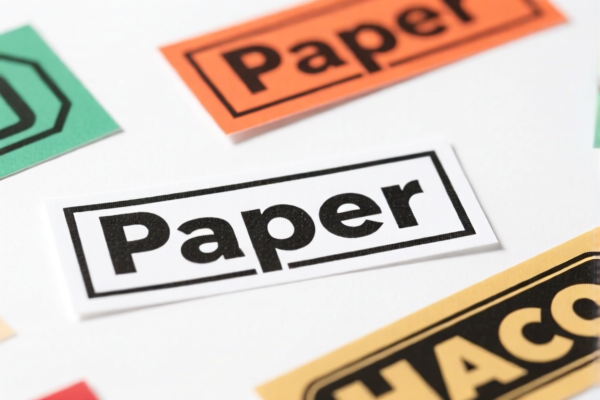
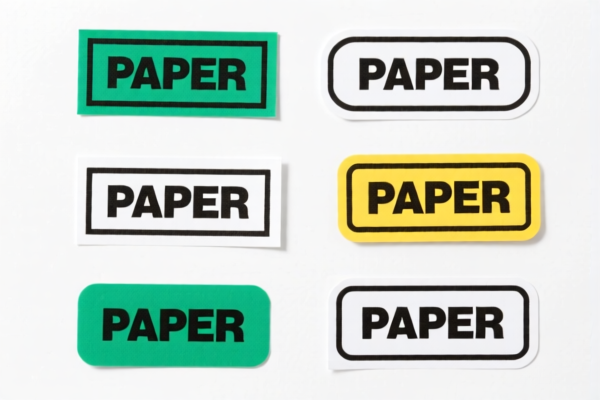


AI Analysis
🏷️ Warning Paper Label (警告纸质标签)
🌐 HS Code Reference & Customs Clearance Guide | 2026 Latest Tariff Analysis | Professional Compliance Strategy
📌 I. Product Definition & Classification: What Exactly is a "Warning Paper Label"?
A Warning Paper Label is a critical component in industrial safety, logistics, and consumer protection. It serves to communicate hazards, instructions, or compliance information to end-users. In international trade, its classification depends heavily on its material composition, format, and specific function.
While the name implies "Paper," customs authorities may scrutinize whether it is a simple paper sticker, a printed document attached to packaging, or a composite material (e.g., paper with plastic backing). This distinction directly impacts the HS Code and, consequently, the tariff burden.
⚠️ Key Distinction Point:
- If it is purely paper (sticker, roll, cut shape) → Falls under Chapter 48 (Paper Products).
- If it is a finished article (e.g., a warning label affixed to a plastic container, or made of mixed materials acting as a "finished product") → May fall under Chapter 39 (Plastics/Other Materials) as a residual category.
📦 II. HS Code Classification Details (2026 Latest Tariff Authority对照)
Based on the provided data, here are the four possible classifications for "Warning Paper Label," ranging from standard paper products to residual categories.
| HS Code | Product Description | Application Scenario | Material/State |
|---|---|---|---|
4821.90.20.00 |
Paper Labels, Other | General paper labels, stickers, or rolls not specified elsewhere. Matches 'Paper' and 'Label'. | ✅ Pure Paper |
4823.90.67.00 |
Other Paper Items, Cut to Shape | Paper labels cut into specific shapes (not in rolls). 'Label' corresponds to the cut shape. | ✅ Pure Paper (Cut) |
4821.10.40.00 |
Printed Labels (Other) | Labels where printing is the primary characteristic. Matches 'Printed' nature of warning labels. | ✅ Paper + Print |
3926.90.99.89 |
Other Plastic/Non-Paper Articles | Residual Category: If classified as a "finished warning label" made of mixed materials or where paper is secondary to the "plastic/mixed" nature. | ⚠️ Mixed/Plastic Backing |
🔍 Critical Note:
- Codes4821.90.20.00,4823.90.67.00, and4821.10.40.00are all Paper-based and carry the highest tariff rate in this dataset. - Code3926.90.99.89is a "Other Materials" residual category. While the tax rate is lower, it requires careful justification to ensure the product doesn't strictly meet the definition of a paper product. Misclassification can lead to severe penalties.
💰 III. 2026 Latest Tariff Rate Breakdown (Including Surcharges & Policy Add-ons)
✅ Applicable Country: United States (US)
✅ Origin: China (CN)
✅ Effective Time: 2025/2026 Import Cycle
🎯 1. Paper-Based Labels (4821.90.20.00, 4823.90.67.00, 4821.10.40.00)
These three codes share the identical tax structure due to their classification under Chapter 48 (Paper Products) subject to specific trade measures.
| Item | Content |
|---|---|
| Base Tariff | 0.0% (Ad Valorem) |
| Section 301 Tariff (25%) | +25% (USITC Footnote: Additional Duty) |
| Section 122 Tariff (10%) | +10% (Specific Policy Add-on) |
| Total Tax Rate | 35.0% |
| Calculation | CIF Value × 35% |
| De Minimis Exemption | ❌ Not Eligible (High value/specific goods often excluded) |
| Legal Path | Section 301:9903.01.25 → Section 122 → HS:4821/4823 |
📌 Explanation:
- The 0% base rate might seem attractive, but the 35% total effective rate is substantial. - Section 301 (25%): Standard retaliatory tariff on Chinese goods. - Section 122 (10%): A specific administrative tariff added to this category. - Combined Impact: For every $10,000 of labels, you pay $3,500 in duties.
🎯 2. Mixed Material/Residual Label (3926.90.99.89)
This code applies if the label is considered a "finished article" made of other materials (e.g., plastic-backed warning labels) and does not strictly fit the paper definitions.
| Item | Content |
|---|---|
| Base Tariff | 5.3% (Ad Valorem) |
| Section 301 Tariff (7.5%) | +7.5% (Reduced rate for this specific residual code) |
| Section 122 Tariff (10%) | +10% (Still applies) |
| Total Tax Rate | 22.8% |
| Calculation | CIF Value × 22.8% |
| De Minimis Exemption | ❌ Check Specific Rules (Often stricter for plastics) |
| Legal Path | Section 301:9903.01.24 → Section 122 → HS:3926 |
📌 Explanation:
- Lower Rate: 22.8% vs. 35.0%. This is a 12.2% saving. - Risk: You must prove the product is not a pure paper label. If it has a strong plastic backing or adhesive layer that defines its character as "plastic," this code may be defensible. However, if it is purely paper, using this code is misclassification.
🛠️ IV. Customs Clearance Practical Advice (Real-World Pitfall Avoidance)
✅ 1. Documentation Checklist (Must-Haves)
| Document | Required | Description |
|---|---|---|
| ✅ Product Specification Sheet | ✔️ | Detail material composition (e.g., "100% Paper, 50gsm," or "Paper Face with Plastic Backing"). |
| ✅ High-Resolution Photos | ✔️ | Show the label close-up, the back (adhesive), and the label on the product. |
| ✅ Bill of Lading & Invoice | ✔️ | Clearly state "Warning Paper Label" and quantity. |
| ✅ Composition Declaration | ✔️ | Explicitly state: "Made of 100% Paper" OR "Composite Material: Paper Face + Plastic Backing." |
| ✅ Print Sample | ✔️ | Show the warning text and symbols to confirm it is indeed a "label" and not a pamphlet. |
✅ 2. Classification Strategy (Key Mantra)
🔥 “Paper = 35%, Mixed = 22.8%. Material is King!”
| Scenario | Recommended HS Code | Tax Rate | Why? |
|---|---|---|---|
| Pure Paper Sticker/Label | 4821.90.20.00 or 4821.10.40.00 |
35.0% | Matches definition of paper label. No plastic content. |
| Cut Paper Shape (Not Roll) | 4823.90.67.00 |
35.0% | Paper material, cut shape. Same tax as rolls. |
| Paper Label with Plastic Backing | 3926.90.99.89 |
22.8% | If plastic backing defines the character, this may apply. Requires strong justification. |
| Warning Pamphlet/Brochure | Not Listed | N/A | Not a label. Different chapter. Do not use label codes. |
✅ 3. Special Case Handling
| Situation | Advice |
|---|---|
| High-Volume Import | Negotiate with your supplier to provide a Material Composition Test Report. If it can be proven to have significant plastic content, try for 3926.90.99.89 to save 12.2% in duties. |
| Customs Audit | If audited, prove that the label is not a "printed document" but a "label" by showing its adhesive nature and small size. |
| De Minimis (Section 321) | Be aware that high-value or specific goods (like labels) may be excluded from the $800 de minimis exemption. Check current CBP rulings. |
| Warning Content | Ensure the warning content complies with US regulations (e.g., OSHA, CPSC). Incorrect warnings can lead to product rejection, regardless of HS Code. |
🌍 V. Global Market Comparison (2026 Update)
| Country/Region | Recommended HS Code | Tariff (China Origin) | Notes |
|---|---|---|---|
| 🇺🇸 USA | 4821.90.20.00 |
35.0% | High tariffs on paper labels. |
| 🇺🇸 USA | 3926.90.99.89 |
22.8% | Lower rate, but higher classification risk. |
| 🇨🇳 China | 4821.90.20.00 |
~5-10% | Lower import duty for domestic production. |
| 🇪🇺 EU | 4821.10.40.00 |
~4-6% | Standard EU duty for paper labels. |
| 🇬🇧 UK | 4821.90.20.00 |
~4-6% | Post-Brexit tariff structure similar to EU. |
📌 Conclusion:
- The US market is the most expensive due to Section 301 and Section 122 tariffs. - Paper labels face a 35% effective duty. This is a significant cost driver. - Optimization Opportunity: If your labels have any plastic component (e.g., vinyl backing, laminated plastic film), consider if3926.90.99.89is a valid alternative to save 12.2%.
📌 VI. Common Mistakes & Pitfalls (Lessons Learned)
❌ Mistake 1: Calling it "Plastic Label" when it's Paper.
👉 Result: Customs rejects the 3926 code, applies 4821 + penalties.
❌ Mistake 2: Ignoring Section 122.
👉 Result: Underpaying duties by 10%. Customs audit leads to back taxes + interest.
❌ Mistake 3: Using "Label" too broadly.
👉 Result: If the item is a "poster" or "flyer," it may fall under different headings. Ensure it is a label (attached to a product).
✅ Best Practice:
"Warning Label, 2x3 inch, Matte Paper, Self-Adhesive, Printed with OSHA Symbols, Roll of 10,000 pcs."
Include material spec: "100% Paper Face, Rubber Adhesive."
🎯 VII. Conclusion: Professional Classification, Cost Optimization!
🎯 Remember the Mantra:
🔹 “Paper = 35%, Mixed = 22.8%. Prove the material to save the dollars!”
🔹 “HS Code determines cost, 35% is high, 22.8% is better, but compliance comes first!”
📌 Pro Tip:
If your supply chain allows, consider importing from Vietnam or Mexico if available, as these countries may have lower or zero tariffs under USMCA or GSP schemes.
For Chinese origin, consult a customs broker to evaluate if your specific label composition qualifies for the lower 3926 rate.
📣 Take Action Now:
📞 Contact a licensed customs broker.
📸 Provide clear photos and material specs.
📝 Request a Binding Ruling if the shipment value is high.
🚀 Optimize your duty cost, ensure smooth clearance, and protect your margins!
✨ Professional Customs Clearance Starts with Accurate Classification!
💼 Your every cent counts, calculate it precisely!
Customer Reviews
About HS Code Classification
The Harmonized System (HS) is an internationally standardized nomenclature developed by the World Customs Organization (WCO) to classify traded products. Over 200 countries use the HS system as the basis for customs tariffs, trade statistics, and import/export regulations.
Each HS code follows a hierarchical structure:
- Chapter (2 digits) — Broad category of goods (e.g., Chapter 84: Machinery and Mechanical Appliances)
- Heading (4 digits) — More specific grouping within the chapter
- Subheading (6 digits) — Internationally standardized breakdown, used by all WCO member countries
- National subdivisions (8-10 digits) — Country-specific extensions for further classification, such as US HTSUS 10-digit codes
Correct HS code classification is essential for smooth customs clearance, accurate duty payment, and compliance with trade regulations. Misclassification can lead to customs delays, overpayment of duties, or penalties.
When importing from CN to US, the applicable tariff rates may include:
- Most-Favored-Nation (MFN) rate — The standard duty rate applied to WTO members
- General rate — Applied to countries without trade agreements
- Trade remedy duties — Additional tariffs such as Section 301 (anti-dumping), Section 232 (national security), or countervailing duties
The information provided on this page is for reference purposes only. For official classification, please consult with your local customs authority or a licensed customs broker.