waste chemical packaging drum
CN → US| HS Code | Tariff Rate | Origin | Destination | Doc |
|---|---|---|---|---|
| 3917290050 | 38.1% | CN | US | Official Doc |
| 3923900012 | 38.0% | CN | US | Official Doc |
| 3926901000 | 20.9% | CN | US | Official Doc |
| 3917290090 | 38.1% | CN | US | Official Doc |
| 3926909989 | 22.8% | CN | US | Official Doc |
Product Images
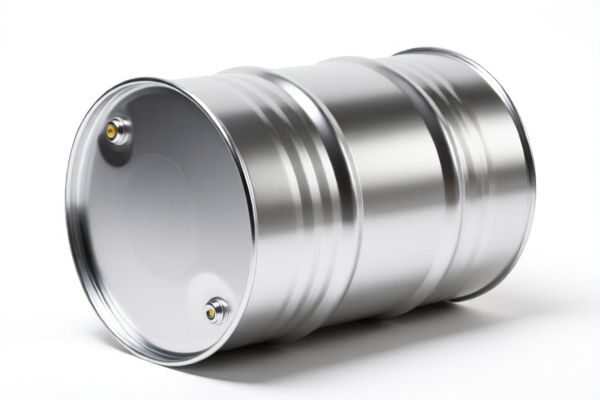
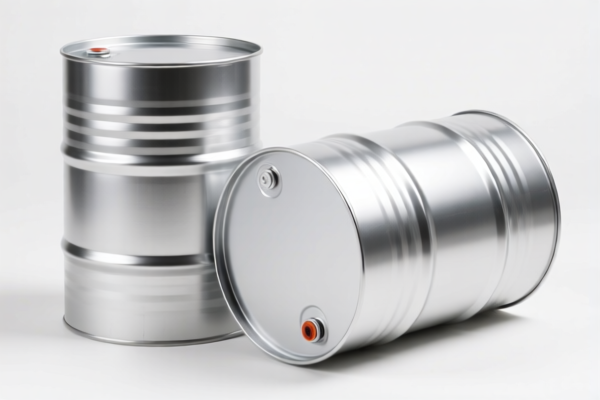
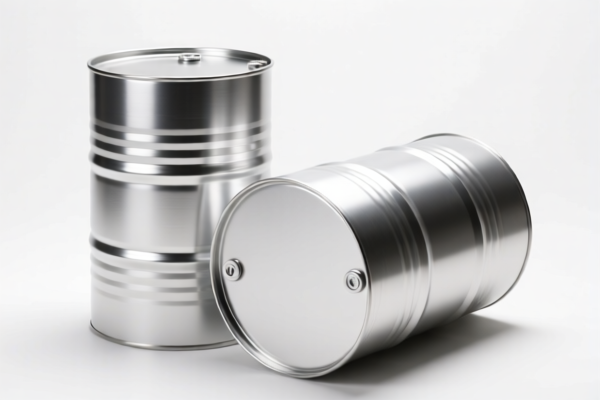
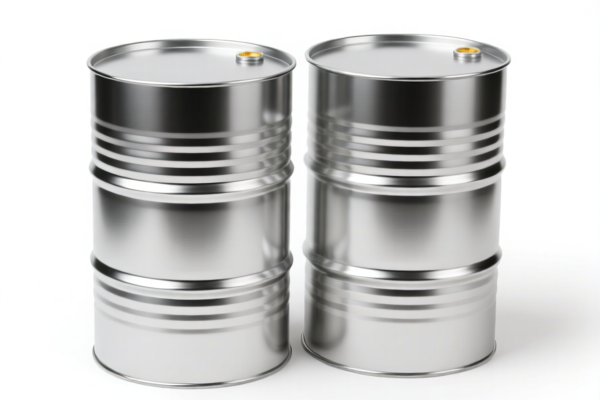
AI Analysis
🛢️ Waste Chemical Packaging Drums (Plastic Chemical Drums)
🌐 HS Code Reference & Customs Clearance Guide | 2026 Latest Tariff Analysis | Professional-Level Clearance Strategy
📌 I. Product Definition & Classification: Do You Really Understand "Plastic Chemical Drums"?
Plastic chemical drums are industrial containers used for the storage and transportation of hazardous and non-hazardous chemicals. In international trade, their classification depends strictly on their material, function, and structural form. They are generally categorized into:
1. Tubes/Pipes and Fittings (3917): If the drum has specific connections, fittings, or functions as part of a piping system (e.g., integrated valve housings, specialized connectors).
2. Packings/Containers (3923): If the drum is primarily a container for goods, falling under "packings of plastics" (the most common classification for standard transport drums).
3. Other Plastic Articles (3926): If the drum is classified as a general plastic container (e.g., buckets, cans) not specifically listed under packings or tubes.
⚠️ Key Distinction Point:
- If it is a standard transport drum used for packing goods → Likely 3923 or 3926.
- If it is a specialized container integrated into a pipeline system with specific fittings → Likely 3917.
- Note: "Waste" status does not change the HS code of the container itself, but may affect environmental compliance documentation. The HS code is based on the material and form of the new or used packaging product.
📦 II. HS Code Classification Details (2026 Latest Tariff Authority Comparison)
| HS Code | Product Description | Applicable Scenario | Key Classification Logic |
|---|---|---|---|
3917.29.00.50 |
Plastic tubing, pipes, and hollow profiles; Fittings thereof | Drums with integrated fittings, valves, or used as part of a pipeline system | ✅ Fittings/Piping Logic: Shape fits "accessories to pipelines" |
3923.90.00.12 |
Other articles for the conveyance or packing of goods, of plastics | Standard plastic chemical drums, transport containers | ✅ Packing Logic: Rational match for "drums/bottles" under other packings |
3926.90.10.00 |
Other articles of plastics | Plastic chemical drums, buckets, oil drums | ✅ General Container Logic: Matches "plastic articles, water/oil drums" |
3917.29.00.90 |
Other tubing, pipes, and hollow profiles; Fittings thereof | Drums classified as "containers/pipeline accessories" under residual logic | ✅ Fallback Logic: Other fittings/accessories not specified elsewhere |
3926.90.99.89 |
Other articles of plastics | Plastic chemical drums as general plastic containers | ✅ Residual Logic: Other plastic containers not elsewhere specified |
🔍 Key Reminder:
- Standard Transport Drums: Most commonly fall under 3923 (Packing) or 3926 (Other Plastic Articles).
- Specialized Drum-Fittings: If the drum has unique threaded connections, flanges, or integration into a fluid system, it may be classified under 3917 (Tubes/Fittings).
- Do Not Split: If the drum includes lids, bands, or handles as a single unit, declare as one item under the primary HS code.
💰 III. 2026 Latest Tariff Rate Breakdown (Including Additional Taxes & Policy Surcharges)
✅ Applicable Country: United States (US)
✅ Origin: China (CN)
✅ Effective Time: From November 10, 2025 (including subsequent imports)
🎯 1. 3917.29.00.50 & 3917.29.00.90 —— Plastic Tubings/Pipes/Fittings (Residual Categories)
| Item | Content |
|---|---|
| Basic Tariff | 3.1% (ad valorem) |
| USITC Additional Tax | +25.0% (Section 301 Tariff) |
| 122 Clause Tariff | +10.0% (Trade enforcement measure) |
| Total Tariff | 38.1% |
| Tax Calculation | CIF Value × 38.1% |
| De Minimis Eligibility | ❌ No (deny_de_minimis) |
| Legal Basis Path | Section 301 → 122 Clause → USITC:3917.29.00.50/90 |
📌 Explanation:
- These codes are subject to the highest tariff tier among plastic containers.
- The 25% Section 301 tariff applies to most Chinese plastic products.
- The 10% 122 Clause is an additional trade remedy measure.
- Total 38.1% is a very high cost, requiring strict cost-benefit analysis.
🎯 2. 3923.90.00.12 —— Other Packing/Conveyance Articles of Plastics
| Item | Content |
|---|---|
| Basic Tariff | 3.0% (ad valorem) |
| USITC Additional Tax | +25.0% (Section 301 Tariff) |
| 122 Clause Tariff | +10.0% (Trade enforcement measure) |
| Total Tariff | 38.0% |
| Tax Calculation | CIF Value × 38.0% |
| De Minimis Eligibility | ❌ No (deny_de_minimis) |
| Legal Basis Path | Section 301 → 122 Clause → USITC:3923.90.00.12 |
📌 Note:
- Despite being "packing" (3923), it still attracts the 25% Section 301 tariff.
- Slightly lower than the 3917 category by 0.1%, but functionally similar in cost.
- Common for standard HDPE/PP chemical drums used for export packaging.
🎯 3. 3926.90.10.00 —— Other Articles of Plastics (Drums/Buckets)
| Item | Content |
|---|---|
| Basic Tariff | 3.4% (ad valorem) |
| USITC Additional Tax | +7.5% (Reduced Section 301/Exclusion?) |
| 122 Clause Tariff | +10.0% (Trade enforcement measure) |
| Total Tariff | 20.9% |
| Tax Calculation | CIF Value × 20.9% |
| De Minimis Eligibility | ❌ No (deny_de_minimis) |
| Legal Basis Path | Section 301 (Reduced) → 122 Clause → USITC:3926.90.10.00 |
📌 Advantage:
- This code offers a significantly lower tariff (20.9%) compared to 3917/3923.
- The Section 301 rate is only 7.5% (possibly due to product-specific exclusions or different subheading interpretation).
- Recommended if the drum is a simple bucket/drum without complex fittings.
🎯 4. 3926.90.99.89 —— Other Articles of Plastics (Residual)
| Item | Content |
|---|---|
| Basic Tariff | 5.3% (ad valorem) |
| USITC Additional Tax | +7.5% (Reduced Section 301) |
| 122 Clause Tariff | +10.0% (Trade enforcement measure) |
| Total Tariff | 22.8% |
| Tax Calculation | CIF Value × 22.8% |
| De Minimis Eligibility | ❌ No (deny_de_minimis) |
| Legal Basis Path | Section 301 (Reduced) → 122 Clause → USITC:3926.90.99.89 |
📌 Comparison:
- Slightly higher than3926.90.10.00due to a higher basic tariff (5.3% vs 3.4%).
- Still much cheaper than the 3917/3923 categories.
- Suitable for generic plastic containers not explicitly listed in 3926.90.10.
🛠️ IV. Customs Clearance Practical Advice (Battle-Tested Pitfall Guide)
✅ 1. Required Documentation Checklist (All Are Mandatory)
| Document | Must Provide | Description |
|---|---|---|
| ✅ Product Specification Sheet | ✔️ | Material (HDPE/PP), Volume, Wall Thickness, Certification |
| ✅ Product Photos (Including Labels) | ✔️ | Show shape, capacity marking, hazard labels (if applicable) |
| ✅ Commercial Invoice | ✔️ | Clearly state "Plastic Chemical Drum" and HS Code |
| ✅ Packing List | ✔️ | Indicate if drums are stacked, palletized, or loose |
| ✅ Material Safety Data Sheet (MSDS) | ✔️ | If drums contained hazardous chemicals previously |
| ✅ Certificate of Origin (CO) | ✔️ | For potential preferential treatment (if applicable) |
| ✅ Declaration of Non-Hazardous Material | ✔️ | If reusing drums, confirm they are cleaned and non-hazardous |
✅ 2. Declaration Strategy (Key Mnemonic)
🔥 "Material First, Form Second, Fittings Check, Tariff Minimized!"
| Scenario | Correct Declaration | Incorrect Practice |
|---|---|---|
| Standard HDPE Drum (no special fittings) | 3926.90.10.00 or 3926.90.99.89 |
Misdeclare as 3917 → 38.1% |
| Drum with Integrated Valve/Flange | 3917.29.00.50 |
Declare as 3926 → Potential Re-classification Risk |
| Packaging for Export | 3923.90.00.12 |
Split declaration (Drum + Lid) → Higher Tax |
| Generic Plastic Bucket | 3926.90.10.00 |
Declare as "Plastic Waste" → Environmental Hold |
✅ 3. Special Case Handling
| Scenario | Handling Advice |
|---|---|
| Used/Second-hand Drums | Must declare as "Used Plastic Drum." Provide cleaning certificate to avoid sanitary inspection. |
| Hazardous Chemical Drums | Must comply with UN Packaging Standards. Provide UN Certification Code. |
| OEM Custom Drums | Provide customer design drawings. Avoid generic descriptions. |
| Drums with Residual Chemicals | PROHIBITED from entry without proper hazardous waste disposal proof. Clean drums only. |
🌍 V. Global Market Comparison (2026 Latest)
| Country/Region | Recommended HS Code | Tariff (China Origin) | Certification Requirements | Remarks |
|---|---|---|---|---|
| 🇺🇸 USA | 3926.90.10.00 |
20.9% | None (Standard) | Lowest Tariff among options |
| 🇺🇸 USA | 3917.29.00.50 |
38.1% | None | Highest Tariff |
| 🇨🇳 China | 3926.90.10.00 |
5.0% | GB Standard | Low domestic tax |
| 🇪🇺 EU | 3926.90.99 |
0-6% | REACH + RoHS | Green border policies |
| 🇦🇺 Australia | 3926.90.99 |
5.0% | None | Standard import duty |
📌 Conclusion:
- USA imposes high tariffs on Chinese plastic drums, ranging from 20.9% to 38.1%.
- 3926 codes offer significant savings (17-17.3% lower) compared to 3917/3923.
- China, EU, and Australia have much lower tariffs, but require strict environmental compliance.
📌 VI. Common Errors & Pitfall Guide (Lessons from Experience)
❌ Error 1: Classifying a standard drum as 3917 (Fittings)
👉 Consequence: Tariff jumps from 20.9% to 38.1% → Cost increase by ~82%!
❌ Error 2: Declaring clean drums as "Plastic Waste"
👉 Consequence: Shipment held for environmental inspection → Delay + Demurrage Fees!
❌ Error 3: Not specifying Material Type (HDPE vs PP)
👉 Consequence: Customs may re-classify to a higher duty rate → Back Taxes + Penalties!
❌ Error 4: Splitting Drum + Lid + Band into separate line items
👉 Consequence: Each item taxed separately, potentially increasing total duty → Complexity & Cost!
✅ Correct Practice:
"HDPE Chemical Drum, 200L, UN Certified, Food Grade, Model XYZ, Cleaned, For Reuse"
🎯 VII. Conclusion: Professional Declaration, Save Time, Cut Costs!
🎯 Remember the Mnemonic:
🔹 "3926 is King, 38.1% is Pain, Fittings Check, Tariff Gain!"
🔹 "HS Code determines fate, 17% difference, declare right, profit stays tight!"
📌 Tips:
- If your drums are originally from Vietnam, India, or Thailand, you may qualify for reduced Section 301 tariffs or exemptions.
- Apply for Advance Ruling before shipment to confirm the correct HS Code.
- Clean drums thoroughly to avoid sanitary holds.
📣 Immediate Action:
📞 Contact professional customs brokers + Provide product photos + Apply for HS Code Advance Ruling
🚀 Ensure your plastic drums clear customs smoothly, efficiently, and profitably!
✨ Professional Clearance Starts with Accurate Classification!
💼 Every cent of your cost deserves precise calculation!
Customer Reviews
About HS Code Classification
The Harmonized System (HS) is an internationally standardized nomenclature developed by the World Customs Organization (WCO) to classify traded products. Over 200 countries use the HS system as the basis for customs tariffs, trade statistics, and import/export regulations.
Each HS code follows a hierarchical structure:
- Chapter (2 digits) — Broad category of goods (e.g., Chapter 84: Machinery and Mechanical Appliances)
- Heading (4 digits) — More specific grouping within the chapter
- Subheading (6 digits) — Internationally standardized breakdown, used by all WCO member countries
- National subdivisions (8-10 digits) — Country-specific extensions for further classification, such as US HTSUS 10-digit codes
Correct HS code classification is essential for smooth customs clearance, accurate duty payment, and compliance with trade regulations. Misclassification can lead to customs delays, overpayment of duties, or penalties.
When importing from CN to US, the applicable tariff rates may include:
- Most-Favored-Nation (MFN) rate — The standard duty rate applied to WTO members
- General rate — Applied to countries without trade agreements
- Trade remedy duties — Additional tariffs such as Section 301 (anti-dumping), Section 232 (national security), or countervailing duties
The information provided on this page is for reference purposes only. For official classification, please consult with your local customs authority or a licensed customs broker.