water based glue double bottle
CN → US| HS Code | Tariff Rate | Origin | Destination | Doc |
|---|---|---|---|---|
| 3506915000 | 37.1% | CN | US | Official Doc |
| 3506105000 | 37.1% | CN | US | Official Doc |
| 3214905000 | 38.25% | CN | US | Official Doc |
| 3214100020 | 38.7% | CN | US | Official Doc |
Product Images
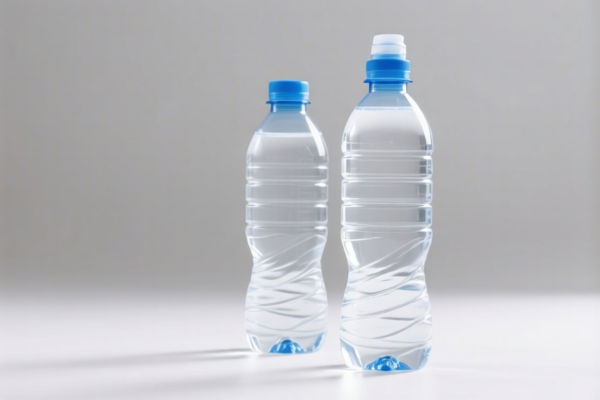
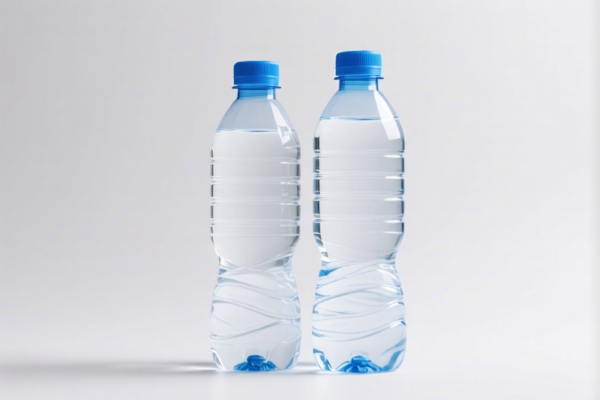
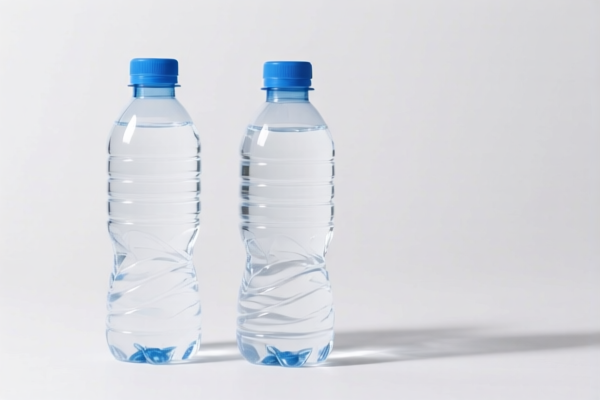
AI Analysis
🧪 Water Based Glue Double Bottle (Adhesives & Sealants)
🌐 HS Code Reference & Customs Clearance Guide | 2026 Latest Tariff Analysis | Professional Clearance Strategy
📌 I. Product Definition & Classification: What exactly is a "Water Based Glue Double Bottle"?
A "Water Based Glue Double Bottle" typically refers to a dual-component adhesive system, often used for bonding, sealing, or filling. In international trade, the classification depends heavily on the chemical composition, primary function, and packaging form.
Key Classification Divergences:
1. Adhesive Category (Chapter 35): If the product is primarily a polymer-based adhesive sold in retail-sized dual containers.
2. Sealant/Putty Category (Chapter 32): If the product functions as a sealant, filler, or caulking compound, even if water-based.
⚠️ Critical Distinction:
- If it is a pure adhesive for bonding materials (wood, paper, fabric) → Consider 3506.
- If it is a sealant/filler for gaps, windows, or construction → Consider 3214.
- The "Double Bottle" aspect often implies a retail kit, which supports classification under specific retail packaging subheadings.
📦 II. HS Code Classification Details (2026 Latest Tariff Authority Comparison)
| HS Code | Product Description | Applicable Scenario | Packaging/State |
|---|---|---|---|
3506.91.50.00 |
Modifying adhesives; based on polymers; retail packing | Dual-component bonding glue; polymer-based; dual-bottle retail kit | ✅ Retail Kit |
3506.10.50.00 |
Adhesives; prepared glues; retail packing | General adhesive; dual-bottle format; inferred retail packaging | ✅ Retail Kit |
3214.90.50.00 |
Sealants; fillers; other sealants; water-based | Construction sealant; caulk; water-based chemical composition | ✅ Liquid/Paste |
3214.10.00.20 |
Sealants; putties; water-based | Window sealing; gap filling; water-based material; no solvent conflict | ✅ Liquid/Paste |
🔍 Key Insight:
- 3506 Codes are generally for bonding (gluing two things together).
- 3214 Codes are generally for sealing/filling (closing gaps, weatherproofing).
- Misclassification between "Adhesive" and "Sealant" can lead to different duty rates and potential customs delays.
💰 III. 2026 Latest Tariff Rate Breakdown (Including Additional Taxes)
✅ Applicable Country: United States (US)
✅ Origin: China (CN)
✅ Effective Date: Includes imports subject to Section 301 and Section 122 tariffs.
🎯 1. 3506.91.50.00 & 3506.10.50.00 —— Adhesives (Polymer/General)
| Item | Detail |
|---|---|
| Base Tariff Rate | 2.1% |
| Section 301 Additional Tariff | +25.0% |
| Section 122 Tariff | +10.0% |
| Total Tariff Rate | 37.1% |
| Tax Calculation | CIF Value × 37.1% |
| De Minimis Exemption | ❌ Not Applicable (High total tariff prevents low-value exemption benefits in many contexts) |
| Legal Basis Path | Section 301: 9903.88.01 → Section 122: 9903.01.24 → USITC: 3506.91.50.00 / 3506.10.50.00 |
📌 Explanation:
- Base Rate (2.1%): Standard Most-Favored-Nation (MFN) rate for adhesives.
- Section 301 (25%): Retaliatory tariff on Chinese goods under Trade Act Section 301.
- Section 122 (10%): Additional tariff on certain imports under Section 122 of the Trade Act.
- Total (37.1%): This is a high-cost category. Accurate classification is vital for cost control.
🎯 2. 3214.90.50.00 —— Sealants (Other)
| Item | Detail |
|---|---|
| Base Tariff Rate | 3.25% |
| Section 301 Additional Tariff | +25.0% |
| Section 122 Tariff | +10.0% |
| Total Tariff Rate | 38.25% |
| Tax Calculation | CIF Value × 38.25% |
| De Minimis Exemption | ❌ Not Applicable |
| Legal Basis Path | Section 301: 9903.88.01 → Section 122: 9903.01.24 → USITC: 3214.90.50.00 |
📌 Note:
- Slightly higher total tariff than adhesive codes due to a higher base rate (3.25% vs 2.1%).
- Must prove product is a "sealant" and not a primary adhesive to avoid misclassification.
🎯 3. 3214.10.00.20 —— Putties & Sealants (Water-Based)
| Item | Detail |
|---|---|
| Base Tariff Rate | 3.7% |
| Section 301 Additional Tariff | +25.0% |
| Section 122 Tariff | +10.0% |
| Total Tariff Rate | 38.7% |
| Tax Calculation | CIF Value × 38.7% |
| De Minimis Exemption | ❌ Not Applicable |
| Legal Basis Path | Section 301: 9903.88.01 → Section 122: 9903.01.24 → USITC: 3214.10.00.20 |
📌 Note:
- Highest Total Tariff (38.7%) among the four options due to the highest base rate (3.7%).
- Applies specifically to water-based putties and sealants. Ensure the "water-based" claim is chemically verified.
🛠️ IV. Customs Clearance Practical Advice (Real-World Pitfall Avoidance)
✅ 1. Essential Documentation Checklist (Non-Negotiable)
| Document | Required? | Purpose |
|---|---|---|
| ✅ Product Specification Sheet | ✔️ | Details chemical composition (water-based vs. solvent), viscosity, curing time. |
| ✅ Safety Data Sheet (SDS) | ✔️ | Crucial to prove it is "water-based" and not a hazardous solvent-based adhesive (which might have different HS codes). |
| ✅ Product Photos (Dual Bottle) | ✔️ | Shows retail packaging format ("double bottle") to support Chapter 35/32 retail subheadings. |
| ✅ Commercial Invoice | ✔️ | Must clearly state "Water Based Adhesive/Sealant, Double Bottle Kit". |
| ✅ Packing List | ✔️ | Confirms dual-component nature (Part A + Part B) if applicable. |
| ✅ HS Code Pre-Ruling Request | ✔️ | Highly recommended for high-tariff items to avoid post-entry audits. |
✅ 2. Declaration Tips (Key Mantra)
🔥 “Function First, Composition Second, Retail Format Third!”
| Scenario | Correct Declaration | Wrong Practice |
|---|---|---|
| Bonding Glue (Wood/Metal) | 3506.91.50.00 or 3506.10.50.00 |
Misclassifying as sealant → Higher duty or audit |
| Caulk/Gap Filler (Construction) | 3214.10.00.20 or 3214.90.50.00 |
Misclassifying as glue → Duty difference of 1.6% |
| Solvent-Based (Not Water-Based) | ❌ Do NOT use 3214.10 | Using water-based HS code for solvent-based → Fraud/Seizure |
| Bulk Industrial (Not Retail) | Re-evaluate HS Code | Claiming "Retail Kit" for large drums → Misdeclaration |
✅ 3. Special Case Handling
| Situation | Recommendation |
|---|---|
| Dual-Component (Part A + Part B) | Clearly declare as "Two-Part Adhesive System". Ensure the HS code covers the final mixed product or the components themselves if shipped separately. |
| Water-Based Claim | Must provide SDS showing water is the primary solvent/carrier. If solvents are present, it may fall under different chemical chapters. |
| Customs Audit Risk | Given the high tariff (37-38.7%), CBP will scrutinize the "water-based" claim and the "retail packaging" definition. Have SDS and product photos ready. |
| Section 122 & 301 Interaction | Ensure both tariffs are applied correctly. Some brokers may miss the 122 tariff, leading to underpayment and penalties later. |
🌍 V. Global Market Comparison (2026 Latest)
| Country/Region | Recommended HS Code | Tariff (China Origin) | Certification Requirements | Notes |
|---|---|---|---|---|
| 🇺🇸 USA | 3506.91.50.00 / 3214.10.00.20 |
37.1% - 38.7% | SDS, Labeling Compliance | High Duty Environment |
| 🇨🇳 China | 3506.91.50.00 / 3214.10.00.20 |
~5% - 10% | CCC (if applicable) | Lower duty, no 301/122 |
| 🇪🇺 EU | 3506.91.50.00 / 3214.10.00.20 |
6.5% - 7.5% | REACH, CLP Labeling | No Section 301/122 |
| 🇬🇧 UK | 3506.91.50.00 / 3214.10.00.20 |
6.5% - 7.5% | UKCA, REACH | Post-Brexit rules apply |
| 🇨🇦 Canada | 3506.91.50.00 / 3214.10.00.20 |
5% - 6.5% | Health Canada Labeling | No US-style 301 tariffs |
📌 Conclusion:
- USA is the most expensive market due to Section 301 (25%) + Section 122 (10%)叠加 on top of MFN rates.
- EU/UK/Canada have moderate duties but strict chemical safety regulations (REACH/CLP).
- Strategy: If shipping to the US, consider duty drawback programs if re-exporting, or verify if any exclusions apply.
📌 VI. Common Mistakes & Pitfalls (Lessons Learned)
❌ Mistake 1: Calling a "Solvent-Based Glue" as "Water-Based" to fit 3214.10
👉 Consequence: Customs seizes goods, fines for misdeclaration, and potential fraud charges.
❌ Mistake 2: Ignoring the "Double Bottle" retail aspect
👉 Consequence: If classified as bulk industrial chemicals, you might miss retail-specific subheadings, or worse, face inspection for hazardous materials if packaging doesn't match.
❌ Mistake 3: Underestimating the Total Tariff (Base + 301 + 122)
👉 Consequence: Profit margins wiped out. Budget for ~38% duty, not just the base 2-4%.
❌ Mistake 4: Failing to provide SDS for "Water-Based" Claims
👉 Consequence: Customs may assume it's solvent-based (different HS code) or hazardous, leading to delays and extra testing.
✅ Correct Practice:
"Water-Based Two-Part Adhesive, Dual-Bottle Retail Kit, Polymer-Modified, Non-Hazardous, SDS Provided, Model XYZ"
🎯 VII. Conclusion: Precision Classification Saves Money!
🎯 Remember the Mantra:
🔹 "Function Dictates HS, Composition Dictates Tax, Retail Format Matters!"
🔹 "37-38% Duty in USA, Plan Ahead, Don't Guess, Save Thousands!"
📌 Pro Tip:
- For US imports, consider applying for a Binding Ruling (Ruling Letter) from CBP before shipment. This provides legal certainty on whether it is 3506 (Adhesive) or 3214 (Sealant) and confirms the tariff application.
- Ensure your SDS explicitly states "Water-Based" to support classification under 3214.10 if applicable, avoiding higher-risk solvent classifications.
📣 Immediate Action:
📞 Consult a licensed US Customs Broker
📄 Prepare SDS and Product Specs
📝 Request CBP Binding Ruling if shipment value is high
✨ Professional Clearance Starts with Accurate Classification!
💼 Your Bottom Line Depends on the Right HS Code!
Customer Reviews
About HS Code Classification
The Harmonized System (HS) is an internationally standardized nomenclature developed by the World Customs Organization (WCO) to classify traded products. Over 200 countries use the HS system as the basis for customs tariffs, trade statistics, and import/export regulations.
Each HS code follows a hierarchical structure:
- Chapter (2 digits) — Broad category of goods (e.g., Chapter 84: Machinery and Mechanical Appliances)
- Heading (4 digits) — More specific grouping within the chapter
- Subheading (6 digits) — Internationally standardized breakdown, used by all WCO member countries
- National subdivisions (8-10 digits) — Country-specific extensions for further classification, such as US HTSUS 10-digit codes
Correct HS code classification is essential for smooth customs clearance, accurate duty payment, and compliance with trade regulations. Misclassification can lead to customs delays, overpayment of duties, or penalties.
When importing from CN to US, the applicable tariff rates may include:
- Most-Favored-Nation (MFN) rate — The standard duty rate applied to WTO members
- General rate — Applied to countries without trade agreements
- Trade remedy duties — Additional tariffs such as Section 301 (anti-dumping), Section 232 (national security), or countervailing duties
The information provided on this page is for reference purposes only. For official classification, please consult with your local customs authority or a licensed customs broker.