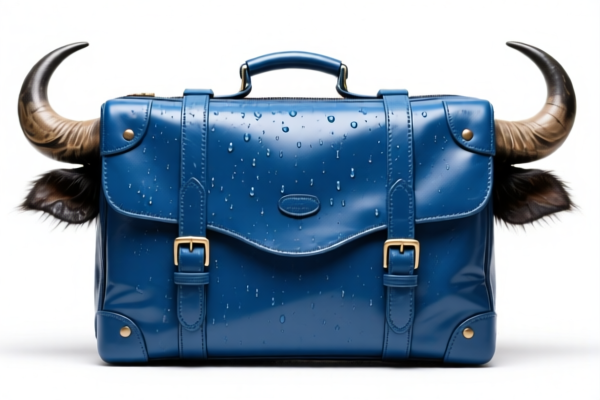
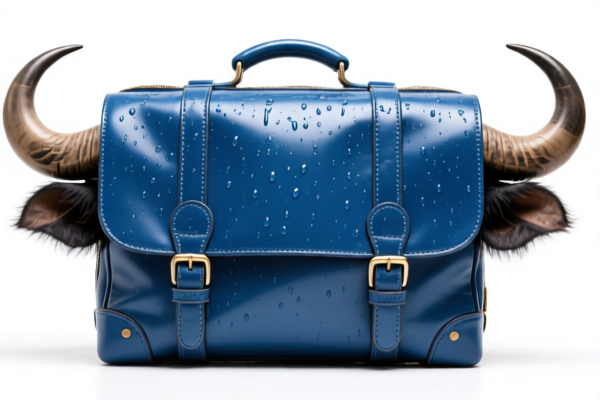
water buffalo/marble grain leather suitcase
CN → USProduct Images


AI Analysis
Here is the professional, Wiki-style classification and tariff guide for Water Buffalo/Marble Grain Leather Suitcases, tailored for US Customs and Trade compliance.
🧳 Water Buffalo / Marble Grain Leather Suitcase (Luggage)
🌐 HS Code Classification & 2026 Tariff Strategy | Premium Leather Goods Guide
📌 一、Product Definition & Classification Logic
Water Buffalo/Marble Grain Leather Suitcases represent a specific intersection of animal hide origin (Buffalo) and surface finish (Marble/Stone grain embossing). In international trade, these are treated as Luggage (Suitcases, Trunks, Handbags, etc.) made of leather or composition leather.
The critical distinction for customs lies in: 1. Material Composition: Is it 100% Water Buffalo hide, or a "composition leather" (buffalo hide scraps + synthetic binder)? 2. Function: Is it a rigid suitcase/trunk or a soft-sided travel bag? 3. Grade: "Water Buffalo" often implies a specific tannery grade, but customs classifies based on the type of leather (bovine) rather than the specific species, unless it's treated as "Other Leather."
⚠️ Key Classification Trap:
- "Marble Grain" is a surface treatment (embossing). It does not change the HS Code from standard "Leather Suitcase." - If the core material is composition leather (scrap leather + glue), it falls under a different subheading with potentially higher duties. - Rigid suitcases (hard shell + leather covering) are generally classified under 4202; Soft-sided luggage is also 4202.
📦 二、HS Code Classification Details (2026 Authority)
For US Import (HTSUS 2026), the primary classification for leather suitcases falls under Heading 4202.
| HS Code (HTSUS) | Product Description | Material Specifics | Duty Rate (General) |
|---|---|---|---|
| 4202.92.11.00 | Trunks, suitcases, vanity cases, briefcases, etc., with outer surface of leather | 100% Bo Vine Leather (Includes Water Buffalo) | 2.5% |
| 4202.92.20.00 | ...with outer surface of composition leather | Leather scraps + binders (often confused with buffalo) | 2.5% |
| 4202.92.31.00 | ...other (includes synthetic/other) | If the "leather" is actually coated fabric | Varies |
| 4202.92.35.00 | ...other (Handbags, etc.) | If the item is primarily a handbag (not a suitcase) | Varies |
🔍 Critical Clarification:
- Water Buffalo = Bovine Leather. US Customs classifies Water Buffalo under the same code as Cow/Heifer leather for luggage (4202.92.11.00). The "Water Buffalo" label is a marketing term for texture/quality, not a separate tariff category. - Marble Grain is merely an embossing pattern. It does not alter the code. - Suitcase vs. Handbag: If the item is large, has wheels, and is for travel, it is a Suitcase (4202.92.11.00). If it is small and carried by hand/shoulder, it might be a Handbag (4202.29.11.00), which has different duty rates.
💰 三、2026 Tariff Rate & Trade Policy Analysis (US Market)
✅ Target Market: United States (US)
✅ Origin: China (CN) – Assuming Chinese Export based on "Water Buffalo" leather trade trends
✅ Effective Date: 2026 Tariff Schedule
🎯 1. Primary Code: 4202.92.11.00 (Leather Suitcase)
| Item | Content |
|---|---|
| Base General Duty | 2.5% (Most Favored Nation - MFN) |
| Section 301 (China Specific) | +25% (Applicable to many leather goods from China) |
| Section 232 (Steel/Aluminum) | N/A (Not applicable to leather) |
| Total Duty Rate | 27.5% |
| De Minimis Exemption | ❌ No (Items >$800 exempt, but this is for B2B; B2C is exempt up to $800 without tariff calculation, but B2B shipments are taxed) |
| Legal Basis | HTSUS 4202.92.11.00 → 301 Section → USITC |
📌 Explanation:
- Base 2.5%: The standard duty for leather suitcases. - 301 Tariff (+25%): Under the Trump-era Section 301 list (still active in 2026 for many categories), Chinese-origin leather luggage is subject to an additional 25% tariff. - Real Cost: A $1,000 suitcase incurs $275 in duties.
⚠️ Special Note on "Composition Leather" (4202.92.20.00)
If the "Water Buffalo" is actually composition leather (reconstituted), the base duty remains 2.5%, but the 301 list may be applied strictly. Customs officers may require Lab Tests to prove it is genuine leather vs. composition. If misclassified as genuine but it's composition, penalties apply.
🛠️ 四、Customs Clearance & Compliance Strategies
✅ 1. Documentation Checklist (Mandatory)
| Document | Requirement | Why It Matters |
|---|---|---|
| Commercial Invoice | Must state: "Water Buffalo Leather Suitcase" and "Marble Grain Finish" | Avoids "Generic" description which triggers audits. |
| Bill of Materials (BOM) | List % of Buffalo Leather vs. Synthetic/Composition | Critical to prove genuine leather for 4202.92.11.00. |
| Photos of Label/Tag | Clear shot of "Made in [Country]" and Material Tag | Confirms origin and material type. |
| Leather Tanning Certificate | If claiming 100% Buffalo, provide tanning proof | Prevents "Composition Leather" reclassification. |
| Packing List | Detail: Rigid vs. Soft structure | Helps verify HS Code sub-class. |
✅ 2. Declaration Strategy (Pro Tips)
🔥 Golden Rule: "Don't hide the grain, declare the material!"
| Scenario | Correct Declaration | Risk of Error |
|---|---|---|
| Genuine Water Buffalo | 4202.92.11.00 - "Suitcase, outer surface of genuine bovine (buffalo) leather" |
None if proven. |
| Reconstituted "Buffalo" | 4202.92.20.00 - "Suitcase, outer surface of composition leather" |
Huge Risk: If you claim "Buffalo" but it's composition, you face 100% penalty + fraud charges. |
| Hybrid (Leather + Synthetic) | 4202.92.90.00 - "Other" (if leather is <51% by weight) |
Duty may vary; requires precise weight analysis. |
✅ 3. Special Handling: "Marble Grain"
- Marketing vs. Technical: Do not list "Marble Grain" as the material name in the HS description. Use it in the Brand/Product Name field.
- Customs Example:
- ❌ Bad: "Marble Grain Plastic Case" (Wrong material, wrong code).
- ✅ Good: "Water Buffalo Leather Suitcase, Marble Grain Embossed, Model X-2026" (Correct material, correct code).
🌍 五、Global Market Comparison (2026)
| Region | HS Code | Duty (China Origin) | Key Requirement |
|---|---|---|---|
| 🇺🇸 USA | 4202.92.11.00 |
27.5% (2.5% + 25% 301) | 301 Section 301 applies strictly. |
| 🇪🇺 EU | 4202.32 |
4.7% (Standard) | CE Mark + EPR (Packaging). No China surcharge. |
| 🇨🇦 Canada | 4202.92.11.00 |
8.5% (Standard) | No 301 equivalent. |
| 🇦🇺 Australia | 4202.92.11.00 |
5.0% (Standard) | Low duty, high compliance on leather. |
| 🇯🇵 Japan | 4202.92.11.00 |
4.4% (Standard) | Strict on leather authenticity. |
📌 Conclusion:
- The US is the most expensive market for this product due to the 25% Section 301 surcharge. - EU/Asia are more favorable for "Marble Grain Leather" exports. - Strategy: If selling to the US, consider pricing adjustments or third-country assembly (e.g., Vietnam/Mexico) to bypass 301 tariffs (if rules of origin allow).
📌 六、Common Pitfalls & "Blood and Tears" Warnings
❌ Mistake 1: Mislabeling "Composition" as "Buffalo Leather"
👉 Result: Customs seizes goods, fines 100% of value, and blacklists the importer.
Fix: Always submit a Leather Test Report (Tannery Certificate) to prove authenticity.
❌ Mistake 2: Confusing "Suitcase" with "Handbag"
👉 Result: If the item has wheels and a telescopic handle, it must be a suitcase (4202.92.11.00). Calling it a "Handbag" (4202.29.11.00) triggers a reclassification audit.
❌ Mistake 3: Ignoring the "Marble Grain" Embossing
👉 Result: If the grain is so deep it changes the texture to "Pleather" (vinyl), Customs may reclassify it as Synthetic.
Fix: Clearly state "Genuine Leather with Embossed Finish" in specs.
🎯 七、Final Conclusion: Strategic Action Plan
🎯 For 2026 Export to the US: 1. Verify Material: Ensure 100% genuine Water Buffalo leather. If <50%, reclassify to "Other". 2. Calculate Landed Cost: Base Duty (2.5%) + 301 Tariff (25%) = 27.5%. 3. Documentation: Prepare Tannery Certificates and Detailed Product Photos showing the marble grain texture. 4. Labeling: Use "Water Buffalo Leather" in the Description, not the Material Code.
🚀 Pro Tip:
If you are importing into the US, apply for a Binding Ruling from US Customs (CBP) before shipment. This guarantees your HS Code and duty rate, preventing surprise fines.
📣 Next Steps:
📞 Contact a Customs Broker to verify the "Water Buffalo" authenticity documentation.
📦 Prepare a Lab Test Report for the leather sample.
💡 Optimize Pricing to absorb the 27.5% tariff if selling to the US.
✨ Precision in Classification = Profit in the Pocket!
💼 Don't let the "Marble Grain" hide the true cost!
Customer Reviews
About HS Code Classification
The Harmonized System (HS) is an internationally standardized nomenclature developed by the World Customs Organization (WCO) to classify traded products. Over 200 countries use the HS system as the basis for customs tariffs, trade statistics, and import/export regulations.
Each HS code follows a hierarchical structure:
- Chapter (2 digits) — Broad category of goods (e.g., Chapter 84: Machinery and Mechanical Appliances)
- Heading (4 digits) — More specific grouping within the chapter
- Subheading (6 digits) — Internationally standardized breakdown, used by all WCO member countries
- National subdivisions (8-10 digits) — Country-specific extensions for further classification, such as US HTSUS 10-digit codes
Correct HS code classification is essential for smooth customs clearance, accurate duty payment, and compliance with trade regulations. Misclassification can lead to customs delays, overpayment of duties, or penalties.
When importing from CN to US, the applicable tariff rates may include:
- Most-Favored-Nation (MFN) rate — The standard duty rate applied to WTO members
- General rate — Applied to countries without trade agreements
- Trade remedy duties — Additional tariffs such as Section 301 (anti-dumping), Section 232 (national security), or countervailing duties
The information provided on this page is for reference purposes only. For official classification, please consult with your local customs authority or a licensed customs broker.