waterproof coating
CN → US| HS Code | Tariff Rate | Origin | Destination | Doc |
|---|---|---|---|---|
| 5906993000 | 38.3% | CN | US | Official Doc |
| 5906913000 | 37.7% | CN | US | Official Doc |
| 3921901500 | 41.5% | CN | US | Official Doc |
| 3921902550 | 41.5% | CN | US | Official Doc |
| 3921905050 | 39.8% | CN | US | Official Doc |
Product Images
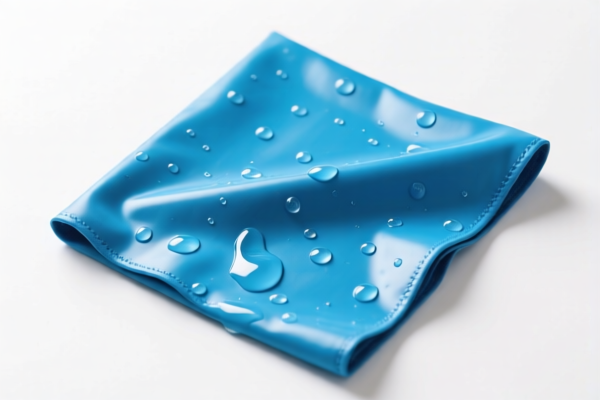
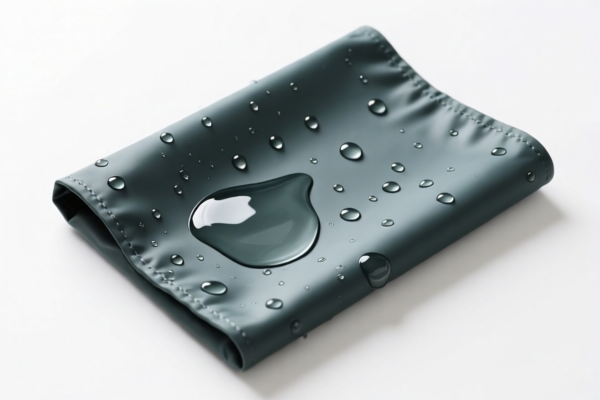
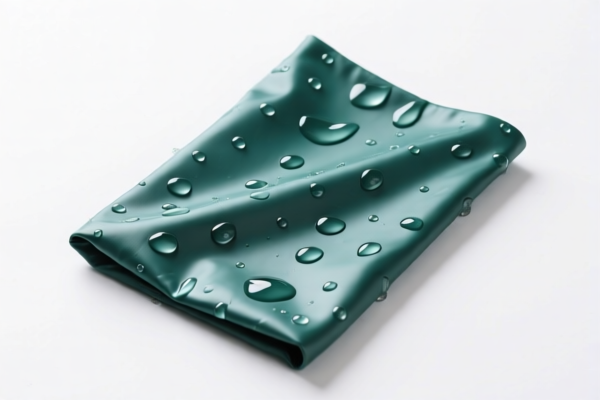
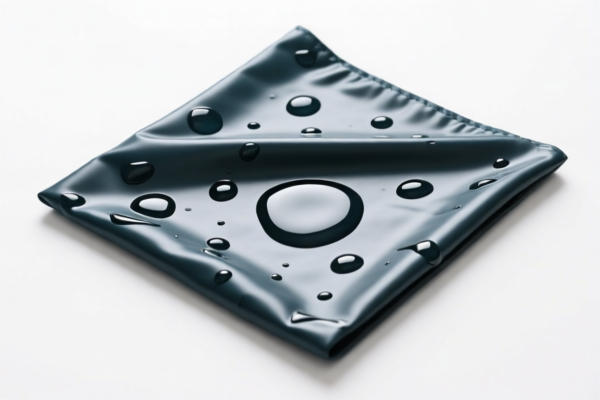
AI Analysis
🌊 Waterproof Coating (Waterproof Fabrics & Laminates)
🌐 HS Code Reference & Customs Clearance Guide | 2026 Latest Tariff Analysis | Professional通关 Strategy
📌 I. Product Definition & Classification: What Exactly Is "Waterproof Coating"?
In international trade, "Waterproof Coating" is not a single commodity but a functional characteristic applied to textile or plastic materials. The HS Code classification depends entirely on the base material and the method of application (coating, impregnation, or lamination).
Broadly, they fall into two categories: 1. Textile-Based Waterproofing (Chapter 59): Fabrics (cotton, polyester, etc.) treated with rubber, plastic, or other substances to make them water-resistant. 2. Plastic/Polymer-Based Waterproofing (Chapter 39): Solid sheets, strips, or films made of plastics (PVC, PU, etc.), possibly reinforced with textiles, used for waterproofing.
⚠️ Key Distinction Point: - If the base is fabric and the waterproofing is a thin layer (rubber/PVC coating) → Chapter 59 - If the base is plastic sheet/film (even if textile-backed) → Chapter 39
📦 II. HS Code Classification Details (2026 Latest Tariff Authority Comparison)
Based on the provided data, here are the five specific HS Codes for waterproof materials:
| HS Code | Product Description | Material Base | Waterproofing Method |
|---|---|---|---|
5906.99.30.00 |
Waterproof Fabric | Textile Fabric | Rubberized or Coated |
5906.91.30.00 |
Waterproof Fabric | Textile Material | Rubber-Coated or Laminated |
3921.90.15.00 |
Waterproof Material | Synthetic Fibers + Textile | PU or Polyester Coating (Laminated) |
3921.90.25.50 |
Waterproof Material | Plastic/Polymer Coated Textile | Plastic/Polymer Lamination |
3921.90.50.50 |
Waterproof PVC/PU Skin | Plastic/Synthetic Resin | PVC or PU Coated (Sheet/Strip Form) |
🔍 Critical Reminder: - Fabric + Rubber/PVC Coating → Usually 5906 (unless the coating makes it essentially a plastic sheet). - Synthetic Fiber + PU Lamination → Often 3921 (if the plastic layer is dominant or the structure is considered a "plastic sheet"). - PVC/PU Sheets → 3921.90.50.50 (specifically for plastic/synthetic resin materials like "wet look" PVC or PU).
💰 III. 2026 Latest Tariff Rate Breakdown (Including Surcharges & Policy Add-ons)
✅ Applicable Country: United States (US)
✅ Country of Origin: China (CN)
✅ Effective Date: From subsequent imports (2025-2026)
All listed items are subject to Section 301 Tariffs (25%) and Section 122 Tariffs (10%), in addition to the base MFN rate.
🎯 1. 5906.99.30.00 —— Rubberized/Cooled Textile Fabric
| Item | Content |
|---|---|
| Base Tariff | 3.3% |
| Section 301 Surcharge | +25.0% |
| Section 122 Surcharge | +10.0% |
| Total Tariff Rate | 38.3% |
| Tax Calculation | CIF Value × 38.3% |
| De Minimis Exemption? | ❌ No (High tariff items generally excluded) |
| Legal Basis | MFN Base + USITC Footnote 301 + IEEPA Section 122 |
📌 Explanation: - 3.3% is the standard MFN duty for other rubberized textile goods. - 25% is the Section 301 duty (List 4A/301 List). - 10% is the Section 122 duty (often applied to specific textiles/apparel inputs). - Total: 38.3%. This is a high-cost category.
🎯 2. 5906.91.30.00 —— Rubber-Coated/Laminated Textile
| Item | Content |
|---|---|
| Base Tariff | 2.7% |
| Section 301 Surcharge | +25.0% |
| Section 122 Surcharge | +10.0% |
| Total Tariff Rate | 37.7% |
| Tax Calculation | CIF Value × 37.7% |
| De Minimis Exemption? | ❌ No |
| Legal Basis | MFN Base + USITC Footnote 301 + IEEPA Section 122 |
📌 Note: - Slightly lower base rate (2.7%) compared to
5906.99.30.00. - Still heavily impacted by trade war tariffs.
🎯 3. 3921.90.15.00 —— Plastic/Textile Laminated (PU/Polyester)
| Item | Content |
|---|---|
| Base Tariff | 6.5% |
| Section 301 Surcharge | +25.0% |
| Section 122 Surcharge | +10.0% |
| Total Tariff Rate | 41.5% |
| Tax Calculation | CIF Value × 41.5% |
| De Minimis Exemption? | ❌ No |
| Legal Basis | MFN Base + USITC Footnote 301 + IEEPA Section 122 |
📌 Warning: - Higher base rate (6.5%) due to classification under Chapter 39 (Plastics). - Total rate 41.5% is among the highest.
🎯 4. 3921.90.25.50 —— Plastic-Coated Textile Material
| Item | Content |
|---|---|
| Base Tariff | 6.5% |
| Section 301 Surcharge | +25.0% |
| Section 122 Surcharge | +10.0% |
| Total Tariff Rate | 41.5% |
| Tax Calculation | CIF Value × 41.5% |
| De Minimis Exemption? | ❌ No |
| Legal Basis | MFN Base + USITC Footnote 301 + IEEPA Section 122 |
📌 Note: - Same rate as
3921.90.15.00. - Often used for technical fabrics with heavy plastic lamination.
🎯 5. 3921.90.50.50 —— Waterproof PVC/PU Skin (Sheets/Strips)
| Item | Content |
|---|---|
| Base Tariff | 4.8% |
| Section 301 Surcharge | +25.0% |
| Section 122 Surcharge | +10.0% |
| Total Tariff Rate | 39.8% |
| Tax Calculation | CIF Value × 39.8% |
| De Minimis Exemption? | ❌ No |
| Legal Basis | MFN Base + USITC Footnote 301 + IEEPA Section 122 |
📌 Specifics: - For "wet look" PVC/PU materials, raincoats material (sheet form), not finished garments. - Base rate 4.8% is mid-range. - Total rate 39.8%.
🛠️ IV. Customs Clearance Practical Advice (Real-World Pitfall Guide)
✅ 1. Documentation Checklist (Mandatory)
| Document | Required | Notes |
|---|---|---|
| ✅ Product Specification Sheet | ✔️ | Must specify: Base material (e.g., Polyester, Nylon), Coating type (PU, PVC, Rubber), Weight, Width |
| ✅ Photos (Raw Material & Finished) | ✔️ | Show texture, coating cross-section, and label |
| ✅ Declaration Statement | ✔️ | Explicitly state: "Waterproof Coated Fabric" or "PVC Laminated Textile" |
| ✅ Commercial Invoice | ✔️ | Do NOT use generic terms like "Coating". Use exact HS Code description |
| ✅ Certificate of Origin | ✔️ | To verify China origin for Section 301/122 application |
✅ 2. Classification Strategy (Key Rules)
🔥 Mnemonic:
"Fabric + Rubber = 5906. Plastic Sheet = 3921. Coating Thickness Matters."
| Scenario | Correct HS Code | Incorrect Classification | Risk |
|---|---|---|---|
| Textile + Thin Rubber/PVC Coating | 5906.91.30.00 or 5906.99.30.00 |
3921 (Plastic) |
Under-declaration? No, Over-declaration risk if misclassified as plastic |
| Synthetic Fiber + Heavy PU Lamination | 3921.90.15.00 or 3921.90.25.50 |
5906 (Textile) |
Under-declaration risk (Lower base duty 6.5% vs 2.7%? Wait: 6.5% > 2.7%. Actually, Chapter 39 often has higher base duties. Misclassification here can lead to underpayment if 3921 is correct but 5906 is declared.) |
| PVC/PU Sheets (No Textile Base) | 3921.90.50.50 |
5906 (Textile) |
Severe Misclassification. Customs will reject "Textile" claims for pure plastic sheets. |
⚠️ Critical Note: - Chapter 39 (Plastics) generally has a higher base duty (6.5%) than Chapter 59 (Textile Rubberized, 2.7%-3.3%). - However, both are hit by 25% + 10%. - Misclassification Risk: If you declare
5906(37.7%) for a product that should be3921(41.5%), you risk underpayment of 3.8%, leading to penalties and interest. - Conversely, declaring3921for5906means you overpay, which is a cost inefficiency but less legally risky.
✅ 3. Special Considerations
| Situation | Handling Advice |
|---|---|
| Finished Garments (Jackets, Pants) | These are NOT "coatings". They fall under Chapter 61/62. Do not use these HS Codes for finished products! |
| Raw Fabric Rolls | Use the HS Codes above (5906 or 3921). |
| Mixed Materials | If the coating makes the fabric essentially a plastic sheet, declare under 3921. |
| Sample Import | Even for samples, if the value > $800, full duties apply. No de minimis exemption for high-tariff items. |
🌍 V. Global Market Comparison (2026)
| Country/Region | Recommended HS Code | Total Tariff (China Origin) | Notes |
|---|---|---|---|
| 🇺🇸 USA | 5906.99.30.00 / 3921.90.50.50 |
37.7% - 41.5% | Includes Section 301 (25%) + Section 122 (10%) |
| 🇨🇳 China | 5906.99.30.00 |
~3.3% - 6.5% | No trade war surcharges |
| 🇪🇺 EU | 5906.99.30.00 |
~3.5% - 6% | No Section 301/122 equivalents |
| 🇬🇧 UK | 5906.99.30.00 |
~3.5% - 6% | Post-Brexit tariff schedules apply |
📌 Conclusion: - The US market is extremely high-cost for waterproof coatings due to 35% additional tariffs (25% + 10%) on top of base duties. - Total landed cost impact: A $10,000 shipment could incur $3,770 - $4,150 in duties alone. - Strategy: Consider tariff engineering (e.g., ensuring textile base qualifies for 5906 if base duty is lower) or supply chain diversification (Vietnam, Bangladesh) to avoid China-specific surcharges.
📌 VI. Common Mistakes & Pitfalls (Lessons Learned)
❌ Mistake 1: Declaring "Waterproof Coating" as "Textile Fabric" without specifying the coating.
👉 Result: Customs may reclassify to 3921 (if coating is dominant), leading to back taxes + penalties.
❌ Mistake 2: Using 5906 for PVC Sheets.
👉 Result: 5906 requires a textile base. Pure PVC sheets must be 3921. Misclassification leads to seizure or delay.
❌ Mistake 3: Assuming de minimis ($800) applies.
👉 Result: No! Items with high tariffs (Section 301/122) are excluded from de minimis exemptions for Chinese goods.
❌ Mistake 4: Confusing "Coated Fabric" with "Finished Apparel".
👉 Result: Finished jackets are Chapter 61/62 (different duties). Using fabric HS codes for garments is wrong.
✅ Correct Practice:
"100% Polyester Woven Fabric, Rubber-Coated, Waterproof, Width 150cm, Roll Form, Unsewn"
🎯 VII. Conclusion: Precise Classification Saves Money!
🎯 Remember:
🔹 "Fabric + Rubber = 5906 (Lower Base)"
🔹 "Plastic Sheet/Heavy Laminate = 3921 (Higher Base)"
🔹 "Both Hit by 35% Extra Tariff (25% + 10%)"
🔹 "Total Duty: 37.7% - 41.5%"
📌 Pro Tip:
- If you are importing large volumes, consider Advance Rulings from US CBP to lock in the HS Code.
- Check if your product qualifies for Section 301 Exclusions (though rare for textiles/plastics currently).
- Always provide cross-section photos to prove whether it's a coated fabric or a plastic sheet.
📣 Immediate Action:
📞 Contact a licensed customs broker.
📄 Prepare product specs showing base material and coating layer.
🚀 Avoid costly misclassification and unexpected $40k+ duty bills.
✨ Professional Clearance Starts with Accurate Classification!
💼 Your Profit Margin Depends on Precision.
Customer Reviews
About HS Code Classification
The Harmonized System (HS) is an internationally standardized nomenclature developed by the World Customs Organization (WCO) to classify traded products. Over 200 countries use the HS system as the basis for customs tariffs, trade statistics, and import/export regulations.
Each HS code follows a hierarchical structure:
- Chapter (2 digits) — Broad category of goods (e.g., Chapter 84: Machinery and Mechanical Appliances)
- Heading (4 digits) — More specific grouping within the chapter
- Subheading (6 digits) — Internationally standardized breakdown, used by all WCO member countries
- National subdivisions (8-10 digits) — Country-specific extensions for further classification, such as US HTSUS 10-digit codes
Correct HS code classification is essential for smooth customs clearance, accurate duty payment, and compliance with trade regulations. Misclassification can lead to customs delays, overpayment of duties, or penalties.
When importing from CN to US, the applicable tariff rates may include:
- Most-Favored-Nation (MFN) rate — The standard duty rate applied to WTO members
- General rate — Applied to countries without trade agreements
- Trade remedy duties — Additional tariffs such as Section 301 (anti-dumping), Section 232 (national security), or countervailing duties
The information provided on this page is for reference purposes only. For official classification, please consult with your local customs authority or a licensed customs broker.