wax mold
CN → US| HS Code | Tariff Rate | Origin | Destination | Doc |
|---|---|---|---|---|
| 8480300000 | 37.8% | CN | US | Official Doc |
| 3406000000 | 17.5% | CN | US | Official Doc |
| 3926909989 | 22.8% | CN | US | Official Doc |
| 3926904590 | 38.5% | CN | US | Official Doc |
| 8480490090 | 38.1% | CN | US | Official Doc |
Product Images
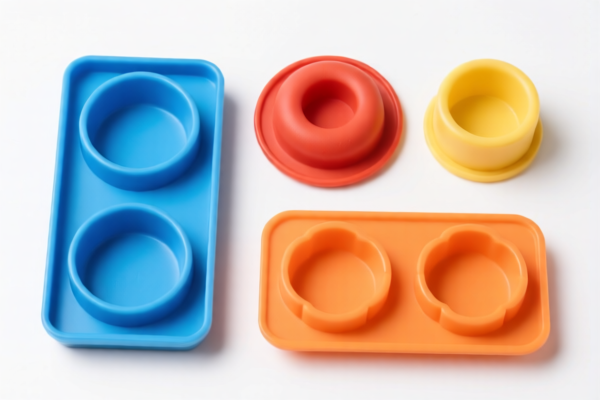
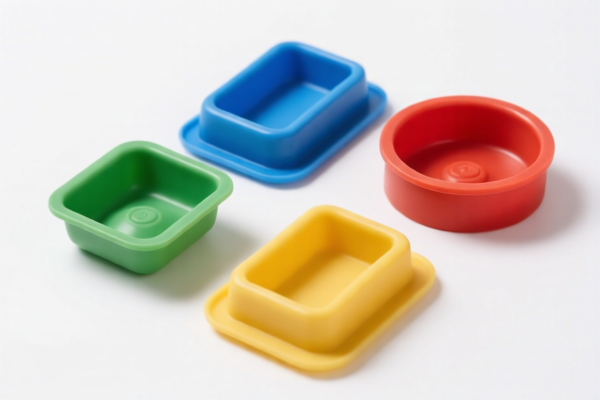


AI Analysis
🕯️ Wax Molds (Casting Molds & Casting Materials)
🌐 HS Code Reference & Customs Clearance Guide | 2026 Latest Tariff Analysis | Professional Strategy for China-US Trade
📌 Part I: Product Definition & Classification – What Exactly Is a "Wax Mold"?
In international trade, "Wax Molds" (蜡模) are primarily used in investment casting (lost-wax casting processes). However, customs authorities may classify them differently based on their primary function, material composition, and structural form. The ambiguity often leads to four distinct HS Code categories, each carrying significantly different tax implications under current US-China trade policies.
⚠️ Key Distinction Points:
- If the wax item is strictly a mold cavity used to create metal/ceramic casts → Heading 8480 (Molds for metal/ceramic casting).
- If the wax item is considered a casting material (like candles or wax sticks used in the process) → Heading 3406 (Candles, tapers, and similar articles).
- If the wax item is classified as a general plastic/wax product without specific mold functionality → Heading 3926 (Other articles of plastics and other materials).
- If the wax item is a specialized non-metallic mold not covered under specific metal/ceramic headings → Heading 3926 (Other articles of plastics) or potentially 8480.49 (Other molds).
📦 Part II: HS Code Classification Details (2026 Latest Tariff Authority Mapping)
| HS Code | Product Description | Application Scenario | Tax Category Basis |
|---|---|---|---|
| 8480.30.00.00 | Molds for metal casting, of wax | Precision investment casting; wax used as the sacrificial pattern/mold body | Primary Mold Function |
| 3406.00.00.00 | Candles and similar articles, of wax | Wax blocks/sticks used as raw material for molding; categorized as "wax products" | Material Composition |
| 3926.90.99.89 | Other articles of plastics and other materials (wax-based) | General wax components, not strictly defined as molds or candles | Fallback/General Category |
| 3926.90.45.90 | Other articles of plastics, non-metallic | Broad category for wax-based non-metallic goods; supplementary scope | Broad Non-Metallic |
| 8480.49.00.90 | Other molds for metal or metal carbides (wax variants) | Wax molds that don't fit the specific 8480.30 definition but still serve mold function | Specialized Mold |
🔍 Critical Note:
- 8480.30.00.00 is the most accurate classification for dedicated wax molds used in casting, as it specifically addresses "molds for casting."
- 3406.00.00.00 is often applied if the wax is sold as "raw material" (e.g., wax pellets, candles) rather than a pre-formed mold.
- 3926 classifications are used when the product’s mold function is ambiguous or when it is considered a general "plastic/wax article."
- Misclassification Risk: Declaring a functional wax mold as "candles" (3406) to avoid higher mold duties is a common audit trigger.
💰 Part III: 2026 Latest Tariff Rate Breakdown (Including Additional Taxes & Policy Surcharges)
✅ Applicable Country: United States (US)
✅ Country of Origin: China (CN)
✅ Effective Date: From November 10, 2025 (for subsequent imports)
🎯 1. 8480.30.00.00 – Molds for Metal Casting (Wax)
| Item | Content |
|---|---|
| Base Tariff | 2.8% (ad valorem) |
| Section 301 Additional Tariff | +25.0% |
| IEEPA Surcharge (122 Clause) | +10.0% |
| Total Effective Rate | 37.8% |
| Tax Calculation | CIF Value × 37.8% |
| De Minimis Eligibility | ❌ No (deny_de_minimis) |
| Legal Basis Path | IEEPA:9903.01.25 → IEEPA:9903.01.24 → USITC:8480.30.00.00 |
📌 Explanation:
- This is the standard mold classification.
- The 37.8% rate reflects the cumulative burden of base tariffs, Section 301 tariffs (25%), and IEEPA surcharges (10%).
- High cost implication: Importers must budget for nearly 38% in duties alone.
🎯 2. 3406.00.00.00 – Candles and Similar Articles (Wax)
| Item | Content |
|---|---|
| Base Tariff | 0.0% (ad valorem) |
| Section 301 Additional Tariff | +7.5% |
| IEEPA Surcharge (122 Clause) | +10.0% |
| Total Effective Rate | 17.5% |
| Tax Calculation | CIF Value × 17.5% |
| De Minimis Eligibility | ❌ No (deny_de_minimis) |
| Legal Basis Path | IEEPA:9903.01.24 → IEEPA:9901.25 → USITC:3406.00.00.00 |
📌 Explanation:
- This classification offers the lowest total tax rate (17.5%).
- Risk Alert: Customs may challenge this if the product is clearly a "mold" and not a "candle." Misdeclaration can lead to penalties, back taxes, and seizure.
- Suitable only if the wax is sold as raw material or candle-like forms for casting.
🎯 3. 3926.90.99.89 – Other Articles of Plastics/Other Materials
| Item | Content |
|---|---|
| Base Tariff | 5.3% (ad valorem) |
| Section 301 Additional Tariff | +7.5% |
| IEEPA Surcharge (122 Clause) | +10.0% |
| Total Effective Rate | 22.8% |
| Tax Calculation | CIF Value × 22.8% |
| De Minimis Eligibility | ❌ No (deny_de_minimis) |
| Legal Basis Path | IEEPA:9903.01.24 → USITC:3926.90.99.89 |
📌 Explanation:
- A middle-ground option for wax products that don't fit neatly into molds or candles.
- Often used for complex wax assemblies or accessories.
🎯 4. 3926.90.45.90 – Other Articles of Plastics (Non-Metallic)
| Item | Content |
|---|---|
| Base Tariff | 3.5% (ad valorem) |
| Section 301 Additional Tariff | +25.0% |
| IEEPA Surcharge (122 Clause) | +10.0% |
| Total Effective Rate | 38.5% |
| Tax Calculation | CIF Value × 38.5% |
| De Minimis Eligibility | ❌ No (deny_de_minimis) |
| Legal Basis Path | IEEPA:9903.01.25 → IEEPA:9903.01.24 → USITC:3926.90.45.90 |
📌 Explanation:
- Despite a low base rate (3.5%), the 25% Section 301 tariff drives the total to 38.5%.
- This is one of the highest cost classifications, often applied when the product is seen as a general plastic article with high trade restrictions.
🎯 5. 8480.49.00.90 – Other Molds for Metal Casting
| Item | Content |
|---|---|
| Base Tariff | 3.1% (ad valorem) |
| Section 301 Additional Tariff | +25.0% |
| IEEPA Surcharge (122 Clause) | +10.0% |
| Total Effective Rate | 38.1% |
| Tax Calculation | CIF Value × 38.1% |
| De Minimis Eligibility | ❌ No (deny_de_minimis) |
| Legal Basis Path | IEEPA:9903.01.25 → IEEPA:9903.01.24 → USITC:8480.49.00.90 |
📌 Explanation:
- Similar to8480.30.00.00, this is a mold classification but for less specific mold types.
- Total rate of 38.1% is nearly identical to the primary mold code.
- Use this only if the product does not meet the strict definition of8480.30.
🛠️ Part IV: Customs Clearance Practical Advice (Operational Pitfalls Guide)
✅ 1. Required Documentation Checklist (Non-Negotiable)
| Document | Mandatory? | Description |
|---|---|---|
| ✅ Product Specification Sheet | ✔️ | Must detail: material (wax type), dimensions, intended use (casting vs. decorative), and weight. |
| ✅ Technical Diagrams/Photos | ✔️ | Clear images showing the mold cavity, shape, and any branding. Must prove "mold" status if claiming 8480. |
| ✅ Commercial Invoice | ✔️ | Must specify "Wax Mold for Investment Casting" or "Wax Casting Material" accurately. |
| ✅ Certificate of Origin (CO) | ✔️ | Critical for verifying China origin and applying correct surcharges. |
| ✅ Packaging List | ✔️ | Detail contents to avoid misclassification as mixed goods. |
| ✅ Third-Party Test Report | ⚠️ Optional | If claiming "non-toxic" or specific wax properties, provide lab reports. |
✅ 2. Declaration Strategies (Key Mnemonics)
🔥 “Function Over Material, Intent Determines Rate!”
| Scenario | Correct HS Code | Wrong Practice | Consequence |
|---|---|---|---|
| Pre-formed wax pattern/mold | 8480.30.00.00 |
Declare as "Candles" (3406) | Penalty + Back Taxes (Customs will inspect for mold function) |
| Wax blocks/pellets for melting | 3406.00.00.00 |
Declare as "Molds" (8480) | Overpaying Taxes (17.5% vs 37.8%) |
| Complex wax assembly | 3926.90.99.89 |
Declare as "Plastic Part" | Ambiguity Risk → Delays |
| Generic wax ornament | 3926.90.45.90 |
N/A | High Tax (38.5%) |
📌 Key Tip:
- If the wax item has a cavity and is designed to be removed after casting, it is a mold → 8480.
- If the wax item is consumed or melted down as raw material, it is a material/candle → 3406.
✅ 3. Special Cases Handling
| Situation | Handling Advice |
|---|---|
| Hybrid Products (Wax + Plastic Core) | Declare as 8480 if mold function is primary; otherwise 3926. |
| OEM Custom Wax Molds | Provide customer design specs to prove "mold" status. Avoid generic names like "wax figure." |
| Small Samples (De Minimis) | ❌ Not Eligible. IEEPA surcharges apply regardless of value. |
| Wax Molds for Jewelry | Specifically mention "Jewelry Investment Casting Molds" to support 8480.30.00.00. |
🌍 Part V: Global Market Comparison (2026 Latest)
| Country/Region | Recommended HS Code | Tariff (China Origin) | Certification | Notes |
|---|---|---|---|---|
| 🇺🇸 USA | 8480.30.00.00 |
37.8% | None specific | High tariff burden. Try 3406 only if truly raw material. |
| 🇨🇳 China | 8480.30.00.00 |
5.0% | None | No additional surcharges. |
| 🇪🇺 EU | 8480.30.00.00 |
0% | CE (if applicable) | No Section 301/IEEPA equivalents. |
| 🇬🇧 UK | 8480.30.00.00 |
0% | UKCA | Post-Brexit trade agreements may apply. |
| 🇯🇵 Japan | 8480.30.00.00 |
0% | PSE | No additional surcharges. |
📌 Conclusion:
- USA is the most challenging market due to cumulative tariffs (Base + 301 + IEEPA).
- Total Tax Range in US: 17.5% to 38.5%, depending on classification.
- Strategic Insight: If your product can be legitimately classified as 3406 (candles/raw material), you save ~20% in duties. However, misclassification is high-risk.
📌 Part VI: Common Errors & Pitfall Avoidance (Lessons Learned)
❌ Error 1: Calling a "Wax Mold" a "Candle" to avoid 37.8% duty.
👉 Result: Customs inspection reveals mold cavity → Seizure + Penalty + Back Taxes.
❌ Error 2: Using generic terms like "Wax Part" or "Wax Item" on invoice.
👉 Result: Customs assigns 3926 (22.8%-38.5%) due to ambiguity → Overpayment or Delay.
❌ Error 3: Ignoring IEEPA Surcharge.
👉 Result: All HS Codes above include +10% IEEPA. Failing to budget for this leads to cash flow issues.
❌ Error 4: Assuming De Minimis (800 USD) exemption applies.
👉 Result: ❌ Denied. IEEPA surcharges apply to all shipments from China, regardless of value.
✅ Correct Declaration Example:
"Wax Investment Casting Mold, Silicone Wax Material, Cavity Design for Jewelry, Model XYZ, Origin: China"
→ Supports 8480.30.00.00 (37.8%)
🎯 Part VII: Conclusion – Precision Classification Saves Costs
🎯 Remember This Mnemonic:
🔹 “Mold Function? Go 8480 (37.8%). Raw Wax? Go 3406 (17.5%). General? Go 3926 (22.8%-38.5%).”
🔹 “122 Clause Adds 10% on Top. Section 301 Adds 25% on Top. Total is High!”
📌 Pro Tip:
- If your wax mold is high-value and low-volume, consider applying for an Exclusion under Section 301 (if available) or Advance Ruling from CBP.
- For high-volume, low-cost wax materials, ensure documentation proves "raw material" status to qualify for 17.5% under 3406.
📣 Immediate Action:
📞 Consult a Customs Broker + Provide Product Photos + Verify Functionality
🚀 Optimize Your HS Code Choice to balance Compliance Risk vs. Tax Cost.
✨ Professional Clearance Starts with Accurate Classification!
💼 Every Percent Saved is Profit Made!
Customer Reviews
About HS Code Classification
The Harmonized System (HS) is an internationally standardized nomenclature developed by the World Customs Organization (WCO) to classify traded products. Over 200 countries use the HS system as the basis for customs tariffs, trade statistics, and import/export regulations.
Each HS code follows a hierarchical structure:
- Chapter (2 digits) — Broad category of goods (e.g., Chapter 84: Machinery and Mechanical Appliances)
- Heading (4 digits) — More specific grouping within the chapter
- Subheading (6 digits) — Internationally standardized breakdown, used by all WCO member countries
- National subdivisions (8-10 digits) — Country-specific extensions for further classification, such as US HTSUS 10-digit codes
Correct HS code classification is essential for smooth customs clearance, accurate duty payment, and compliance with trade regulations. Misclassification can lead to customs delays, overpayment of duties, or penalties.
When importing from CN to US, the applicable tariff rates may include:
- Most-Favored-Nation (MFN) rate — The standard duty rate applied to WTO members
- General rate — Applied to countries without trade agreements
- Trade remedy duties — Additional tariffs such as Section 301 (anti-dumping), Section 232 (national security), or countervailing duties
The information provided on this page is for reference purposes only. For official classification, please consult with your local customs authority or a licensed customs broker.