weather station
CN → US| HS Code | Tariff Rate | Origin | Destination | Doc |
|---|---|---|---|---|
| 9025804000 | 18.5% | CN | US | Official Doc |
| 9025801000 | 36.7% | CN | US | Official Doc |
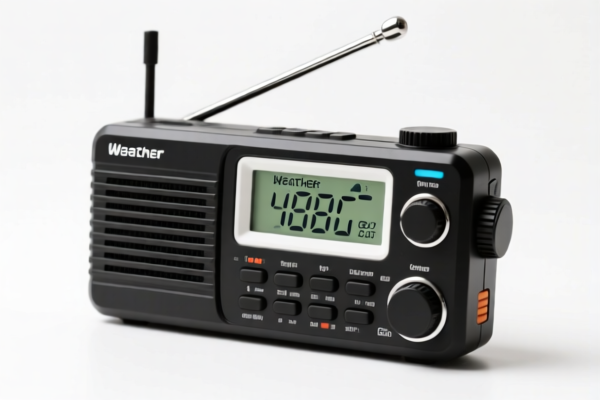
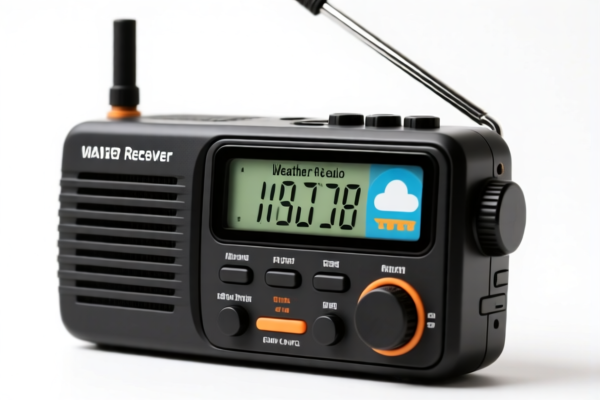
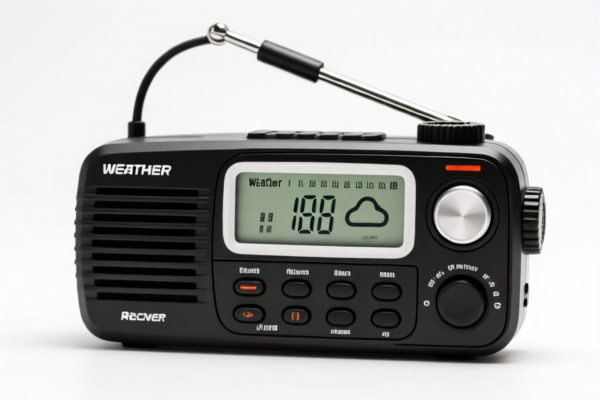
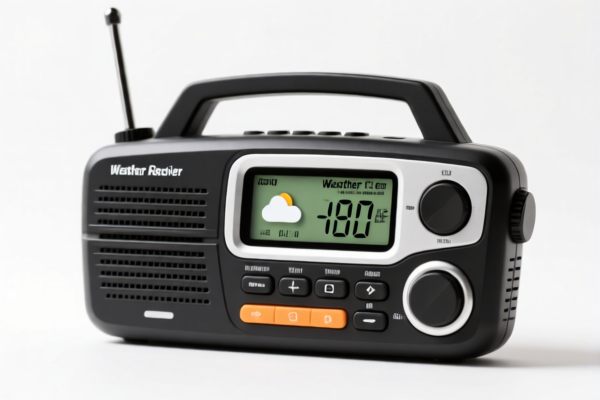
Product Images
AI Analysis
🌦️ Weather Station (Meteorological Instruments)
🌐 HS Code Reference & Customs Clearance Guide | 2026 Latest Tariff Analysis | Professional-Level通关 Strategy
📌 1. Product Definition & Classification: Do You Really Understand "Weather Station"?
A Weather Station is a facility with instruments and equipment for observing the atmosphere to give weather information. In international trade, these are classified under Chapter 90 (Optical, photographic, cinematographic, measuring, checking, precision, medical or surgical instruments and apparatus).
Crucially, they are divided into two main categories based on their functionality: 1. Standard/Non-Recording Instruments: Devices that provide manual readings (e.g., a standard mercury thermometer, a manual barometer, or a simple hygrometer). 2. Recording/Integrated Instruments: Devices that automatically record data over time (e.g., Thermographs, Barographs, Hygrographs) or complex multi-sensor systems that combine temperature, humidity, pressure, and wind data into a single unit.
⚠️ Key Distinction Point:
- If the device is a single, non-recording instrument (like a standalone digital thermometer) → It may fall under different subheadings (e.g., 9025.19).
- If the device is a recording instrument (Thermograph, Barograph, etc.) or a combination specifically designed to record meteorological data → It falls under 9025.80.
- Note for Weather Stations: Most modern "Weather Stations" sold to consumers or professionals are recording devices or combinations. Therefore, they are primarily classified under 9025.80.
📦 2. HS Code Classification Details (2026 Latest Tariff Authority Comparison)
| HS Code | Product Description | Application Scenario | Recording Function? |
|---|---|---|---|
9025.19.00.00 |
Other thermometers and pyrometers, not combined with other instruments | Standalone digital thermometers, simple non-integrated sensors | ❌ No |
9025.80.10.00 |
Other instruments: Electrical | Electronic weather stations, digital sensors with data logging, smart home weather hubs | ✅ Yes (Electrical/Electronic) |
9025.80.40.00 |
Other instruments: Other (including Thermographs, Barographs, Hygrographs) | Mechanical recording charts, classic analog recording stations, hybrid systems not fully electrical in the primary sensing mechanism | ✅ Yes (Mechanical/Recording) |
🔍 Important Reminder:
- Modern Digital Weather Stations (with LCD screens, wireless sensors, and data logging) are overwhelmingly classified under9025.80.10.00(Electrical).
- Classic Analog Recorders (which print or draw graphs on paper) fall under9025.80.40.00.
- If a weather station is sold as a kit with separate sensors and a base unit, it is still considered a "combination of instruments" and falls under 9025.80.
💰 3. 2026 Latest Tariff Rate Details (Including Additional Taxes & Policy Add-ons)
✅ Applicable Country: United States (US)
✅ Country of Origin: China (CN)
✅ Effective Date: November 10, 2025 (and subsequent imports)
🎯 1. 9025.80.10.00 —— Electrical Weather Instruments / Electronic Weather Stations
| Item | Content |
|---|---|
| Base Tariff Rate | 0% (ad valorem) |
| USITC Additional Tax | +0% (No additional Section 301 tariff for this specific code in most recent updates for electrical instruments) |
| IEEPA Additional Tax | +0% (No IEEPA surcharge for this category) |
| Total Tariff Rate | 0% |
| Tax Calculation | CIF Value × 0% |
| De Minimis Eligibility | ✅ Yes (For shipments under $800, no duty is paid regardless of origin, but classification still matters for regulatory compliance) |
| Legal Basis Path | HTSUS:9025.80.10 |
📌 Explanation:
- Unlike displays or solar panels, electrical meteorological instruments currently face 0% total duty for Chinese origins in the US.
- This is a highly favorable classification for exporters.
- However, regulatory compliance (FCC for radio frequency sensors, NTEP for commercial use) is critical, even if duties are zero.
🎯 2. 9025.80.40.00 —— Other Recording Instruments (Thermographs, Barographs, etc.)
| Item | Content |
|---|---|
| Base Tariff Rate | 0% (ad valorem) |
| USITC Additional Tax | +0% |
| IEEPA Additional Tax | +0% |
| Total Tariff Rate | 0% |
| Tax Calculation | CIF Value × 0% |
| De Minimis Eligibility | ✅ Yes |
| Legal Basis Path | HTSUS:9025.80.40 |
📌 Note:
- Mechanical recording instruments also benefit from 0% total duty.
- Ensure that the product description clearly states "Recording Instrument" or "Thermograph" to justify this code over general sensors.
🛠️ 4. Customs Clearance Practical Advice (Combat Pitfalls Guide)
✅ 1. Document Checklist (Essential Documents)
| Document | Required? | Notes |
|---|---|---|
| ✅ Product Specification Sheet | ✔️ | Must clearly state: "Weather Station," model, range, recording type (digital/mechanical). |
| ✅ Circuit Diagram / Block Diagram | ✔️ | Proves the device is a "combination of instruments" or "electrical instrument." |
| ✅ Product Photos | ✔️ | Clear shots of the main unit, sensors, and any recording mechanism (pen chart, LCD). |
| ✅ FCC ID / Certification | ✔️ | Critical! Most weather stations transmit data wirelessly (Zigbee, LoRa, Wi-Fi). Without FCC ID, goods will be detained. |
| ✅ Commercial Invoice | ✔️ | Must explicitly mention "Meteorological Instrument" or "Weather Station." |
| ✅ Packing List | ✔️ | List components separately (Base unit, outdoor sensor, antenna) to show they form a complete system. |
✅ 2. Declaration Tips (Key Mantra)
🔥 “Complete System, Not Loose Parts; Record Function, Clear Code; FCC First, Clearance Smooth!”
| Scenario | Correct Declaration | Wrong Approach |
|---|---|---|
| Complete Digital Weather Station | 9025.80.10.00 |
Misdeclare as "Computer Accessory" (8471) → Risk of classification error. |
| Stand-alone Temperature Sensor | 9025.19.00.00 |
Misdeclare as "Part of Weather Station" → If it’s sold separately, it’s not a combination. |
| Mechanical Chart Recorder | 9025.80.40.00 |
Misdeclare as "Electrical" → Incorrect subheading, potential audit flag. |
| Sensor + Cable Only | 9025.19.00.00 or 8543.70.99.98 |
Misdeclare as "Weather Station" → Over-classification, compliance risk. |
✅ 3. Special Cases Handling
| Case | Handling Advice |
|---|---|
| Smart Home Weather Hub | Ensure FCC ID is provided. If it also acts as a Wi-Fi router, it might be scrutinized, but core function (meteorology) usually keeps it in 9025. |
| Industrial/Scientific Grade | May require NTEP (National Type Evaluation Program) certification if used for commercial trade (e.g., airport weather reports). |
| Kit Assembled by Buyer | If shipped in parts, each part must be classified correctly. If assembled into a system, ensure documentation proves intent to combine. |
| USB Data Loggers | If they only store data without real-time sensor integration, they may fall under 8471 (Data Processing Machines) or 8543 (Electrical Machines). Check with a broker. |
🌍 5. Global Market Comparison (2026 Latest)
| Country/Region | Recommended HS Code | Tariff Rate | Certification Required | Notes |
|---|---|---|---|---|
| 🇺🇸 USA | 9025.80.10.00 |
0% | FCC ID, RoHS | Zero duty is excellent; FCC is mandatory. |
| 🇨🇳 China | 9025.80.10.00 |
0%~5% | CCC (if applicable) | Low import duty; focus on domestic standards. |
| 🇪🇺 EU | 9025.80.10.00 |
0% | CE Mark, RoHS, WEEE | No additional tariffs; CE marking is strictly enforced. |
| 🇬🇧 UK | 9025.80.10.00 |
0% | UKCA, RoHS | Post-Brexit rules apply; UKCA marking required. |
| 🇯🇵 Japan | 9025.80.10.00 |
0%~5% | PSE (Electrical) | PSE marking required for powered devices. |
📌 Conclusion:
- Weather Stations enjoy 0% tariffs in most major markets (US, EU, China).
- The real barrier is not tariff, but compliance: FCC (US), CE (EU), and PSE (Japan) are the key hurdles.
- Misclassification as "Electrical Appliances" (8543) or "Data Processors" (8471) can lead to higher duties and unnecessary compliance checks.
📌 6. Common Mistakes & Pitfall Guide (Blood & Tears Lessons)
❌ Mistake 1: Declaring a Wireless Weather Station as a "Non-Electronic Instrument"
👉 Consequence: Customs may reject the classification because modern stations are electrical/electronic. Requires FCC compliance.
❌ Mistake 2: Shipping Loose Sensors separately from the Base Unit and declaring them as one "Weather Station"
👉 Consequence: If not in the same shipment or clearly intended as a kit, customs may classify the sensor separately (9025.19) and the base unit differently, leading to confusion and delays.
❌ Mistake 3: Ignoring FCC ID for wireless sensors
👉 Consequence: Detention and Return/ Destruction. This is the #1 reason for weather station delays in the US.
❌ Mistake 4: Using generic names like "Sensor" or "Meter" in the invoice
👉 Consequence: Ambiguity leads to manual examination, slowing down clearance. Use specific terms: "Automatic Recording Weather Station."
✅ Correct Declaration Example:
"Electronic Weather Station, Model WS-2000, Includes Outdoor Temp/Humidity Sensor, Rain Gauge, and Indoor Base Unit with LCD Display and Data Logger. FCC ID: ABC-123456. HS Code: 9025.80.10.00."
🎯 7. Conclusion: Precise Classification, Smooth Clearance
🎯 Remember the Mantra:
🔹 “Wireless Needs FCC, Electrical Needs 9025.80.10. Zero Duty is Sweet, But Compliance is Key.”
🔹 “Don’t Split the Kit, Declare as a Whole, Avoid the Audit Toll.”
📌 Pro Tip:
If your weather station includes GPS or Cellular Connectivity, ensure these modules also have their own certifications (FCC ID).
Recommend Advance Ruling from CBP if you have a hybrid device (e.g., a weather station that also functions as a home hub) to avoid classification disputes.
📣 Call to Action:
📞 Contact a Licensed Customs Broker + Provide FCC ID + Ensure CE/UKCA Marks
🚀 Let Your Weather Station Clear Customs Fast, Reach Markets Globally, and Grow Your Business!
✨ Professional Clearance Starts with Precise Classification!
💼 Every Zero Percent Duty is Earned Through Compliance!
Customer Reviews
About HS Code Classification
The Harmonized System (HS) is an internationally standardized nomenclature developed by the World Customs Organization (WCO) to classify traded products. Over 200 countries use the HS system as the basis for customs tariffs, trade statistics, and import/export regulations.
Each HS code follows a hierarchical structure:
- Chapter (2 digits) — Broad category of goods (e.g., Chapter 84: Machinery and Mechanical Appliances)
- Heading (4 digits) — More specific grouping within the chapter
- Subheading (6 digits) — Internationally standardized breakdown, used by all WCO member countries
- National subdivisions (8-10 digits) — Country-specific extensions for further classification, such as US HTSUS 10-digit codes
Correct HS code classification is essential for smooth customs clearance, accurate duty payment, and compliance with trade regulations. Misclassification can lead to customs delays, overpayment of duties, or penalties.
When importing from CN to US, the applicable tariff rates may include:
- Most-Favored-Nation (MFN) rate — The standard duty rate applied to WTO members
- General rate — Applied to countries without trade agreements
- Trade remedy duties — Additional tariffs such as Section 301 (anti-dumping), Section 232 (national security), or countervailing duties
The information provided on this page is for reference purposes only. For official classification, please consult with your local customs authority or a licensed customs broker.