weatherstrip
CN → US| HS Code | Tariff Rate | Origin | Destination | Doc |
|---|---|---|---|---|
| 4016931010 | 37.5% | CN | US | Official Doc |
| 4016935010 | 37.5% | CN | US | Official Doc |
| 3926904590 | 38.5% | CN | US | Official Doc |
| 3926904510 | 38.5% | CN | US | Official Doc |
| 4016935050 | 37.5% | CN | US | Official Doc |
Product Images
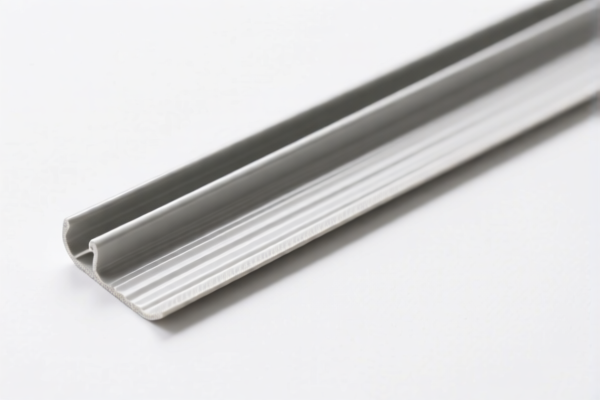
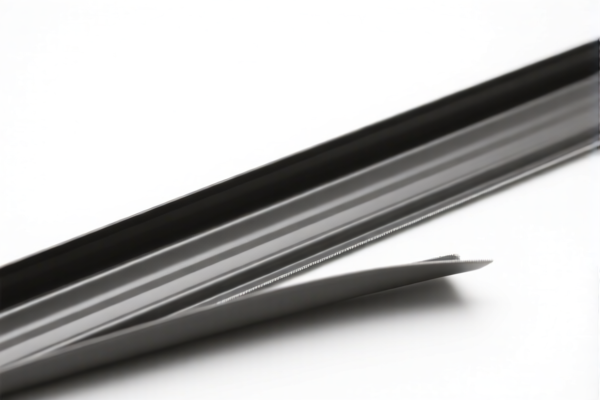
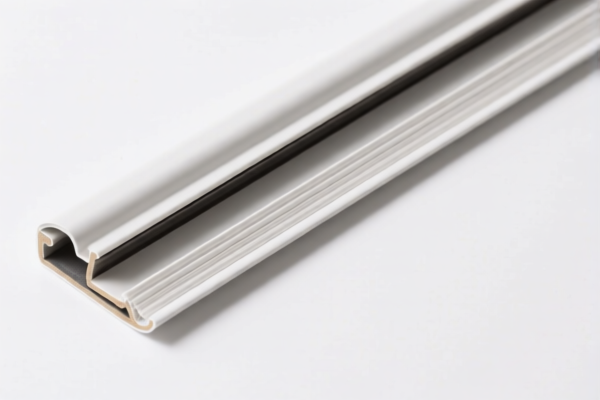
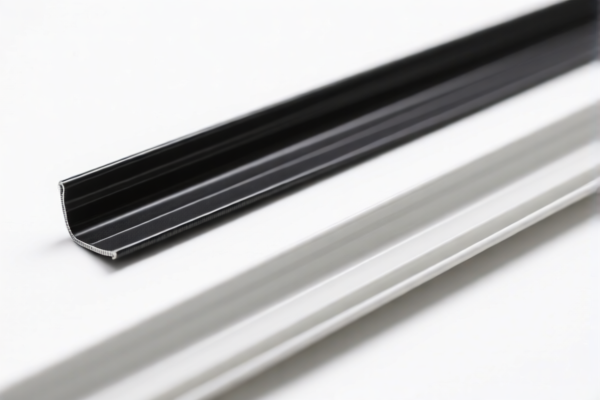
AI Analysis
🚪 Weatherstrips (Sealing Strips for Doors, Windows, and Vehicles)
🌐 HS Code Reference & Customs Clearance Guide | 2026 Latest Tariff Analysis | Professional Clearance Strategy
📌 I. Product Definition & Classification: Do You Really Understand “Weatherstrips”?
Weatherstrips are essential components used to seal gaps between movable components (such as doors, windows, or vehicle bodies) and fixed frames. Their primary function is to prevent the entry of air, water, dust, noise, and pests. In international trade, they are primarily classified based on their material composition and form factor, falling mainly under Chapter 40 (Rubber) or Chapter 39 (Plastics).
Rubber Weatherstrips (4016.93...):
- Material: Usually ethylene-propylene diene monomer (EPDM), silicone, or natural rubber.
- Characteristics: High elasticity, heat resistance, and durability. Commonly used in automotive and high-end construction.
- Logic: Classified as "other articles of vulcanized rubber" specifically for sealing purposes.
Plastic Weatherstrips (3926.90...):
- Material: PVC, TPE (Thermoplastic Elastomer), or other plastics.
- Characteristics: Cost-effective, easy to install, often used in standard windows, doors, and light-duty applications.
- Logic: Classified as "other articles of plastics" or "other gaskets and washers."
⚠️ Key Distinction Point:
- If the material is explicitly Rubber (including TPE classified as rubber in some contexts, but strictly EPDM/Silicone here) → Aim for 4016.93
- If the material is explicitly Plastic (PVC, rigid/flexible plastic) → Aim for 3926.90
- If material is unknown/undefined, customs often infer based on typical market standards (e.g., rubber for automotive, plastic for general construction) or apply the most likely category.
📦 II. HS Code Classification Details (2026 Latest Tariff Authority Comparison)
| HS Code | Product Description | Application Scenario | Inferred Material | Key Logic |
|---|---|---|---|---|
4016.93.10.10 |
Sealing strips, form factor falls under "sealing parts," material undefined but inferred as rubber/rubber-like sealing articles. | Automotive seals, industrial sealing gaskets. | Rubber (Inferred) | Fits the category of "sealing parts" under vulcanized rubber. |
4016.93.50.10 |
Sealing strips, usage is "sealing part," material unspecified but inferred as rubber due to sealing function. | Construction door/window seals, automotive doors. | Rubber (Inferred) | Matches "other articles of vulcanized rubber" for sealing. |
3926.90.45.90 |
Sealing strips, categorized as "gaskets, washers, and sealing parts," inferred as plastic. | Standard PVC window seals, door sweeps. | Plastic | No conflict with "other sealing parts not O-rings" in Chapter 39. |
3926.90.45.10 |
Sealing strips, form factor is "sealing part," material inferred as plastic or rubber (but Chapter 39 dominates). | General purpose plastic seals. | Plastic/Rubber Hybrid Logic | Fits within Chapter 39 "other articles of plastics." |
4016.93.50.50 |
Door/window weatherstrips, material inferred as rubber, form matches sealing parts. | High-quality EPDM window seals, car door seals. | Rubber | Specifically matches "door/window" sealing context in rubber category. |
🔍 Key Reminder:
- Rubber vs. Plastic: The biggest source of misclassification. If you declare "Weatherstrip" without material, customs may use their discretion.
- Form vs. Function: Both 4016.93 and 3926.90 rely on "sealing part" logic.
- O-Rings Excluded: Note that O-rings often have different subheadings; weatherstrips are typically "other" shapes.
💰 III. 2026 Latest Tariff Rate Detailed Breakdown (Including Surtaxes & Policy Add-ons)
✅ Applicable Country: United States (US)
✅ Country of Origin: China (CN)
✅ Effective Date: November 10, 2025 onwards (including subsequent imports)
🎯 1. Rubber Weatherstrips (4016.93.10.10, 4016.93.50.10, 4016.93.50.50)
These codes fall under Vulcanized Rubber Articles.
| Item | Content |
|---|---|
| Basic Tariff Rate | 2.5% (ad valorem) |
| Section 301 Surcharge | +25.0% (Applied to Chinese imports under USITC Footnote 9903.88.01) |
| Section 122 Tariff (IEEPA) | +10.0% (Specific surcharge for certain Chinese rubber/plastic goods, effective from Nov 2025) |
| Total Tax Rate | 37.5% |
| Tax Calculation | CIF Value × 37.5% |
| De Minimis Exemption | ❌ Not Eligible (deny_de_minimis) |
| Legal Basis Path | IEEPA:9903.01.25 → IEEPA:9903.01.24 → USITC:4016.93.xxxx → FOOTNOTE:9903.88.01 |
📌 Explanation:
- "Basic 2.5%": Standard MFN rate for rubber articles.
- "301 Surtax 25%": The major trade war tariff.
- "Section 122 10%": An additional layer of protectionist tariff on specific rubber/plastic products.
- Total 37.5%: This is a high cost. Importers must calculate carefully.
🎯 2. Plastic Weatherstrips (3926.90.45.90, 3926.90.45.10)
These codes fall under Articles of Plastics.
| Item | Content |
|---|---|
| Basic Tariff Rate | 3.5% (ad valorem) |
| Section 301 Surcharge | +25.0% (Applied to Chinese imports under USITC Footnote 9903.88.01) |
| Section 122 Tariff (IEEPA) | +10.0% (Specific surcharge for certain Chinese rubber/plastic goods) |
| Total Tax Rate | 38.5% |
| Tax Calculation | CIF Value × 38.5% |
| De Minimis Exemption | ❌ Not Eligible (deny_de_minimis) |
| Legal Basis Path | IEEPA:9903.01.25 → IEEPA:9903.01.24 → USITC:3926.90.45 → FOOTNOTE:9903.88.01 |
📌 Note:
- Plastic weatherstrips are slightly more expensive in total tax (38.5% vs 37.5%) due to a higher basic rate (3.5% vs 2.5%).
- Both categories suffer from the same heavy surcharges (25% + 10%).
🛠️ IV. Customs Clearance Practical Advice (Real-World Pitfall Guide)
✅ 1. Document Checklist (None Are Optional)
| Document | Mandatory? | Description |
|---|---|---|
| ✅ Product Specification Sheet | ✔️ | Must specify: Material (EPDM, PVC, Silicone), Dimensions, Hardness, Color. |
| ✅ Material Composition Statement | ✔️ | Explicitly state "100% EPDM Rubber" or "70% PVC" to avoid inference. |
| ✅ Product Photos (Clear) | ✔️ | Show cross-section, installation context, and any brand/logo. |
| ✅ Commercial Invoice | ✔️ | Clearly describe item as "EPDM Rubber Weatherstrip for Car Doors" (be specific). |
| ✅ Packing List | ✔️ | Weight and dimensions per carton. |
| ✅ Certificate of Origin (CO) | ✔️ | Required for duty drawback claims if applicable (though limited here). |
✅ 2. Declaration Strategy (Key Mantra)
🔥 “Material First, Form Second, Specificity Wins, Ambiguity Loses!”
| Situation | Correct Declaration | Wrong Approach |
|---|---|---|
| Automotive Rubber Seal | 4016.93.50.50 + "EPDM Rubber Door Seal" |
Vague "Rubber Strip" → May be questioned. |
| PVC Window Seal | 3926.90.45.90 + "PVC Weatherstrip" |
"Plastic Seal" → May be misclassified. |
| Mixed Material Seal | Declare primary material. If >50% rubber, lean 4016.93. | Don't hide material. |
| Unknown Material | Provide lab report or assume typical (Rubber for auto, Plastic for construction). | Do not leave blank. |
✅ 3. Special Circumstances Handling
| Situation | Handling Advice |
|---|---|
| OEM Custom Seals | Provide customer drawings and material specs. Proves specific use, reducing ambiguity. |
| TPE (Thermoplastic Elastomer) | This is tricky. If vulcanized, it may go to 4016. If not, it may go to 3926. Declare material processing method! |
| With Adhesive Backing | Still classified by main material. Do not split into "tape" and "strip." |
| Samples for Evaluation | If value < $800, check if De Minimis applies. However, for China-origin rubber/plastic, De Minimis is often denied (see tax section above). Assume full duty applies. |
🌍 V. Global Market Customs Comparison (2026 Latest)
| Country/Region | Recommended HS Code | Tariff (China Origin) | Certification | Remarks |
|---|---|---|---|---|
| 🇺🇸 USA | 4016.93 or 3926.90 |
37.5% - 38.5% | None specific | High tariffs due to 301 + 122. |
| 🇨🇳 China | 4016.93 or 3926.90 |
2.5% - 3.5% | CCC (if applicable) | Low import duty. |
| 🇪🇺 EU | 4016.93 or 3926.90 |
0% - 4% | REACH (Chemical safety) | No surcharges. REACH compliance is key. |
| 🇦🇺 Australia | 4016.93 or 3926.90 |
5% | None specific | Moderate duty. |
| 🇯🇵 Japan | 4016.93 or 3926.90 |
0% - 3.5% | None specific | Low duty. |
📌 Conclusion:
- USA is the most expensive market due to叠加 (stacked) tariffs (Basic + 301 + 122).
- EU and Japan are more favorable if REACH/JIS standards are met.
- Material Declaration is Critical in the US to avoid misclassification penalties.
📌 VI. Common Mistakes & Pitfalls (Blood & Tears Lessons)
❌ Mistake 1: Declaring as "Plastic Parts" when it's Rubber
👉 Consequence: If classified under 3926, tax is 38.5% vs 37.5%. Small difference, but misdeclaration leads to fines.
❌ Mistake 2: Declaring as "Rubber Parts" when it's Plastic
👉 Consequence: If classified under 4016, tax is 37.5% vs 38.5%. But if customs finds it's plastic, they may penalize for "undervalued" or "wrong class."
❌ Mistake 3: Using "Weatherstrip" without material in description
👉 Consequence: Customs uses their own inference. If they pick 3926.90.45.10 (Plastic) for a rubber item, you might face scrutiny. Be Specific.
❌ Mistake 4: Assuming De Minimis ($800) applies
👉 Consequence: Do not assume! For China-origin rubber/plastic seals under Section 122, de minimis is denied. You must pay full duty on small shipments.
✅ Correct Practice:
"EPDM Rubber Weatherstrip for Automotive Doors, 5m Roll, Black, Self-Adhesive, Model XYZ, Compliant with ISO 1781"
🎯 VII. Conclusion: Precision in Classification Saves Money!
🎯 Remember the Mantra:
🔹 "Rubber is 4016, Plastic is 3926."
🔹 "US Tariff is 37.5% (Rubber) / 38.5% (Plastic)."
🔹 "No De Minimis for China Origin."
🔹 "Declare Material, Declare Form, Declare Use."
📌 Pro Tip:
If your weatherstrips are shipped from Vietnam, Mexico, or Thailand, check if they qualify for IEEPA Exemptions or USMCA (for Mexico) preferential rates. The US tariff burden can be significantly reduced with proper Country of Origin management.
📣 Immediate Action:
📞 Contact a professional customs broker + Provide Material Test Reports + Apply for Advance Ruling if shipping in bulk.
🚀 Let your weatherstrips clear smoothly, avoid audits, and maximize profit margins!
✨ Professional Clearance Starts with Precise Classification!
💼 Every cent of tariff cost deserves precise calculation!
Customer Reviews
About HS Code Classification
The Harmonized System (HS) is an internationally standardized nomenclature developed by the World Customs Organization (WCO) to classify traded products. Over 200 countries use the HS system as the basis for customs tariffs, trade statistics, and import/export regulations.
Each HS code follows a hierarchical structure:
- Chapter (2 digits) — Broad category of goods (e.g., Chapter 84: Machinery and Mechanical Appliances)
- Heading (4 digits) — More specific grouping within the chapter
- Subheading (6 digits) — Internationally standardized breakdown, used by all WCO member countries
- National subdivisions (8-10 digits) — Country-specific extensions for further classification, such as US HTSUS 10-digit codes
Correct HS code classification is essential for smooth customs clearance, accurate duty payment, and compliance with trade regulations. Misclassification can lead to customs delays, overpayment of duties, or penalties.
When importing from CN to US, the applicable tariff rates may include:
- Most-Favored-Nation (MFN) rate — The standard duty rate applied to WTO members
- General rate — Applied to countries without trade agreements
- Trade remedy duties — Additional tariffs such as Section 301 (anti-dumping), Section 232 (national security), or countervailing duties
The information provided on this page is for reference purposes only. For official classification, please consult with your local customs authority or a licensed customs broker.