weed eater
CN → US| HS Code | Tariff Rate | Origin | Destination | Doc |
|---|---|---|---|---|
| 8467290070 | 17.5% | CN | US | Official Doc |
| 8467895060 | 17.5% | CN | US | Official Doc |
| 2918992010 | 24.0% | CN | US | Official Doc |
| 2933392300 | 16.5% | CN | US | Official Doc |
| 846721 | 0.0% | CN | US | Official Doc |
| 846729 | 0.0% | CN | US | Official Doc |
| 4011908010 | 38.4% | CN | US | Official Doc |
| 4011901010 | 35.0% | CN | US | Official Doc |
Product Images
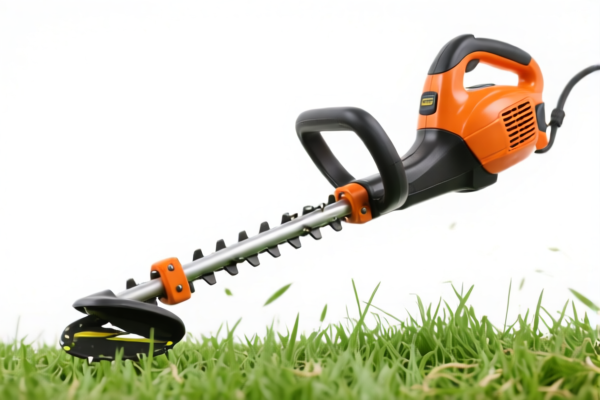
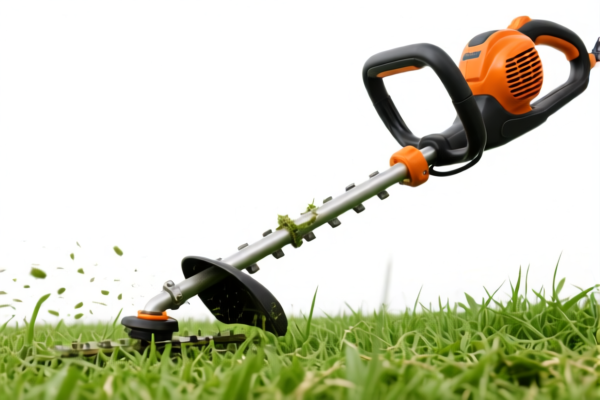
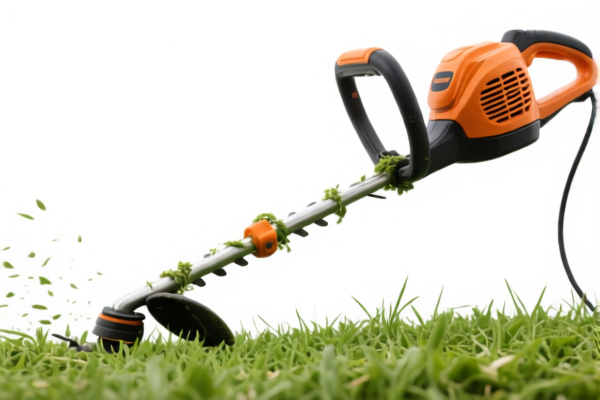
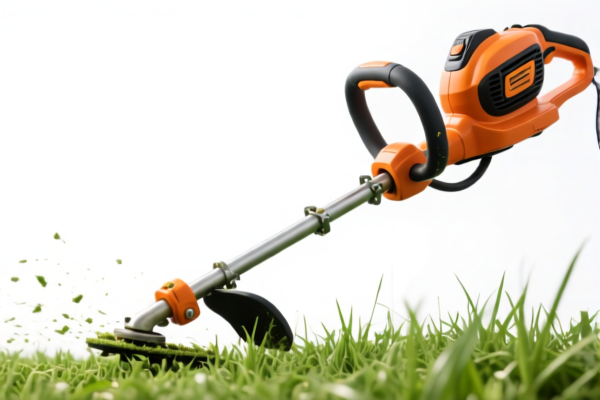
AI Analysis
🌿 Weed Eater (Grass & Weed Trimmers/Edgers)
🌐 HS Code Reference & Customs Clearance Guide | 2026 Latest Tariff Analysis | Professional Clearance Strategy
📌 1. Product Definition & Classification: What exactly is a "Weed Eater"?
"Weed Eater" is a common generic term for hand-held power tools designed for cutting grass, weeds, and shrubbery. In international trade, these products are primarily classified under Chapter 84 (Nuclear reactors, boilers, machinery and mechanical appliances).
They are typically categorized by their power source: * Electric Motor Powered: Battery-operated or corded electric trimmers. * Internal Combustion Engine: Gas-powered string trimmers.
⚠️ Key Distinction Point: - If the tool has a self-contained electric motor, it generally falls under 8467.21 (Hand-held) or 8467.29 (Other). - If the tool is non-electric (e.g., manual) or has a specific horticultural design not covered by standard motorized headings, it may fall under 8467.89. - Note: Accessories like tires for golf carts/lawnmowers are classified separately under Chapter 40.
📦 2. HS Code Classification Details (2026 Latest Tariff Authority Comparison)
Based on the provided data, here are the relevant HS Codes and their specific tax implications.
| HS Code | Product Description | Applicability | Tax Status (China Origin → US) |
|---|---|---|---|
8467.29.00.70 |
Tools with self-contained electric motor: Other Grass and weed trimmers/edgers | Standard electric weed eaters with self-contained motors | 🟢 7.5% (Base 0% + Add-on 7.5%) |
8467.89.50.60 |
Other hand-held power tools: Other, designed for use in agriculture or horticulture | Non-electric or specific horticultural tools not elsewhere specified | 🟢 7.5% (Base 0% + Add-on 7.5%) |
8467.21 |
Electrically powered hand-held garden tools (e.g., weed eaters) | Hand-held electric trimmers | 🔴 Error/Unknown ("Failed to retrieve tax information") |
8467.29 |
Other hand-held power tools for gardening/agricultural use | General category for non-specified garden tools | 🔴 Error/Unknown ("Failed to retrieve tax information") |
4011.90.80.10 |
Pneumatic tires: Of a kind used on golf carts, all-terrain vehicles, turf/lawn/garden | Tires ONLY for lawn equipment/golf carts | 🟠 28.4% (Base 3.4% + Add-on 25.0%) |
4011.90.10.10 |
Pneumatic tires: Herring-bone tread for golf carts/lawn/garden | Tires ONLY (Herring-bone pattern) | 🟠 25.0% (Base 0% + Add-on 25.0%) |
2918.99.20.10 |
Carboxylic acids: 2,4-Dichlorophenoxyacetic acid (2,4-D) | HERBICIDE CHEMICAL (Active ingredient) | 🟢 0.0% (Base 0% + Add-on 0%) |
2933.39.23.00 |
Heterocyclic compounds: o-Paraquat dichloride | HERBICIDE CHEMICAL (Active ingredient) | 🟢 0.0% (Base 0% + Add-on 0%) |
🔍 Critical Reminder: - Tools vs. Chemicals: The term "Weed Eater" usually refers to the tool (HS 8467). However, if you are importing weed-killing chemicals (like 2,4-D or Paraquat), they fall under HS 2918 or 2933 with 0% tax. - Tires vs. Tools: Tires for lawn equipment are NOT classified with the trimmers. They have much higher tariffs (25-28.4%).
💰 3. 2026 Latest Tariff Rate Breakdown (Including Surcharge)
✅ Applicable Country: United States (US)
✅ Origin: China (CN)
✅ Effective Date: 2025-11-10 onwards (Includes subsequent imports)
🎯 1. 8467.29.00.70 —— Grass and Weed Trimmers/Edgers (Electric Motor)
| Item | Content |
|---|---|
| Base Tariff | 0.0% |
| Surcharge (Section 301) | +7.5% |
| Total Tariff | 7.5% |
| Tax Calculation | CIF Value × 7.5% |
| De Minimis Exemption? | ❌ No (Not eligible for de minimis exemption under current rules for these categories) |
| Legal Basis Path | USITC:8467.29.00.70 → Section 301 Footnote |
📌 Explanation: - Electric weed trimmers with self-contained motors are subject to a 7.5% additional tariff on top of a 0% base rate. - This is significantly lower than the 25%+ tariffs applied to many other electronics, making this a relatively favorable category for hardware.
🎯 2. 8467.89.50.60 —— Other Horticultural Tools (Hand-held)
| Item | Content |
|---|---|
| Base Tariff | 0.0% |
| Surcharge (Section 301) | +7.5% |
| Total Tariff | 7.5% |
| Tax Calculation | CIF Value × 7.5% |
| De Minimis Exemption? | ❌ No |
| Legal Basis Path | USITC:8467.89.50.60 → Section 301 Footnote |
📌 Note: - Applies to other hand-held power tools for agriculture/horticulture not specified elsewhere (e.g., certain non-electric or specialized tools). - Same tax rate as electric trimmers: 7.5%.
🎯 3. 4011.90.80.10 & 4011.90.10.10 —— Tires for Lawn/Garden Equipment
| Item | Content |
|---|---|
| Base Tariff | 0.0% or 3.4% |
| Surcharge (Section 301) | +25.0% |
| Total Tariff | 25.0% - 28.4% |
| Tax Calculation | CIF Value × (25.0% to 28.4%) |
| De Minimis Exemption? | ❌ No |
📌 Warning: - If you are importing tires separately (not with the tool), the tariff jumps drastically to 25% or 28.4%. - Do not mix tire shipments with tool shipments to avoid misclassification penalties.
🎯 4. 2918.99.20.10 & 2933.39.23.00 —— Herbicides (2,4-D & Paraquat)
| Item | Content |
|---|---|
| Base Tariff | 0.0% |
| Surcharge (Section 301) | 0.0% |
| Total Tariff | 0.0% |
| Tax Calculation | $0 |
| De Minimis Exemption? | ❌ No (Chemicals often require special EPA/USDA permits regardless of tariff) |
📌 Important: - These are chemical products, not tools. - While the tariff is 0%, they require strict regulatory compliance (EPA registration, USDA permits) which is often more challenging than tariff payment.
🛠️ 4. Customs Clearance Practical Advice (Avoid Pitfalls)
✅ 1. Document Checklist (Non-Negotiable)
| Document | Required? | Purpose |
|---|---|---|
| ✅ Product Specification Sheet | ✔️ | Must clearly state: "Power Tool, Electric Motor, Grass Trimmer" |
| ✅ User Manual & Diagrams | ✔️ | Proves it is a "weed eater" and not a "garden hose" or "tool accessory" |
| ✅ Commercial Invoice | ✔️ | Must list HS Code 8467.29.00.70 explicitly |
| ✅ Proof of Origin | ✔️ | To claim 0% base rate |
| ✅ EPA/CE Certification | ✔️ | For electric tools (safety) and chemical products (if applicable) |
✅ 2. Declaration Tips (Key Mantra)
🔥 "Specify Motor, Avoid 'Garden Tool' Ambiguity, Separate Tires!"
| Scenario | Correct Declaration | Wrong Practice |
|---|---|---|
| Electric Weed Eater | "Electric Motor Grass Trimmer, HS 8467.29.00.70" | "Garden Accessory" → Risk of wrong classification |
| Gas-Powered Trimmer | "Internal Combustion Engine Weed Eater" → Check if under 8467.29 or other |
Use 8467.21 if not applicable |
| Tires for Lawnmower | "Rubber Tires for Agricultural Use, HS 4011.90.80.10" | Declare with the trimmer → Misclassification Penalty |
| Herbicide (2,4-D) | "2,4-Dichlorophenoxyacetic Acid, HS 2918.99.20.10" | Declare as "Garden Chemical" without HS code → EPA Hold |
✅ 3. Special Situations
| Situation | Handling Advice |
|---|---|
| Battery-Powered Tools | Ensure lithium batteries are declared properly (UN38.3 test report required for shipping) |
| Charged-in-Case | If the trimmer comes with a battery inside, declare both as part of the same shipment under the tool's HS code |
| OEM Custom Parts | If importing "rotating heads" or "blades" separately, check if they are "parts" (HS 8467.90) or "tools" |
| Herbicide Imports | EPA Prior Notice is mandatory. Even with 0% tax, customs will hold the shipment without EPA permit numbers |
🌍 5. Global Market Clearance Comparison (2026 Latest)
| Country/Region | Recommended HS Code | Tariff (China Origin) | Certification Required | Notes |
|---|---|---|---|---|
| 🇺🇸 USA | 8467.29.00.70 |
7.5% | UL/ETL, FCC, EPA (for chemical parts) | High compliance focus |
| 🇨🇳 China | 8467.29.00.70 |
~9% | CCC (for motor parts) | Standard import |
| 🇪🇺 EU | 8467.89 |
~6.5% | CE, UKCA, ErP | Strict safety directives |
| 🇯🇵 Japan | 8467.89 |
~6% | PSE, JIS | Quality standards high |
📌 Conclusion: - USA is the most complex due to Section 301 tariffs (7.5% for tools, 0% for chemicals). - EU/Japan have lower tariffs but stricter safety certifications (CE/PSE). - Chemicals (2,4-D/Paraquat) have 0% tariff in the US but require EPA approval, which is the real barrier.
📌 6. Common Mistakes & Pitfall Guide (Blood & Tears Lessons)
❌ Mistake 1: Declaring "Weed Eater" as "Garden Hose" or "Tool Part" 👉 Consequence: Wrong HS code → 7.5% tax becomes 8-12% + fines.
❌ Mistake 2: Mixing Tires with Trimmers in one shipment 👉 Consequence: Tires taxed at 25-28.4%, Trimmers at 7.5% → Bill shock!
❌ Mistake 3: Importing Herbicides (2,4-D) without EPA Permit 👉 Consequence: Shipment seized/destroyed by CBP/EPA, despite 0% tariff.
❌ Mistake 4: Ignoring Battery Regulations for Electric Tools 👉 Consequence: Carrier refusal or customs hold due to unsafe lithium battery declaration.
✅ Correct Practice:
"Electric Grass Trimmer, 18V Lithium Battery, Model XYZ, Compliant with UL/ETL Standards, HS Code: 8467.29.00.70"
🎯 7. Conclusion: Professional Declaration Saves Money!
🎯 Remember the Mantra:
🔹 "Tools: 7.5% (Electric), Tires: 25%+, Chemicals: 0% (But Hard Permit)!"
🔹 "HS Code is Key, Tariff Differs 20%, Declaration Step Matters, Avoid Fines!"
📌 Tips: - If your weed eaters are originally from Vietnam or Mexico, check for USMCA/FTA exemptions which may reduce or eliminate the 7.5% tariff. - For chemicals, start the EPA registration process 3-6 months before shipping. - Consider applying for an Advance Ruling (ACE) from US CBP to confirm the HS code and tariff before shipment.
📣 Immediate Action:
📞 Contact a licensed customs broker + Provide Product Photos + Request HS Code Advance Ruling
🚀 Let your weed eaters clear smoothly, reduce costs, and maximize profits!
✨ Professional Clearance Starts with Accurate Classification!
💼 Every Dollar of Cost Deserves Precision!
Customer Reviews
About HS Code Classification
The Harmonized System (HS) is an internationally standardized nomenclature developed by the World Customs Organization (WCO) to classify traded products. Over 200 countries use the HS system as the basis for customs tariffs, trade statistics, and import/export regulations.
Each HS code follows a hierarchical structure:
- Chapter (2 digits) — Broad category of goods (e.g., Chapter 84: Machinery and Mechanical Appliances)
- Heading (4 digits) — More specific grouping within the chapter
- Subheading (6 digits) — Internationally standardized breakdown, used by all WCO member countries
- National subdivisions (8-10 digits) — Country-specific extensions for further classification, such as US HTSUS 10-digit codes
Correct HS code classification is essential for smooth customs clearance, accurate duty payment, and compliance with trade regulations. Misclassification can lead to customs delays, overpayment of duties, or penalties.
When importing from CN to US, the applicable tariff rates may include:
- Most-Favored-Nation (MFN) rate — The standard duty rate applied to WTO members
- General rate — Applied to countries without trade agreements
- Trade remedy duties — Additional tariffs such as Section 301 (anti-dumping), Section 232 (national security), or countervailing duties
The information provided on this page is for reference purposes only. For official classification, please consult with your local customs authority or a licensed customs broker.