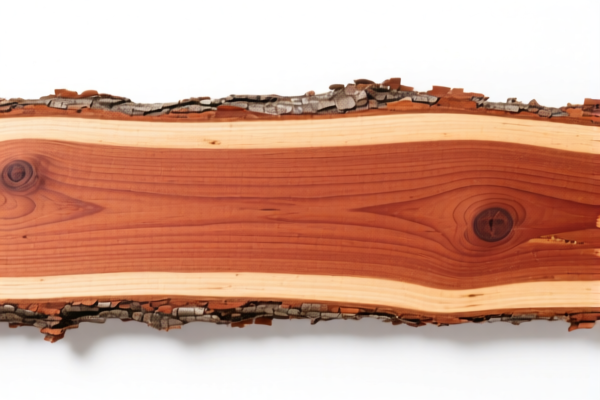
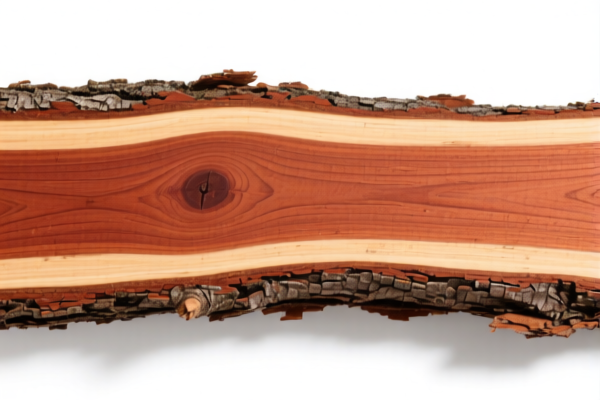
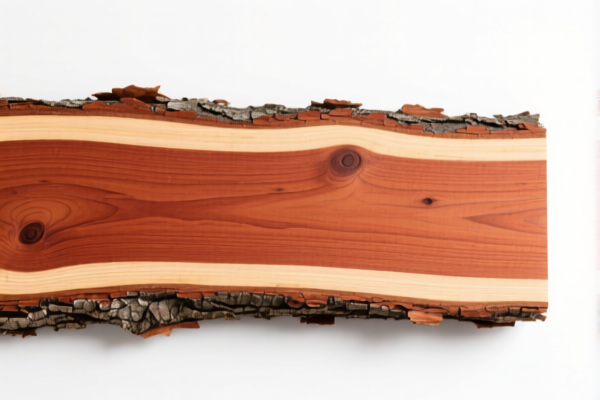
western red cedar logs with bark
CN → US| HS Code | Tariff Rate | Origin | Destination | Doc |
|---|---|---|---|---|
| 4401120000 | 35.0% | CN | US | Official Doc |
| 4401110000 | 35.0% | CN | US | Official Doc |
| 4403210130 | 35.0% | CN | US | Official Doc |
| 4403220165 | 35.0% | CN | US | Official Doc |
| 4403220165 | 35.0% | CN | US | Official Doc |
Product Images

AI Analysis
🌲 Western Red Cedar Logs with Bark
🌐 HS Code Reference & Customs Clearance Guide | 2026 Latest Tariff Analysis | Professional Level Compliance Strategy
📌 I. Product Definition and Classification: Do You Really Understand "Western Red Cedar Logs"?
Western Red Cedar (WRC) is a premium softwood native to the Pacific Northwest of North America, highly prized for its durability, aromatic scent, and resistance to decay. In international trade, timber products are strictly categorized by their processing state (raw vs. processed), botanical family (conifer/softwood vs. hardwood), and primary use (fuel vs. construction/materials).
For Western Red Cedar Logs with Bark, the classification hinges on two critical factors: 1. "With Bark": The wood has not been debarked. 2. "Logs": The wood is in its natural round form, not sawn or planed.
However, the HS Code applied depends heavily on the specific sub-category intended for import, particularly whether it is classified as fuel wood or other timber materials. This distinction is crucial because the data provided highlights three distinct scenarios under HS codes starting with 4401 and 4403.
⚠️ Key Distinction Point:
- If declared as Fuel Wood (for burning/energy): Falls under HS 4401.1x.
- If declared as Other Timber (for construction/processing): Falls under HS 4403.2x.
- Crucially, despite the product description "Western Red Cedar," the provided data assigns a uniform high tariff across all specified codes. There is no tariff advantage for choosing one code over another in this specific dataset.
📦 II. HS Code Classification Details (2026 Latest Tariff Authoritative Comparison)
Based on the provided <DATA>, Western Red Cedar Logs with Bark are mapped to the following HS Codes. Note that while the summaries differ slightly, the tax implications are identical.
| HS Code | Product Summary (From Data) | Botanical Category | Primary Use Implication | Status |
|---|---|---|---|---|
4401.12.00.00 |
Logs with bark, non-coniferous fuel wood | Non-Coniferous (Hardwood/Other) | Fuel / Energy | ⚠️ Included |
4401.11.00.00 |
Logs with bark, coniferous or deciduous fuel wood | Coniferous (Softwood) | Fuel / Energy | ⚠️ Included |
4403.21.01.30 |
Logs with bark, other wood category | Other | Material / Construction | ⚠️ Included |
4403.22.01.65 |
Logs with bark, other coniferous wood | Coniferous (Softwood) | Material / Construction | ⚠️ Included |
🔍 Critical Insight:
- Western Red Cedar is technically a Conifer (Softwood). Therefore, it physically aligns with4401.11.00.00(if for fuel) or4403.22.01.65(if for other uses).
- However, the data also lists4401.12.00.00(Non-coniferous) and4403.21.01.30(Other). This suggests that for the purpose of this specific tariff regime, all these categories are subject to the same punitive tax structure.
- Do not attempt to misclassify WRC as "Non-coniferous" to seek loopholes; the total tax rate is identical. Accuracy in botanical classification is still required for customs compliance, even if the tax outcome is the same.
💰 III. 2026 Latest Tariff Rate Breakdown (Including Surtaxes & Policy Add-ons)
✅ Applicable Region: United States (US) (Implied by 122-Clause & Section 301 context)
✅ Origin: China (CN) (Implied by the high surtaxes typical of US-China trade)
✅ Effective Date: Current applicable regime (Section 122 & Section 301)
🎯 1. All Specified HS Codes (4401.11/12/21/22)
| Item | Content |
|---|---|
| Base Tariff Rate | 0% (ad valorem) |
| Section 301 Surcharge | +25% (Standard US trade remedy tax on Chinese wood products) |
| Section 122 Tariff | +10% (Specific to certain timber/timber products from China) |
| Total Tariff Rate | 35.0% |
| Tax Calculation | CIF Value × 35% |
| De Minimis Exemption | ❌ Not Applicable (De minimis usually applies to low-value shipments, but high-tariff goods are generally excluded or scrutinized heavily) |
| Legal Basis Path | HTSUS:4401/4403 → USITC Section 301 → Trade Act Section 122 |
📌 Explanation:
- The Base Rate of 0% means the fundamental customs duty for logs is low.
- The 25% Section 301 Tariff is the major cost driver, targeting Chinese-manufactured or Chinese-origin wood products to counter unfair trade practices.
- The 10% Section 122 Tariff is a specific additional duty applied to certain categories of wood and wood products.
- Total 35%: This is a significant barrier to entry. It effectively eliminates the price competitiveness of Chinese Western Red Cedar logs in the US market compared to domestic or non-tariffed sources.
🛠️ IV. Customs Clearance Practical Advice (Real-World Pitfall Avoidance)
✅ 1. Required Documentation Checklist (Non-negotiable)
| Document | Mandatory? | Explanation |
|---|---|---|
| ✅ Phytosanitary Certificate | ✔️ YES | Critical. Wood imports require proof of freedom from pests/diseases. Issued by the exporting country's plant protection agency. |
| ✅ Commercial Invoice | ✔️ YES | Must clearly state "Western Red Cedar Logs, With Bark," HS Code, Value, and Origin. |
| ✅ Packing List | ✔️ YES | Detail the number of logs, dimensions, and total weight. |
| ✅ Bill of Lading (B/L) | ✔️ YES | Standard shipping document. |
| ✅ Fumigation Certificate | ✔️ YES | If required by ISPM 15 standards for wood packaging or direct treatment. |
| ✅ Origin Declaration | ✔️ YES | To confirm origin for Section 301 applicability. |
✅ 2. Classification Strategy (Key Mnemonics)
🔥 "Bark on, Code on, 35% Tax, Plan On!"
| Scenario | Correct HS Code (from Data) | Error to Avoid |
|---|---|---|
| Logs with bark, intended for fuel | 4401.11.00.00 (Coniferous) or 4401.12.00.00 (Non-coniferous) |
Mislabeling as "sawn timber" → Wrong Code |
| Logs with bark, for construction | 4403.22.01.65 (Other Coniferous) |
Mislabeling as "processed wood" → No change in tax, but compliance risk |
| Any Western Red Cedar Logs | Any of the 4 listed codes | Assuming one code has lower tax → All are 35% |
✅ 3. Special Handling Tips
| Situation | Recommendation |
|---|---|
| Origin Uncertainty | Ensure the wood is not from a third country re-exported through China to avoid Section 301 if possible. However, if origin is China, 35% applies. |
| Bark Presence | Confirm "With Bark" is accurately declared. Debarked logs might fall under different sub-headings, but in this dataset, the tax remains 35%. |
| Quality/Grade | Provide detailed grade specifications. Poor quality wood may be rejected for Phytosanitary reasons if pest activity is found. |
🌍 V. Global Market Comparison (2026 Latest)
| Country/Region | Recommended HS Code | Tariff (China Origin) | Certification | Notes |
|---|---|---|---|---|
| 🇺🇸 USA | 4401.11.00.00 / 4403.22.01.65 |
35% (0% Base + 25% Sec 301 + 10% Sec 122) | Phytosanitary + ISPM 15 | Highest Cost |
| 🇨🇳 China | 4403.22.01.65 |
5% (Import Duty) | CIQ | No Section 301 |
| 🇪🇺 EU | 4403.22.01.65 |
Varies (Often 0-5% with FLEGT) | FLEGT / EUTR | No Section 301 |
| 🇬🇧 UK | 4403.22.01.65 |
Varies | UKCA / FSC | Post-Brexit rules apply |
📌 Conclusion:
- The USA is the only market in this comparison with punitive 35% tariffs due to Section 301 and Section 122.
- For Western Red Cedar, US domestic sources or imports from Canada/Alaska (non-China origin) may enjoy lower or zero tariffs under FTAA/USMCA, making them far more competitive.
- Importing Chinese Western Red Cedar to the US is economically challenging due to the 35% tax burden.
📌 VI. Common Errors & Pitfalls (Lessons Learned)
❌ Error 1: Declaring "Western Red Cedar" as "Generic Softwood" to avoid scrutiny
👉 Consequence: Customs audit, seizure, or backdated penalties.
👉 Solution: Be specific. Use the correct scientific or common name.
❌ Error 2: Assuming "Fuel Wood" has a lower tax rate than "Material Wood"
👉 Consequence: In this dataset, both are 35%. Misclassification efforts are futile and risky.
👉 Solution: Accept the 35% rate and focus on supply chain efficiency.
❌ Error 3: Neglecting Phytosanitary Certificates
👉 Consequence: Cargo detention or destruction at the port. Wood is heavily regulated for pests.
👉 Solution: Secure the certificate before shipment. Do not ship without it.
❌ Error 4: Ignoring Section 122 Specificity
👉 Consequence: Underpayment of tariffs.
👉 Solution: Ensure the 10% Section 122 surcharge is calculated in addition to the 25% Section 301.
✅ Correct Approach:
"Western Red Cedar Logs, with Bark, Origin: China, HS: 4403.22.01.65, Value: $XXX, 35% Total Tax Applied, Phytosanitary Cert Attached."
🎯 VII. Conclusion: Professional Declaration, Risk Minimization, Cost Control
🎯 Remember the Rules:
🔹 "Logs with Bark, 35% Tax, No Loopholes in this Data."
🔹 "Section 301 + Section 122 = 35% Burden."
🔹 "Phytosanitary Cert is Non-Negotiable."
📌 Pro Tip:
If you are sourcing Western Red Cedar for the US market, consider:
1. Sourcing from Canada or Alaska to avoid Section 301/122 tariffs.
2. Pre-Arranging Customs Broker Review to ensure correct HS Code selection within the 35% bracket.
3. Factoring the 35% tax into your landed cost calculation immediately.
📣 Immediate Action:
📞 Engage a licensed US Customs Broker.
📄 Prepare Phytosanitary Certificates and Fumigation Logs.
🚀 Clear Customs Smoothly, Avoid Seizures, Protect Your Margin!
✨ Professional Customs Compliance Starts with Accurate Classification!
💼 Every Dollar Saved on Compliance is a Dollar Added to Your Profit!
Customer Reviews
About HS Code Classification
The Harmonized System (HS) is an internationally standardized nomenclature developed by the World Customs Organization (WCO) to classify traded products. Over 200 countries use the HS system as the basis for customs tariffs, trade statistics, and import/export regulations.
Each HS code follows a hierarchical structure:
- Chapter (2 digits) — Broad category of goods (e.g., Chapter 84: Machinery and Mechanical Appliances)
- Heading (4 digits) — More specific grouping within the chapter
- Subheading (6 digits) — Internationally standardized breakdown, used by all WCO member countries
- National subdivisions (8-10 digits) — Country-specific extensions for further classification, such as US HTSUS 10-digit codes
Correct HS code classification is essential for smooth customs clearance, accurate duty payment, and compliance with trade regulations. Misclassification can lead to customs delays, overpayment of duties, or penalties.
When importing from CN to US, the applicable tariff rates may include:
- Most-Favored-Nation (MFN) rate — The standard duty rate applied to WTO members
- General rate — Applied to countries without trade agreements
- Trade remedy duties — Additional tariffs such as Section 301 (anti-dumping), Section 232 (national security), or countervailing duties
The information provided on this page is for reference purposes only. For official classification, please consult with your local customs authority or a licensed customs broker.