western red cedar timber
CN → US| HS Code | Tariff Rate | Origin | Destination | Doc |
|---|---|---|---|---|
| 4407190069 | 35.0% | CN | US | Official Doc |
| 4403250155 | 35.0% | CN | US | Official Doc |
| 4403260155 | 35.0% | CN | US | Official Doc |
| 4408100145 | 35.0% | CN | US | Official Doc |
Product Images
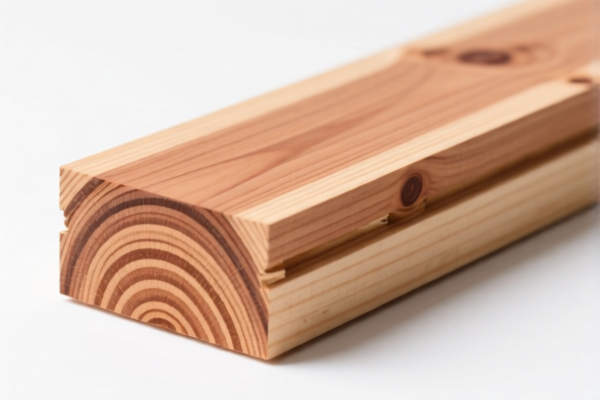
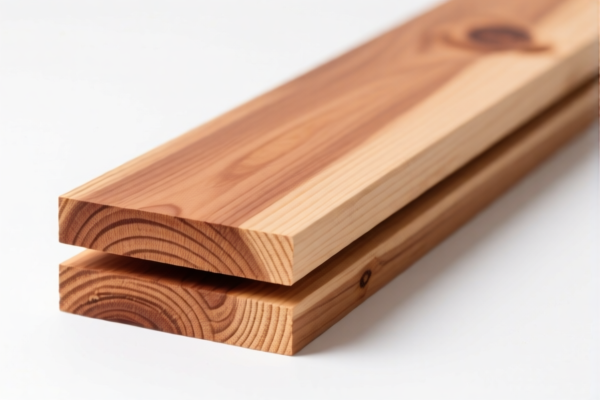
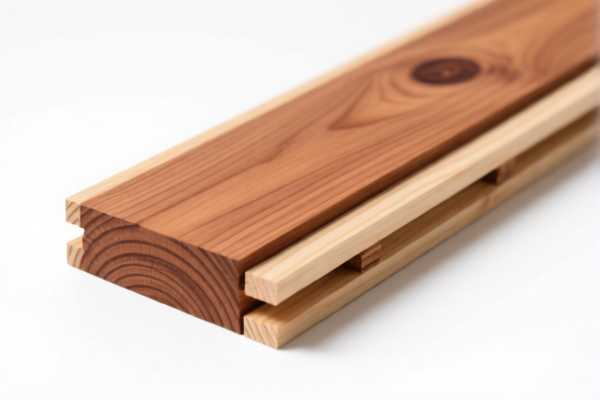
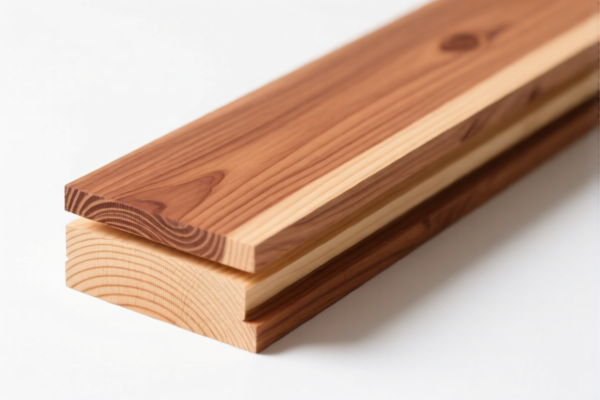
AI Analysis
🌲 Western Red Cedar Timber (Thuja plicata)
🌐 HS Code Reference & Customs Clearance Guide | 2026 Latest Tariff Analysis | Strategic Import Strategy
📌 I. Product Definition & Classification: Do You Really Know "Western Red Cedar"?
Western Red Cedar (WRC) is a premium softwood known for its natural resistance to decay, insects, and moisture. In international trade, it is strictly classified under Coniferous Timber. Its classification depends heavily on its processing level: whether it is raw log, rough-sawn, or further processed (like planed or sliced).
⚠️ Key Distinction Points:
- If the wood is in its raw, unprocessed, or merely debarked state → Classified as Logs/Ingot (Chapter 44.03).
- If the wood is sawn or chipped lengthwise (rough sawn, planed, etc.) → Classified as Sawn Wood (Chapter 44.07 or 44.08).
- Crucial Note: WRC is always considered "Coniferous" (Softwood), regardless of its reddish appearance.
📦 II. HS Code Classification Details (2026 Latest Tariff Authority Comparison)
| HS Code | Product Description | Application Scenario | Processing State |
|---|---|---|---|
4403.25.01.55 |
Western Red Cedar, Coniferous Wood | Raw Logs / Ingot / Roughly trimmed | ❌ Raw/Unprocessed |
4403.26.01.55 |
Western Red Cedar, Coniferous Timber | Sawn/Lumber (Rough or Planed) | ✅ Processed (Sawn) |
4407.19.00.69 |
Western Red Cedar Wood | Further Processed Sawn Wood (Non-standard) | ✅ Deep Processed |
4408.10.01.45 |
Red Cedar Veneer Sheets | Veneer / Thin Slices (for Plywood/Furniture) | ✅ Sliced/Laminated |
🔍 Key Reminder:
- All listed HS Codes for Western Red Cedar from China attract a Total Tax Rate of 35.0%.
- Misclassifying raw logs as sawn wood (or vice versa) can lead to customs delays, re-inspection, or penalties, even if the tax rate remains similar.
-4403covers "Wood freshly felled... roughly squared";4407covers "Wood sawn or chipped lengthwise";4408covers "Veneer sheets".
💰 III. 2026 Latest Tariff Rate Breakdown (Including Surtaxes & Policy Add-ons)
✅ Applicable Country: USA (US)
✅ Origin: China (CN)
✅ Effective Time: 2025-Nov-10 (For all subsequent imports)
✅ Total Effective Tax Rate: 35.0% (Fixed for all WRC codes in this dataset)
🎯 1. Base Tariff & Surtax Structure
| Component | Rate | Legal Basis | Description |
|---|---|---|---|
| Base Tariff | 0.0% | HTSUS General | No basic import duty for most coniferous timber |
| Section 301 Surtax | +25.0% | USITC Footnote 9903.88.01 | Trade war surcharge on Chinese goods |
| Section 122 / IEEPA Surtax | +10.0% | IEEPA:9903.01.25 | Emergency economic powers surcharge |
| TOTAL EFFECTIVE RATE | 35.0% | Sum of All | Apply to CIF Value |
📌 Explanation:
- 0% Base: Coniferous timber often has zero base duty to encourage construction material imports.
- 25% Section 301: The standard trade war tariff on Chapter 44 (Wood) from China.
- 10% Section 122/IEEPA: Additional national security/emergency surcharge effective from Nov 2025.
- Total 35%: This is a high-cost import category. Profit margins must account for this significant tax burden.
🛠️ IV. Customs Clearance Practical Advice (Avoid Pitfalls)
✅ 1. Required Documentation Checklist (Mandatory)
| Document | Required | Purpose |
|---|---|---|
| ✅ Phytosanitary Certificate | ✔️ Critical | Issued by origin country authority; proves wood is pest-free (ISPM 15 compliance). |
| ✅ Commercial Invoice | ✔️ | Must clearly state: "Western Red Cedar (Thuja plicata)", HS Code, Country of Origin. |
| ✅ Packing List | ✔️ | Detailed dimensions, weight, and volume (CBM). |
| ✅ Bill of Lading/Air Waybill | ✔️ | Standard shipping document. |
| ✅ Species Declaration | ✔️ | Explicitly name the species to avoid confusion with other cedars (e.g., Eastern Red Cedar). |
| ✅ Fumigation Certificate | ✔️ | If not heat-treated, must show chemical fumigation. |
✅ 2. Declaration Tips (Key Mnemonics)
🔥 “Species Clear, Process Defined, Phytosanitary Ready, Taxes Paid!”
| Scenario | Correct HS Code | Risk if Misclassified |
|---|---|---|
| Raw Logs with bark | 4403.25.01.55 |
Risk of "Incomplete Declaration" → Delay |
| Sawn Lumber (2x4, etc.) | 4403.26.01.55 or 4407.19.00.69 |
Risk of wrong duty calculation |
| Veneer Sheets (Thin) | 4408.10.01.45 |
Risk of misfitting "Wood" vs "Veneer" |
| Mixed Species Loads | Split Declaration | High risk of audit if not separated |
✅ 3. Special Handling Cases
| Situation | Handling Advice |
|---|---|
| ISPM 15 Marking | Ensure all wooden pallets/crating are marked with IPPC logo. Unmarked wood = Rejection/Re-export. |
| Moisture Content | Declare moisture content (e.g., "Air-Dried" vs "Kiln-Dried"). Affects grading but not HS code directly. |
| Value Declaration | Ensure CIF value includes freight and insurance. Customs may verify Landed Cost vs Invoice Value. |
| End-Use Declaration | Specify if for "Construction," "Fencing," or "Garden Use." Some uses may require additional EPA/FDA notes (if treated with chemicals). |
🌍 V. Global Market Customs Comparison (2026 Update)
| Country/Region | Recommended HS Code | Tariff Rate (China Origin) | Key Certification | Notes |
|---|---|---|---|---|
| 🇺🇸 USA | 4403.26.01.55 / 4407.19.00.69 |
35.0% | Phytosanitary + Fumigation | Highest Cost due to 301 + 122 clauses |
| 🇨🇳 China | 4403.26.01.55 |
Varies (Import Duty) | Phytosanitary | Domestic use common |
| 🇪🇺 EU | 4403.25 / 4407.10 |
0% - 4.7% | Phytosanitary (Reg 1078/2008) | No Section 301 tariffs. More Favorable |
| 🇬🇧 UK | 4403.25 |
0% - 5% | Phytosanitary | Post-Brexit rules apply |
| 🇨🇦 Canada | 4403.25 |
0% | CFIA Phytosanitary | Nearshoring advantage; low tariffs |
| 🇦🇺 Australia | 4403.25 |
5% - 10% | Biosecurity Permit | Strict biosecurity rules |
📌 Conclusion:
- USA is the most expensive market for WRC due to 35% total tariffs.
- EU/UK/Canada offer significantly lower or zero tariffs. Consider supply chain diversification if targeting non-US markets.
- Biosecurity is the #1 hurdle globally for wood products, not just tariffs.
📌 VI. Common Mistakes & Pitfall Guide (Lessons Learned)
❌ Mistake 1: Forgetting the Phytosanitary Certificate
👉 Consequence: Cargo held in quarantine, fumigated at importer’s cost, or returned. No Phytosanitary = No Entry.
❌ Mistake 2: Misidentifying Species (e.g., calling WRC "Cedar Wood" vaguely)
👉 Consequence: Customs may classify it under a higher-duty or restricted category. Always use "Thuja plicata".
❌ Mistake 3: Ignoring Section 301 & 122 Surprises
👉 Consequence: Unexpected 35% tax bill erodes profit. Plan cash flow accordingly.
❌ Mistake 4: Mixing Raw Logs and Sawn Wood in One Container
👉 Consequence: Separate declarations required. Mixed loads cause administrative delays.
✅ Correct Practice:
"Western Red Cedar (Thuja plicata), Sawn and Planed, Kiln-Dried, ISPM 15 Compliant Crating, HS Code 4403.26.01.55, Origin China"
🎯 VII. Conclusion: Professional Declaration, Cost Control, Risk Reduction
🎯 Key Takeaways:
🔹 "Phytosanitary is King, HS Code is Queen, Tariffs are the Court."
🔹 "35% Total Tax in US – Factor it into FOB Pricing."
🔹 "Never Ship Wood Without a Phytosanitary Certificate."
📌 Pro Tip:
If your WRC is sourced from Canada or USA (not China), tariffs drop to 0% in the US (USMCA).
For European imports, ensure EUTR (EU Timber Regulation) compliance to avoid legal risks.
📣 Immediate Action:
📞 Engage a licensed customs broker + Verify Phytosanitary status + Calculate Landed Cost with 35% Tax
🚀 Ensure smooth clearance, avoid detention, and protect your margins!
✨ Precision in Classification Saves Time and Money!
💼 Every CBM counts – optimize your wood supply chain today!
Customer Reviews
About HS Code Classification
The Harmonized System (HS) is an internationally standardized nomenclature developed by the World Customs Organization (WCO) to classify traded products. Over 200 countries use the HS system as the basis for customs tariffs, trade statistics, and import/export regulations.
Each HS code follows a hierarchical structure:
- Chapter (2 digits) — Broad category of goods (e.g., Chapter 84: Machinery and Mechanical Appliances)
- Heading (4 digits) — More specific grouping within the chapter
- Subheading (6 digits) — Internationally standardized breakdown, used by all WCO member countries
- National subdivisions (8-10 digits) — Country-specific extensions for further classification, such as US HTSUS 10-digit codes
Correct HS code classification is essential for smooth customs clearance, accurate duty payment, and compliance with trade regulations. Misclassification can lead to customs delays, overpayment of duties, or penalties.
When importing from CN to US, the applicable tariff rates may include:
- Most-Favored-Nation (MFN) rate — The standard duty rate applied to WTO members
- General rate — Applied to countries without trade agreements
- Trade remedy duties — Additional tariffs such as Section 301 (anti-dumping), Section 232 (national security), or countervailing duties
The information provided on this page is for reference purposes only. For official classification, please consult with your local customs authority or a licensed customs broker.