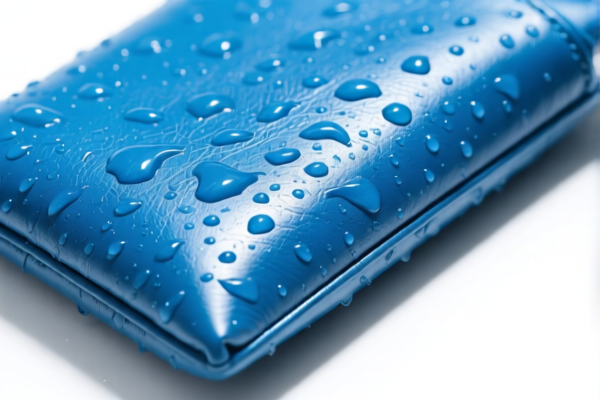
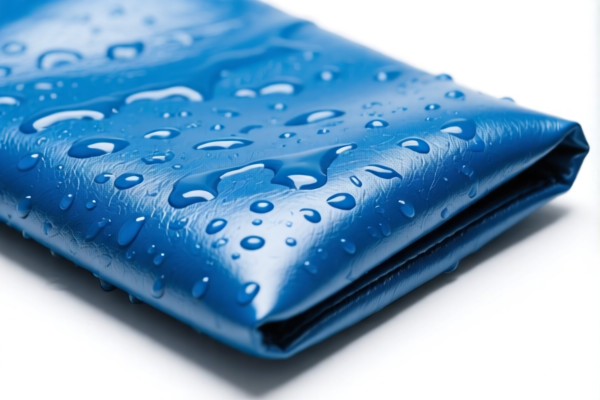
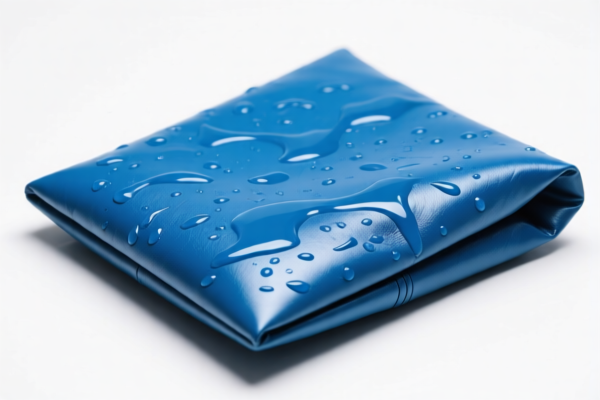
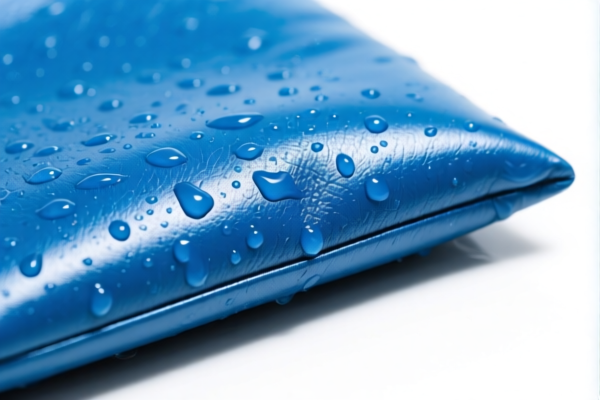
wet blue raw leather
CN → US| HS Code | Tariff Rate | Origin | Destination | Doc |
|---|---|---|---|---|
| 4113200000 | 39.2% | CN | US | Official Doc |
| 4103301000 | 17.5% | CN | US | Official Doc |
| 4103302000 | 21.7% | CN | US | Official Doc |
| 4106319000 | 39.2% | CN | US | Official Doc |
| 4106311000 | 39.2% | CN | US | Official Doc |
Product Images
AI Analysis
🧀 Wet Blue Raw Leather (Pigskin)
🌐 HS Code Reference & Customs Clearance Guide | 2024 Latest Tariff Analysis | Professional-Level Entry Strategy
📌 I. Product Definition & Classification: What is "Wet Blue Pigskin"?
"Wet Blue Raw Leather" refers to pigskins that have undergone the tanning process (usually chrome tanning) to reach a stable state known as "wet blue." However, the classification in the provided data suggests a nuanced distinction between pre-tanned raw hides, partially processed skins, and fully tanned but wet skins.
Key Distinctions in the Data: * State: "Wet" or "Wet Blue" (preserved via salting/pickling or chrome tanning). * Material: Pigskin (Porcine). * Processing Level: Ranges from Raw/Un-tanned (cured/salted) → Pre-tanned/Coarse Tanned → Fully Tanned (Wet Blue).
⚠️ Critical Classification Point: - If the skin is raw, salted, or pickled (no chrome tanning) → It is considered Raw Hide/Skin (
4103or4106). - If the skin is coarse-tanned or further processed beyond raw but not finished → It may fall under4113. - If it is fully tanned (Wet Blue) but classified under specific headings for "prepared hides" → It falls under4106.31.
📦 II. HS Code Classification Details (Authoritative Reference)
Based strictly on the provided <DATA>, here are the 5 possible classifications for "Wet Blue Pigskin," sorted by processing state and tax implication:
| HS Code | Product Description & State | Processing Level | Total Tax Rate |
|---|---|---|---|
4103.30.10.00 |
Wet Blue Pigskin (Salted/Pickled/Preserved) | Raw/Un-tanned: Raw hide preserved by salting or pickling. | 17.5% |
4106.31.90.00 |
Wet Blue Pigskin (Wet/Blue State) | Fully Tanned: Matches the description of "wet/blue" state perfectly. | 39.2% |
4106.31.10.00 |
Wet Blue Pigskin (Wet/Blue) | Fully Tanned: Fully consistent with "Wet Blue" classification explanation. | 39.2% |
4103.30.20.00 |
Wet Blue Pigskin (Raw Hide) | Raw/Un-tanned: Raw hide corresponding to fresh/salted/pickled form. | 21.7% |
4113.20.00.00 |
Wet Blue Pigskin (Coarse/Processed) | Coarse Tanned: Crude or further processed leather. | 39.2% |
🔍 Key Insight: - The lowest tax rate (17.5%) applies to
4103.30.10.00, which describes the product as "preserved but un-pre-tanned." This is crucial if the "Wet Blue" is actually just salted raw hide (often mislabeled by traders). - The highest tax rates (39.2%) apply to4106.31and4113.20, which imply chrome-tanned (true Wet Blue) or coarse-tanned leather. - Why the confusion? In international trade, "Wet Blue" usually implies chrome tanning. However, if customs determines the skin is merely salted and blue-tinged (not chemically tanned), it may qualify for the lower4103rate.
💰 III. 2024 Latest Tariff Rate Breakdown (Including Surcharges)
✅ Applicable Country: United States (US) ✅ Origin: China (CN) ✅ Effective Date: Current Trade Policy (Section 301 + IEEPA)
🎯 1. 4103.30.10.00 — Lowest Tax Option: Preserved Raw Hide
Tax Rate: 17.5%
| Item | Detail |
|---|---|
| Basic Duty | 0.0% (Ad Valorem) |
| Section 301 Surcharge | +7.5% |
| IEEPA Surcharge | +10% |
| Total Effective Rate | 17.5% |
| Tax Base | CIF Value × 17.5% |
| De Minimis Eligibility | ❌ No (High risk of audit) |
| Legal Basis | USITC:4103.30.10.00 + IEEPA:9903.01.10 |
📌 Interpretation: - This rate is significantly lower than the others. - It applies only if the leather is NOT chrome-tanned. If it is truly "Wet Blue" (chrome-tanned), using this code is misclassification. - Risk: If customs inspects and finds chrome tanning agents, you face back taxes + penalties.
🎯 2. 4103.30.20.00 — Raw Hide with Basic Duty
Tax Rate: 21.7%
| Item | Detail |
|---|---|
| Basic Duty | 4.2% |
| Section 301 Surcharge | +7.5% |
| IEEPA Surcharge | +10% |
| Total Effective Rate | 21.7% |
| Tax Base | CIF Value × 21.7% |
| De Minimis Eligibility | ❌ No |
📌 Interpretation: - Applies to raw hides that incur a basic duty but are not pre-tanned. - Slightly higher than
4103.30.10.00.
🎯 3. 4113.20.00.00 — Coarse or Further Processed Leather
Tax Rate: 39.2%
| Item | Detail |
|---|---|
| Basic Duty | 4.2% |
| Section 301 Surcharge | +25.0% |
| IEEPA Surcharge | +10% |
| Total Effective Rate | 39.2% |
| Tax Base | CIF Value × 39.2% |
| De Minimis Eligibility | ❌ No |
📌 Interpretation: - Applies to leather that is coarse-tanned or further processed beyond raw hides but not fully finished. - High duty due to 25% Section 301 tariff.
🎯 4. 4106.31.90.00 & 4106.31.10.00 — Fully Tanned (Wet Blue)
Tax Rate: 39.2%
| Item | Detail |
|---|---|
| Basic Duty | 4.2% |
| Section 301 Surcharge | +25.0% |
| IEEPA Surcharge | +10% |
| Total Effective Rate | 39.2% |
| Tax Base | CIF Value × 39.2% |
| De Minimis Eligibility | ❌ No |
📌 Interpretation: - These codes are for chrome-tanned pigskins (true Wet Blue). - Identical tax rate (39.2%). -
4106.31.10.00is described as "fully consistent with Wet Blue classification."
🛠️ IV. Customs Clearance Practical Advice (Real-World Pitfall Guide)
✅ 1. Documentation Checklist (Mandatory)
| Document | Required | Purpose |
|---|---|---|
| ✅ Certificate of Origin | ✔️ | Proves Chinese origin (triggers surcharges). |
| ✅ Product Specification Sheet | ✔️ | Crucial: Must specify "Chrome Tanned" vs. "Salted/Preserved". |
| ✅ Lab Test Report | ✔️ | Chemical Analysis: Must confirm presence/absence of Chrome (Cr) salts. |
| ✅ Commercial Invoice | ✔️ | Clearly state: "Pigskin, Wet Blue, Chrome Tanned" OR "Pigskin, Salted, Raw". |
| ✅ Packing List | ✔️ | Detail weight, quantity, and packaging type. |
| ✅ Photos | ✔️ | Clear images of the hide (color, texture, moisture). |
📌 Critical Tip: If you claim 17.5% (
4103.30.10.00), you MUST provide a lab report proving NO CHROME TANNING. If chrome is detected, you will be reclassified to4106.31or4113.20and fined.
✅ 2. Declaration Strategy (Key Mnemonics)
🔥 "True Wet Blue = 39.2% | Salted Raw = 17.5-21.7%"
| Scenario | Correct HS Code | Risk if Misclassified |
|---|---|---|
| True Wet Blue (Chrome-Tanned) | 4106.31.10.00 or 4106.31.90.00 |
Declaring as 4103 → Audit, Back Tax + Penalty. |
| Salted Raw Hide (Blue-ish due to salt) | 4103.30.10.00 |
Declaring as 4106 → Overpay by 21.7%. |
| Coarse Tanned/Partially Processed | 4113.20.00.00 |
Declaring as 4103 → Penalty for misdeclaration. |
| Mixed Batches (Some Tanned, Some Not) | Separate Entries | Mixing codes → Seizure of goods. |
✅ 3. Special Handling Tips
| Situation | Recommendation |
|---|---|
| "Wet Blue" Label Ambiguity | Provide a chemical test report showing chrome content. If Cr > 0.1%, it is tanned. |
| Moisture Content | Ensure hide is not too wet (to avoid microbial decay) but not dry (to avoid reclassification as "Dry Hide"). |
| OEM/Custom Orders | Clearly state the processing stage in the invoice: e.g., "Wet Blue Pigskin, Chrome Tanned, for Further Finishing." |
| De Minimis Exemption | ❌ Not Applicable. These goods are high-risk for Section 301 tariffs. Do not use 86.01 or 88.01 parcels. |
🌍 V. Global Market Comparison (2024 Update)
| Country/Region | Recommended HS Code | Tariff Rate (China Origin) | Notes |
|---|---|---|---|
| 🇺🇸 USA | 4106.31.10.00 |
39.2% | High tariffs due to Section 301 + IEEPA. |
| 🇨🇳 China | 4106.31.10.00 |
~10-14% | Lower import duty, no Section 301. |
| 🇪🇺 EU | 4106.31 |
~10-12% | No surcharges, but requires REACH compliance. |
| 🇬🇧 UK | 4106.31 |
~10-12% | Post-Brexit tariffs apply. |
| 🇻🇳 Vietnam | 4106.31 |
0-10% | Possible FTZ benefits if processed further. |
📌 Conclusion: - USA is the most expensive market due to 25% Section 301 + 10% IEEPA. - Strategic Tip: Consider transshipment or further processing in a third country (e.g., Vietnam) to mitigate US tariffs, but ensure substantial transformation criteria are met.
📌 VI. Common Mistakes & Pitfalls (Blood Lessons)
❌ Mistake 1: Using "Wet Blue" to mean "Salted Raw Hide" to save tax. 👉 Consequence: Customs lab test reveals chrome → Reclassified to 39.2% + Fine.
❌ Mistake 2: Not providing a Chemical Test Report. 👉 Consequence: Customs assumes Chrome-Tanned → Applies 39.2% even if you claimed 17.5%.
❌ Mistake 3: Mixing Tanned and Untanned hides in one shipment. 👉 Consequence: Customs hold until separation → Storage fees + Delay.
❌ Mistake 4: Ignoring Moisture Content. 👉 Consequence: If too wet, it may be rejected for biosecurity reasons. If too dry, it becomes "Dry Hide" (different code).
✅ Best Practice:
Always include a lab report.
"Chrome-Tanned" =4106.31(39.2%)
"Salted/Preserved" =4103.30(17.5-21.7%)
Clarity Saves Money!
🎯 VII. Conclusion: Professional Declaration, Cost Optimization
🎯 Key Takeaway:
🔹 "True Wet Blue is Expensive (39.2%) | Salted Raw is Cheaper (17.5%)"
🔹 "Lab Test is Your Best Friend"
🔹 "Never Misclassify Tanned Leather as Raw"
📌 Pro Tip:
If your product is truly Wet Blue (Chrome-Tanned), the 39.2% rate is unavoidable for US imports. Consider: 1. Value-Added Processing in a free trade zone. 2. Adjusting Pricing to absorb the tariff. 3. Consulting a Customs Broker for Pre-Ruling if you have unique processing steps.
📣 Immediate Action:
📞 Contact your customs broker
🔬 Send samples for Chrome Testing
📄 Prepare accurate HS Code Declaration
🚀 Ensure smooth clearance, avoid penalties, and maximize profit!
✨ Professional Customs Clearance Starts with Accurate Classification!
💼 Your Cost Control Depends on Precision!
Customer Reviews
About HS Code Classification
The Harmonized System (HS) is an internationally standardized nomenclature developed by the World Customs Organization (WCO) to classify traded products. Over 200 countries use the HS system as the basis for customs tariffs, trade statistics, and import/export regulations.
Each HS code follows a hierarchical structure:
- Chapter (2 digits) — Broad category of goods (e.g., Chapter 84: Machinery and Mechanical Appliances)
- Heading (4 digits) — More specific grouping within the chapter
- Subheading (6 digits) — Internationally standardized breakdown, used by all WCO member countries
- National subdivisions (8-10 digits) — Country-specific extensions for further classification, such as US HTSUS 10-digit codes
Correct HS code classification is essential for smooth customs clearance, accurate duty payment, and compliance with trade regulations. Misclassification can lead to customs delays, overpayment of duties, or penalties.
When importing from CN to US, the applicable tariff rates may include:
- Most-Favored-Nation (MFN) rate — The standard duty rate applied to WTO members
- General rate — Applied to countries without trade agreements
- Trade remedy duties — Additional tariffs such as Section 301 (anti-dumping), Section 232 (national security), or countervailing duties
The information provided on this page is for reference purposes only. For official classification, please consult with your local customs authority or a licensed customs broker.