wheat seeds for planting
CN → US| HS Code | Tariff Rate | Origin | Destination | Doc |
|---|---|---|---|---|
| 1001110000 | 0.0% | CN | US | Official Doc |
| 1001910000 | 20.3% | CN | US | Official Doc |
| 1101000010 | 0.0% | CN | US | Official Doc |
| 1101000030 | 0.0% | CN | US | Official Doc |
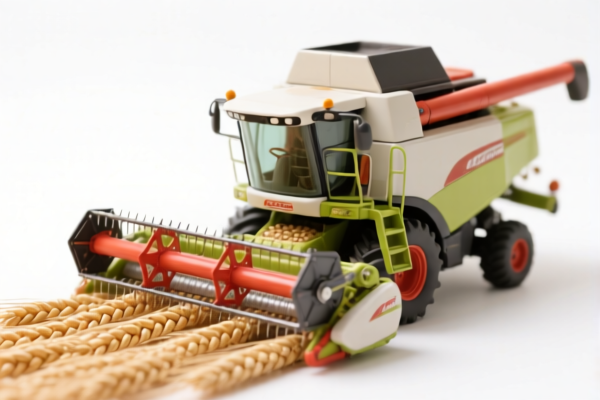
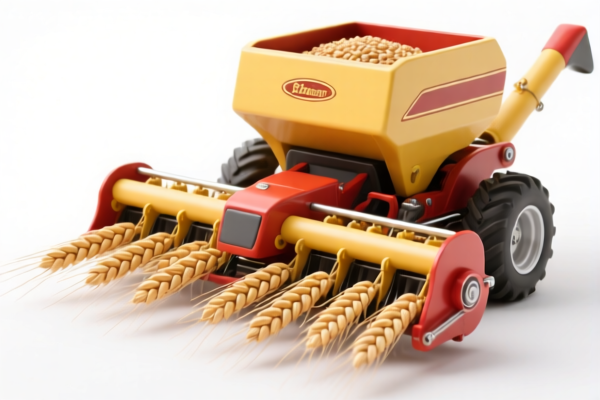
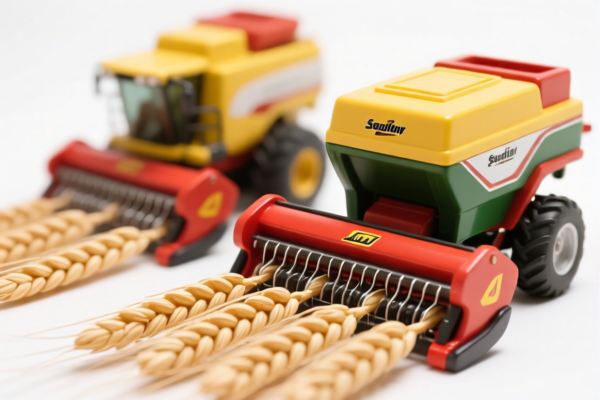
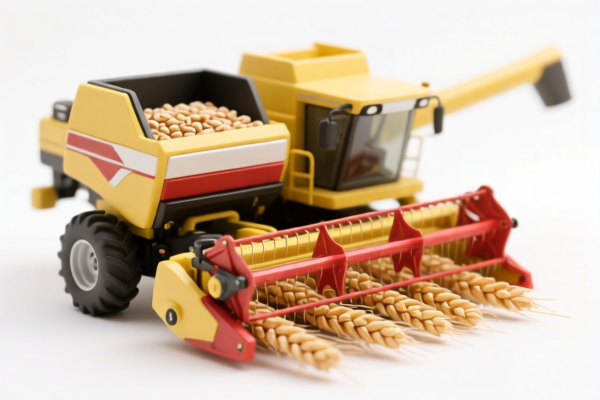
Product Images
AI Analysis
🌾 Wheat Seeds for Planting – HS Code & Tariff Guide | 2026 Latest Customs Classification & Duty Breakdown
🌐 HS Code Reference & Customs Clearance Strategy | 2026 Updated Tariff Rules | Professional Import Advisory
📌 One-Stop Guide to Wheat Seeds for Planting – Accurate Classification, Full Tax Details, and Pro Tips for Smooth Import
📦 1. Product Definition & Classification: What Exactly Are “Wheat Seeds for Planting”?
Wheat seeds for planting refer to durum wheat (Triticum durum) and other wheat varieties (Triticum aestivum, Triticum sp.) that are intended for agricultural cultivation, not for human consumption or industrial processing (e.g., flour, feed, or malt).
⚠️ Key Distinction:
- If the wheat is intended for sowing (i.e., planting in fields) → Must be classified under seed categories
- If the wheat is intended for milling or food use → Classified under flour or grain (e.g., 1101.00.00.10/30)
- Seeds for planting are not edible, not processed, and must be labeled as “for sowing” or “seed grade”
📊 2. HS Code Classification Breakdown (2026 Official Tariff Schedule)
| HS Code | Product Description | Applicable To | Key Features |
|---|---|---|---|
1001.11.00.00 |
Wheat and meslin: Durum wheat: Seed | Durum wheat seeds for planting | High protein, used in pasta, but only if intended for sowing |
1001.91.00.00 |
Wheat and meslin: Other: Seed | All other wheat seeds (e.g., winter, spring, common wheat) | Non-durum, general-purpose planting seeds |
🔍 Critical Rule:
- Only seeds intended for planting qualify for these codes
- Food-grade wheat, flour, or animal feed must not be declared under these seed codes
- Misclassification leads to penalties, delays, or seizure
💰 3. 2026 Updated Tariff & Tax Breakdown (With Full Legal Details)
✅ Applicable Country: United States (US)
✅ Origin: China (CN)
✅ Effective Date: November 10, 2025 (including all subsequent imports)
🎯 1. 1001.11.00.00 — Durum Wheat Seeds for Planting
| Item | Detail |
|---|---|
| Base Tariff | 0.65¢ per kg (specific duty) |
| Additional Tariff (Section 301) | +25.0% (based on USITC Footnote 9903.88.01) |
| Total Duty | 0.65¢/kg + 25.0% of CIF value |
| Tax Calculation Method | Combined Duty Model: |
| > - Specific duty: $0.0065/kg (flat rate) | |
| > - Ad valorem duty: 25% of CIF value | |
| > - Total = (0.0065 × weight in kg) + (CIF × 25%) | |
| De Minimis Threshold | ❌ Not applicable (denied under US law) |
| Legal Basis | USITC: 1001.11.00.00 → FOOTNOTE: 9903.88.01 → IEEPA: 9903.01.25 |
📌 Explanation:
- 0.65¢/kg is a specific duty (per kilogram), so even small shipments are subject to this fee
- 25% additional tariff is Section 301 from the U.S. Trade Representative (USTR) due to China’s agricultural subsidies
- No de minimis exemption → Even a 1kg shipment must pay full duty
- This is a high-cost category — always calculate total duty before shipment
🎯 2. 1001.91.00.00 — Other Wheat Seeds for Planting (Non-Durum)
| Item | Detail |
|---|---|
| Base Tariff | 2.8% (ad valorem) |
| Additional Tariff (Section 301) | +7.5% (from USTR list) |
| Total Duty | 2.8% + 7.5% = 10.3% of CIF value |
| Tax Calculation | CIF × 10.3% (no specific duty) |
| De Minimis Threshold | ❌ Not applicable (denied under US law) |
| Legal Basis | USITC: 1001.91.00.00 → FOOTNOTE: 9903.88.01 → IEEPA: 9903.01.24 |
📌 Explanation:
- No per-kg fee — only a percentage of value
- 10.3% total is lower than durum wheat, but still significant
- Still subject to Section 301 — no relief for non-durum wheat seeds
- No de minimis → No exceptions for small shipments
🛠️ 4. Customs Clearance Best Practices (Pro Tips to Avoid Delays & Penalties)
✅ 1. Required Documentation (Must-Have List)
| Document | Required? | Notes |
|---|---|---|
| ✅ Commercial Invoice | ✔️ | Must clearly state: "Wheat Seeds for Planting – For Agricultural Sowing" |
| ✅ Bill of Lading / Air Waybill | ✔️ | Accurate weight, HS Code, and product description |
| ✅ Phytosanitary Certificate | ✔️ | Mandatory for seeds — issued by exporting country’s agricultural authority |
| ✅ Seed Certification (if applicable) | ✔️ | From USDA or equivalent (for U.S. import) |
| ✅ Packing List | ✔️ | Show total weight, number of bags, and seed type |
| ✅ Certificate of Origin (CO) | ✔️ | Required for tariff eligibility; can be used for claims if origin changes |
| ✅ Product Photos (with labeling) | ✔️ | Show “seed grade”, “for planting”, and packaging |
✅ 2.申报技巧 (申报口诀)
🔥 "Seed ≠ Flour, Planting ≠ Food, Label Right, Duty Low!"
| Scenario | Correct HS Code | Wrong Code | Risk |
|---|---|---|---|
| Durum wheat seeds for planting | 1001.11.00.00 |
1101.00.00.10 (flour) |
45%+ duty, penalties |
| Spring wheat seeds | 1001.91.00.00 |
1101.00.00.30 (white winter wheat flour) |
Misclassification = seizure |
| Wheat seeds with packaging labeled “for sowing” | 1001.11.00.00 or 1001.91.00.00 |
1001.00.00.00 (raw grain) |
Higher duty, delays |
✅ 3. Special Cases & Solutions
| Situation | Recommended Action |
|---|---|
| Seeds from Vietnam, Mexico, or India | Can qualify for IEEPA exemption — 0% additional tariff if origin is non-China |
| Small shipment (e.g., 5kg for research) | Still must pay duty — no de minimis applies |
| Organic or GMO-free seeds | Require additional certification — may affect tariff eligibility |
| Seeds with mixed varieties | Must declare primary seed type — cannot split申报 |
| Seeds in bulk vs. packaged | Packaged seeds are easier to classify — use clear labels |
🌍 5. Global Market Comparison (2026)
| Country | Recommended HS Code | Tariff Rate | Certification Required | Notes |
|---|---|---|---|---|
| 🇺🇸 United States | 1001.11.00.00 / 1001.91.00.00 |
0.65¢/kg + 25% (durum) / 10.3% (other) | Phytosanitary + Seed Cert | High cost for China origin |
| 🇨🇳 China | 1001.11.00.00 / 1001.91.00.00 |
0% (if domestic) / 5% (import) | Plant Quarantine Certificate | No additional tariffs |
| 🇪🇺 European Union | 1001.11.00.00 / 1001.91.00.00 |
0% (if CE/Phytosanitary) | EU Plant Health Certificate | No Section 301 |
| 🇦🇺 Australia | 1001.11.00.00 / 1001.91.00.00 |
0% (if approved) | APVMA + Phytosanitary | Strict biosecurity |
| 🇯🇵 Japan | 1001.11.00.00 / 1001.91.00.00 |
0% (if compliant) | Plant Quarantine | High inspection standards |
📌 Insight:
- U.S. is the most expensive market for China-origin wheat seeds
- Vietnam, India, and Mexico are preferred sourcing countries to avoid Section 301 tariffs
- Always verify origin — even if shipped via China, if seeds are from Vietnam, you may qualify for lower duty
🚨 6. Common Mistakes & How to Avoid Them (Real-World Risks)
❌ Mistake 1: Declaring wheat seeds as “flour” or “grain”
👉 Result: 25%+ additional tariff, seizure, fines
✅ Fix: Use “Wheat Seeds for Planting” in description and HS Code 1001.11.00.00 or 1001.91.00.00
❌ Mistake 2: Not providing a phytosanitary certificate
👉 Result: Cargo held at port, rejected, or destroyed
✅ Fix: Obtain certificate before shipment — from exporting country’s agriculture authority
❌ Mistake 3: Using “seed” in name but not for planting
👉 Result: Misclassification → duty underpayment → penalties
✅ Fix: Only use seed codes if intended for sowing — not for food or feed
❌ Mistake 4: Assuming small shipments are exempt
👉 Result: Full duty still applies — no de minimis
✅ Fix: Always calculate duty — even 1kg matters
🎯 7. Final Verdict: Smart Sourcing, Smart Clearance
✅ If you’re importing wheat seeds for planting: - Use
1001.11.00.00for durum wheat seeds - Use1001.91.00.00for all other wheat seeds - Always provide phytosanitary and seed certification - Avoid China origin if possible — switch to Vietnam/Mexico/India to avoid 25% Section 301 - Never declare seeds as flour or grain
📌 Pro Tip:
🔹 Apply for an Advance Ruling (Pre-Clearance) with U.S. Customs (CBP) — get binding HS Code and duty confirmation before shipment
🔹 Use a licensed customs broker with experience in agricultural seeds
🔹 Track tariff changes — Section 301 tariffs can change monthly
📣 Act Now!
📞 Contact a customs expert + submit product photos + origin docs
🚀 Get your HS Code pre-approved — avoid delays, penalties, and cargo loss
✨ Your seeds deserve a smooth journey — classify right, pay less, grow more!
💼 Precision in classification = Profit in import!
Customer Reviews
About HS Code Classification
The Harmonized System (HS) is an internationally standardized nomenclature developed by the World Customs Organization (WCO) to classify traded products. Over 200 countries use the HS system as the basis for customs tariffs, trade statistics, and import/export regulations.
Each HS code follows a hierarchical structure:
- Chapter (2 digits) — Broad category of goods (e.g., Chapter 84: Machinery and Mechanical Appliances)
- Heading (4 digits) — More specific grouping within the chapter
- Subheading (6 digits) — Internationally standardized breakdown, used by all WCO member countries
- National subdivisions (8-10 digits) — Country-specific extensions for further classification, such as US HTSUS 10-digit codes
Correct HS code classification is essential for smooth customs clearance, accurate duty payment, and compliance with trade regulations. Misclassification can lead to customs delays, overpayment of duties, or penalties.
When importing from CN to US, the applicable tariff rates may include:
- Most-Favored-Nation (MFN) rate — The standard duty rate applied to WTO members
- General rate — Applied to countries without trade agreements
- Trade remedy duties — Additional tariffs such as Section 301 (anti-dumping), Section 232 (national security), or countervailing duties
The information provided on this page is for reference purposes only. For official classification, please consult with your local customs authority or a licensed customs broker.