wheel bolts and nuts convex dome
CN → US| HS Code | Tariff Rate | Origin | Destination | Doc |
|---|---|---|---|---|
| 7318152041 | 85.0% | CN | US | Official Doc |
| 8708706060 | 37.5% | CN | US | Official Doc |
| 7318152061 | 85.0% | CN | US | Official Doc |
| 7318152010 | 85.0% | CN | US | Official Doc |
Product Images
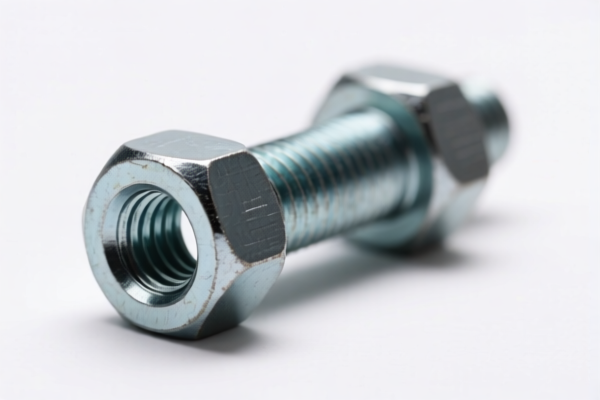
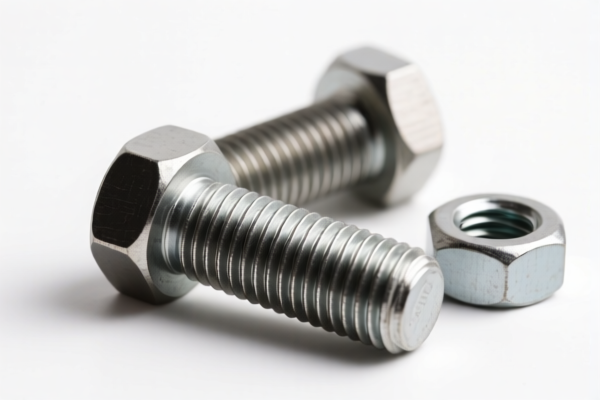
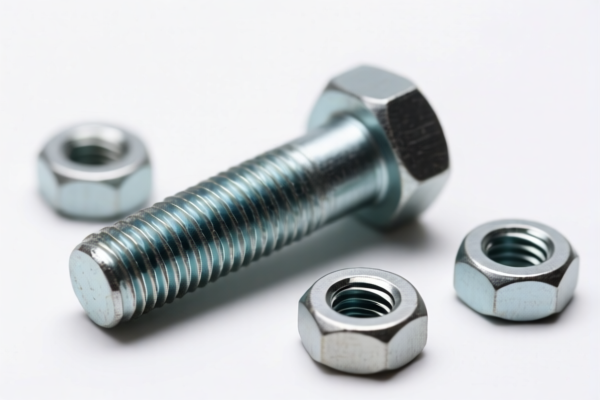

AI Analysis
🔩 Wheel Bolts & Nuts (Convex Dome)
🌐 HS Code Reference & Customs Clearance Guide | 2026 Latest Tariff Analysis | Professional Clearance Strategy
📌 I. Product Definition & Classification: Do You Really Understand "Wheel Bolts and Nuts"?
Wheel bolts and nuts (specifically convex dome style) are critical fastening components for vehicle wheel assembly. In international trade, they are primarily classified under Chapter 73 (Articles of Iron or Steel) due to their metallic material, or potentially under Chapter 87 (Vehicles) if considered specific vehicle parts.
Key Distinction:
- If classified as generic metal fasteners →归入 7318.15 (Other bolts and nuts, whether or not with their nuts or washers, of iron or steel).
- If classified as specific vehicle parts →归入 8708.70 (Parts and accessories for vehicles of heading 8701 to 8705).
⚠️ Critical Classification Point:
- Most customs authorities (especially US CBP) treat standard wheel bolts/nuts as Chapter 73 articles because they are generic fasteners, not exclusively designed for one vehicle model without broader applicability. However, specific "convex dome" designs may sometimes trigger "vehicle part" arguments if heavily customized. The data provided below reflects the two primary classification paths and their resulting tax liabilities.
📦 II. HS Code Classification Details (2026 Latest Tariff Authority Comparison)
| HS Code | Product Description | Application Scenario | Total Tax Rate | Tax Detail Breakdown |
|---|---|---|---|---|
7318.15.20.41 |
Wheel bolts and nuts (convex dome) classified as bolt/nut products, material: metal (iron/steel) | Generic metal fasteners for wheel assembly | 85.0% | Base: 0.0%, Add-on: 25.0%, Section 301/232 Steel/Aluminum/Copper: 50% |
8708.70.60.60 |
Wheel bolts and nuts as vehicle wheel-related parts/accessories, matching spare parts preference | Specific vehicle spare parts | 37.5% | Base: 2.5%, Add-on: 25.0%, Section 301: 10% |
7318.15.20.61 |
Bolt/Nut Sets classified as threaded products, material: metal, meets classification requirements | Sets of bolts and nuts | 85.0% | Base: 0.0%, Add-on: 25.0%, Section 301/232 Steel/Aluminum/Copper: 50% |
7318.15.20.10 |
Bolt/Nut Sets meet bolt/nut threaded product category, material no conflict | Sets of bolts and nuts | 85.0% | Base: 0.0%, Add-on: 25.0%, Section 301/232 Steel/Aluminum/Copper: 50% |
🔍 Key Reminder:
- The huge tax difference (37.5% vs. 85.0%) depends entirely on whether the product is declared as a vehicle part (8708) or a metal fastener (7318).
- 85.0% applies when classified under 7318 due to additional 50% Section 301/232 tariffs on steel/aluminum/copper products.
- 37.5% applies under 8708 with a lower 10% Section 301 tariff, but still includes base and other add-ons.
💰 III. 2026 Latest Tariff Rate Details (Including Additional Taxes, Policy Add-ons)
✅ Applicable Country: United States (US)
✅ Origin: China (CN)
✅ Effective Time: 2025-11-10 onwards (including subsequent imports)
🎯 1. 7318.15.20.41 / 7318.15.20.61 / 7318.15.20.10 —— Wheel Bolts & Nuts (Metal Fastener Classification)
| Item | Content |
|---|---|
| Base Tax Rate | 0% (ad valorem) |
| USITC Additional Tax (Section 301) | +25% |
| Section 301/232 Steel/Aluminum/Copper Tariff | +50% |
| Total Tax Rate | 85.0% |
| Tax Calculation | CIF Value × 85.0% |
| De Minimis Exemption Applicable? | ❌ No (deny_de_minimis) |
| Legal Basis Path | Section 301:9903.01.24 → Section 232:9903.01.25 → USITC:7318.15.20.41/61/10 |
📌 Explanation:
- When classified under 7318, these products are considered steel/aluminum/copper articles and are subject to the 50% additional tariff under Section 301/232.
- Combined with the standard 25% Section 301 tariff, the total reaches 85%.
- This is a very high tariff rate, requiring careful cost planning.
🎯 2. 8708.70.60.60 —— Wheel Bolts & Nuts (Vehicle Part Classification)
| Item | Content |
|---|---|
| Base Tax Rate | 2.5% (ad valorem) |
| USITC Additional Tax (Section 301) | +25% |
| Section 301 Tariff (Specific Footnote) | +10% |
| Total Tax Rate | 37.5% |
| Tax Calculation | CIF Value × 37.5% |
| De Minimis Exemption Applicable? | ❌ No (deny_de_minimis) |
| Legal Basis Path | Section 301:9903.01.24 → USITC:8708.70.60.60 |
📌 Note:
- Classifying as a vehicle part (8708) avoids the 50% steel/aluminum/copper additional tariff, resulting in a lower total rate of 37.5%.
- However, this classification requires proving the product is a specific part of a vehicle and not just a generic fastener.
- The 10% Section 301 tariff still applies, plus the standard 25% and 2.5% base.
🛠️ IV. Customs Clearance Practical Advice (Real-World Pitfall Avoidance Guide)
✅ 1. Required Documents Checklist (None Can Be Missing)
| Document | Mandatory | Description |
|---|---|---|
| ✅ Product Specifications | ✔️ | Material composition, dimensions, threading standards (e.g., ISO, DIN) |
| ✅ Product Photos (with label) | ✔️ | Clear image showing "Convex Dome" design, part number, brand |
| ✅ Commercial Invoice | ✔️ | Clearly state "Wheel Bolts and Nuts, Convex Dome, Steel" |
| ✅ Packing List | ✔️ | Separate packing list for bolts and nuts if sold as a set |
| ✅ Origin Certificate (CO) | ✔️ | If non-Chinese origin, can apply for preferential rates |
| ✅ Third-Party Test Report | ✔️ | Material test report (e.g., tensile strength, corrosion resistance) |
✅ 2. Declaration Tips (Key Mantras)
🔥 "Declare as Vehicle Part, Save 47.5%! But Prove It's Not Generic!"
| Scenario | Correct Declaration | Wrong Practice |
|---|---|---|
| Generic wheel bolts/nuts | 7318.15.20.41 / 61 / 10 |
Claim as vehicle part without proof → 85% |
| Vehicle-specific convex dome nuts | 8708.70.60.60 |
Over-generalize as "fasteners" → 37.5% is better |
| Bolts and nuts sold as a set | 7318.15.20.61 / 10 |
Separate declaration for bolts and nuts → Complexity & Risk |
📌 Strategy:
- If the bolts/nuts are universally compatible with many vehicle models, they are likely generic fasteners (7318).
- If they are designed for specific vehicles (e.g., OEM parts for Tesla, BMW, etc.), argue for 8708.70.
- Documentation is key: Provide engineering drawings showing vehicle-specific compatibility to support the 8708 classification.
✅ 3. Special Case Handling
| Scenario | Handling Advice |
|---|---|
| OEM Custom Wheel Bolts | Provide vehicle manufacturer's part number and compatibility list to support 8708.70.60.60 |
| Generic Convex Dome Nuts | Best classified under 7318.15.20.41 (85% tax), but ensure material is clearly stated as steel/iron |
| Bolts & Nuts Sets | Declare as a set under 7318.15.20.61 or 10 (85% tax), do not split unless necessary |
| Non-Chinese Origin | If from Vietnam, Mexico, etc., check for IEEPA exemptions or USMCA/FTA benefits |
🌍 V. Global Market Comparison (2026 Latest)
| Country/Region | Recommended HS Code | Tariff | Certification Required | Notes |
|---|---|---|---|---|
| 🇺🇸 United States | 8708.70.60.60 (if vehicle part) |
37.5% (China) | None specific | If generic, 7318 applies → 85% |
| 🇨🇳 China | 7318.15.20.41 |
5-10% | CCC (if applicable) | No additional US-style tariffs |
| 🇪🇺 European Union | 7318.15.20.41 |
0-2% (if preferential) | CE (if applicable) | Generally low tariffs for fasteners |
| 🇬🇧 United Kingdom | 7318.15.20.41 |
0-2% | UKCA (if applicable) | Post-Brexit rules apply |
📌 Conclusion:
- US Market is the most critical: Classification difference between 37.5% and 85% is massive.
- Efforts should be made to classify under 8708.70.60.60 if the product is vehicle-specific, to save 47.5% in taxes.
- For generic products, accept the 85% rate or explore supply chain diversification (e.g., third-country origin).
📌 VI. Common Mistakes & Pitfall Avoidance (Lessons Learned)
❌ Mistake 1: Declaring generic wheel bolts as "Vehicle Parts" without proof
👉 Consequence: Customs reclassifies to 7318 → 85% tax + penalties!
❌ Mistake 2: Splitting bolts and nuts into separate shipments to avoid "set" classification
👉 Consequence: Customs may combine them artificially → Higher tax burden
❌ Mistake 3: Ignoring the "Convex Dome" design feature
👉 Consequence: If this design is unique to certain vehicles, it supports 8708 classification → Missing tax savings
❌ Mistake 4: Not providing material test reports
👉 Consequence: Customs questions the steel/aluminum content → Delay in clearance
✅ Correct Approach:
"Wheel Bolts and Nuts, Convex Dome, Steel Material, Model XYZ, Compatible with [Vehicle Make/Model], OEM Part Number ABC123"
🎯 VII. Conclusion: Professional Declaration, Time-Saving, Cost-Effective!
🎯 Remember the Mantra:
🔹 "Vehicle Part = 37.5%, Generic Fastener = 85%! Prove Specificity to Save Big!"
🔹 "HS Code Determines Tax Rate, Difference is 47.5%, Correct Declaration Saves Thousands!"
📌 Pro Tip:
- If your wheel bolts/nuts are originally from Vietnam, Mexico, Thailand, or Malaysia, you may qualify for IEEPA exemptions or preferential tariffs (0-5%).
- Consider applying for an Advance Ruling (Ruling Letter) from US CBP to lock in the 8708.70.60.60 classification before shipment.
📣 Take Action Now:
📞 Contact a professional customs broker + Provide product specs + Apply for HS Code Advance Ruling
🚀 Let your wheel bolts and nuts clear customs smoothly, efficiently, and profitably!
✨ Professional Clearance Starts with Accurate Classification!
💼 Every cent of cost deserves precise calculation!
Customer Reviews
About HS Code Classification
The Harmonized System (HS) is an internationally standardized nomenclature developed by the World Customs Organization (WCO) to classify traded products. Over 200 countries use the HS system as the basis for customs tariffs, trade statistics, and import/export regulations.
Each HS code follows a hierarchical structure:
- Chapter (2 digits) — Broad category of goods (e.g., Chapter 84: Machinery and Mechanical Appliances)
- Heading (4 digits) — More specific grouping within the chapter
- Subheading (6 digits) — Internationally standardized breakdown, used by all WCO member countries
- National subdivisions (8-10 digits) — Country-specific extensions for further classification, such as US HTSUS 10-digit codes
Correct HS code classification is essential for smooth customs clearance, accurate duty payment, and compliance with trade regulations. Misclassification can lead to customs delays, overpayment of duties, or penalties.
When importing from CN to US, the applicable tariff rates may include:
- Most-Favored-Nation (MFN) rate — The standard duty rate applied to WTO members
- General rate — Applied to countries without trade agreements
- Trade remedy duties — Additional tariffs such as Section 301 (anti-dumping), Section 232 (national security), or countervailing duties
The information provided on this page is for reference purposes only. For official classification, please consult with your local customs authority or a licensed customs broker.