whole mink fur tail
CN → US| HS Code | Tariff Rate | Origin | Destination | Doc |
|---|---|---|---|---|
| 4302110010 | 37.1% | CN | US | Official Doc |
| 4302110020 | 37.1% | CN | US | Official Doc |
Product Images
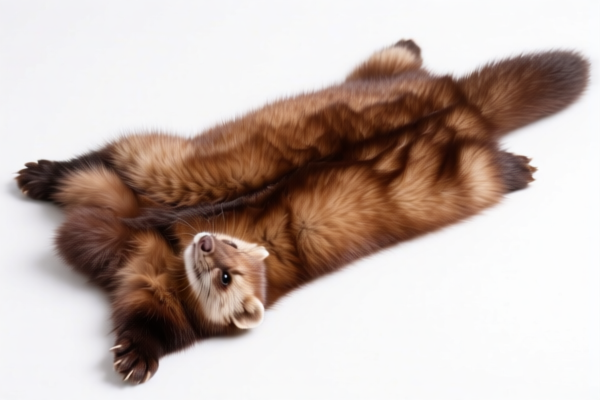
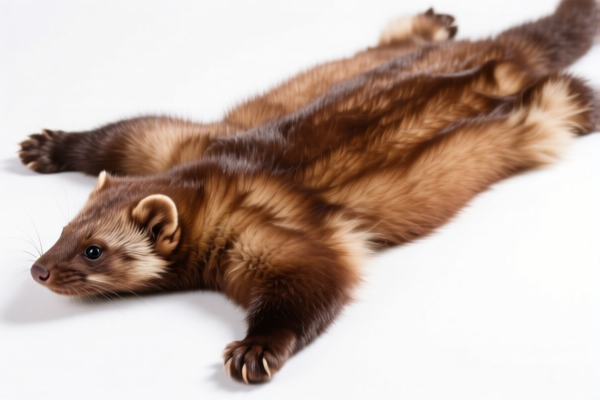
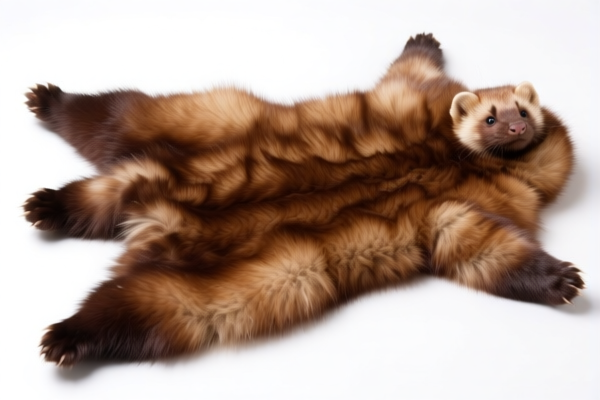
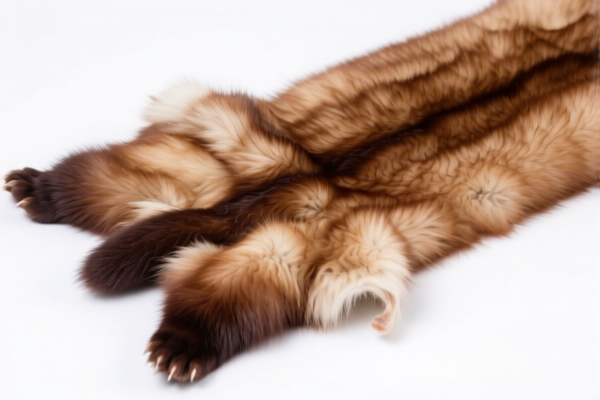
AI Analysis
🦊 Whole Mink Fur Tail (Parts of Tanned Skins)
🌐 HS Code Reference & Clearance Guide | 2026 Latest Tariff Analysis | Professional Custom Strategy
📌 I. Product Definition & Classification: Is it a "Tail" or a "Skin"?
In international trade, the classification of fur parts depends strictly on the state of assembly and the heading definition in the Harmonized System (HS).
According to Heading 4302, the scope covers:
"Tanned or dressed furskins (including heads, tails, paws and other pieces or cuttings), unassembled, or assembled (without the addition of other materials) other than those of heading 4303."
This means that individual body parts (such as tails, heads, paws, or cuttings) of tanned mink fur are classified under Heading 4302, not Heading 4303 (which is for made-up articles like coats).
The key distinction here is between: 1. Whole Skin Assembled: The main body skin with all parts attached → Heading 4302 (Specific codes for Mink). 2. Unassembled Pieces: Tails, heads, paws sold separately → Also Heading 4302 (Specific codes for Mink).
⚠️ Critical Distinction:
- If the tail is detached from the main body and sold as a separate piece → It falls under "Pieces or cuttings" within Heading 4302.
- If the tail is attached to the main body skin (assembled or unassembled whole skin) → It is still classified under the Whole Skin codes for Mink.
📦 II. HS Code Classification Details (2026 Latest Tariff Authority Comparison)
Based on the provided , there are two specific sub-categories for Mink skins/tails under Heading 4302.11. Note that the provided data does not distinguish explicitly between "Whole Skin" and "Tail Only" in the description text, but rather splits by "Kolinsky" (a specific high-grade mink variant) and "Other".
Since "Whole Mink Fur Tail" is typically considered part of the Mink category and not the specialized "Kolinsky" variant (unless specified), it generally falls under "Of mink Other". However, if the tail is part of a whole skin (assembled/unassembled), it follows the whole skin codes.
| HS Code | Product Description | Applicable Scenario | Tax Rate |
|---|---|---|---|
4302.11.00.10 |
Whole skins, with or without head, tail or paws, not assembled: Of mink Kolinsky | High-grade Kolinsky mink skins/tails | 0.0% |
4302.11.00.20 |
Whole skins, with or without head, tail or paws, not assembled: Of mink Other | Standard Mink skins, tails, heads, paws (unassembled) | 0.0% |
🔍 Key Insight:
- HS4302.11.00.20is the primary code for Whole Mink Fur Tails (if sold as part of a whole skin or as a piece of "Other" mink).
- HS4302.11.00.10applies only if the tail is from Kolinsky mink.
- Both codes are within Heading 4302, which explicitly includes "heads, tails, paws and other pieces or cuttings".
💰 III. 2026 Latest Tariff Rate Details (Detailed Breakdown)
✅ Applicable Country: United States (US)
✅ Origin: China (CN) (Assumed for tax calculation context)
✅ Effective Date: 2026
🎯 1. 4302.11.00.20 —— Whole Mink Skins/Tails (Other than Kolinsky)
| Item | Content |
|---|---|
| Basic Duty Rate | 0.0% (ad valorem) |
| Additional Duty (Section 301/IEEPA) | 0.0% |
| Total Tax Rate | 0.0% |
| Tax Calculation | CIF Value × 0% = $0 |
| De Minimis Eligibility | ❌ Not Applicable (Furskins are generally excluded from de minimis thresholds due to animal product regulations, but tax-wise, it is 0% regardless) |
| Legal Basis Path | USITC:4302.11.00.20 → 0% |
📌 Explanation:
- Unlike electronics or steel, fur products (particularly under heading 4302) often enjoy zero-duty status in the US under normal Most Favored Nation (MFN) treatment.
- Crucially, the provided shows "加征关税: 0.0%" (Additional Duty: 0.0%). This means these specific mink fur codes are exempt from the additional 25% or 10% tariffs that apply to many other Chinese goods (like electronics or machinery).
- Total Cost: Only freight, insurance, and local handling fees apply. No US Customs duty is levied on this HS code.
🎯 2. 4302.11.00.10 —— Whole Mink Skins/Tails (Kolinsky)
| Item | Content |
|---|---|
| Basic Duty Rate | 0.0% |
| Additional Duty (Section 301/IEEPA) | 0.0% |
| Total Tax Rate | 0.0% |
| Tax Calculation | CIF Value × 0% = $0 |
| De Minimis Eligibility | ❌ Not Applicable |
| Legal Basis Path | USITC:4302.11.00.10 → 0% |
📌 Note:
- Kolinsky mink is a premium variant, but the tariff treatment is identical to "Other" mink in this dataset.
- Ensure proper species identification to avoid misclassification, as Kolinsky may have stricter CITES/documentation requirements (though not reflected in the tax rate here).
🛠️ IV. Clearance Practical Advice (Battle-Tested Pitfall Guide)
✅ 1. Required Documentation Checklist
| Document | Required? | Description |
|---|---|---|
| ✅ Commercial Invoice | ✔️ | Must clearly state "Tanned Mink Fur Tail" or "Mink Skin (Unassembled)". Do not use vague terms like "Leather Goods." |
| ✅ Packing List | ✔️ | Detail the quantity of tails/skins. Specify if assembled or unassembled. |
| ✅ CITES Permit | ✔️ | Critical! Mink (especially Kolinsky) may be subject to CITES regulations if wild-caught. Farmed mink usually requires a CITES Commercial Document or exemption certificate. |
| ✅ Animal Health Certificate | ✔️ | Required by USDA APHIS for animal products. |
| ✅ Product Photos | ✔️ | Clear images showing the tanned state, color, and condition. |
⚠️ Warning:
- CITES Compliance: Even if the tax is 0%, non-compliance with CITES can lead to seizure and penalties. Ensure your supplier provides valid CITES documentation for farmed mink. - Mislabeling: Do not label as "Leather Jacket" or "Fur Coat." Use precise HS Code terms.
✅ 2. Declaration Tips (Key Mnemonics)
🔥 "Tax is Zero, But CITES is Key!"
| Situation | Correct Declaration | Incorrect Declaration |
|---|---|---|
| Tail only (unassembled) | 4302.11.00.20 - "Mink Fur Tail, Tanned, Unassembled" |
"Leather Piece" → Risk of misclassification |
| Whole skin with tail | 4302.11.00.20 - "Mink Skin, Assembled/Unassembled" |
"Fur Part" → Vague, may trigger inspection |
| Kolinsky Mink Tail | 4302.11.00.10 - "Kolinsky Mink Tail" |
"Mink Tail" → May be downgraded, but tax is same. Specify for accuracy. |
✅ 3. Special Considerations
| Situation | Handling Advice |
|---|---|
| OEM/Custom Orders | Provide design specs. If tail is attached to a coat (Heading 4303), tax changes! |
| Mixed Shipments | If mink tails are mixed with other furs (e.g., fox), declare separately. Fox fur has different HS codes. |
| Farmed vs. Wild | Farmed mink is generally easier to clear. Wild-caught requires stricter CITES proof. |
| De Minimis ($800) | Do NOT rely on de minimis. Animal products are often excluded from Section 321 (de minimis) entry due to health/safety inspections. Full formal entry is recommended. |
🌍 V. Global Market Clearance Comparison (2026 Latest)
| Country/Region | Recommended HS Code | Duty Rate | Certification | Notes |
|---|---|---|---|---|
| 🇺🇸 USA | 4302.11.00.20 |
0% | CITES + USDA | No additional tariffs. CITES is key. |
| 🇨🇳 China | 4302.11.00 |
5-10% | CITES | Import duty applies. |
| 🇪🇺 EU | 4302.11 |
0-12% | CITES + EU Furskin Regulation | Strict anti-animal welfare checks. |
| 🇬🇧 UK | 4302.11 |
0% | CITES | Post-Brexit rules apply. |
| 🇯🇵 Japan | 4302.11 |
0% | CITES | Low duty, high inspection standards. |
📌 Conclusion:
- USA offers the most favorable tariff (0%) for Mink tails/skins under these HS codes.
- CITES documentation is the biggest hurdle, not cost. Ensure your supplier is compliant.
📌 VI. Common Mistakes & Pitfall Guide (Lessons Learned)
❌ Mistake 1: Declaring as "Leather Goods" or "Raw Hides"
👉 Consequence: Misclassification leads to delays, fines, or rejection by USDA.
👉 Correct: Use "Tanned Mink Fur Skin/Tail" and HS Code 4302.11.00.20.
❌ Mistake 2: Ignoring CITES Requirements
👉 Consequence: Seizure and destruction of goods by CBP/FWS.
👉 Correct: Obtain CITES Commercial Document for farmed mink.
❌ Mistake 3: Assuming De Minimis Applies
👉 Consequence: Shipment held at border for full entry.
👉 Correct: File full entry even for small quantities of animal products.
❌ Mistake 4: Confusing Heading 4302 (Parts) with 4303 (Made-up Articles)
👉 Consequence: If you ship a tail attached to a coat, it becomes a "Made-up Article" (4303), which may have different tax rates (not 0%).
👉 Correct: If selling tail only or skin only, use 4302. If coat, use 4303.
✅ Correct Practice:
"Tanned Mink Fur Tail, Farmed, Unassembled, Model MT-01, CITES Certified, HS: 4302.11.00.20"
🎯 VII. Conclusion: Professional Clearance, Zero Tax, Full Compliance!
🎯 Remember the Mantra:
🔹 "Tax is Zero, But CITES is King!"
🔹 "4302 for Parts, 4303 for Coats – Don’t Mix Them Up!"
🔹 "Unassembled Tail = 0% Duty, but Document It Properly!"
📌 Pro Tip:
- If your mink is Kolinsky, use
4302.11.00.10for precision.- If it is Standard Mink, use
4302.11.00.20.- Always include CITES documentation in your shipping package.
- Consult a Customs Broker for pre-clearance if this is your first import of animal products.
📣 Immediate Action:
📞 Contact your supplier for CITES docs + USDA Health Cert.
📄 Prepare Commercial Invoice with exact HS Code4302.11.00.20.
🚀 Ensure smooth, duty-free entry into the US!
✨ Professional clearance starts with accurate classification!
💼 Zero tax doesn’t mean zero effort – compliance is key!
Customer Reviews
About HS Code Classification
The Harmonized System (HS) is an internationally standardized nomenclature developed by the World Customs Organization (WCO) to classify traded products. Over 200 countries use the HS system as the basis for customs tariffs, trade statistics, and import/export regulations.
Each HS code follows a hierarchical structure:
- Chapter (2 digits) — Broad category of goods (e.g., Chapter 84: Machinery and Mechanical Appliances)
- Heading (4 digits) — More specific grouping within the chapter
- Subheading (6 digits) — Internationally standardized breakdown, used by all WCO member countries
- National subdivisions (8-10 digits) — Country-specific extensions for further classification, such as US HTSUS 10-digit codes
Correct HS code classification is essential for smooth customs clearance, accurate duty payment, and compliance with trade regulations. Misclassification can lead to customs delays, overpayment of duties, or penalties.
When importing from CN to US, the applicable tariff rates may include:
- Most-Favored-Nation (MFN) rate — The standard duty rate applied to WTO members
- General rate — Applied to countries without trade agreements
- Trade remedy duties — Additional tariffs such as Section 301 (anti-dumping), Section 232 (national security), or countervailing duties
The information provided on this page is for reference purposes only. For official classification, please consult with your local customs authority or a licensed customs broker.