whole raw cowhide unsplit, single weight not exceeding 10kg, dry salted
CN → US| HS Code | Tariff Rate | Origin | Destination | Doc |
|---|---|---|---|---|
| 4101201010 | 17.5% | CN | US | Official Doc |
| 4101901020 | 17.5% | CN | US | Official Doc |
| 4101201010 | 17.5% | CN | US | Official Doc |
| 4101201020 | 17.5% | CN | US | Official Doc |
Product Images
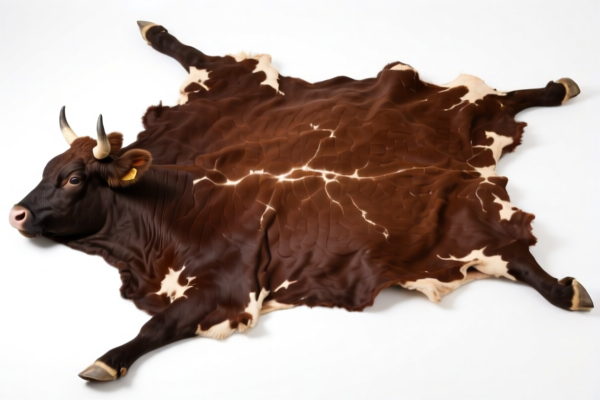
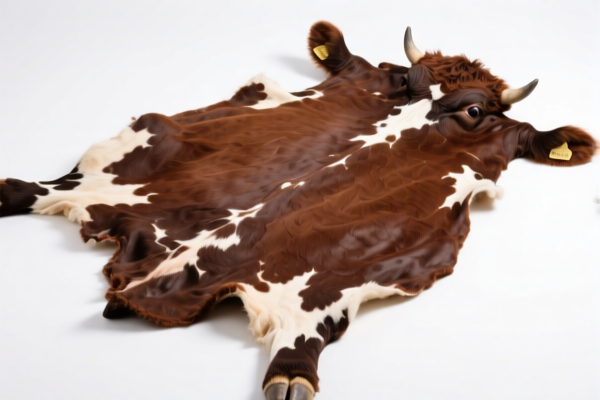
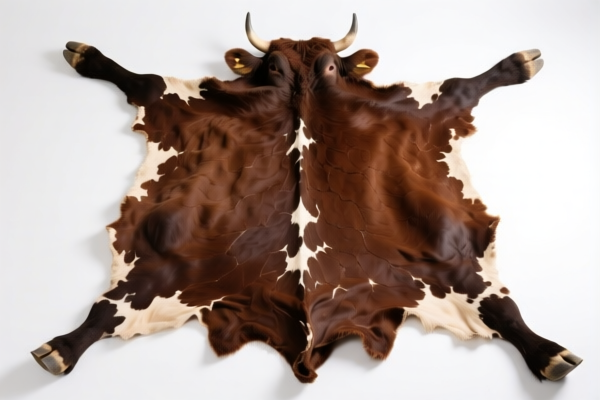
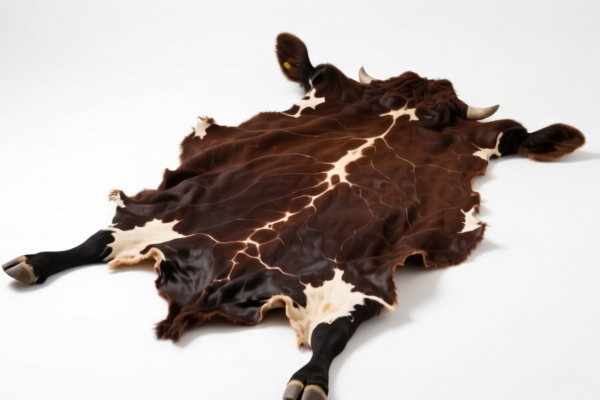
AI Analysis
🐄 Bovine Hides: Raw, Unsplit, Dry-Salted, ≤10kg
🌐 HS Code Reference & Customs Clearance Guide | 2026 Latest Tariff Analysis | Professional Entry Strategy
📌 I. Product Definition & Classification: Do You Really Understand "Raw Bovine Hides"?
Raw bovine hides are the fundamental raw materials for the leather industry. In international trade, they are strictly classified based on animal origin, treatment method, layering status (split vs. unsplit), and weight.
For the specific product described: "whole raw cowhide unsplit, single weight not exceeding 10kg, dry salted", the key characteristics are: 1. Material: Cowhide (Bovine). 2. State: Raw/Whole (Not tanned or further processed). 3. Structure: Unsplit (The hide has not been cut into layers). 4. Preservation: Dry Salted (Salted to prevent decomposition during transit). 5. Weight: ≤ 10 kg per single hide.
⚠️ Critical Distinction:
- If the hide is split (cut into layers), it falls under different subheadings (e.g., 4101.20.10.20 or 4101.90.10.20 depending on specific regional interpretations, but usually split hides have different weight/value thresholds).
- If the weight exceeds 10 kg, it typically moves to HS Code 4101.20.10.20 or 4101.90.10.20.
- If the hide is wet salted or fresh, it may not qualify for the "dry salted" specific entry, though often grouped under general raw hides.
- For this specific query (≤10kg, unsplit, dry salted), the primary match is 4101.20.10.10.
📦 II. HS Code Classification Details (2026 Latest Tariff Authority Reference)
| HS Code | Product Description | Applicable Scenario | Key Matching Conditions |
|---|---|---|---|
4101.20.10.10 |
Bovine hides, raw, unsplit, dry-salted, weighing ≤ 10 kg | High-value leather goods (luxury bags, shoes, accessories) requiring thinner, uniform hides | ✅ Unsplit, ✅ Dry Salted, ✅ ≤10kg |
4101.90.10.20 |
Other bovine hides, raw, unsplit (general category) | Heavier hides (>10kg) or alternative preservation methods not explicitly covered in 4101.20.10.10 | ✅ Unsplit, ❌ Weight >10kg or non-dry salted specifics |
4101.20.10.20 |
Bovine hides, raw, unsplit, weighing > 10 kg | Industrial leather, heavy-duty upholstery, belts | ✅ Unsplit, ❌ Weight >10kg |
🔍 Key Reminder:
-4101.20.10.10is the most precise fit for your description: "whole raw bovine hides", "unsplit", "dry salted", "not exceeding 10 kg".
-4101.90.10.20may appear in some systems as a broader match for "unsplit cowhide dry salted" if the weight constraint is not strictly enforced in the system's logic, but4101.20.10.10is technically more accurate for ≤10kg.
- Misclassification can lead to incorrect duty calculations and customs delays.
💰 III. 2026 Latest Tariff Rate Breakdown (Including Surtaxes & Policy Add-ons)
✅ Applicable Country: United States (US)
✅ Origin: China (CN)
✅ Effective Date: November 10, 2025 onwards (including subsequent imports)
🎯 1. 4101.20.10.10 – Bovine Hides, Raw, Unsplit, Dry-Salted, ≤10kg
| Item | Content |
|---|---|
| Base Tariff | 0% (ad valorem) |
| USITC Surtax | +7.5% (Section 301 Tariff on Chinese Goods) |
| IEEPA Surtax | +10% (Section 122 Tariff on Chinese Goods) |
| Total Tax Rate | 17.5% |
| Tax Calculation | CIF Value × 17.5% |
| De Minimis Eligibility | ❌ Not Eligible (Section 321 de minimis does not apply to Section 301/122 goods from China) |
| Legal Authority Path | IEEPA:9903.01.25 → IEEPA:9903.01.24 → USITC:4101.20.10.10 → FOOTNOTE:9903.88.01 |
📌 Explanation:
- "7.5% USITC Surtax": Derived from the Trade Act of 1974, Section 301, targeting specific Chinese products.
- "10% IEEPA 122 Tariff": Additional tariffs imposed under the International Emergency Economic Powers Act (IEEPA), specifically for certain raw materials and goods from China.
- Total 17.5%: This is a significant cost for raw materials. Must be factored into landed cost calculations.
🎯 2. 4101.90.10.20 – Other Bovine Hides, Raw, Unsplit (General Category)
| Item | Content |
|---|---|
| Base Tariff | 0% |
| USITC Surtax | +7.5% |
| IEEPA Surtax | +10% |
| Total Tax Rate | 17.5% |
| Tax Calculation | CIF × 17.5% |
| De Minimis Eligibility | ❌ Not Eligible |
| Legal Authority Path | IEEPA:9901.25 → IEEPA:9903.01.24 → USITC:4101.90.10.20 → FOOTNOTE:9903.88.01 |
📌 Note:
- Although the HS Code differs slightly, the tax rate is identical (17.5%) for Chinese-origin raw bovine hides under these surtax regimes.
- Whether classified as4101.20.10.10or4101.90.10.20, the financial impact is the same.
- However,4101.20.10.10is the more accurate description for ≤10kg hides, reducing the risk of customs scrutiny or requests for clarification.
🛠️ IV. Customs Clearance Practical Advice (Real-World Pitfall Avoidance)
✅ 1. Required Documentation Checklist (No Omissions)
| Document | Mandatory? | Notes |
|---|---|---|
| ✅ Commercial Invoice | ✔️ | Must clearly state: "Bovine Hides, Raw, Unsplit, Dry Salted, ≤10kg per Hide" |
| ✅ Packing List | ✔️ | List each hide's weight individually if possible, or confirm "≤10kg per hide" |
| ✅ Bill of Lading/Air Waybill | ✔️ | Ensure consignor/consignee details match invoice |
| ✅ Phytosanitary Certificate | ✔️ | Critical: Raw hides are biological materials. Many countries require proof of disease-free status. |
| ✅ Certificate of Origin | ✔️ | To prove origin is China (subject to surtaxes) |
| ✅ Product Photos | ✔️ | Show salted surface, thickness, and unsplit nature |
| ✅ Supplier Declaration | ✔️ | Confirm no chemical tanning, dyeing, or other processing |
✅ 2. Declaration Tips (Key Mantras)
🔥 "Unsplit, Dry-Salted, ≤10kg, Declare 4101.20.10.10!"
| Scenario | Correct Declaration | Incorrect Practice |
|---|---|---|
| Hides are unsplit and ≤10kg | 4101.20.10.10 |
Misreporting as 4101.20.10.20 (heavier) → Audit risk |
| Hides are split (layered) | 4101.20.10.20 or 4101.90.10.20 |
Misreporting as "unsplit" → False declaration |
| Hides are wet-salted | May require different classification | Assuming dry-salted code applies to wet-salted |
| Hides exceed 10kg | 4101.20.10.20 |
Falsifying weight to fit ≤10kg → Fraud |
✅ 3. Special Cases Handling
| Scenario | Handling Advice |
|---|---|
| Mixed Weights | If a shipment contains both ≤10kg and >10kg hides, split the declaration. Do not mix HS Codes in one line item. |
| OEM/Custom Sizes | Ensure supplier confirms "unsplit" status. Some hides are naturally thin and might be split; require lab or supplier certification. |
| Transshipment | If goods transit through a third country, ensure the Certificate of Origin clearly shows China as the country of origin to avoid origin confusion. |
| Phytosanitary Issues | Work with a licensed customs broker to pre-clear phytosanitary requirements. Delays here are common and costly. |
🌍 V. Global Market Clearance Comparison (2026 Latest)
| Country/Region | Recommended HS Code | Tariff | Certification | Notes |
|---|---|---|---|---|
| 🇺🇸 USA | 4101.20.10.10 |
17.5% | Phytosanitary | 17.5% due to Section 301 + 122 tariffs |
| 🇨🇳 China | 4101.20.10.10 |
0% | Phytosanitary | No surtaxes for imports into China |
| 🇪🇺 EU | 4101.20.10 |
0-4% | CE/Eco-label (if applicable) | Lower tariffs; no US-style surtaxes |
| 🇬🇧 UK | 4101.20.10 |
0-4% | UKCA (if applicable) | Post-Brexit rules apply |
| 🇻🇳 Vietnam | 4101.20.10 |
0-10% | VCO (Vietnam Certificate of Origin) | Free Trade Agreement benefits may apply |
📌 Conclusion:
- USA is the most expensive market due to 17.5% additional tariffs.
- China, EU, UK have significantly lower or zero tariffs.
- Phytosanitary regulations are universal for raw animal products.
📌 VI. Common Errors & Pitfall Guide (Lessons Learned)
❌ Error 1: Declaring "Dry Salted" hides as "Fresh"
👉 Consequence: Missing phytosanitary requirements → Quarantine or Return
❌ Error 2: Ignoring the "Unsplit" condition
👉 Consequence: If hides are split, they may fall under a different HS Code with different tax implications → Customs Dispute
❌ Error 3: Falsifying Weight to avoid Higher Tariff Codes
👉 Consequence: If a single hide weighs 12kg but is declared as 9kg, it is fraud → Heavy Fines & Blacklisting
❌ Error 4: Not Providing Phytosanitary Certificate
👉 Consequence: Detention at Port → Storage fees, potential destruction of goods
✅ Correct Practice:
"Bovine Hides, Raw, Unsplit, Dry-Salted, Individual Hide Weight ≤10kg, Origin: China, Phytosanitary Cert Attached"
🎯 VII. Conclusion: Professional Declaration, Save Time, Reduce Costs
🎯 Remember the Mantra:
🔹 "Unsplit + Dry-Salted + ≤10kg = 4101.20.10.10"
🔹 "17.5% Tariff for US Imports from China – Plan Ahead!"
🔹 "Phytosanitary Cert is Mandatory – Don't Forget It!"
📌 Pro Tip:
If your hides are sourced from Vietnam, Brazil, or India, the IEEPA/Section 301 surtaxes may not apply (depending on current trade rules). Always verify the country of origin to potentially reduce tariffs to 0% or lower rates.
Consider Advance Rulings for large shipments to confirm HS Code classification and duty rates before shipping.
📣 Immediate Action:
📞 Contact a licensed Customs Broker + Provide Phytosanitary Cert + Verify HS Code
4101.20.10.10
🚀 Ensure smooth clearance, avoid delays, and optimize your landed cost!
✨ Professional Customs Clearance Starts with Accurate Classification!
💼 Every Percent of Tariff Counts!
Customer Reviews
About HS Code Classification
The Harmonized System (HS) is an internationally standardized nomenclature developed by the World Customs Organization (WCO) to classify traded products. Over 200 countries use the HS system as the basis for customs tariffs, trade statistics, and import/export regulations.
Each HS code follows a hierarchical structure:
- Chapter (2 digits) — Broad category of goods (e.g., Chapter 84: Machinery and Mechanical Appliances)
- Heading (4 digits) — More specific grouping within the chapter
- Subheading (6 digits) — Internationally standardized breakdown, used by all WCO member countries
- National subdivisions (8-10 digits) — Country-specific extensions for further classification, such as US HTSUS 10-digit codes
Correct HS code classification is essential for smooth customs clearance, accurate duty payment, and compliance with trade regulations. Misclassification can lead to customs delays, overpayment of duties, or penalties.
When importing from CN to US, the applicable tariff rates may include:
- Most-Favored-Nation (MFN) rate — The standard duty rate applied to WTO members
- General rate — Applied to countries without trade agreements
- Trade remedy duties — Additional tariffs such as Section 301 (anti-dumping), Section 232 (national security), or countervailing duties
The information provided on this page is for reference purposes only. For official classification, please consult with your local customs authority or a licensed customs broker.