wicker baskets
CN → US| HS Code | Tariff Rate | Origin | Destination | Doc |
|---|---|---|---|---|
| 4601932000 | 41.6% | CN | US | Official Doc |
| 4602121600 | 40.0% | CN | US | Official Doc |
| 4602110700 | 35.0% | CN | US | Official Doc |
| 4601942000 | 41.6% | CN | US | Official Doc |
| 4602191700 | 35.0% | CN | US | Official Doc |
Product Images
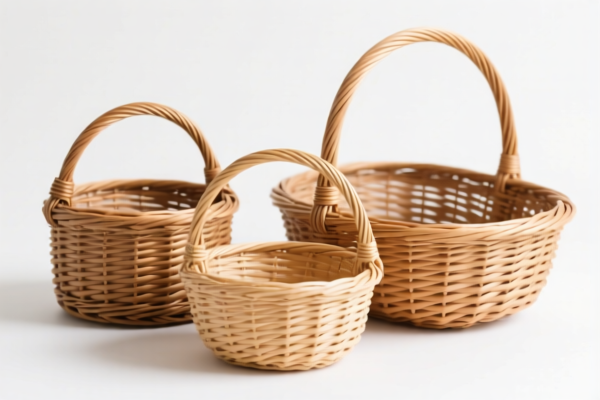
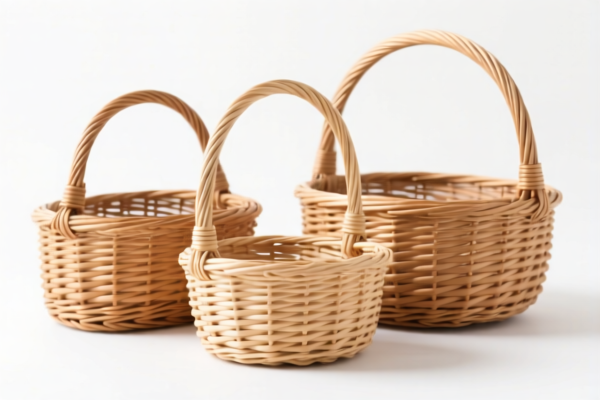
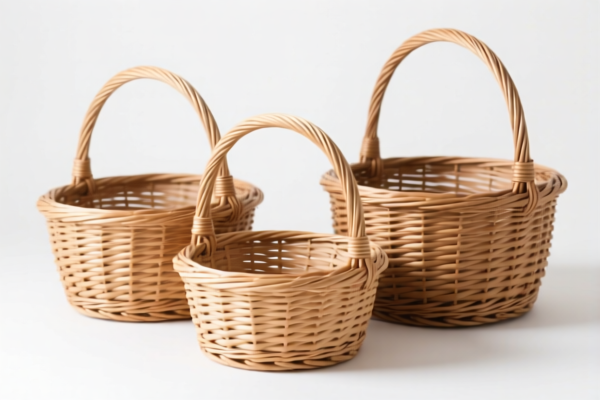
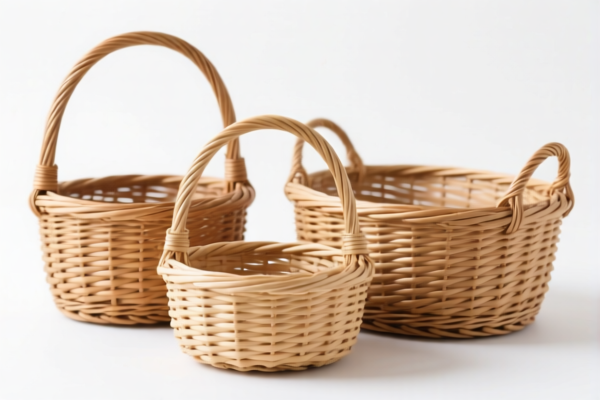
AI Analysis
🧺 Wicker Baskets (Plaited Basketry Products)
🌐 HS Code Reference & Customs Clearance Guide | 2026 Latest Tariff Analysis | Professional Clearance Strategy
📌 I. Product Definition & Classification: Do You Really Know "Wicker Baskets"?
"Wicker baskets" in international trade are not a single HS code but a category of plaited basketry products. The classification depends on: 1. Material: Reed, willow, rattan, bamboo, or other vegetable materials. 2. Form: Baskets, bowls, trays, or other woven containers. 3. Construction: Whether it is a finished article (Chapter 46) or a basketry product using specific materials like bamboo (Chapter 47 or 46 depending on process).
⚠️ Key Distinction Point:
- If the product is made of willow, reed, or rattan and is a finished basket, it generally falls under Chapter 46.
- Specific sub-headings distinguish between willow baskets (4601/4602) and other plaited basketry.
- Note: The provided data focuses on HS Codes 4601 and 4602, which cover Willow (Salix) and Rattan (Calamus) products.
📦 II. HS Code Classification Details (2026 Latest Tariff Authority Comparison)
| HS Code | Product Description | Applicable Scenario | Material Type |
|---|---|---|---|
4601.93.20.00 |
Woven baskets of willow or other materials | Willow/rattan baskets, packaging | Willow, Rattan, etc. |
4602.12.16.00 |
Woven basketry articles (Willow/Rattan) | Finished willow/rattan baskets | Willow, Rattan |
4602.11.07.00 |
Willow baskets | Pure willow woven baskets | Willow (Salix) |
4601.94.20.00 |
Other plaited goods (Willow) | Willow woven items (non-basket) | Willow |
4602.19.17.00 |
Other woven basketry (Plant materials) | Mixed plant materials, willow/rattan | Willow, Bamboo, etc. |
🔍 Key Reminder:
- All finished willow/rattan baskets fall under Chapter 46 (Plaited Basketry and Wickerwork).
- Do not confuse with wooden baskets (Chapter 44) or plastic baskets (Chapter 39).
- Material matters: "Willow" (Salix) vs. "Rattan" (Calamus) may have different sub-codes, but the tax structure here is similar.
💰 III. 2026 Latest Tariff Rate Breakdown (Including Additional Taxes, Policy Surcharges)
✅ Applicable Country: United States (US)
✅ Origin: China (CN)
✅ Effective Date: November 10, 2025 (and subsequent imports)
🎯 1. 4601.93.20.00 & 4601.94.20.00 – Woven Willow/Rattan Baskets
| Item | Content |
|---|---|
| Basic Tariff | 6.6% (ad valorem) |
| Section 301 Additional Tariff | +25.0% |
| Section 122 Tariff | +10.0% |
| Total Tax Rate | 41.6% |
| Tax Calculation | CIF Value × 41.6% |
| De Minimis Eligibility | ❌ Not Eligible (deny_de_minimis) |
| Legal Basis | 301:4601.93.20.00 → 122:China → USITC:4601.93.20.00 |
📌 Explanation:
- Basic Tariff (6.6%): Standard MFN rate for plaited basketry.
- Section 301 (25%): Trump-era tariff retained under Biden administration for many Chinese goods.
- Section 122 (10%): Additional tariff on certain strategic materials/products.
- Total: 41.6% – This is a high-cost item for US importers from China.
🎯 2. 4602.12.16.00 – Woven Basketry Articles (Willow/Rattan)
| Item | Content |
|---|---|
| Basic Tariff | 5.0% (ad valorem) |
| Section 301 Additional Tariff | +25.0% |
| Section 122 Tariff | +10.0% |
| Total Tax Rate | 40.0% |
| Tax Calculation | CIF Value × 40.0% |
| De Minimis Eligibility | ❌ Not Eligible |
| Legal Basis | 301:4602.12.16.00 → 122:China → USITC:4602.12.16.00 |
📌 Note:
- Slightly lower basic tariff (5.0%) compared to 4601.93.20.00.
- Still subject to 35% additional taxes (25% + 10%).
🎯 3. 4602.11.07.00, 4602.19.17.00 – Willow Baskets & Other Plant Material Baskets
| Item | Content |
|---|---|
| Basic Tariff | 0.0% (ad valorem) |
| Section 301 Additional Tariff | +25.0% |
| Section 122 Tariff | +10.0% |
| Total Tax Rate | 35.0% |
| Tax Calculation | CIF Value × 35.0% |
| De Minimis Eligibility | ❌ Not Eligible |
| Legal Basis | 301:4602.11.07.00 → 122:China → USITC:4602.11.07.00 |
📌 Critical Point:
- Basic tariff is 0%, but additional taxes push it to 35%.
- This is the most favorable option among the listed codes, but still significantly higher than non-US markets.
🛠️ IV. Customs Clearance Practical Advice (Real-World Pitfall Avoidance Guide)
✅ 1. Document Checklist (Must-Provide)
| Document | Mandatory | Description |
|---|---|---|
| ✅ Product Specification Sheet | ✔️ | Material composition (Willow? Rattan? Bamboo?), dimensions, weight |
| ✅ Material Declaration | ✔️ | Confirm if it is natural vegetable material (Chapter 46) vs. wood (Chapter 44) |
| ✅ Product Photos | ✔️ | Clear images showing weave, handle, base, and any labels |
| ✅ Commercial Invoice | ✔️ | Must state "Wicker Basket" or "Willow Basket", not vague terms like "Home Decor" |
| ✅ Packing List | ✔️ | Net/Gross weight, quantity per carton |
| ✅ Country of Origin Certificate | ✔️ | If not China, may avoid 301/122 tariffs |
✅ 2. Declaration Tips (Key Mnemonic)
🔥 "Material Matters, Code Matches, Tax Avoids Surcharge!"
| Scenario | Correct HS Code | Wrong Practice |
|---|---|---|
| Willow Basket | 4602.11.07.00 (0% base + 35% total) |
Declare as "Wooden Basket" (Chapter 44) → Different tariff, potential fraud |
| Rattan Basket | 4602.12.16.00 (5% base + 40% total) |
Declare as "Plastic Basket" (Chapter 39) → Wrong classification, penalties |
| Mixed Material Basket | 4601.93.20.00 or 4602.19.17.00 |
Vague description "Basket" → Customs will assign worst-case code |
| Non-Chinese Origin | Same HS Code, 0% additional taxes | Assume China origin → Pay 25%+10% unnecessarily |
✅ 3. Special Case Handling
| Case | Handling Advice |
|---|---|
| OEM Custom Baskets | Provide design specs and material list to prove Chapter 46 classification |
| Basket + Liner (Plastic/Cloth) | If liner is integral, declare as basket; if removable, may split declaration (complex) |
| Gift Sets (Basket + Fruit) | The basket may be classified as "packaging" if value is minor, but often still charged |
| Non-China Origin (e.g., Vietnam, Indonesia) | Zero 301/122 tariffs! Total tax = Basic Tariff only (0%~5%) |
🌍 V. Global Main Market Clearance Comparison (2026 Latest)
| Country/Region | Recommended HS Code | Basic Tariff | 301/122 Tariffs | Total Tax (China Origin) | Remarks |
|---|---|---|---|---|---|
| 🇺🇸 USA | 4602.11.07.00 |
0% | +35% | 35% | High cost due to 301/122 |
| 🇨🇳 China | 4602.11.07.00 |
6.5% | 0% | 6.5% | No additional tariffs |
| 🇪🇺 EU | 4602.11.07.00 |
3.9% | 0% | 3.9% | CE/RoHS may apply for some items |
| 🇬🇧 UK | 4602.11.07.00 |
3.9% | 0% | 3.9% | Post-Brexit tariff |
| 🇯🇵 Japan | 4602.11.07.00 |
0% | 0% | 0% | Zero tariff! |
📌 Conclusion:
- USA is the only market imposing 35%+ tariffs on Chinese wicker baskets.
- Japan and EU offer near-zero tariffs.
- Recommendation: If shipping to US, consider transshipment from Vietnam/Indonesia (check rules of origin carefully) or absorb tariff cost.
📌 VI. Common Mistakes & Pitfall Guide (Lessons Learned)
❌ Mistake 1: Declaring "Willow Basket" as "Wooden Box" (Chapter 44)
👉 Consequence: Wrong HS code, potential customs penalty, 35% vs. different rate mismatch.
❌ Mistake 2: Ignoring Section 122 Tariff
👉 Consequence: Underpaying taxes by 10% → Back taxes + interest + fines.
❌ Mistake 3: Using "Basket" as a vague description
👉 Consequence: Customs may assign 4601.93.20.00 (41.6%) instead of 4602.11.07.00 (35%) → Loss of 6.6% due to poor description.
❌ Mistake 4: Assuming De Minimis (Section 321) applies
👉 Consequence: Section 301/122 tariffs apply even for small parcels → No $800 exemption.
✅ Correct Practice:
"Willow Woven Storage Basket, Natural Finish, 12x12x10 inches, Made in China"
🎯 VII. Conclusion: Professional Declaration, Save Time & Money!
🎯 Remember the Mnemonic:
🔹 "Willow is Chapter 46, Tax is 35% in US, 0% in Japan, De Minimis Does Not Apply!"
🔹 "Code 4602.11.07.00 is best, 0% base + 35% extra, avoid 4601.93.20.00!"
📌 Tips:
- If your baskets are originating from Vietnam, Indonesia, or Malaysia, you may avoid Section 301 and 122 tariffs.
- Apply for Advance Ruling with US Customs (CBP) to confirm HS code and tariff liability.
- For US market, consider bundling with non-tariff items if possible, but be cautious of evasion rules.
📣 Immediate Action:
📞 Contact a licensed US customs broker + Provide material specs + Verify origin country
🚀 Let your wicker baskets clear customs smoothly, avoid surprise taxes, and maximize profit!
✨ Professional Clearance Starts with Precise Classification!
💼 Your Every Dollar Saved, Deserves Accurate Calculation!
Customer Reviews
About HS Code Classification
The Harmonized System (HS) is an internationally standardized nomenclature developed by the World Customs Organization (WCO) to classify traded products. Over 200 countries use the HS system as the basis for customs tariffs, trade statistics, and import/export regulations.
Each HS code follows a hierarchical structure:
- Chapter (2 digits) — Broad category of goods (e.g., Chapter 84: Machinery and Mechanical Appliances)
- Heading (4 digits) — More specific grouping within the chapter
- Subheading (6 digits) — Internationally standardized breakdown, used by all WCO member countries
- National subdivisions (8-10 digits) — Country-specific extensions for further classification, such as US HTSUS 10-digit codes
Correct HS code classification is essential for smooth customs clearance, accurate duty payment, and compliance with trade regulations. Misclassification can lead to customs delays, overpayment of duties, or penalties.
When importing from CN to US, the applicable tariff rates may include:
- Most-Favored-Nation (MFN) rate — The standard duty rate applied to WTO members
- General rate — Applied to countries without trade agreements
- Trade remedy duties — Additional tariffs such as Section 301 (anti-dumping), Section 232 (national security), or countervailing duties
The information provided on this page is for reference purposes only. For official classification, please consult with your local customs authority or a licensed customs broker.