wicker pet basket
CN → US| HS Code | Tariff Rate | Origin | Destination | Doc |
|---|---|---|---|---|
| 4602110700 | 35.0% | CN | US | Official Doc |
| 4602121600 | 40.0% | CN | US | Official Doc |
Product Images
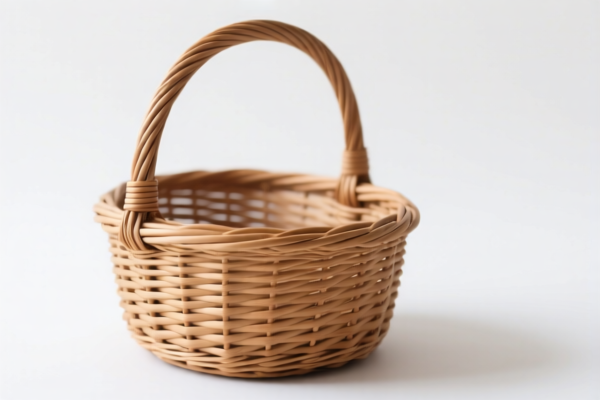
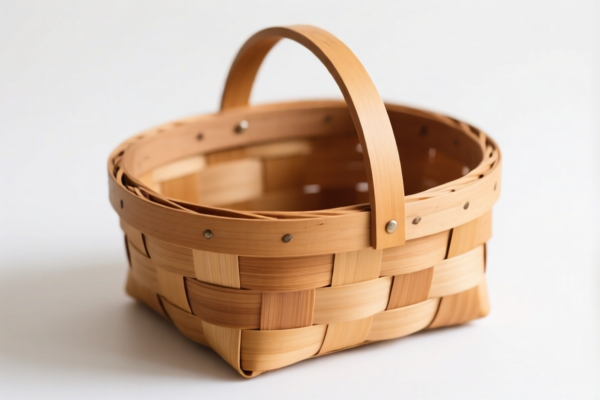
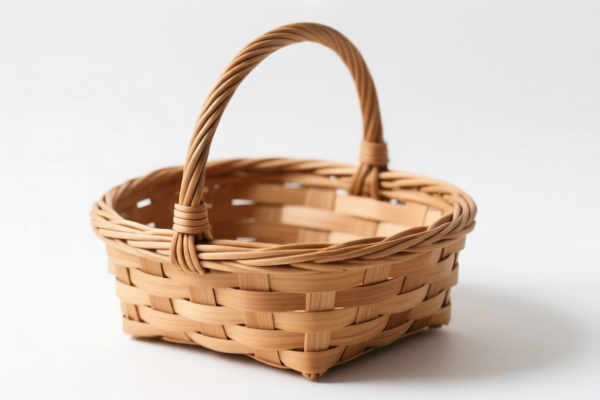
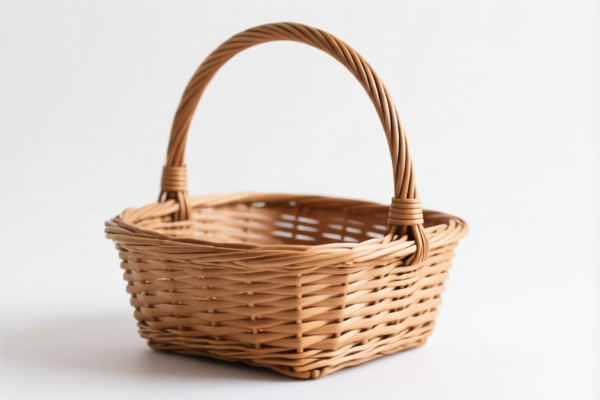
AI Analysis
🐶 Wicker Pet Basket (Wickerwork Articles)
🌐 HS Code Reference & Clearance Guide | 2026 Latest Tariff Analysis | Professional Customs Strategy
📌 I. Product Definition and Classification: What Exactly Is a "Wicker Pet Basket"?
A "Wicker Pet Basket" falls under the broader category of Basketwork, wickerwork, and other articles, made directly to shape from plaiting materials or made up from articles of heading 4601; articles of loofah.
In international trade, these products are classified based on material composition and construction method. The two primary materials for wicker pet baskets are Bamboo and Rattan.
⚠️ Key Distinction Point:
- If the basket is made primarily of Bamboo → It falls under subheading 4602.11.
- If the basket is made primarily of Rattan → It falls under subheading 4602.12.
- Crucial Note: Even if the basket is lined with fabric or has a cushion, it is still classified as "basketwork" unless the lining constitutes the essential character (which is rare for simple pet beds).
📦 II. HS Code Classification Details (2026 Latest Tariff Authority Comparison)
| HS Code | Product Description | Applicable Scenario | Material |
|---|---|---|---|
4602.11.07.00 |
Other baskets and bags, whether or not lined: Wickerwork | Bamboo pet baskets, bamboo carriers, bamboo crate-style beds | 🎋 Vegetable: Bamboo |
4602.12.16.00 |
Other baskets and bags, whether or not lined: Other | Rattan pet baskets, rattan lounge chairs for pets, woven rattan beds | 🌿 Vegetable: Rattan |
🔍 Important Reminder:
- Lining Does Not Change Classification: Adding a cotton or fleece liner to a bamboo/rattan basket does not change the HS Code to textiles (Heading 6307). It remains a basketwork article because the basket structure defines the essential character.
- "Other" Category: Both4602.11.07.00and4602.12.16.00are "Other" subcategories, meaning they do not fall into specific listed types like "cooking baskets" or "market baskets," making them the default for pet products.
💰 III. 2026 Latest Tariff Rate Detail (Including Additional Taxes & Policy Add-ons)
✅ Applicable Country: United States (US)
✅ Origin: China (CN)
✅ Effective Date: From November 10, 2025 (including subsequent imports)
🎯 1. 4602.11.07.00 — Wickerwork (Bamboo)
| Item | Content |
|---|---|
| Basic Tariff | 0.0% (Ad Valorem) |
| Additional Tariff (Section 301) | +25.0% |
| Total Tax Rate | 25.0% |
| Tax Calculation | CIF Value × 25% |
| De Minimis Exemption | ❌ Not Eligible (Section 301 goods are exempt from de minimis relief under current enforcement) |
| Legal Basis Path | USITC:4602.11.07.00 → FOOTNOTE:301 |
📌 Explanation:
- Bamboo wicker products are heavily scrutinized due to their classification as "wickerwork."
- While the base duty is 0%, the 25% Section 301 tariff applies because these goods originate from China.
- No IEEPA Additional Tax: Unlike some electronics or steel, wickerwork currently does not have an additional IEEPA tax layered on top in this specific data set. The total burden is strictly 25%.
🎯 2. 4602.12.16.00 — Other (Rattan)
| Item | Content |
|---|---|
| Basic Tariff | 5.0% (Ad Valorem) |
| Additional Tariff (Section 301) | +25.0% |
| Total Tax Rate | 30.0% |
| Tax Calculation | CIF Value × 30% |
| De Minimis Exemption | ❌ Not Eligible |
| Legal Basis Path | USITC:4602.12.16.00 → FOOTNOTE:301 |
📌 Note:
- Rattan has a higher base duty (5%) compared to bamboo (0%).
- Combined with the 25% Section 301 tariff, the total import cost into the US is 30%.
- This makes Rattan pet baskets 5% more expensive in duties than Bamboo ones for US importers.
🛠️ IV. Clearance Operational Suggestions (Practical Pitfall Avoidance Guide)
✅ 1. Required Documentation Checklist (Indispensable)
| Material | Must Provide | Explanation |
|---|---|---|
| ✅ Product Specifications | ✔️ | Must state material composition: e.g., "100% Natural Bamboo" or "Rattan with Cotton Liner." |
| ✅ Product Photos | ✔️ | Clear images showing the woven structure. Must distinguish between "wickerwork" and "wooden furniture." |
| ✅ Commercial Invoice | ✔️ | Description must match HS Code logic: "Bamboo Wicker Pet Basket" or "Rattan Wicker Pet Bed." Avoid vague terms like "Home Decor." |
| ✅ Packing List | ✔️ | Clarify if items are sold as sets (basket + cushion). The set is classified by the basket. |
| ✅ Material Certificate | ✔️ | Proof that materials are vegetable-based (Bamboo/Rattan) to avoid misclassification as plastic (Headings 3926) or metal. |
✅ 2. Declaration Techniques (Key Mantras)
🔥 "Material First, Liner Second, Base Duty Matters!"
| Scenario | Correct Declaration | Incorrect Practice |
|---|---|---|
| Bamboo Basket with Liner | 4602.11.07.00 (25% Total) |
Misdeclare as Textile Bed → Risk of Fraud/Rejection |
| Rattan Basket with Cushion | 4602.12.16.00 (30% Total) |
Misdeclare as Wooden Furniture → Different Duty, Potential Penalty |
| Plastic Imitation Wicker | Not Wickerwork (Likely Heading 39 or 9403) | Declare as "Wicker" → Misclassification Error |
| Solid Wood Pet Crate | Not Wickerwork (Heading 4601/4403) | Declare as "Wicker" → Significant Duty Difference |
📌 Critical Warning:
- Do NOT use "Pet Bed" as the primary description. Use "Wickerwork Article" or "Basketwork" as the technical classification driver.
- If the product is plastic molded to look like wicker, it belongs in Heading 3926.90 or 9403, NOT 4602. Misclassifying plastic as wicker can lead to severe penalties.
✅ 3. Special Circumstances Handling
| Situation | Handling Advice |
|---|---|
| Mixed Materials | If the basket is 90% bamboo but has 10% plastic handles, it may still be classified as bamboo if bamboo is the essential character. Provide material breakdown. |
| Kit Sales | If sold as a "Basket + Liner + Toy" kit, the entire kit is classified under the basket's HS Code (4602.11 or 4602.12). Do not split the value for separate duties. |
| Origin Proof | Ensure the Certificate of Origin explicitly states China. If transshipped, ensure no substantial transformation occurred to change origin. |
🌍 V. Global Market Comparison for Wicker Pet Baskets (2026)
| Country/Region | Recommended HS Code | Duty Rate (CN Origin) | Key Requirements | Notes |
|---|---|---|---|---|
| 🇺🇸 USA | 4602.11.07.00 / 4602.12.16.00 |
25% (Bamboo) / 30% (Rattan) | Section 301 Tariff | High duty burden. Base tax is low, but 301 tax is heavy. |
| 🇨🇳 China | 4602.11 / 4602.12 | 5% - 10% | CCC (if applicable) | Importing into China is cheaper than exporting to US. |
| 🇪🇺 EU | 4602.11 / 4602.12 | 0% - 2% | No Section 301 | Much more favorable for bamboo/rattan products. |
| 🇬🇧 UK | 4602.11 / 4602.12 | 0% - 5% | Post-Brexit Rules | Competitive market, lower barriers than US. |
| 🇦🇺 Australia | 4602.11 / 4602.12 | 0% - 5% | No Additional Tax | Good alternative market to the US. |
📌 Conclusion:
- The US market is the most expensive for Chinese-made wicker pet baskets due to the 25-30% total tariff.
- EU and UK markets offer significantly lower duties (often 0-5%), making them more attractive for cost-sensitive exports.
- Consider supply chain diversification if targeting the US heavily, as wickerwork is not always exempt from 301 tariffs like some consumer goods.
📌 VI. Common Errors & Pitfalls Guide (Lessons Learned)
❌ Error 1: Declaring a Plastic Wicker-Look basket as Natural Wicker (4602.11)
👉 Consequence: Misclassification. Plastic goods fall under Heading 39 or 94. Penalties for fraud if discovered.
👉 Solution: Accurately identify material. Plastic = Heading 39/94. Natural = Heading 46.
❌ Error 2: Ignoring the Lining
👉 Consequence: Believing a fabric liner changes the HS Code to Textiles.
👉 Solution: The liner is an accessory. The basket remains the essential character. Stick to 4602.
❌ Error 3: Confusing Bamboo vs. Rattan
👉 Consequence: Using 4602.11 (0% base) for Rattan (5% base) saves you nothing and risks inspection.
👉 Solution: Know your material. Bamboo = 4602.11. Rattan = 4602.12. The 5% base difference matters.
❌ Error 4: Assuming De Minimis Exemption for Low-Value Baskets
👉 Consequence: Sending baskets valued under $800 hoping for tax-free entry.
👉 Solution: Section 301 goods are excluded from de minimis. You will pay tax even on small parcels.
✅ Correct Approach:
"Wicker Pet Basket, Bamboo, with Cotton Liner, Model XYZ, Origin China"
HS Code:4602.11.07.00
Duty: 25%
🎯 VII. Conclusion: Professional Declaration, Cost Savings, Efficiency!
🎯 Remember the Mantra:
🔹 "Bamboo is 25%, Rattan is 30%, Plastic is NOT Wicker!"
🔹 "Section 301 kills de minimis for wickerwork, pay up at the border!"
🔹 "Base duty is low, but additional tax is high, plan your margin wisely!"
📌 Pro Tip:
If you are exporting to the US, calculate your landed cost including the 25-30% tariff.
If you are exporting to Europe/UK, highlight the low/no duty advantage in your marketing.
For US-bound goods, consider Pre-Clearance Rulings to confirm the exact material classification and avoid seizure or delays.
📣 Immediate Action:
📞 Verify Material: Is it Bamboo or Rattan?
📝 Select Correct HS:4602.11.07.00or4602.12.16.00
📦 Calculate Total Duty: CIF × 25% or 30%
🚀 Ensure Smooth Customs Clearance by Declaring Accurately!
✨ Professional Clearance Starts with Accurate Classification!
💼 Every Percent of Duty Counts in Your Profit Margin!
Customer Reviews
About HS Code Classification
The Harmonized System (HS) is an internationally standardized nomenclature developed by the World Customs Organization (WCO) to classify traded products. Over 200 countries use the HS system as the basis for customs tariffs, trade statistics, and import/export regulations.
Each HS code follows a hierarchical structure:
- Chapter (2 digits) — Broad category of goods (e.g., Chapter 84: Machinery and Mechanical Appliances)
- Heading (4 digits) — More specific grouping within the chapter
- Subheading (6 digits) — Internationally standardized breakdown, used by all WCO member countries
- National subdivisions (8-10 digits) — Country-specific extensions for further classification, such as US HTSUS 10-digit codes
Correct HS code classification is essential for smooth customs clearance, accurate duty payment, and compliance with trade regulations. Misclassification can lead to customs delays, overpayment of duties, or penalties.
When importing from CN to US, the applicable tariff rates may include:
- Most-Favored-Nation (MFN) rate — The standard duty rate applied to WTO members
- General rate — Applied to countries without trade agreements
- Trade remedy duties — Additional tariffs such as Section 301 (anti-dumping), Section 232 (national security), or countervailing duties
The information provided on this page is for reference purposes only. For official classification, please consult with your local customs authority or a licensed customs broker.