wide format film for indoor photography
CN → US| HS Code | Tariff Rate | Origin | Destination | Doc |
|---|---|---|---|---|
| 3704000000 | 35.0% | CN | US | Official Doc |
| 3705000000 | 35.0% | CN | US | Official Doc |
| 3920992000 | 39.2% | CN | US | Official Doc |
| 3920591000 | 41.0% | CN | US | Official Doc |
Product Images


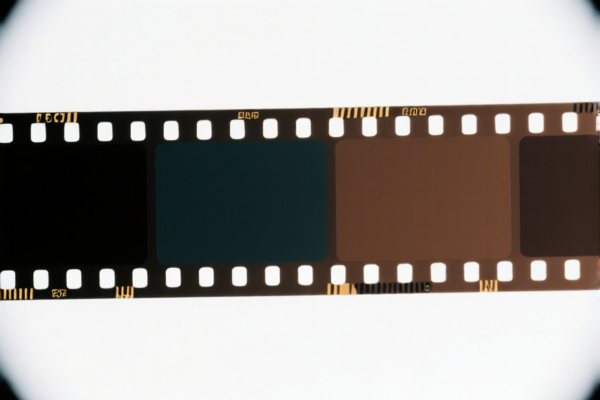
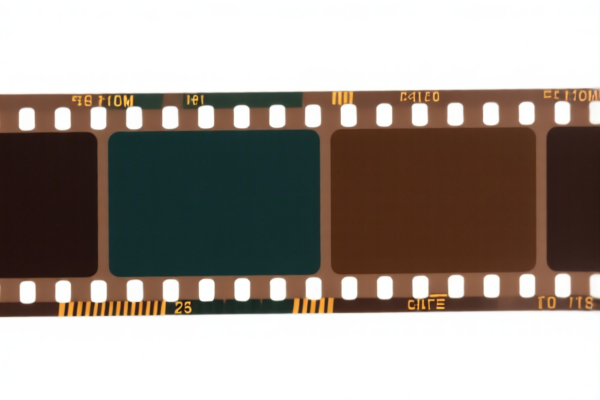
AI Analysis
🎞️ Wide Format Film for Indoor Photography
🌐 HS Code Reference & Customs Clearance Guide | 2026 Latest Tariff Analysis | Professional Clearance Strategy
📌 I. Product Definition and Classification: Do You Really Understand "Wide Format Film"?
"Film for indoor photography" refers to photographic film designed for use in controlled lighting environments, typically used with medium or large format cameras (wide format implies formats larger than standard 35mm, such as 120, 220, or sheet film). In international trade, the classification depends on whether the film has been exposed/developed and its specific material composition. Since it is "film" intended for "photography," it generally falls under Chapter 37 (Photographic Goods) or potentially Chapter 39 (Plastics) if deemed unexposed/unidentified material.
⚠️ Key Distinction Point:
- If the film is photographic in nature (chemical emulsion on a base), it belongs to Chapter 37.
- If the material is ambiguous or considered a generic plastic sheet, it might be misclassified under Chapter 39.
- "Indoor" usage does not change the fundamental nature of the product but confirms it is for photography (as opposed to industrial x-ray or medical imaging which might have different sub-codes).
📦 II. HS Code Classification Details (2026 Latest Tariff Authority Comparison)
| HS Code | Product Description | Applicability | Rationale from Data |
|---|---|---|---|
| 3704.00.00.00 | Paper, paperboard, cellulose wadding and webs of cellulose fibrous material, sensitised, unexposed, other than goods of heading 3702 | ✅ Best Fit | "Film" matches the material/form. "Indoor" use does not conflict with "exposed but undeveloped" photographic purpose. Common sense infers photographic use. |
| 3705.00.00.00 | Photographic plates and film, sensitised, unexposed, other | ✅ Fallback Fit | "Film" is the core form. Even if exposure status is unclear, under the "fallback category" principle, it preliminarily fits this definition in the absence of material/conflict issues. |
| 3920.99.20.00 | Other plates, sheets, film, bladder and film, of plastics, non-cellular | ⚠️ Risk Classification | "Film" matches the form "film/plate/web." Based on common sense, it might be inferred as plastic material, fitting the "other plastic flexible film" fallback. No obvious material conflict identified in generic search. |
| 3920.59.10.00 | Other plates, sheets, film, bladder and film, of acrylic polymers, non-cellular | ⚠️ Speculative Classification | Infers "acrylic polymer" based on "indoor" scene and film-like appearance. Possible for decorative/clear films, but risky for photographic film unless specifically acrylic-based. |
🔍 Key Reminder:
- Chapter 37 (3704/3705) is the correct category for photographic film because it carries the specific "sensitised" (if applicable) or photographic purpose.
- Chapter 39 (3920) is a misclassification risk if the product is clearly photographic film. Customs may reject plastic codes for optical/chemical media.
- Tax Rate Impact: Plastic codes (3920) have higher base tariffs than photographic codes (3704/3705) which often have 0% base rates.
💰 III. 2026 Latest Tariff Rate Details (Including Surcharges and Policy Add-ons)
✅ Applicable Country: United States (US)
✅ Origin: China (CN)
✅ Effective Date: November 10, 2025 onwards (including subsequent imports)
🎯 1. 3704.00.00.00 —— Sensitised Paper, Paperboard, etc. (Other Photographic Goods)
| Item | Content |
|---|---|
| Base Tariff | 0.0% (ad valorem) |
| USITC Additional Tariff | +25.0% (Under Section 301) |
| IEEPA Additional Tariff | +10.0% (针对中国/香港产品,自2025年11月10日起) |
| Total Tariff Rate | 35.0% |
| Tax Calculation | CIF Value × 35% |
| De Minimis Eligibility | ❌ Not Eligible (deny_de_minimis) |
| Legal Basis Path | IEEPA:9903.01.25 → IEEPA:9903.01.24 → USITC:3704.00.00.00 → FOOTNOTE:9903.88.01 |
📌 Explanation:
- "Base Tariff 0%" is standard for many photographic goods under USITC rules.
- "25% USITC" comes from Section 301 trade remedy duties.
- "10% IEEPA" is the additional surcharge on Chinese-origin goods.
- Total 35%: High cost, must be factored into pricing.
🎯 2. 3705.00.00.00 —— Other Sensitised Photographic Plates and Film
| Item | Content |
|---|---|
| Base Tariff | 0.0% |
| USITC Additional Tariff | +25.0% |
| IEEPA Additional Tariff | +10.0% |
| Total Tariff Rate | 35.0% |
| Tax Calculation | CIF × 35% |
| De Minimis Eligibility | ❌ Not Eligible |
| Legal Basis Path | IEEPA:9901.25 → IEEPA:9903.01.24 → USITC:3705.00.00.00 → FOOTNOTE:9903.88.01 |
📌 Note:
- Same as above. Whether classified as 3704 (other) or 3705 (other film), the tax burden is identical due to the same surcharge structure.
- "Indoor photography" film is typically high-sensitivity or specific-type film, falling under "other" if not strictly roll film for 35mm cameras (which might have different sub-codes, but 3705 is the broad fallback).
🎯 3. 3920.99.20.00 —— Other Plastic Film (Non-Photographic Misclassification)
| Item | Content |
|---|---|
| Base Tariff | 4.2% |
| USITC Additional Tariff | +25.0% |
| IEEPA Additional Tariff | +10.0% |
| Total Tariff Rate | 39.2% |
| Tax Calculation | CIF × 39.2% |
| De Minimis Eligibility | ❌ Not Eligible |
| Legal Basis Path | IEEPA:9903.01.25 → IEEPA:9903.01.24 → USITC:3920.99.20.00 → FOOTNOTE:9903.88.01 |
📌 Warning:
- Although the total rate (39.2%) is higher than 35%, the risk is not just tax but customs seizure for incorrect classification.
- If customs determines it is photographic film, they will reclassify to 3705, potentially imposing penalties for misdeclaration.
🎯 4. 3920.59.10.00 —— Acrylic Polymer Film (Speculative)
| Item | Content |
|---|---|
| Base Tariff | 6.0% |
| USITC Additional Tariff | +25.0% |
| IEEPA Additional Tariff | +10.0% |
| Total Tariff Rate | 41.0% |
| Tax Calculation | CIF × 41.0% |
| De Minimis Eligibility | ❌ Not Eligible |
| Legal Basis Path | IEEPA:9901.25 → IEEPA:9903.01.24 → USITC:3920.59.10.00 → FOOTNOTE:9903.88.01 |
📌 Caution:
- This is the highest tax rate among the options.
- Only appropriate if the "film" is actually a clear acrylic sheet used for decor, NOT for photography.
- Using this for photographic film is a high-risk error.
🛠️ IV. Customs Clearance Practical Advice (Real-World Pitfall Guide)
✅ 1. Required Documentation Checklist (All Are Mandatory)
| Document | Must Provide | Description |
|---|---|---|
| ✅ Product Specification Sheet | ✔️ | Includes film speed (ISO), format (120/Sheet), chemical type (B&W/Color) |
| ✅ Product Photos (Packaging) | ✔️ | Clear label showing "Photographic Film," Brand, Model |
| ✅ Material Composition Statement | ✔️ | Clarify if it is cellulose acetate or polyester base (affects Chapter 37 vs 39 debate) |
| ✅ Commercial Invoice | ✔️ | Must explicitly state "Photographic Film for Indoor Use" |
| ✅ Certificate of Origin (CO) | ✔️ | If not Chinese origin, may apply for preferential rates |
| ✅ Packing List | ✔️ | Detail contents to avoid confusion with other plastic films |
✅ 2. Declaration Tips (Key Mantra)
🔥 "Photographic Film Goes to 37, Not 39! 'Indoor' Doesn't Change 'Photo'!"
| Scenario | Correct Declaration | Incorrect Practice |
|---|---|---|
| Standard Photographic Film | 3704.00.00.00 or 3705.00.00.00 |
Reporting as "Plastic Film" → 39.2%-41% Tax + Risk |
| Unexposed, Sensitised Film | 3705.00.00.00 |
Reporting as "Raw Material" → Delayed Clearance |
| Clear Acrylic Sheet (Not Photo) | 3920.59.10.00 |
Reporting as "Photographic Film" → Wrong Classification |
| Mixed Package (Film + Accessories) | Whole Package Declaration | Splitting申报 → Each item taxed separately |
✅ 3. Special Case Handling
| Situation | Handling Advice |
|---|---|
| OEM Custom Film | Provide design specs and chemical composition to prove it is photographic, not industrial plastic. |
| "Wide Format" Ambiguity | Specify format (e.g., "120 Roll Film" or "4x5 Sheet Film") to avoid confusion with standard 35mm codes. |
| Sample Imports | Even for samples, declare correctly. De minimis does NOT apply to Chinese goods under current IEEPA rules. |
| Re-exported Film | If originally from Japan/Germany but transshipped through China, provide proof of origin to avoid US surcharges. |
🌍 V. Global Major Market Customs Comparison (2026 Latest)
| Country/Region | Recommended HS Code | Tariff | Certification Requirements | Remarks |
|---|---|---|---|---|
| 🇺🇸 USA | 3705.00.00.00 |
35% (China Origin) | None | High tax due to 301 + IEEPA. |
| 🇨🇳 China | 3705.00.00.00 |
5-6% | None | No additional surcharges. |
| 🇪🇺 EU | 3705.00.00.00 |
0% | CE (if applicable) | No surcharges. |
| 🇬🇧 UK | 3705.00.00.00 |
0% | UKCA | Post-Brexit rules apply. |
| 🇦🇺 Australia | 3705.00.00.00 |
5% | RCM | No surcharges. |
📌 Conclusion:
- The US is the only major market imposing high additional tariffs on these goods from China.
- European and other markets have significantly lower barriers.
- Strategy: For US-bound goods, consider sourcing from non-Chinese countries (e.g., Japan, Germany) if volume is high, to avoid the 35% effective rate.
📌 VI. Common Errors & Pitfall Guide (Lessons Learned the Hard Way)
❌ Error 1: Classifying photographic film as "Plastic Film" (Chapter 39)
👉 Consequence: 39.2% - 41% Tax + Potential fine for misclassification.
❌ Error 2: Ignoring the "Indoor" label as irrelevant
👉 Consequence: It confirms photographic use, strengthening the case for Chapter 37. Hiding it leads to suspicion.
❌ Error 3: Assuming "Film" means 35mm only
👉 Consequence: "Wide Format" may require specific sub-descriptions. Vague descriptions lead to Customs Hold.
❌ Error 4: Using "De Minimis" exemption for small shipments
👉 Consequence: Strict Denial. Chinese-origin goods >$800 are subject to full tariffs under IEEPA.
✅ Correct Approach:
"Photographic Film, Unexposed, Wide Format (e.g., 120mm), for Indoor Studio Use, Sensitised, Brand XYZ"
🎯 VII. Conclusion: Precise Classification Saves Money!
🎯 Remember the Mantra:
🔹 "Photo Film = 37, Plastic = 39!
🔹 "US Tariff = 35%, Don't Guess, Know the Code!
🔹 "Indoor Use = Photo, Not Decor!
🔹 "De Minimis = Dead for China!
📌 Pro Tip:
If your film is originally from Japan, Germany, or India, and you can prove it was substantially transformed or shipped directly, you may avoid the 10% IEEPA surcharge.
Apply for an Advance Ruling if importing large volumes to secure certainty.
📣 Immediate Action:
📞 Contact a Professional Customs Broker + Provide Product Photos + Apply for HS Code Advance Ruling
🚀 Let your film pass smoothly, clear efficiently, and maximize profits!
✨ Professional Customs Clearance Starts with Accurate Classification!
💼 Every Cent of Your Cost Deserves Precise Calculation!
Customer Reviews
About HS Code Classification
The Harmonized System (HS) is an internationally standardized nomenclature developed by the World Customs Organization (WCO) to classify traded products. Over 200 countries use the HS system as the basis for customs tariffs, trade statistics, and import/export regulations.
Each HS code follows a hierarchical structure:
- Chapter (2 digits) — Broad category of goods (e.g., Chapter 84: Machinery and Mechanical Appliances)
- Heading (4 digits) — More specific grouping within the chapter
- Subheading (6 digits) — Internationally standardized breakdown, used by all WCO member countries
- National subdivisions (8-10 digits) — Country-specific extensions for further classification, such as US HTSUS 10-digit codes
Correct HS code classification is essential for smooth customs clearance, accurate duty payment, and compliance with trade regulations. Misclassification can lead to customs delays, overpayment of duties, or penalties.
When importing from CN to US, the applicable tariff rates may include:
- Most-Favored-Nation (MFN) rate — The standard duty rate applied to WTO members
- General rate — Applied to countries without trade agreements
- Trade remedy duties — Additional tariffs such as Section 301 (anti-dumping), Section 232 (national security), or countervailing duties
The information provided on this page is for reference purposes only. For official classification, please consult with your local customs authority or a licensed customs broker.