wild mink raw furskins whole skin
CN → US| HS Code | Tariff Rate | Origin | Destination | Doc |
|---|---|---|---|---|
| 4302110010 | 37.1% | CN | US | Official Doc |
| 4302110020 | 37.1% | CN | US | Official Doc |
Product Images
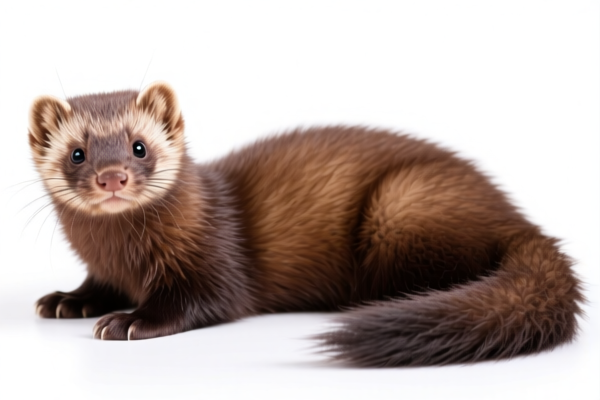
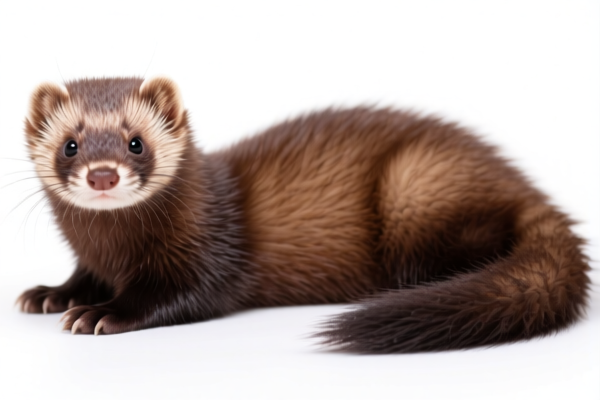
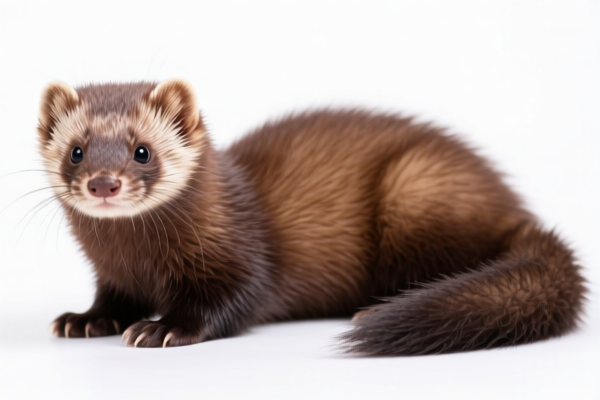
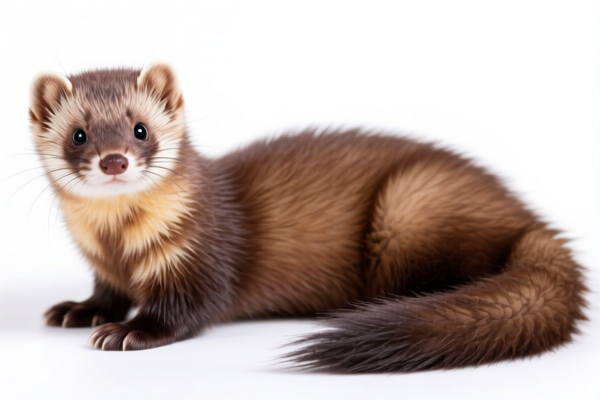
AI Analysis
🦫 Wild Mink Raw Furskins: Whole Skin
🌐 HS Code Reference & Customs Clearance Guide | 2026 Latest Tariff Analysis | Professional Strategy for Raw Furs
📌 I. Product Definition & Classification: Understanding "Whole Skin"
Wild Mink Raw Furskins (Whole Skin) refer to the pelts of minks harvested in the wild, processed (tanned or dressed) to preserve the hair and leather, and kept in their natural, whole form. In international trade, these are classified strictly under Heading 4302 ("Tanned or dressed furskins...").
⚠️ Key Distinction:
- Whole Skin vs. Assembled Goods: These are unassembled or assembled without other materials. If sewn into coats (Heading 4303), the HS Code changes completely.
- Wild vs. Farmed: While tax rates may be identical in this specific dataset, origin declaration (Wild vs. Farmed) is critical for ethical compliance and potential trade restrictions.
- Kolinsky vs. Other Mink: "Kolinsky" refers to high-quality sable/mink variations. The data distinguishes between "Kolinsky" and "Other" mink, though both fall under the same 4302 umbrella.
📦 II. HS Code Classification Details (2026 Latest Tariff Authority)
Based on the provided data, Wild Mink Raw Furskins (Whole Skin) are classified into two primary subheadings under 4302.11.00.
| HS Code | Product Description | Application Scenario | Tax Rate (Total) |
|---|---|---|---|
4302.11.00.10 |
Of Mink: Kolinsky | High-grade wild mink pelts, specifically "Kolinsky" variety, with or without head/tail/paws. | 0.0% |
4302.11.00.20 |
Of Mink: Other | Standard wild mink pelts (non-Kolinsky), with or without head/tail/paws. | 0.0% |
🔍 Key Clarification:
- Category: Both codes belong to "Whole skins, with or without head, tail or paws, not assembled".
- Material: Specifically Mink (Mustela vison).
- Status: Tanned or dressed, but not assembled into garments or other articles (which would be Heading 4303).
- Origin Note: "Kolinsky" is a premium subset of mink/sable. If your wild mink is not specifically classified as Kolinsky, it falls under "Other".
💰 III. 2026 Latest Tariff Rate Details (Zero Tariff Structure)
✅ Applicable Country: United States (US)
✅ Origin: China (CN) (Implied by typical US-China trade context in tariff data)
✅ Effective Date: Current 2026 Tariff Schedule
🎯 1. 4302.11.00.10 —— Mink, Kolinsky (Whole Skin)
| Item | Content |
|---|---|
| Base Tariff | 0.0% (ad valorem) |
| Additional Tariffs | 0.0% |
| Total Tax Rate | 0.0% |
| Tax Calculation | CIF Value × 0.0% = $0 |
| De Minimis Eligibility | ❓ Check Local Rules (Usually restricted for fur products due to animal welfare laws, but tariff-wise, it is 0%) |
| Legal Basis Path | USITC:4302.11.00.10 |
📌 Explanation:
- Base Rate: The US Generalized System of Preferences (GSP) or specific bilateral agreements may have eliminated base duties on raw furskins.
- No Section 301/IEEPA Surcharge: Unlike electronics or steel, raw furskins are currently exempt from the aggressive 25% (Section 301) and 10% (IEEPA) surcharges typically applied to Chinese imports.
- Result: Pure 0% duty. This is a significant cost advantage for raw material importers.
🎯 2. 4302.11.00.20 —— Mink, Other (Whole Skin)
| Item | Content |
|---|---|
| Base Tariff | 0.0% (ad valorem) |
| Additional Tariffs | 0.0% |
| Total Tax Rate | 0.0% |
| Tax Calculation | CIF Value × 0.0% = $0 |
| De Minimis Eligibility | ❓ Check Local Rules |
| Legal Basis Path | USITC:4302.11.00.20 |
📌 Note:
- The tariff treatment is identical to Kolinsky mink.
- There is no penalty for classifying as "Other" Mink instead of "Kolinsky" regarding duty rates.
🛠️ IV. Customs Clearance Practical Advice (Avoiding Pitfalls)
✅ 1. Documentation Checklist (Critical for Furskins)
| Document | Required? | Explanation |
|---|---|---|
| ✅ Commercial Invoice | ✔️ | Must clearly state: "Wild Mink Furskins, Whole Skin, Tanned/Dressed". Specify "Kolinsky" if applicable. |
| ✅ Packing List | ✔️ | Detail the number of skins, average size, and weight. |
| ✅ Certificate of Origin | ✔️ | Proves origin (e.g., China, Canada, etc.) for tariff verification. |
| ✅ Animal Health/Veterinary Certificate | ✔️ | Mandatory for animal products. Proves freedom from rabies and other diseases. |
| ✅ CITES Permit (If Applicable) | ✔️ | Wild mink may require CITES documentation if listed or if specific national regulations apply. Check if wild-caught mink is exempt in your destination country. |
| ✅ Customs Bond | ✔️ | Required for commercial entry into the US. |
✅ 2. Declaration Tips (Key Mnemonics)
🔥 "Be Whole, Be Tanned, Be Precise!"
| Scenario | Correct Declaration | Wrong Practice |
|---|---|---|
| Whole Skin | Declare as 4302.11.00.10/20 (Whole Skin) |
Misdeclare as "Garment Parts" → Higher scrutiny |
| Tanned/Dressed | Explicitly state "Tanned or Dressed" | Declare as "Raw/Fresh" → Requires veterinary quarantine, delays |
| Head/Tail Included | "With Head, Tail, Paws" | Hide parts → Customs may reclassify or penalize |
| Kolinsky vs. Other | Specify if "Kolinsky" | Ambiguous description → Customs may apply "Other" rate or hold for classification |
✅ 3. Special Considerations
| Issue | Handling Advice |
|---|---|
| Wild vs. Farmed | Although tax is 0%, Wild mink may trigger stricter CITES or wildlife protection checks. Ensure legal harvest proof. |
| Smell/Preservation | Tanned skins must be properly preserved. Customs may inspect for odor or pests (mildew, insects). |
| Value Assessment | Since duty is 0%, customs may still assess value for statistical purposes or other taxes (e.g., Merger Tax in EU, though not applicable here for US). |
| Misclassification Risk | Do NOT declare as "Fur Garments" (4303). If customs inspects and finds unselled skins, but you declared them as "parts", it creates a discrepancy. |
🌍 V. Global Market Comparison (2026)
| Country/Region | Recommended HS Code | Duty Rate | Notes |
|---|---|---|---|
| 🇺🇸 USA | 4302.11.00.10/20 |
0.0% | No 301/IEEPA surcharge on raw furskins. |
| 🇨🇳 China | 4302.11 |
~5-10% | Import duties on raw furs may apply; check latest CN Tariff. |
| 🇪🇺 EU | 4302.11 |
0-4% | Varies by member state; strict CITES enforcement for wild species. |
| 🇬🇧 UK | 4302.11 |
0-4% | Post-Brexit tariffs may differ; check UK Global Tariff. |
📌 Conclusion:
- The US offers a significant advantage with 0% total tariff on wild mink raw furskins.
- Ensure CITES compliance for wild-caught specimens, as tariff exemption does not override wildlife protection laws.
📌 VI. Common Mistakes & Pitfalls (Lessons Learned)
❌ Mistake 1: Declaring "Mink Fur" without specifying "Whole Skin".
👉 Consequence: Customs may classify under broader categories, leading to delays or incorrect valuation.
❌ Mistake 2: Confusing "Raw" with "Tanned".
👉 Consequence: "Raw" skins require different HS codes and veterinary certificates. Misdeclaration leads to quarantine or seizure.
❌ Mistake 3: Ignoring CITES for "Wild" Mink.
👉 Consequence: Even with 0% duty, illegal wildlife trade penalties apply if CITES permits are missing.
❌ Mistake 4: Assuming "Kolinsky" applies to all high-quality mink.
👉 Consequence: Over-specification may cause unnecessary scrutiny. Only use "Kolinsky" if scientifically accurate.
✅ Correct Practice:
"Wild Mink Furskins, Tanned, Whole, With Head/Tail, Kolinsky Grade, CITES Compliant, Origin: China"
🎯 VII. Conclusion: Professional Clearance, Zero Duty Advantage!
🎯 Remember:
🔹 "Raw Furs, Whole Skin, 0% Duty in US!"
🔹 "CITES is Key for Wild Species, Not Just Tax!"
🔹 "Be Precise: Kolinsky vs. Other, Avoid Delays!"
📌 Pro Tip:
- If you are importing large volumes, consider applying for an Advance Ruling from US Customs (CBP) to confirm the 0% duty status and CITES exemptions in advance.
- Ensure your supplier provides clean, properly tanned skins to avoid rejection due to pest or odor issues during inspection.
📣 Immediate Action:
📞 Contact a Licensed Customs Broker + Prepare CITES Documents + Verify Tanning Process.
🚀 Leverage the 0% Duty Advantage to Maximize Profit Margins!
✨ Professional Clearance Starts with Accurate Classification!
💼 Your Raw Furskins Deserve Zero Duty and Smooth Entry!
Customer Reviews
About HS Code Classification
The Harmonized System (HS) is an internationally standardized nomenclature developed by the World Customs Organization (WCO) to classify traded products. Over 200 countries use the HS system as the basis for customs tariffs, trade statistics, and import/export regulations.
Each HS code follows a hierarchical structure:
- Chapter (2 digits) — Broad category of goods (e.g., Chapter 84: Machinery and Mechanical Appliances)
- Heading (4 digits) — More specific grouping within the chapter
- Subheading (6 digits) — Internationally standardized breakdown, used by all WCO member countries
- National subdivisions (8-10 digits) — Country-specific extensions for further classification, such as US HTSUS 10-digit codes
Correct HS code classification is essential for smooth customs clearance, accurate duty payment, and compliance with trade regulations. Misclassification can lead to customs delays, overpayment of duties, or penalties.
When importing from CN to US, the applicable tariff rates may include:
- Most-Favored-Nation (MFN) rate — The standard duty rate applied to WTO members
- General rate — Applied to countries without trade agreements
- Trade remedy duties — Additional tariffs such as Section 301 (anti-dumping), Section 232 (national security), or countervailing duties
The information provided on this page is for reference purposes only. For official classification, please consult with your local customs authority or a licensed customs broker.