willow baskets
CN → US| HS Code | Tariff Rate | Origin | Destination | Doc |
|---|---|---|---|---|
| 4601932000 | 41.6% | CN | US | Official Doc |
| 4602121600 | 40.0% | CN | US | Official Doc |
| 4602110700 | 35.0% | CN | US | Official Doc |
| 4601942000 | 41.6% | CN | US | Official Doc |
| 4602191700 | 35.0% | CN | US | Official Doc |
| 4601940500 | 37.7% | CN | US | Official Doc |
Product Images
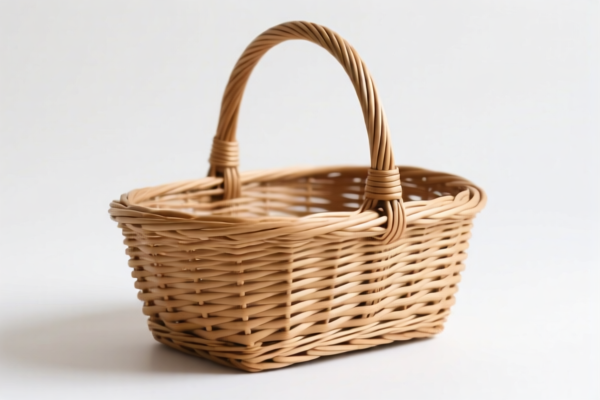


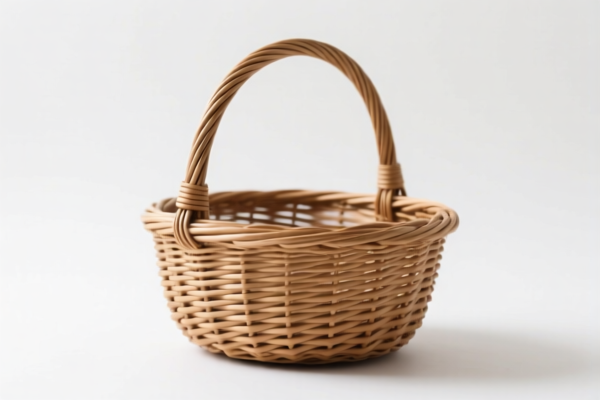
AI Analysis
🧺 Willow Baskets (藤柳编制品)
🌐 HS Code Reference & Customs Clearance Guide | 2026 Latest Tariff Analysis | Professional Entry Strategy
📌 I. Product Definition & Classification: Do You Really Understand "Willow Baskets"?
Willow baskets, crafted from woven plant materials such as willow, rattan, or other similar fibers, are versatile storage and decorative items. In international trade, they are primarily classified under Chapter 46 (Wickerwork, Basketweave Articles and Lampshade Shells). However, precise classification depends heavily on the specific material composition (e.g., pure willow vs. mixed rattan) and manufacturing method (woven vs. braided).
⚠️ Key Distinction Point:
- If the product is strictly made of willow strips woven into a basket shape → It typically falls under 4601 or 4602 depending on specific structural nuances.
- If the product is made of rattan or other reeds → It also falls under 4602.
- Misclassification Risk: Confusing "willow" with generic "plant fibers" can lead to different duty rates due to varying base tariffs.
📦 II. HS Code Classification Details (2026 Latest Tariff Authority Comparison)
Based on the provided data, here are the precise HS Codes for Willow Baskets and their corresponding tax implications.
| HS Code | Product Description | Material/Shape Match | Total Tax Rate |
|---|---|---|---|
4601.93.20.00 |
Willow Baskets; Material: Rattan/Willow etc.; Shape: Basket | ✅ Matches Rattan/Willow woven material requirement | 41.6% |
4602.12.16.00 |
Willow or Rattan Baskets; Material: Willow/Rattan; Shape: Basket | ✅ Perfectly matches woven basket category | 40.0% |
4602.11.07.00 |
Willow Strip Baskets; Material: Willow strips; Shape: Basket | ✅ Matches willow weaving & basket type | 35.0% |
4601.94.20.00 |
Willow Strip Baskets; Material: Willow strips; Shape: Woven Product | ✅ Matches material & usage logic | 41.6% |
4602.19.17.00 |
Willow Strip Baskets; Material: Willow weave/Plant material; Shape: Basket | ✅ Matches classification requirements | 35.0% |
4601.94.05.00 |
Willow Strip Baskets; Material: Other plant materials; Shape: Woven Articles | ✅ Matches logical classification | 37.7% |
🔍 Key Takeaway:
- The tax burden varies significantly, ranging from 35.0% to 41.6%.
- The difference lies in whether the basket is classified as a "basket" (4602) or a general "woven article" (4601), and the specific sub-category of the plant material.
💰 III. Detailed Tariff Rate Breakdown (Including Surtaxes & Policy Surcharges)
✅ Applicable Country: United States (US)
✅ Origin: China (CN)
✅ Effective Time: Current active tariffs (including Section 301 and IEEPA surcharges)
🎯 1. 4601.93.20.00 & 4601.94.20.00 — Woven Articles (High Base Tariff)
| Item | Content |
|---|---|
| Base Tariff | 6.6% (Ad Valorem) |
| Section 301 Surtax | +25.0% (USITC Footnote / Section 301) |
| IEEPA Surtax (Section 122) | +10.0% (Targeting specific Chinese goods) |
| Total Tax Rate | 41.6% |
| Tax Calculation | CIF Value × 41.6% |
| De Minimis Exemption | ❌ Not Eligible |
| Legal Basis Path | USITC:4601.93.20.00 → FOOTNOTE:301 → IEEPA:9903.01.24 |
📌 Explanation:
- These codes fall under "Woven articles of vegetable materials" but with a higher base duty (6.6%).
- The total effective rate is 41.6%, making this a high-cost classification.
- The 10% IEEPA surcharge applies specifically to these categories under current enforcement.
🎯 2. 4602.12.16.00 & 4602.19.17.00 — Baskets (Moderate Base Tariff)
| Item | Content |
|---|---|
| Base Tariff | 5.0% |
| Section 301 Surtax | +25.0% |
| IEEPA Surtax (Section 122) | +10.0% |
| Total Tax Rate | 40.0% |
| Tax Calculation | CIF Value × 40.0% |
| De Minimis Exemption | ❌ Not Eligible |
| Legal Basis Path | USITC:4602.12.16.00 → FOOTNOTE:301 → IEEPA:9903.01.24 |
📌 Note:
- Slightly lower than the 4601.94 series due to a lower base duty (5.0% vs 6.6%).
- Still subject to full 25% Section 301 and 10% IEEPA surcharges.
🎯 3. 4602.11.07.00 — Willows Strip Baskets (Lowest Base Tariff)
| Item | Content |
|---|---|
| Base Tariff | 0.0% |
| Section 301 Surtax | +25.0% |
| IEEPA Surtax (Section 122) | +10.0% |
| Total Tax Rate | 35.0% |
| Tax Calculation | CIF Value × 35.0% |
| De Minimis Exemption | ❌ Not Eligible |
| Legal Basis Path | USITC:4602.11.07.00 → FOOTNOTE:301 → IEEPA:9903.01.24 |
📌 Critical Insight:
- This is the most cost-effective classification at 35.0%.
- It applies specifically to "Willow strips" (not just generic "willow" or mixed materials).
- If your product can be explicitly described as "woven from willow strips," this is the optimal HS Code.
🎯 4. 4601.94.05.00 — Other Plant Material Woven Articles
| Item | Content |
|---|---|
| Base Tariff | 2.7% |
| Section 301 Surtax | +25.0% |
| IEEPA Surtax (Section 122) | +10.0% |
| Total Tax Rate | 37.7% |
| Tax Calculation | CIF Value × 37.7% |
| De Minimis Exemption | ❌ Not Eligible |
📌 Note:
- This code is for "Other plant materials" where the base duty is low (2.7%).
- Suitable if the willow is mixed with other materials or processed differently.
🛠️ IV. Customs Clearance Practical Advice (Real-World Pitfall Avoidance Guide)
✅ 1. Documentation Checklist (Non-Negotiable)
| Document | Required? | Description |
|---|---|---|
| ✅ Product Specification Sheet | ✔️ | Must specify: Material (Willow/Rattan), Diameter, Height, Weaving Technique |
| ✅ Product Photos (Clear) | ✔️ | Show texture, weave pattern, and any handles/lids |
| ✅ Commercial Invoice | ✔️ | Must clearly state: "Woven Willow Baskets" or "Rattan Storage Baskets" |
| ✅ Packing List | ✔️ | Detail quantity per carton and total gross/net weight |
| ✅ Material Certificate | ✔️ | Confirm 100% natural plant origin (no plastic lining unless specified) |
✅ 2. Declaration Tips (Key Mnemonic)
🔥 "Exact Material, Precise Shape, Avoid 'Generic', Save 6.6%!"
| Scenario | Correct Declaration | Wrong Action |
|---|---|---|
| Pure Willow Strips Woven | 4602.11.07.00 |
Mislabeling as "Woven Basket" → 41.6% |
| Rattan + Willow Mix | 4601.93.20.00 |
Labeling as "Pure Willow" → Audit Risk |
| Plastic-Coated Willow | Check for Chapter 39 | Declaring as pure natural willow → Rejection |
| Gift Sets (Basket + Liner) | Declare Basket as primary | Splitting liner as separate item → Complexity |
✅ 3. Special Cases Handling
| Situation | Handling Suggestion |
|---|---|
| Lined Baskets | If lined with fabric/leather, ensure the outer material (willow) remains dominant. Otherwise, it might move to Chapter 42 (Articles of Leather). |
| Decorative vs. Functional | Both fall under Chapter 46. Focus on material description rather than use. |
| OEM Customization | Provide design specs to prove "Willow Strip" construction for 4602.11.07.00. |
| Packaging | Do not include unrelated items (e.g., fruit inside) in the declared value unless part of a gift set. |
🌍 V. Global Market Comparison (2026 Latest)
| Country/Region | Recommended HS Code | Base Duty | Surtax | Total Effective | Notes |
|---|---|---|---|---|---|
| 🇺🇸 USA | 4602.11.07.00 |
0% | +35% (301+IEEPA) | 35.0% | Lowest US tariff for willow |
| 🇨🇳 China | 4602.11.07.00 |
8% | None | 8.0% | No surtaxes; import duty only |
| 🇪🇺 EU | 4602.11.07.00 |
5% | None | 5.0% | No Section 301/IEEPA equivalent |
| 🇬🇧 UK | 4602.11.07.00 |
5% | None | 5.0% | Post-Brexit tariff alignment |
📌 Conclusion:
- USA is the most expensive market due to Section 301 and IEEPA surcharges.
- Europe and China offer significantly lower duties for the same product.
- For US exports,4602.11.07.00is the critical code to optimize costs.
📌 VI. Common Errors & Pitfall Guide (Lessons from Experience)
❌ Error 1: Using "Wicker Basket" as a generic term
👉 Consequence: Customs may classify under 4601.94.20.00 (41.6%) instead of 4602.11.07.00 (35.0%).
✅ Fix: Use specific terms: "Willow Strip Woven Basket."
❌ Error 2: Ignoring the 10% IEEPA Surtax
👉 Consequence: Budgeting only for 25% Section 301 leads to 10% unexpected cost.
✅ Fix: Always calculate Total Tax = Base + 25% + 10%.
❌ Error 3: Misidentifying Material Composition
👉 Consequence: If bamboo is mixed with willow, the classification changes.
✅ Fix: Provide material breakdown on the invoice.
🎯 VII. Conclusion: Precision Classification Saves Money!
🎯 Remember the Rule:
🔹 "Willow Strips = 0% Base = 35% Total"
🔹 "Mixed/Rattan = 5-6.6% Base = 40-41.6% Total"
🔹 "Always add 35% to your CIF value for US Customs Clearance"
📌 Pro Tip:
If you are importing large volumes, consider Applying for an Advance Ruling from US Customs to confirm the
4602.11.07.00classification. This locks in the 35% rate and avoids post-import audits.
📣 Immediate Action:
📞 Contact your freight forwarder with material specs.
📝 Ensure your Commercial Invoice says "Willow Strip Baskets" — not just "Baskets."
🚀 Clear customs faster, pay less tax, maximize profit!
✨ Professional clearance starts with precise classification!
💼 Your bottom line depends on these 4 digits!
Customer Reviews
About HS Code Classification
The Harmonized System (HS) is an internationally standardized nomenclature developed by the World Customs Organization (WCO) to classify traded products. Over 200 countries use the HS system as the basis for customs tariffs, trade statistics, and import/export regulations.
Each HS code follows a hierarchical structure:
- Chapter (2 digits) — Broad category of goods (e.g., Chapter 84: Machinery and Mechanical Appliances)
- Heading (4 digits) — More specific grouping within the chapter
- Subheading (6 digits) — Internationally standardized breakdown, used by all WCO member countries
- National subdivisions (8-10 digits) — Country-specific extensions for further classification, such as US HTSUS 10-digit codes
Correct HS code classification is essential for smooth customs clearance, accurate duty payment, and compliance with trade regulations. Misclassification can lead to customs delays, overpayment of duties, or penalties.
When importing from CN to US, the applicable tariff rates may include:
- Most-Favored-Nation (MFN) rate — The standard duty rate applied to WTO members
- General rate — Applied to countries without trade agreements
- Trade remedy duties — Additional tariffs such as Section 301 (anti-dumping), Section 232 (national security), or countervailing duties
The information provided on this page is for reference purposes only. For official classification, please consult with your local customs authority or a licensed customs broker.