willow woven carry basket
CN → US| HS Code | Tariff Rate | Origin | Destination | Doc |
|---|---|---|---|---|
| 4602191200 | 40.8% | CN | US | Official Doc |
| 4602193500 | 35.0% | CN | US | Official Doc |
Product Images
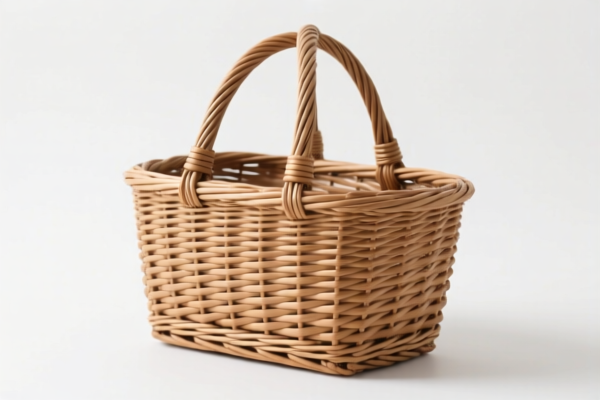
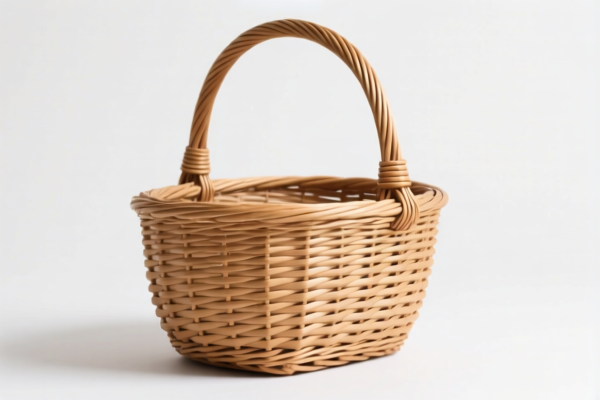
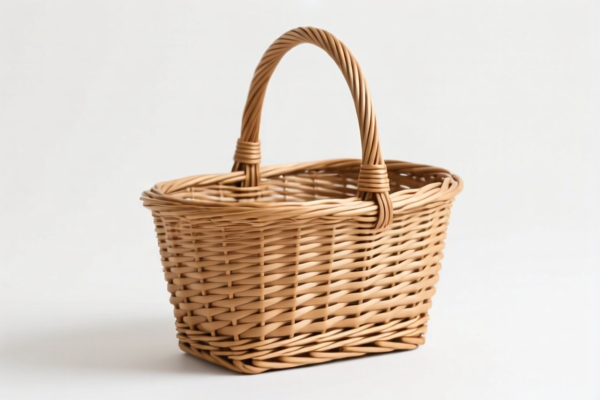
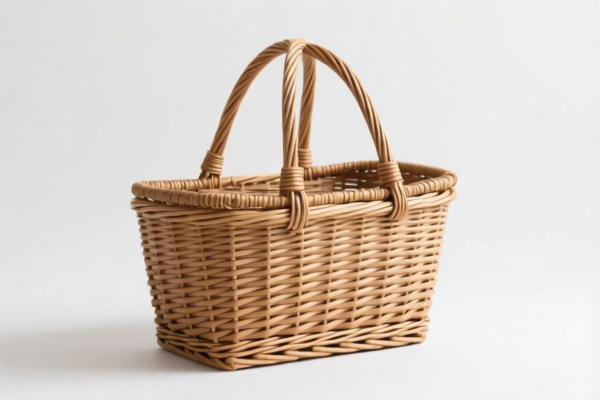
AI Analysis
🧺 Willow Woven Carry Basket
🌐 HS Code Reference & Clearance Guide | 2024/2025 Tariff Analysis | Professional Customs Strategy
📌 I. Product Definition & Classification: What Exactly is a "Willow Woven Carry Basket"?
A "Willow Woven Carry Basket" is an article of basketwork made directly to shape from plaiting materials (specifically willow) or made up from articles of heading 4601. In international trade, the classification hinges on two critical factors:
1. Material Composition: Is it made entirely of vegetable material (willow)?
2. Structure & Function: Is it a simple woven container (basket/bag) or a more complex wickerwork structure?
⚠️ Key Distinction:
- If it is a simple basket or bag (lined or unlined, open or closed) made of willow strips → Goes to 4602.19.12.00.
- If it is complex wickerwork (interlaced wood strips forming a rigid, decorative structure) → Goes to 4602.19.35.00.
📦 II. HS Code Classification Details (Latest Tariff Authority)
| HS Code | Product Description | Applicable Scenario | Tax Rate (China Origin → US) |
|---|---|---|---|
4602.19.12.00 |
Other baskets and bags, whether or not lined: Of willow | Simple carry baskets, picnic baskets, shopping baskets made of willow strips. May be lined with fabric. | 0.0% |
4602.19.35.00 |
Other: Of willow or wood: Wickerwork | Decorative wicker baskets, rigid wicker containers, complex woven structures where the willow is processed into thin strips and interlaced densely. | 25.0% |
🔍 Critical Insight:
- The term "Wickerwork" in HS Code 4602.19.35.00 often triggers higher scrutiny and tariffs because it implies a more complex manufacturing process involving splitting and weaving thin wood strips.
- "Baskets and bags" in 4602.19.12.00 is broader and includes simpler forms. If your product is a standard carry basket, it likely falls here.
- Do not misclassify a simple willow basket as "wickerwork" to avoid the 25% tariff. Conversely, do not classify complex wicker decor as a simple basket to evade taxes.
💰 III. 2024/2025 Tariff Rate Breakdown (Including Additional Duties)
✅ Applicable Country: United States (US)
✅ Origin: China (CN)
✅ Effective Time: Current as of 2024/2025 trade policies
🎯 1. 4602.19.12.00 —— Other baskets and bags, whether or not lined: Of willow
| Item | Content |
|---|---|
| Base Tariff | 0.0% (Ad Valorem) |
| Section 301 Additional Tariff | 0.0% |
| Total Tariff | 0.0% |
| Tax Calculation | CIF Value × 0% = $0 |
| De Minimis Eligibility | ✅ Yes (if value < $800) |
| Legal Basis | HTSUS 4602.19.12.00 |
📌 Explanation:
- This is a zero-tariff item for Chinese-origin goods entering the US.
- It is not subject to the 25% Section 301 tariffs that apply to many other household goods.
- Advantage: Significantly lower customs clearance cost compared to wickerwork.
🎯 2. 4602.19.35.00 —— Other: Of willow or wood: Wickerwork
| Item | Content |
|---|---|
| Base Tariff | 0.0% |
| Section 301 Additional Tariff | +25.0% |
| Total Tariff | 25.0% |
| Tax Calculation | CIF Value × 25% |
| De Minimis Eligibility | ❌ No (Subject to full duty) |
| Legal Basis | HTSUS 4602.19.35.00 |
📌 Explanation:
- Although the base tariff is 0%, the 25% Section 301 tariff applies due to the "wickerwork" classification.
- This is a high-cost item for importers.
- Risk: Misclassifying a simple basket as "wickerwork" leads to unexpected 25% charges.
🛠️ IV. Customs Clearance Practical Advice (Battle-Tested Pitfall Guide)
✅ 1. Required Documentation Checklist (Non-Negotiable)
| Document | Must Provide | Explanation |
|---|---|---|
| ✅ Product Photos | ✔️ | Clear images showing the weaving method, material (willow), and structure. |
| ✅ Material Declaration | ✔️ | Confirm 100% vegetable material (willow). No synthetic fibers. |
| ✅ Commercial Invoice | ✔️ | Describe as "Willow Woven Carry Basket, HS 4602.19.12.00" |
| ✅ Packing List | ✔️ | Include dimensions and weight to prove it’s a basket, not a wicker crate. |
| ✅ Origin Certificate | ✔️ | Proof of Chinese origin to apply correct tariff schedule. |
✅ 2. Declaration Tips (Key Mantras)
🔥 "Willow Basket = 0%, Wickerwork = 25%! Describe Accurately!"
| Scenario | Correct Declaration | Wrong Practice |
|---|---|---|
| Simple willow basket | 4602.19.12.00 |
Mislabel as "Wicker Basket" → 25% |
| Decorative wicker container | 4602.19.35.00 |
Mislabel as "Simple Basket" → Penalty |
| Lined willow bag | 4602.19.12.00 |
Overcomplicate description → Delay |
| Mixed material (willow + plastic) | Not 4602 | Must re-classify under plastic goods |
✅ 3. Special Cases Handling
| Situation | Handling Advice |
|---|---|
| Lined Basket | Still 4602.19.12.00 if lining is incidental. Declare "Lined Willow Basket". |
| With Handles | Still 4602.19.12.00. Handles are part of the basket structure. |
| Willow + Wood Mix | If wood is dominant, may shift to 4421 (Wood articles). Check material ratio. |
| Importing from Vietnam | May qualify for 0% tariff under USMCA or GSP, but check origin rules. |
🌍 V. Global Market Clearance Comparison (2024/2025)
| Country/Region | Recommended HS Code | Tariff (China Origin) | Certification | Notes |
|---|---|---|---|---|
| 🇺🇸 USA | 4602.19.12.00 |
0.0% | None | Best for willow baskets. Avoid 4602.19.35.00 (25%). |
| 🇨🇳 China | 4602.19.12.00 |
0% | None | Export-friendly. |
| 🇪🇺 EU | 4602.19 |
0-6.5% | FSC (if sustainable) | Check for CE if used for food storage. |
| 🇬🇧 UK | 4602.19 |
0-6.5% | FSC | Post-Brexit rules apply. |
| 🇦🇺 Australia | 4602.19 |
5% | None | No additional duties. |
📌 Conclusion:
- USA is the most tariff-sensitive market for wickerwork (25%) but favorable for willow baskets (0%).
- EU/UK have moderate tariffs but may require sustainability certifications (FSC).
- Strategy: Opt for 4602.19.12.00 for US exports to minimize costs.
📌 VI. Common Mistakes & Pitfall Guide (Blood & Tears Lessons)
❌ Mistake 1: Calling a simple willow basket "Wickerwork"
👉 Consequence: 25% tariff applied unnecessarily → Profit loss!
❌ Mistake 2: Mixing willow with synthetic handles and declaring as 100% willow
👉 Consequence: Customs seizure or fine for misdeclaration.
❌ Mistake 3: Not declaring lining
👉 Consequence: Delay in clearance for verification.
❌ Mistake 4: Using "Basket" as a generic term without material detail
👉 Consequence: Customs may classify under highest duty rate for uncertainty.
✅ Correct Practice:
"Willow Woven Carry Basket, Lined with Cotton, For General Use, HS 4602.19.12.00, Origin: China"
🎯 VII. Conclusion: Professional Declaration Saves Money!
🎯 Remember the Mantra:
🔹 "Willow Basket = 0% Tax, Wickerwork = 25% Tax. Describe Material, Avoid Pitfalls!"
🔹 "HS Code Determines Cost, 25% Difference is Huge, Declare Accurately, Save Thousands!"
📌 Pro Tip:
If your basket is made in Vietnam, Indonesia, or the Philippines, check for preferential tariff agreements with the US (e.g., GSP, ASEAN-US FTAs). Some may qualify for 0% duty even if classified as wickerwork.
📣 Immediate Action:
📞 Contact your customs broker + Provide product photos + Apply for Advance Ruling
🚀 Let your willow baskets clear customs smoothly, maximize profits, and expand globally!
✨ Professional Customs Clearance Starts with Accurate Classification!
💼 Every Percent of Tax Saved is Pure Profit!
Customer Reviews
About HS Code Classification
The Harmonized System (HS) is an internationally standardized nomenclature developed by the World Customs Organization (WCO) to classify traded products. Over 200 countries use the HS system as the basis for customs tariffs, trade statistics, and import/export regulations.
Each HS code follows a hierarchical structure:
- Chapter (2 digits) — Broad category of goods (e.g., Chapter 84: Machinery and Mechanical Appliances)
- Heading (4 digits) — More specific grouping within the chapter
- Subheading (6 digits) — Internationally standardized breakdown, used by all WCO member countries
- National subdivisions (8-10 digits) — Country-specific extensions for further classification, such as US HTSUS 10-digit codes
Correct HS code classification is essential for smooth customs clearance, accurate duty payment, and compliance with trade regulations. Misclassification can lead to customs delays, overpayment of duties, or penalties.
When importing from CN to US, the applicable tariff rates may include:
- Most-Favored-Nation (MFN) rate — The standard duty rate applied to WTO members
- General rate — Applied to countries without trade agreements
- Trade remedy duties — Additional tariffs such as Section 301 (anti-dumping), Section 232 (national security), or countervailing duties
The information provided on this page is for reference purposes only. For official classification, please consult with your local customs authority or a licensed customs broker.