winches and hoists
CN → US| HS Code | Tariff Rate | Origin | Destination | Doc |
|---|---|---|---|---|
| 8425110000 | 35.0% | CN | US | Official Doc |
| 8425310100 | 35.0% | CN | US | Official Doc |
Product Images
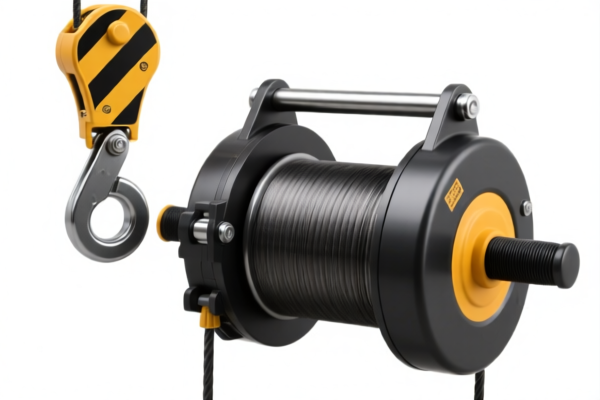
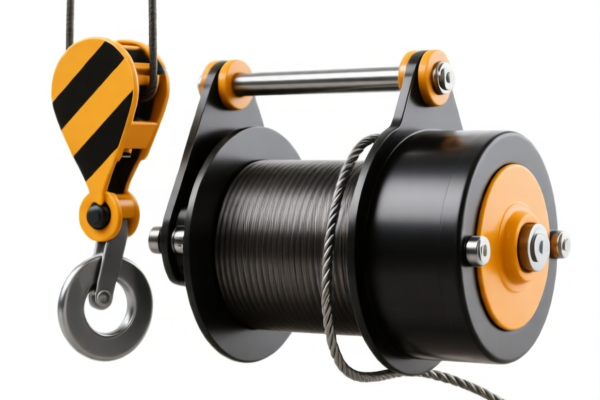
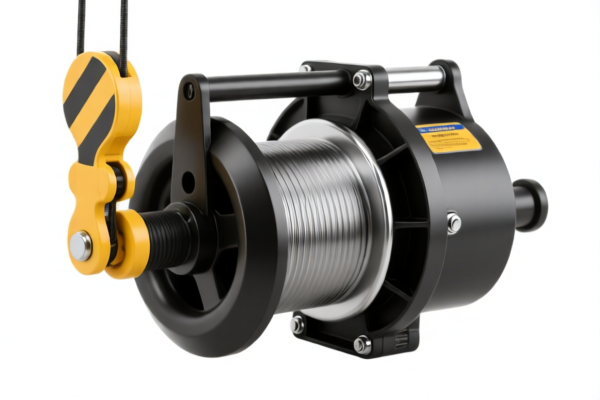
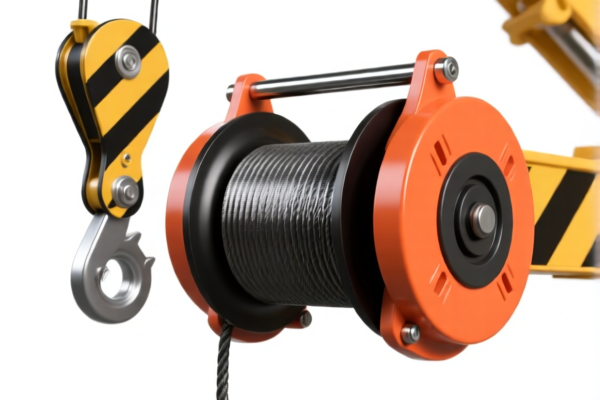
AI Analysis
🏗️ Winches & Hoists: The Heavy Lifters of Industry (Classification & Duty Analysis 2026)
🌐 HS Code Reference & Customs Clearance Guide | 2026 Latest Tariff Analysis | Professional Strategy for Electric Winches & Hoists
📌 I. Product Definition & Classification: Do You Really Know "Winches and Hoists"?
Winches and hoists are mechanical devices used for lifting, lowering, or pulling loads. In international trade, they are strictly categorized based on their power source and mechanical structure. The provided data focuses specifically on Electrically Powered variants, excluding manual or hydraulic-only systems unless specified.
Electric Hoists (8425.11): * Definition: Powered pulley tackles and hoists other than skip hoists (conveyor elevators) or vehicle hoists (car lifts). * Key Feature: Typically used for general industrial lifting, construction, or warehouse operations. * Power: Electric motor-driven.
Winches & Capstans (8425.31): * Definition: Devices for winding wire rope, chain, or cable around a rotating drum. * Key Feature: Primarily used for pulling (winching) or holding tension, though some can lift. * Power: Electric motor-driven.
⚠️ Critical Distinction:
- If the device is a lift for raising vehicles (e.g., car repair shop lifts) → NOT 8425.11.00.00 (Excluded in description).
- If the device is a skip hoist (elevator for materials in shafts) → NOT 8425.11.00.00 (Excluded in description).
- Must be Electric: The provided data strictly covers electric motor powered units. Manual crank winches or hydraulic pumps fall under different HS codes not listed in .
📦 II. HS Code Classification Details (2026 Latest Tariff Reference)
Based strictly on the provided <DATA>, here are the two specific classifications for Electric winches and hoists:
| HS Code | Product Description | Key Characteristics | Applicable Scenario |
|--------|--------------------------|--------------------------|
| 8425.11.00.00 | Pulley tackle and hoists (other than skip hoists; other than vehicle hoists) | - Powered by Electric Motor
- Not a skip hoist
- Not a vehicle lift | General industrial hoisting, warehouse cranes, marine davits (if not vehicle-specific) |
| 8425.31.01.00 | Winches; Capstans | - Powered by Electric Motor | Cable pulling, towing, anchoring, tensioning, marine deck operations, construction site hoists (drum-based) |
🔍 Focus Reminder:
- Both codes exclude manual/hand-operated devices.
- Both codes exclude skip hoists (material elevators in shafts).
- Both codes exclude vehicle hoists (auto repair lifts).
- If your product is a manual winch or a hydraulic hoist, these HS codes do not apply.
💰 III. 2026 Latest Tariff Rate Breakdown (Detailed Tax Analysis)
✅ Source Data: Strictly from
<DATA>provided
✅ Tax Structure: Base + Additional (Section 301-style)
🎯 1. 8425.11.00.00 – Electric Hoists (General/Pulley Tackle)
| Item | Content |
|---|---|
| Base Tariff | 0.0% (Ad Valorem) |
| Additional Tariff | +25.0% |
| Total Tax Rate | 25.0% |
| Tax Detail | 基础关税: 0.0%, 加征关税: 25.0% |
| Calculation Basis | CIF Value × 25% |
📌 Explanation:
- The Base Tariff is 0%, making the product duty-free at the standard level.
- However, an Additional Tariff of 25% is applied. In the context of US-China trade (as implied by the "Additional Tariff" structure and common trade data formats), this typically refers to Section 301 tariffs.
- Total Duty = 25%. This is a significant cost burden compared to base rates.
🎯 2. 8425.31.01.00 – Electric Winches & Capstans
| Item | Content |
|---|---|
| Base Tariff | 0.0% (Ad Valorem) |
| Additional Tariff | +25.0% |
| Total Tax Rate | 25.0% |
| Tax Detail | 基础关税: 0.0%, 加征关税: 25.0% |
| Calculation Basis | CIF Value × 25% |
📌 Explanation:
- Identical tax treatment to Electric Hoists.
- Base: 0% + Additional: 25% = Total 25%.
- This uniform rate suggests that the "Additional Tariff" is applied broadly to electric industrial machinery from specific origins (likely China, given the 25% rate which is a common Section 301 tier).
🛠️ IV. Customs Clearance Operational Advice (Practical Pitfall Avoidance)
✅ 1. Preparation Checklist (Non-negotiable for 8425)
| Document | Mandatory? | Purpose |
|---|---|---|
| ✅ Technical Specification Sheet | ✔️ | Must clearly state: Power Source (Electric), Motor Type, Max Load, Voltage/Frequency. |
| ✅ Product Photos | ✔️ | Show motor housing, electrical connections, and drum/pulley system. Prove it is electric, not manual. |
| ✅ Bill of Lading / Commercial Invoice | ✔️ | Description must match HS Code: e.g., "Electric Winch, Model X, 5-Ton Capacity" not just "Winch". |
| ✅ Certificate of Origin (CO) | ✔️ | Critical for determining if the 25% additional tariff applies (origin-dependent). |
| ✅ User Manual | ✔️ | Helpful to prove intended use (not a vehicle lift or skip hoist). |
✅ 2. Declaration Tips (Key Mnemonic)
🔥 “Electric is Key, Exclude Lifts & Skips, Name It Right!”
| Scenario | Correct Declaration | Error to Avoid |
|---|---|---|
| Electric Hoist | 8425.11.00.00"Electric Pulley Tackle Hoist" |
Calling it a "Lift" → May be misclassified as vehicle hoist (excluded) or different code. |
| Electric Winch | 8425.31.01.00"Electric Capstan/Winch" |
Calling it a "Crane" → May fall under 8425.39 or 8426, changing tax. |
| Manual Winch | NOT 8425.11/31 | Trying to force a manual winch into electric code → False Declaration, penalties, seizure. |
| Car Lift | NOT 8425.11 | Using 8425.11 for a garage car lift → Excluded by description, customs rejection. |
✅ 3. Special Considerations
| Situation | Advice |
|---|---|
| Hybrid Power | If it works with both electric and manual, the primary power source determines classification. If electric is standard, use 8425.11/31. |
| Components | Do not split electric motors from winches. If sold as a set, declare as the complete unit (Winch/Hoist). |
| Origin Strategy | Since the Total Tax is 25%, consider supply chain optimization. If exported to the US, verify if your country of origin qualifies for any exemptions (e.g., UFLPA compliance, specific FTAs if applicable, though 25% suggests Section 301). |
| Safety Certs | Provide CE, UL, or ETL marks if importing to regulated markets. Electric hoists have high safety risks; customs may inspect for compliance. |
🌍 V. Global Market Comparison (Hypothetical Context)
| Market | Typical HS Code | Base Tariff | Additional Tariff (if CN origin) | Total Effective Rate | Notes |
|---|---|---|---|---|---|
| 🇺🇸 USA | 8425.11.00.00 / 8425.31.01.00 |
0% | +25% (Section 301) | 25% | High cost; verify origin carefully. |
| 🇨🇳 China | 8425.11.00.00 / 8425.31.01.00 |
~8-10% | 0% | ~8-10% | Lower base duty; no Section 301. |
| 🇪🇺 EU | 8425.11.00 / 8425.31.00 |
0% | 0% | 0% | Generally duty-free under GSP/WTO. |
| 🇯🇵 Japan | 8425.11.00 / 8425.31.00 |
0% | 0% | 0% | Duty-free for many industrial goods. |
📌 Conclusion:
- The 25% total tax rate is primarily driven by additional tariffs (likely US Section 301).
- Base duties are 0%, so the entire cost burden comes from trade policy measures.
- Non-US markets (EU, Japan, etc.) likely offer 0% duty, making them more cost-effective if export diversification is possible.
📌 VI. Common Errors & Pitfalls (Lessons Learned)
❌ Error 1: Classifying a Manual Winch as 8425.11.00.00
👉 Consequence: Classification error. Manual winches are often 8425.19 or 8425.40. Misdeclaration leads to penalties and back-taxes.
❌ Error 2: Calling an Electric Hoist a "Lift" without specifying "Not for Vehicles"
👉 Consequence: Customs may suspect it is a vehicle hoist (garage lift), which is excluded from 8425.11. This causes delays for additional documentation.
❌ Error 3: Ignoring the Electric Motor Specification
👉 Consequence: If the product is hydraulic or pneumatic, it does not fit 8425.11 or 8425.31. Must use correct code (e.g., 8425.49 for hydraulic).
✅ Correct Practice:
"Electric Winch, Model ABC, 500kg Capacity, 220V/50Hz, Steel Drum, IP55 Rated"
- Clearly states: Electric, Winch, Specs.
- Matches8425.31.01.00.
🎯 VII. Conclusion: Precision in Classification Saves Money!
🎯 Remember:
🔹 "Electric is Key, Exclude Vehicle Lifts."
🔹 "Base 0%, Plus 25% = 25% Total."
🔹 "Manual Winch? Don't Use 8425.11/31!"
📌 Tip:
If you are exporting Electric Hoists/Winches to the US, budget for the 25% additional tariff. If possible, explore alternative markets (EU, ASEAN, South America) where duties may be 0%. Always ensure your product description explicitly states "Electric Motor Powered" and "Not for Vehicle Lifting" to avoid clearance delays.
📣 Immediate Action:
📞 Contact your customs broker with the exact technical specs (especially power source).
🚀 Verify Origin: Check if your manufacturing origin qualifies for any tariff exclusions.
✨ Proper Packaging & Labeling: Clearly mark "Electric Winch/Hoist" on packaging to prevent manual classification assumptions.
✨ Professional Classification, Efficient Customs Clearance!
💼 Every Dollar in Duty Saved is Pure Profit!
Customer Reviews
About HS Code Classification
The Harmonized System (HS) is an internationally standardized nomenclature developed by the World Customs Organization (WCO) to classify traded products. Over 200 countries use the HS system as the basis for customs tariffs, trade statistics, and import/export regulations.
Each HS code follows a hierarchical structure:
- Chapter (2 digits) — Broad category of goods (e.g., Chapter 84: Machinery and Mechanical Appliances)
- Heading (4 digits) — More specific grouping within the chapter
- Subheading (6 digits) — Internationally standardized breakdown, used by all WCO member countries
- National subdivisions (8-10 digits) — Country-specific extensions for further classification, such as US HTSUS 10-digit codes
Correct HS code classification is essential for smooth customs clearance, accurate duty payment, and compliance with trade regulations. Misclassification can lead to customs delays, overpayment of duties, or penalties.
When importing from CN to US, the applicable tariff rates may include:
- Most-Favored-Nation (MFN) rate — The standard duty rate applied to WTO members
- General rate — Applied to countries without trade agreements
- Trade remedy duties — Additional tariffs such as Section 301 (anti-dumping), Section 232 (national security), or countervailing duties
The information provided on this page is for reference purposes only. For official classification, please consult with your local customs authority or a licensed customs broker.