wine bottle natural cork stopper
CN → US| HS Code | Tariff Rate | Origin | Destination | Doc |
|---|---|---|---|---|
| 4503102000 | 35.0% | CN | US | Official Doc |
| 4503106000 | 35.0% | CN | US | Official Doc |
| 4502000000 | 35.0% | CN | US | Official Doc |
| 4504104500 | 35.0% | CN | US | Official Doc |
| 4503102000 | 35.0% | CN | US | Official Doc |
Product Images
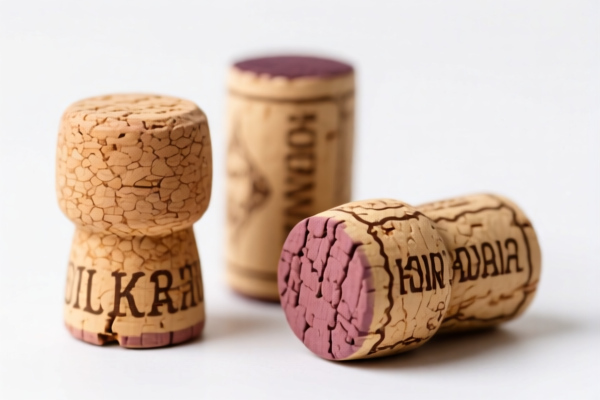
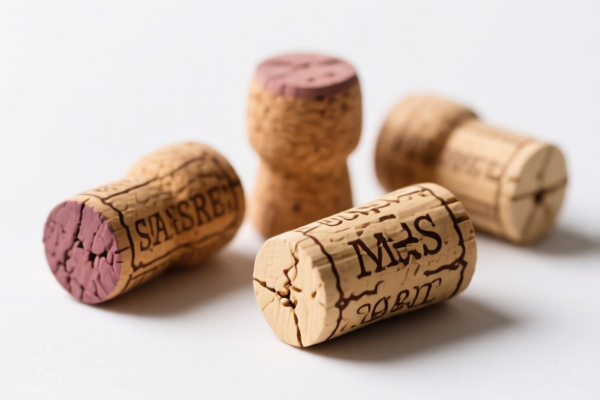


AI Analysis
🍷 Wine Bottle Natural Cork Stopper
🌐 HS Code Reference & Clearance Guide | 2026 Latest Tariff Analysis | Professional Entry Strategy
📌 I. Product Definition & Classification: Do You Truly Understand "Natural Cork Stopper"?
Natural cork stoppers are the traditional and primary sealing mechanism for wine bottles, crafted from the bark of the Quercus suber (cork oak) tree. In international trade, they are classified based on their material origin and physical form. While often viewed simply as "corks," their classification hinges on whether they are processed natural cork, agglomerated cork, or composite materials, and their specific shape as a "stopper."
⚠️ Key Distinction Point:
- If the product is 100% Natural Cork, molded into a stopper shape, it falls under Chapter 45 (Cork and Articles of Cork).
- Specific subheadings differentiate between natural cork blocks/slabs vs. manufactured stoppers.
- Crucial Warning: Misclassification as "other cork articles" or misidentifying the material can lead to significant tariff discrepancies and customs delays.
📦 II. HS Code Classification Details (2026 Latest Tariff Authority Cross-Reference)
| HS Code | Product Description | Application Scenario | Material Status |
|---|---|---|---|
4503.10.20.00 |
Natural cork stoppers; natural cork and articles of cork; stoppers, corks and stopple plugs | Standard wine bottle stoppers made from single-piece natural cork; core component of wine packaging | ✅ 100% Natural |
4503.10.60.00 |
Stoppers, corks and stopple plugs (Other) | Natural cork stoppers that do not fit specific sub-codes; fully complies with "natural cork" definition | ✅ 100% Natural |
4502.00.00.00 |
Natural cork (in slabs, blocks, round logs and squares) | Less common for finished stoppers; implies raw or semi-processed form shaped for stopping purposes | ✅ Raw/Semi-processed |
4504.10.45.00 |
Agglomerated cork with one or more faces covered with natural cork or natural cork powder | Composite corks (natural top/bottom, agglomerated center); often used for premium wines | ⚠️ Composite |
🔍 Key Reminder:
- All finished natural cork stoppers intended for wine bottling should primarily target 4503.10 variants.
- If the stopper is made from agglomerated cork (reconstituted), it may fall under 4504, but the data provided focuses on Natural Cork variants (4503).
- Ensure the description explicitly states "Natural Cork" to avoid being misclassified as synthetic or agglomerated products which may have different tax treatments.
💰 III. 2026 Latest Tariff Rate Details (Including Additional Taxes & Policy Surcharges)
✅ Applicable Country: United States (US)
✅ Origin: China (CN)
✅ Effective Date: November 10, 2025 (and subsequent imports)
🎯 1. 4503.10.20.00 —— Natural Cork Stopper (Specific Subcategory)
| Item | Content |
|---|---|
| Base Duty Rate | 0% (ad valorem) |
| USITC Additional Duty | +25% (Under USITC Footnote 9903.88.01 / Section 301) |
| IEEPA Additional Duty | +10% (Targeting China/HK products, effective Nov 10, 2025) |
| Total Effective Rate | 35.0% |
| Tax Calculation | CIF Value × 35% |
| De Minimis Eligibility | ❌ Not Eligible (deny_de_minimis) |
| Legal Basis Path | IEEPA:9903.01.25 → IEEPA:9903.01.24 → USITC:4503.10.20.00 → FOOTNOTE:9903.88.01 |
📌 Explanation:
- Although the base duty is 0%, the Section 301 tariff (+25%) and IEEPA 122 Clause (+10%) apply, totaling 35%.
- This is a high-duty item due to geopolitical trade measures.
- No de minimis exemption applies; all shipments are subject to full duty calculation.
🎯 2. 4503.10.60.00 —— Natural Cork Stopper (Other/General)
| Item | Content |
|---|---|
| Base Duty Rate | 0% (ad valorem) |
| USITC Additional Duty | +25% (Section 301) |
| IEEPA Additional Duty | +10% (Targeting China/HK products) |
| Total Effective Rate | 35.0% |
| Tax Calculation | CIF Value × 35% |
| De Minimis Eligibility | ❌ Not Eligible (deny_de_minimis) |
| Legal Basis Path | IEEPA:9903.01.25 → IEEPA:9903.01.24 → USITC:4503.10.60.00 → FOOTNOTE:9903.88.01 |
📌 Note:
- Same tax structure as4503.10.20.00.
- Used for natural cork stoppers that are standard but may not fit the more specific20.00subcategory, or as a fallback for broad "natural cork stopper" declarations.
🎯 3. 4502.00.00.00 —— Natural Cork (Slabs/Blocks for Stopping)
| Item | Content |
|---|---|
| Base Duty Rate | 0% (ad valorem) |
| USITC Additional Duty | +25% (Section 301) |
| IEEPA Additional Duty | +10% (Targeting China/HK products) |
| Total Effective Rate | 35.0% |
| Tax Calculation | CIF Value × 35% |
| De Minimis Eligibility | ❌ Not Eligible (deny_de_minimis) |
| Legal Basis Path | IEEPA:9903.01.25 → IEEPA:9903.01.24 → USITC:4502.00.00.00 → FOOTNOTE:9903.88.01 |
📌 Caution:
- This code is for natural cork in slabs/blocks. If you are importing finished stoppers, using this code might be considered misclassification unless they are semi-processed.
- However, the provided data links it to "stoppers," so ensure you use 4503 for finished goods to avoid compliance issues.
🎯 4. 4504.10.45.00 —— Agglomerated/Composite Cork (With Natural Cork Faces)
| Item | Content |
|---|---|
| Base Duty Rate | 0% (ad valorem) |
| USITC Additional Duty | +25% (Section 301) |
| IEEPA Additional Duty | +10% (Targeting China/HK products) |
| Total Effective Rate | 35.0% |
| Tax Calculation | CIF Value × 35% |
| De Minimis Eligibility | ❌ Not Eligible (deny_de_minimis) |
| Legal Basis Path | IEEPA:9903.01.25 → IEEPA:9903.01.24 → USITC:4504.10.45.00 → FOOTNOTE:9903.88.01 |
📌 Note:
- This code is for agglomerated cork (reconstituted cork particles) with natural cork faces.
- If your product is 100% natural single-piece cork, do NOT use this code. It is for composite/agglomerated products.
- Tax rate remains 35% due to same trade policies.
🛠️ IV. Clearance Practical Advice (Battle-Proven Pitfall Avoidance Guide)
✅ 1. Required Documentation Checklist (Non-Negotiable)
| Document | Mandatory | Description |
|---|---|---|
| ✅ Product Specification Sheet | ✔️ | Include dimensions, density, moisture content, material type (100% natural vs. agglomerated) |
| ✅ Material Declaration | ✔️ | Explicitly state "100% Natural Cork" or "Agglomerated Cork with Natural Faces" |
| ✅ Product Photos (Clear & Detailed) | ✔️ | Show cross-section to distinguish natural vs. agglomerated; show label/branding |
| ✅ Commercial Invoice | ✔️ | Clearly describe as "Natural Cork Stoppers for Wine Bottles" |
| ✅ Packing List | ✔️ | Detail quantity, weight, and packaging type |
| ✅ Certificate of Origin (CO) | ✔️ | Proof of China origin triggers the 35% rate; if from Portugal/Spain, different rules may apply |
| ✅ USDA/APHIS Permit (If Applicable) | ✔️ | Cork is a plant product; some shipments may require phytosanitary inspection |
✅ 2. Declaration Tips (Key Mantras)
🔥 “Natural Must Be Stated, Composition Must Be Clear, HS Code Must Match!”
| Scenario | Correct Declaration | Wrong Practice |
|---|---|---|
| 100% Natural Cork Stopper | 4503.10.20.00 or 4503.10.60.00"Natural Cork Stoppers" |
Mislabel as "Synthetic Cork" → 0% but illegal |
| Agglomerated Cork with Natural Top/Bottom | 4504.10.45.00"Agglomerated Cork Stopper with Natural Faces" |
Call it "Natural Cork" → Compliance Violation |
| Raw Cork Slabs for Custom Cutting | 4502.00.00.00 |
Call it "Finished Stopper" → Misclassification |
| Wine Corks + Capsules + Packaging | Declare Separately or as Principal Article | Mix with foil capsules (different HS) → Complex Tax |
✅ 3. Special Handling
| Situation | Handling Advice |
|---|---|
| OEM Custom Corks | Provide mold drawings + sample photos to prove shape/material |
| Mixed Shipments (Natural + Agglomerated) | Split HS Codes! Do not lump together. Agglomerated (4504) and Natural (4503) have different technical definitions. |
| Low-Value Samples | ❌ No De Minimis Exemption! Even under $800, natural cork stoppers from China are subject to 35% duty. |
| Phytosanitary Concerns | Ensure cork is treated/sterilized. Provide phytosanitary certificate if requested by USDA/APHIS. |
🌍 V. Global Market Clearance Comparison (2026 Latest)
| Country/Region | Recommended HS Code | Tariff (China Origin) | Certification Requirements | Notes |
|---|---|---|---|---|
| 🇺🇸 USA | 4503.10.20.00 / 4503.10.60.00 |
35% (0% Base + 25% Sec301 + 10% IEEPA) | None Specific | High duty; no de minimis |
| 🇨🇳 China | 4503.10.20.00 |
~5-10% (Import Duty) | N/A | Lower duty for imports into China |
| 🇪🇺 EU | 4503.10 |
0% (Most Favored Nation) | CE (if applicable), FSC (Sustainability) | No 301 tariffs; sustainable sourcing preferred |
| 🇬🇧 UK | 4503.10 |
0% | UKCA (if applicable) | Post-Brexit trade agreement may apply |
| 🇯🇵 Japan | 4503.10 |
0% | JAS (Wood/Cork standards) | Free trade agreement benefits |
📌 Conclusion:
- USA is the most expensive market for Chinese cork due to Section 301 and IEEPA tariffs.
- EU, UK, and Japan have 0% base tariffs for natural cork, making them more competitive for export.
- Sustainability Certifications (FSC/PEFC) are increasingly important in EU/UK markets, though not directly linked to duty rates.
📌 VI. Common Errors & Pitfall Avoidance (Blood-Teaching Lessons)
❌ Error 1: Declaring Agglomerated Cork as "Natural Cork"
👉 Consequence: Customs rejection, fines, and forced reclassification. Agglomerated cork has different material properties.
❌ Error 2: Assuming De Minimis ($800) Applies
👉 Consequence: 35% Duty Still Applies! The data confirms deny_de_minimis for these HS codes from China. Small shipments are NOT tax-free.
❌ Error 3: Vague Description "Cork Stopper"
👉 Consequence: Customs officer may classify as higher-duty category or request additional info, causing delays.
❌ Error 4: Ignoring Phytosanitary Requirements
👉 Consequence: USDA/APHIS may quarantine or destroy shipment if cork shows signs of pests/mold.
✅ Correct Practice:
"100% Natural Cork Stoppers, Diameter 24mm, Length 45mm, for Wine Bottles, Model XYZ, FSC Certified"
🎯 VII. Conclusion: Precise Declaration, Cost Control, Efficient Clearance!
🎯 Remember the Mantra:
🔹 "Natural vs. Agglomerated: Know the Difference!"
🔹 "USA Tariff: 35% is the Truth!"
🔹 "No De Minimis: All Shipments Pay!"
🔹 "HS Code 4503: The Home for Natural Cork!"
📌 Pro Tip:
If your cork stoppers are originated from Portugal, Spain, or Morocco, you may avoid the China-specific tariffs by providing a valid Certificate of Origin from those countries.
For USA imports, consider Advance Rulings if you have complex composite corks to ensure correct HS classification.
📣 Immediate Action:
📞 Consult a Licensed Customs Broker + Provide Product Photos + Apply for HS Code Advance Ruling
🚀 Let your wine corks clear smoothly, avoid penalties, and maximize your profit margins!
✨ Professional Clearance Starts with Accurate Classification!
💼 Every cent of duty is calculated precisely!
Customer Reviews
About HS Code Classification
The Harmonized System (HS) is an internationally standardized nomenclature developed by the World Customs Organization (WCO) to classify traded products. Over 200 countries use the HS system as the basis for customs tariffs, trade statistics, and import/export regulations.
Each HS code follows a hierarchical structure:
- Chapter (2 digits) — Broad category of goods (e.g., Chapter 84: Machinery and Mechanical Appliances)
- Heading (4 digits) — More specific grouping within the chapter
- Subheading (6 digits) — Internationally standardized breakdown, used by all WCO member countries
- National subdivisions (8-10 digits) — Country-specific extensions for further classification, such as US HTSUS 10-digit codes
Correct HS code classification is essential for smooth customs clearance, accurate duty payment, and compliance with trade regulations. Misclassification can lead to customs delays, overpayment of duties, or penalties.
When importing from CN to US, the applicable tariff rates may include:
- Most-Favored-Nation (MFN) rate — The standard duty rate applied to WTO members
- General rate — Applied to countries without trade agreements
- Trade remedy duties — Additional tariffs such as Section 301 (anti-dumping), Section 232 (national security), or countervailing duties
The information provided on this page is for reference purposes only. For official classification, please consult with your local customs authority or a licensed customs broker.