wing mirror indicator light
CN → US| HS Code | Tariff Rate | Origin | Destination | Doc |
|---|---|---|---|---|
| 8539212040 | 35.0% | CN | US | Official Doc |
| 8539100010 | 37.0% | CN | US | Official Doc |
| 8531200040 | 35.0% | CN | US | Official Doc |
| 8531809051 | 17.5% | CN | US | Official Doc |
| 8512204080 | 37.5% | CN | US | Official Doc |
Product Images
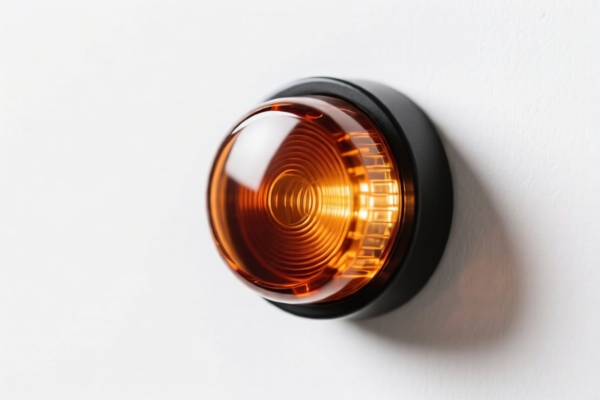
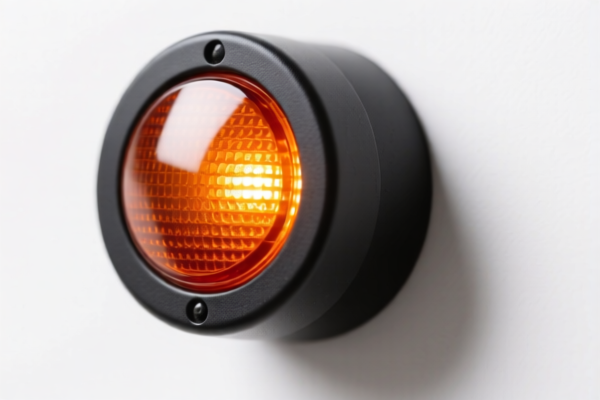
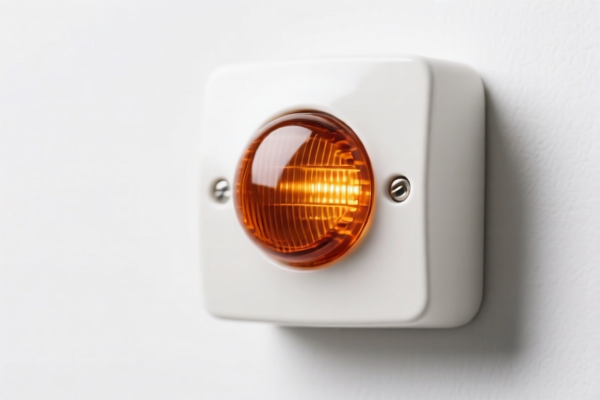
AI Analysis
🚗 Wing Mirror Indicator Light (Turn Signal)
🌐 HS Code Reference & Customs Clearance Guide | 2026 Latest Tariff Analysis | Professional Clearance Strategy
📌 I. Product Definition & Classification: Do You Truly Understand "Wing Mirror Indicators"?
The Wing Mirror Indicator Light (commonly known as a turn signal or side repeater) is a critical safety component for automotive visibility. In international trade, its classification is contentious because it straddles the line between Lighting Equipment and Electrical Signaling Devices.
The core debate lies in its primary function: 1. Illumination: Is it primarily a light source (Lamp)? 2. Signaling: Is it primarily an electrical signal device (Signal Unit)?
Depending on how customs authorities interpret the "essential character," it falls into one of five specific HS Codes with vastly different tax implications.
📦 II. HS Code Classification Details (2026 Latest Tariff Authority Comparison)
| HS Code | Product Description | Classification Logic | Key Distinction |
|---|---|---|---|
8539.21.20.40 |
Sealed Beam Lamps & Light Units | Lamp Category: Viewed as a specific vehicle lighting unit under "Sealed Beam." | Focuses on the physical form of a light source. |
8539.10.00.10 |
Sealed Beam Lamps (General) | Lamp Category: Generic sealed light unit for any application. | Broader "lamp" classification; often higher base tax. |
8531.20.00.40 |
Electrical Sound or Visual Signal Apparatus | Signal Category: Viewed as a signaling device (no material conflict). | Focuses on the function of signaling traffic/status. |
8531.80.90.51 |
Other Signaling Apparatus | Signal Category: "Other" electrical signaling devices. | Used when it doesn't fit specific signal sub-categories; Lowest Tax. |
8512.20.40.80 |
Visual Signaling Equipment (Other) | Vehicle Equipment Category: Specific visual signal for vehicles. | Tied strictly to vehicle electrical systems (12V DC context). |
🔍 Critical Insight:
- Lamps (8539.xxxxxxx): Often interpreted as "Light Sources."
- Signals (8531.xxxxxxx/8512.xxxxxxx): Interpreted as "Functional Devices."
- Tax Disparity: The difference between "Lamp" (35-37.5%) and "Other Signal" (17.5%) can significantly impact landed costs.
💰 III. 2026 Latest Tariff Rate Breakdown (Including Surcharges & Policy Add-ons)
✅ Applicable Country: United States (US)
✅ Origin: China (CN)
✅ Effective Date: Post-2025 Policies (Section 301 + IEEPA)
🎯 1. 8539.21.20.40 — Sealed Beam Lamps (Vehicle Specific)
| Item | Detail |
|---|---|
| Base Duty | 0.0% |
| Section 301 Surcharge | +25.0% |
| IEEPA Surcharge | +10.0% (Section 122) |
| Total Effective Rate | 35.0% |
| Tax Calculation | CIF Value × 35% |
| De Minimis Exemption | ❌ Denied |
| Legal Basis | USITC:8539.21.20.40 → FOOTNOTE:301.8539 → IEEPA:9903.01.25 |
📌 Explanation:
- Classified as a "Lamp." Lamps generally attract the standard Section 301 tariff.
- The 122 Clause (IEEPA) adds an extra 10% on top, resulting in a 35% total.
🎯 2. 8539.10.00.10 — Sealed Beam Lamps (General)
| Item | Detail |
|---|---|
| Base Duty | 2.0% |
| Section 301 Surcharge | +25.0% |
| IEEPA Surcharge | +10.0% (Section 122) |
| Total Effective Rate | 37.0% |
| Tax Calculation | CIF Value × 37% |
| De Minimis Exemption | ❌ Denied |
| Legal Basis | USITC:8539.10.00.10 → FOOTNOTE:301.8539 → IEEPA:9903.01.24 |
📌 Note:
- This is the most expensive option due to the 2% base duty.
- Use only if the product strictly fits the "General Sealed Beam" definition and not the vehicle-specific one.
🎯 3. 8531.20.00.40 — Electrical Visual Signal Apparatus
| Item | Detail |
|---|---|
| Base Duty | 0.0% |
| Section 301 Surcharge | +25.0% |
| IEEPA Surcharge | +10.0% (Section 122) |
| Total Effective Rate | 35.0% |
| Tax Calculation | CIF Value × 35% |
| De Minimis Exemption | ❌ Denied |
| Legal Basis | USITC:8531.20.00.40 → FOOTNOTE:301.8531 → IEEPA:9903.01.25 |
📌 Explanation:
- Classified as a "Signal Apparatus." Even though it’s a signal, it carries the same 35% rate as the lamps due to the heavy surcharges.
- The logic here is: "It emits a visual signal, therefore it is a signal apparatus."
🎯 4. 8531.80.90.51 — Other Signaling Apparatus (Optimal Choice)
| Item | Detail |
|---|---|
| Base Duty | 0.0% |
| Section 301 Surcharge | +7.5% |
| IEEPA Surcharge | +10.0% (Section 122) |
| Total Effective Rate | 17.5% |
| Tax Calculation | CIF Value × 17.5% |
| De Minimis Exemption | ❌ Denied |
| Legal Basis | USITC:8531.80.90.51 → FOOTNOTE:301.8531 → IEEPA:9903.01.24 |
📌 Strategic Advantage:
- This is the lowest tax rate (17.5%)!
- It relies on the argument that the wing mirror indicator is an "Other" electrical signaling device, not a primary lamp.
- Requirement: Must convincingly argue the "Signaling" function over the "Lighting" function.
🎯 5. 8512.20.40.80 — Visual Signaling Equipment (Vehicle)
| Item | Detail |
|---|---|
| Base Duty | 2.5% |
| Section 301 Surcharge | +25.0% |
| IEEPA Surcharge | +10.0% (Section 122) |
| Total Effective Rate | 37.5% |
| Tax Calculation | CIF Value × 37.5% |
| De Minimis Exemption | ❌ Denied |
| Legal Basis | USITC:8512.20.40.80 → FOOTNOTE:301.8512 → IEEPA:9903.01.25 |
📌 Note:
- While it fits the "Vehicle Equipment" definition precisely, the high base duty (2.5%) pushes the total to 37.5%.
- Generally not recommended unless other codes are disputed.
🛠️ IV. Customs Clearance Practical Advice (Risk Avoidance Guide)
✅ 1. Documentation Checklist (Mandatory)
| Document | Required | Description |
|---|---|---|
| ✅ Product Specifications | ✔️ | Must detail voltage (12V/24V), wattage, lens color, IP rating. |
| ✅ Function Statement | ✔️ | Explicitly state: "Primary function is visual signaling for vehicle safety, not illumination." |
| ✅ Structure Diagram | ✔️ | Show internal wiring. Is it just an LED module with a resistor (Signal)? Or a complex lamp? |
| ✅ Photos (Labeled) | ✔️ | Clear images showing the unit mounted on a mirror, with "Indicator" or "Turn Signal" labels. |
| ✅ Commercial Invoice | ✔️ | Description: "Wing Mirror LED Turn Signal Indicator, Vehicle Safety Device" (Avoid generic "Light"). |
| ✅ Certifications | ✔️ | DOT (US) or ECE (EU) approval documents if available. |
✅ 2. Declaration Tips (Key Mantras)
🔥 "Signal Over Light, Function Over Form!"
| Scenario | Correct Declaration Strategy | Wrong Practice |
|---|---|---|
| LED Wing Mirror Light | Declare as "Visual Signaling Apparatus" (8531.80.90.51) |
Call it "LED Lamp" → Triggers 8539 codes → 35%+ |
| Integrated Mirror Assembly | If the mirror housing is included, declare separately or as "Mirror Assembly" | Combining mirror + light into one vague description → Customs confusion |
| Aftermarket Parts | Provide OEM reference number (e.g., "For Toyota Camry 2022") | Generic "Car Light" → High scrutiny |
✅ 3. Special Cases
| Situation | Handling Advice |
|---|---|
| OEM Parts | Provide letter from auto manufacturer confirming part number and function. |
| Aftermarket/Universal | Emphasize "Electrical Signaling Device" to aim for 8531.80.90.51. |
| Dispute Resolution | If customs insists on 8539 (Lamp), appeal with evidence that it lacks the "illumination" purpose (low lumens, specific flash pattern). |
🌍 V. Global Market Comparison (2026)
| Region | Recommended HS Code | Est. Tax Rate (CN Origin) | Key Requirement |
|---|---|---|---|
| 🇺🇸 USA | 8531.80.90.51 |
17.5% | Must prove "Signaling" function. Avoid "Lamp" terminology. |
| 🇨🇳 China | 8531.80.90.51 |
~7-14% | Standard import duties. No trade war tariffs. |
| 🇪🇺 EU | 8512.20.40 |
~4-6% | E-Mark certification required. |
| 🇲🇽 Mexico | 8539.21.20 |
~5% | USMCA rules may apply if assembled locally. |
📌 Conclusion:
- The USA market is the most critical due to the 17.5% vs. 35%+ disparity.
- Winning Strategy: Argue for8531.80.90.51(Other Signaling Apparatus) to save ~17.5% in taxes compared to lamp classifications.
📌 VI. Common Mistakes & Pitfalls (Lessons Learned)
❌ Mistake 1: Using the word "Lamp" or "Light Bulb" in the invoice description.
👉 Consequence: Customs automatically assigns 8539 codes → 35-37.5% Tax.
❌ Mistake 2: Failing to provide a function statement.
👉 Consequence: Customs uses the "worst-case" classification for your benefit (highest tax).
❌ Mistake 3: Combining the indicator with the mirror housing in a way that suggests a "Mirror Assembly" without separate value.
👉 Consequence: Complex valuation issues; potential delays.
✅ Correct Approach:
"Wing Mirror Turn Signal Indicator, LED, 12V, Visual Signaling Device for Automotive Safety, Model XYZ, DOT Certified"
🎯 VII. Conclusion: Precise Classification Saves Money!
🎯 Remember the Mantra:
🔹 "Don't call it a lamp, call it a signal!"
🔹 "8531.80 saves you 17.5% compared to 8539.21!"
🔹 "Function dictates duty; clarify it in every document!"
📌 Pro Tip:
For high-volume imports, consider filing an Advance Ruling (Ruling Letter) with US Customs and Border Protection (CBP) to legally lock in the 8531.80.90.51 classification before shipping. This provides legal certainty and prevents unexpected duties.
📣 Immediate Action:
📞 Consult your customs broker to review your product's technical specs.
📄 Update your invoice descriptions to emphasize "Visual Signaling Apparatus."
🚀 Secure the 17.5% rate and boost your profit margins!
✨ Professional clearance starts with precise classification!
💼 Your bottom line depends on the first three digits of your HS Code!
Customer Reviews
About HS Code Classification
The Harmonized System (HS) is an internationally standardized nomenclature developed by the World Customs Organization (WCO) to classify traded products. Over 200 countries use the HS system as the basis for customs tariffs, trade statistics, and import/export regulations.
Each HS code follows a hierarchical structure:
- Chapter (2 digits) — Broad category of goods (e.g., Chapter 84: Machinery and Mechanical Appliances)
- Heading (4 digits) — More specific grouping within the chapter
- Subheading (6 digits) — Internationally standardized breakdown, used by all WCO member countries
- National subdivisions (8-10 digits) — Country-specific extensions for further classification, such as US HTSUS 10-digit codes
Correct HS code classification is essential for smooth customs clearance, accurate duty payment, and compliance with trade regulations. Misclassification can lead to customs delays, overpayment of duties, or penalties.
When importing from CN to US, the applicable tariff rates may include:
- Most-Favored-Nation (MFN) rate — The standard duty rate applied to WTO members
- General rate — Applied to countries without trade agreements
- Trade remedy duties — Additional tariffs such as Section 301 (anti-dumping), Section 232 (national security), or countervailing duties
The information provided on this page is for reference purposes only. For official classification, please consult with your local customs authority or a licensed customs broker.