wipe slippers
CN → US| HS Code | Tariff Rate | Origin | Destination | Doc |
|---|---|---|---|---|
| 6405902000 | 21.3% | CN | US | Official Doc |
| 6405209015 | 22.5% | CN | US | Official Doc |
| 6402993110 | 16.0% | CN | US | Official Doc |
| 6402994920 | 55.0% | CN | US | Official Doc |
| 6404192520 | 25.0% | CN | US | Official Doc |
| 6404193015 | 22.5% | CN | US | Official Doc |
Product Images
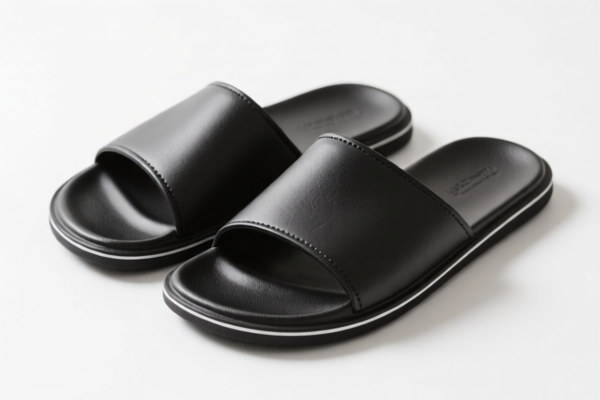
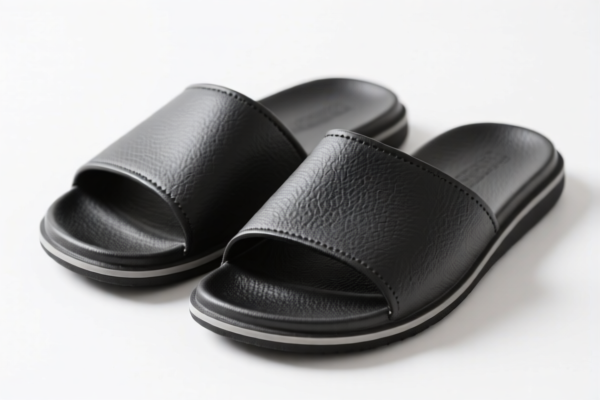
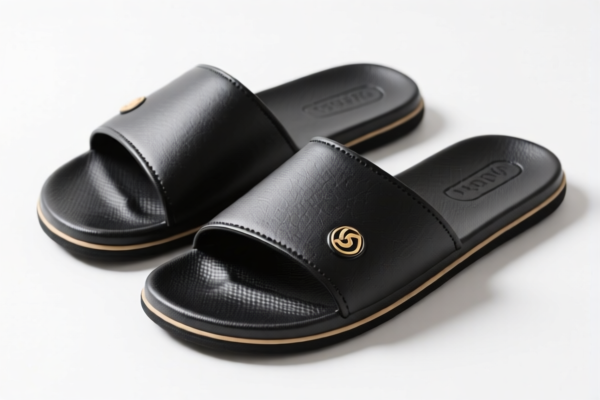
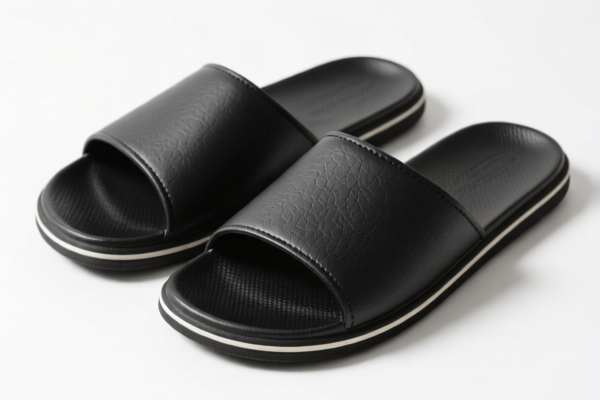
AI Analysis
👟 Wipe Slippers (Disposable Footwear)
🌐 HS Code Reference & Customs Clearance Guide | 2026 Latest Tariff Analysis | Professional Strategy for Disposable Footwear
📌 I. Product Definition & Classification: What Exactly Are "Wipe Slippers"?
Wipe Slippers (also known as disposable slippers, hygiene slippers, or non-woven slippers) are lightweight, single-use footwear designed for one-time use. They are commonly found in hotels, hospitals, spas, cruise ships, and industrial cleanrooms.
In international trade, they are strictly categorized as Disposable Footwear, distinct from regular textile or rubber slippers. The key differentiator is the material composition (non-woven fabric, polyethylene, etc.) and the intent of use (hygiene, hygiene barrier, single-use).
⚠️ Key Distinction Point:
- If the product is designed for one-time use (e.g., non-woven fabric, thin plastic, flimsy construction) → It falls under 6405.90.20.00.
- If the product is durable, reusable, and used as regular house slippers (even if made of textile) → It may fall under 6404.19 or 6405.20, but NOT 6405.90.20.00.
- Warning: Misclassifying durable textile slippers as "disposable" to seek lower taxes is a common customs audit trigger. Ensure the product is genuinely designed for single use.
📦 II. HS Code Classification Details (2026 Latest Tariff Authority Comparison)
Based on the provided , here are the specific HS Codes relevant to slippers and footwear. Note that "Wipe Slippers" primarily maps to 6405.90.20.00, but other similar items may fall under different codes depending on material and construction.
| HS Code | Product Description | Applicable Scenario | Material/Construction | Is it Disposable? |
|---|---|---|---|---|
6405.90.20.00 |
Disposable footwear, designed for one-time use | Hotel amenities, medical hygiene, spa single-use | Non-woven, thin plastic, foam | ✅ Yes (Primary Match for "Wipe Slippers") |
6404.19.25.20 |
Other footwear: Outer sole rubber/plastics, upper textile/veg fibers; Open toe/heel or slip-on; <10% rubber/plastics by weight; Vegetable fiber upper; House slippers | Basic textile house slippers with rigid sole | Textile upper, vegetable fiber | ❌ No (Reusable) |
6404.19.30.15 |
Other footwear: Outer sole rubber/plastics, upper textile; Slip-on; <10% rubber/plastics; Other house slippers covering ankle | Ankle-covering textile slippers | Textile upper, ankle coverage | ❌ No (Reusable) |
6405.20.90.15 |
Other footwear: Upper of textile materials; Other House slippers | General textile house slippers (non-disposable) | Pure textile upper | ❌ No (Reusable) |
6402.99.31.10 |
Other footwear with outer soles/uppers of rubber/plastics; >90% rubber/plastics on upper surface; House slippers | Rubber/Plastic house slippers | Rubber/Plastic dominant | ❌ No (Reusable) |
6402.99.49.20 |
Other footwear with outer soles/uppers of rubber/plastics; Slip-on; <10% rubber/plastics (foxing exception); House slippers | Rubber/Plastic slip-on slippers | Rubber/Plastic dominant | ❌ No (Reusable) |
🔍 Crucial Reminder:
- "Wipe Slippers" = Disposable. The only code in the data set explicitly defining "disposable" is 6405.90.20.00.
- Codes6404and6405.20are for textile uppers but are generally for reusable footwear unless explicitly stated as disposable.
- Codes6402are for rubber/plastic footwear. While some rubber slippers are disposable, the specific code for "Disposable footwear" is6405.90.20.00. If your rubber/plastic slipper is truly disposable, check if it fits the specific "disposable" descriptor in 6405. If not, it may fall under other 6402 subheadings, but6405.90.20.00is the safest bet for standard hotel/medical wipe slippers.
💰 III. 2026 Latest Tariff Rate Details (Including Surtaxes & Policy Add-ons)
✅ Applicable Country: United States (US)
✅ Origin: China (CN)
✅ Effective Time: 2025–2026 (Current Trade Policy)
🎯 1. 6405.90.20.00 —— Disposable Footwear (Primary Target for "Wipe Slippers")
| Item | Content |
|---|---|
| Base Tariff Rate | 3.8% (ad valorem) |
| USITC Surcharge (Section 301) | +7.5% |
| Total Tariff Rate | 11.3% |
| Tax Calculation | CIF Value × 11.3% |
| De Minimis Eligibility | ❌ No (High tariff items often excluded from $800 de minimis benefits depending on specific enforcement, but generally, high combined rates make small shipments costly; verify current CBP enforcement on de minimis for Section 301 goods) |
| Legal Basis Path | USITC:6405.90.20.00 → Section 301 Footnote: 9903.02.01 (Example placeholder for 7.5% surcharge) |
📌 Explanation:
- The base duty for disposable footwear is relatively low at 3.8%.
- However, a Section 301 surcharge of 7.5% is applied to Chinese-origin disposable footwear (as per the provided data).
- Total Cost Impact: You must budget for 11.3% of the customs value. This is significantly higher than many textile products (which are often 0% base), but lower than high-tech electronics.
- Comparison: Unlike "Wipe Slippers" made of textile (6404/6405.20) which have 0% total tax in the data, disposable ones incur this 11.3% charge. This is a critical cost driver.
🎯 2. Comparison with Non-Disposable Slippers (For Context)
| HS Code | Description | Base Tax | Surcharge | Total Tax |
|---|---|---|---|---|
6404.19.25.20 |
Textile upper, veg fiber, house slipper | 0.0% | 0.0% | 0.0% |
6404.19.30.15 |
Textile upper, ankle cover, house slipper | 0.0% | 0.0% | 0.0% |
6405.20.90.15 |
Textile upper, house slipper | 0.0% | 0.0% | 0.0% |
6402.99.31.10 |
Rubber/Plastic >90%, house slipper | 0.0% | 0.0% | 0.0% |
6402.99.49.20 |
Rubber/Plastic slip-on, house slipper | 0.0% | 0.0% | 0.0% |
📌 Key Insight:
- If you can prove your "wipe slippers" are reusable (e.g., durable EVA slippers sold in bulk for home use), you might qualify for 0% tax under other codes.
- However, if they are truly disposable (single-use, non-woven, hotel amenities), you must use6405.90.20.00and pay 11.3%.
- Do not misdeclare disposable slippers as reusable textile slippers to avoid tax. Customs will inspect material composition and durability.
🛠️ IV. Customs Clearance Practical Advice (Combat Pitfalls Guide)
✅ 1. Required Documentation Checklist (Non-Negotiable)
| Document | Must Provide | Explanation |
|---|---|---|
| ✅ Product Specifications | ✔️ | Must state "Disposable" or "Single-Use". Include material (e.g., "Spunbond Non-Woven Fabric", "PE Film"). |
| ✅ Product Photos | ✔️ | Clear images showing the flimsy nature, lack of stitching, or simple construction indicative of one-time use. |
| ✅ Commercial Invoice | ✔️ | Clearly describe as "Disposable Wipe Slippers, Non-Woven, Single-Use". Avoid vague terms like "Shoe". |
| ✅ Packing List | ✔️ | Detail quantity, weight, and packaging (e.g., "Packed 10 pairs per bag, 1000 bags per carton"). |
| ✅ Material Composition Certificate | ✔️ | If challenged, prove the upper/sole material to distinguish from textile/rubber durable slippers. |
| ✅ Declaration of Disposal | ✔️ | Confirm that the product is not intended for long-term wear. |
✅ 2. Declaration Tips (Key Mantras)
🔥 "True Disposable, Correct Code; Fake Reusable, High Risk!"
| Scenario | Correct Declaration | Wrong Practice |
|---|---|---|
| Hotel Amenities | 6405.90.20.00 |
Misdeclare as 6405.20.90.15 (Textile Slipper) → 11.3% evasion risk |
| Medical Hygiene | 6405.90.20.00 |
Declare as "Foot Cover" without material detail → Delay for inspection |
| Durable EVA Slippers | 6402.99.xxxx (e.g., 6402.99.31.10) |
Call them "Disposable" to get 0% tax → Audit failure |
| Mixed Shipment | Separate lines for Disposable vs. Reusable | Mixed line item → Complex valuation, potential penalty |
✅ 3. Special Case Handling
| Situation | Handling Advice |
|---|---|
| OEM Hotel Slippers | Provide the hotel’s purchase order and design sheet to prove "disposable" nature. |
| Plastic Film Slippers | Ensure they are classified as disposable (6405.90.20.00) if single-use, not as plastic footwear (6402). |
| Non-Woven Fabric Slippers | Confirm material is non-woven (not woven textile) to support "disposable" classification. |
| Bulk Imports | For large volumes, consider applying for an Advance Ruling if the product’s durability is borderline. |
🌍 V. Global Market Comparison (2026 Latest)
| Country/Region | Recommended HS Code for Disposable Slippers | Tariff Rate | Certification Required | Notes |
|---|---|---|---|---|
| 🇺🇸 USA | 6405.90.20.00 |
11.3% | None specific, but must be accurate | High compliance risk for misclassification |
| 🇨🇳 China | 6405.90.20.00 |
~3.8% (Import) | None | Domestic production may be exempt or low tax |
| 🇪🇺 EU | 6405.90 (Varies) |
~1.7% (Most Favored Nation) | CE Mark (if applicable for hygiene) | No Section 301 surcharge |
| 🇬🇧 UK | 6405.90 |
~1.7% | UKCA Mark (if applicable) | Post-Brexit rules apply |
| 🇯🇵 Japan | 6405.90 |
~5-10% | None | Varies by material |
📌 Conclusion:
- USA is the most challenging market due to the 7.5% Section 301 surcharge on Chinese disposable footwear.
- EU and UK have lower base rates but may have different material restrictions.
- Always verify if your specific "wipe slipper" material (e.g., biodegradable, recycled) affects classification.
📌 VI. Common Errors & Pitfall Avoidance (Blood & Tears Lessons)
❌ Error 1: Declaring disposable non-woven slippers as "Textile House Slippers" (6405.20.90.15) to pay 0% tax.
👉 Consequence: Customs detects material is non-woven/disposable → 11.3% back taxes + fines + shipment detention.
❌ Error 2: Using "Slippers" as a generic name without specifying "Disposable".
👉 Consequence: Ambiguous declaration → Random inspection, delay of 2-4 weeks.
❌ Error 3: Ignoring the 7.5% surcharge in cost calculation.
👉 Consequence: Profit margin eroded by 11.3% instead of expected 0-3%.
❌ Error 4: Mixing disposable and reusable slippers in one HS Code line.
👉 Consequence: Valuation issues, potential penalty for incorrect valuation.
✅ Correct Practice:
"Disposable Non-Woven Wipe Slippers, Single-Use, Hotel Amenity, Model XYZ, Made in China"
🎯 VII. Conclusion: Professional Classification Saves Money!
🎯 Remember the Mantra:
🔹 "Disposable = 6405.90.20.00 = 11.3% Tax"
🔹 "Reusable Textile/Rubber = 0% Tax (Often)"
🔹 "Don't Lie, Don't Hide, Accurate Declaration is Key!"
📌 Pro Tip:
If you are importing large volumes of wipe slippers, consider:
1. Value Engineering: Can you improve the product to be considered "reusable" (e.g., thicker material, durable sole)? If so, it may fall under 0% tax codes.
2. Supply Chain Diversification: Import from Vietnam or Malaysia to avoid Section 301 surcharges (if rules of origin are met).
3. Advance Ruling: Request a binding ruling from US CBP if your product is borderline.
📣 Immediate Action:
📞 Consult your customs broker with material samples.
📄 Ensure your invoice explicitly states "Disposable / Single-Use".
💰 Budget for 11.3% total tax for US imports.
✨ Professional Clearance Starts with Accurate Classification!
💼 Every Percent Saved is Pure Profit!
Customer Reviews
About HS Code Classification
The Harmonized System (HS) is an internationally standardized nomenclature developed by the World Customs Organization (WCO) to classify traded products. Over 200 countries use the HS system as the basis for customs tariffs, trade statistics, and import/export regulations.
Each HS code follows a hierarchical structure:
- Chapter (2 digits) — Broad category of goods (e.g., Chapter 84: Machinery and Mechanical Appliances)
- Heading (4 digits) — More specific grouping within the chapter
- Subheading (6 digits) — Internationally standardized breakdown, used by all WCO member countries
- National subdivisions (8-10 digits) — Country-specific extensions for further classification, such as US HTSUS 10-digit codes
Correct HS code classification is essential for smooth customs clearance, accurate duty payment, and compliance with trade regulations. Misclassification can lead to customs delays, overpayment of duties, or penalties.
When importing from CN to US, the applicable tariff rates may include:
- Most-Favored-Nation (MFN) rate — The standard duty rate applied to WTO members
- General rate — Applied to countries without trade agreements
- Trade remedy duties — Additional tariffs such as Section 301 (anti-dumping), Section 232 (national security), or countervailing duties
The information provided on this page is for reference purposes only. For official classification, please consult with your local customs authority or a licensed customs broker.