wiper blades
CN → US| HS Code | Tariff Rate | Origin | Destination | Doc |
|---|---|---|---|---|
| 4016996010 | 37.5% | CN | US | Official Doc |
| 4016993000 | 35.0% | CN | US | Official Doc |
| 8512404000 | 37.5% | CN | US | Official Doc |
| 8512909000 | 37.5% | CN | US | Official Doc |
| 8512404000 | 37.5% | CN | US | Official Doc |
Product Images
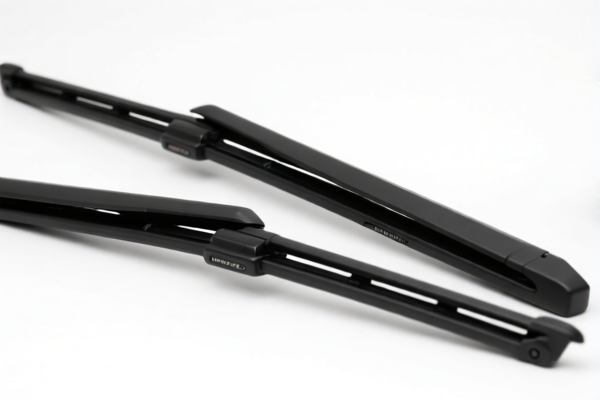
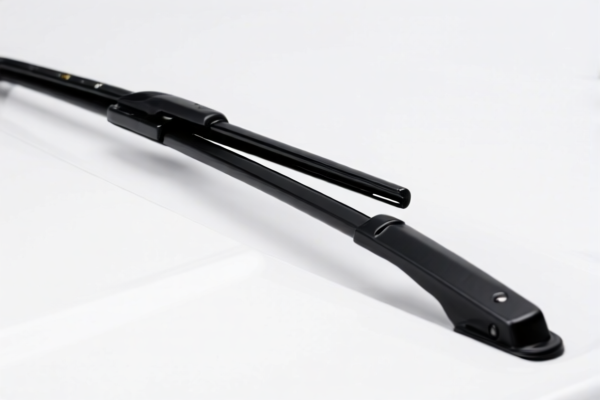
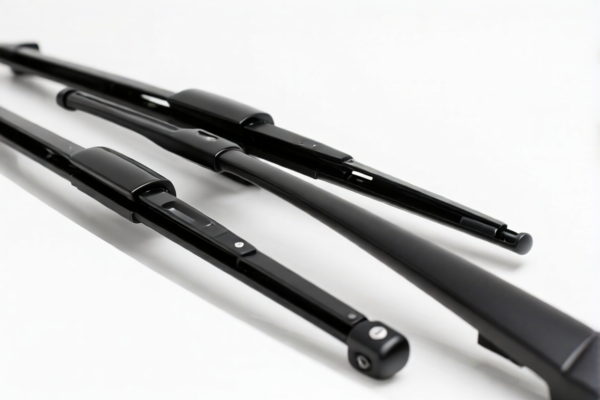
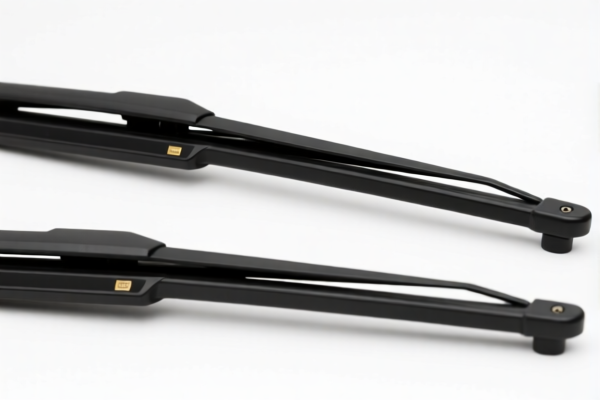
AI Analysis
🚗 Windshield Wiper Blades (Wiper Blades for Automotive Vehicles)
🌐 HS Code Reference & Customs Clearance Guide | 2026 Latest Tariff Full Analysis | Professional Clearance Strategy
📌 I. Product Definition & Classification: Do You Really Understand "Wiper Blades"?
Wiper blades are critical safety components for automotive vehicles, designed to clear rain, snow, and debris from the windshield to ensure driver visibility. In international trade, they are classified based on their functional identity and material composition. There is a common misconception that because they contain rubber, they must be classified as rubber parts. However, customs authorities prioritize the primary function of the item.
Two Main Classification Paths: 1. As a Vehicle Accessory/Part (Rubber Focus): If classified primarily by its material (sulfurated rubber) and use as a generic mechanical part, it falls under Chapter 40. 2. As a Specific Vehicle Equipment (Function Focus): If classified by its specific function as a "windshield wiper," it falls under Chapter 85 (Electrical machinery and equipment).
⚠️ Key Distinction Point:
- If the importer chooses to declare based on material (Sulfurated Rubber) → Code 4016.99
- If the importer chooses to declare based on Function (Windshield Wiper) → Code 8512.40 or 8512.90
Note: Both paths are valid depending on the specific product structure and commercial invoice description, but they carry identical high tax rates in the current trade environment.
📦 II. HS Code Classification Details (2026 Latest Tariff Authoritative Comparison)
| HS Code | Product Description | Applicable Scenario | Classification Logic |
|---|---|---|---|
4016.99.60.10 |
Other articles of vulcanized rubber other than hard rubber | Wiper blades made of vulcanized rubber, treated as auto parts/mechanical components | ✅ Material-based (Rubber) |
4016.99.30.00 |
Other articles of vulcanized rubber for vehicles (8701-8705) | Wipers used as shock-absorbing or functional components for vehicles | ✅ Material-based (Vehicle Rubber Part) |
8512.40.40.00 |
Windscreen wipers, defrosters and demisters | Core Product: Wipers specifically designed for cleaning windshields | ✅ Function-based (Wiper) |
8512.90.90.00 |
Other parts and accessories | Wipers treated as generic vehicle attachments/accessories without specific material conflict | ✅ Function-based (Accessory) |
🔍 Key Reminder:
-8512.40.40.00is the most precise fit for "Windshield Wipers" as it explicitly matches the function.
-4016.99codes are used when the product is emphasized as a rubber component rather than an electrical/mechanical assembly.
- Crucial Warning: Despite different HS codes, ALL listed codes in this data set attract the same high tariff burden due to Section 301 and Section 232/122 tariffs.
💰 III. 2026 Latest Tariff Rate Detail (Including Surcharge, Policy Surcharge)
✅ Applicable Country: United States (US)
✅ Origin: China (CN)
✅ Effective Date: Current (Post-2025 Trade Policy)
🎯 1. 4016.99.60.10 & 4016.99.30.00 —— Rubber-based Classification
| Item | Content |
|---|---|
| Base Tariff | 0.0% - 2.5% (Ad Valorem) |
| Section 301 Surcharge (Add-on Tariff) | +25.0% |
| Section 232 / "122" Clause Surcharge | +10.0% |
| Total Effective Tax Rate | 35.0% - 37.5% |
| Tax Calculation | CIF Value × 35.0% to 37.5% |
| De Minimis Exemption | ❌ Not Applicable (High risk of seizure/penalty if declared under $800) |
| Legal Basis Path | USITC:4016.99 → Section 301: +25% → Section 232/122: +10% |
📌 Explanation:
- The 25% is the standard "Section 301" tariff on Chinese manufactured goods.
- The 10% is the additional "122 Clause" (often associated with steel/aluminum or specific trade enforcement actions applied to certain rubber/auto parts).
- For4016.99.60.10and8512codes, the base rate is 2.5%, making the total 37.5%.
- For4016.99.30.00, the base rate is 0.0%, making the total 35.0%.
🎯 2. 8512.40.40.00 & 8512.90.90.00 —— Function-based Classification (Wipers)
| Item | Content |
|---|---|
| Base Tariff | 2.5% (Ad Valorem) |
| Section 301 Surcharge (Add-on Tariff) | +25.0% |
| Section 232 / "122" Clause Surcharge | +10.0% |
| Total Effective Tax Rate | 37.5% |
| Tax Calculation | CIF Value × 37.5% |
| De Minimis Exemption | ❌ Not Applicable |
| Legal Basis Path | USITC:8512.40 → Section 301: +25% → Section 232/122: +10% |
📌 Explanation:
- Although8512is an electrical/mechanical category, it is not exempt from China-specific tariffs.
- The 37.5% rate is uniform for both sub-headings in this dataset.
- Do not assume that "Electrical" goods have lower tariffs; Section 301 applies broadly to Chapter 85 items from China.
🛠️ IV. Customs Clearance Practical Advice (Combat Pitfall Guide)
✅ 1. Required Documentation Checklist (Non-negotiable)
| Document | Mandatory? | Notes |
|---|---|---|
| ✅ Commercial Invoice | ✔️ | Must clearly state "Windshield Wiper Blades" and HS Code. |
| ✅ Product Photos | ✔️ | Show the blade, frame, and connector type. |
| ✅ Material Composition Statement | ✔️ | Specify % of rubber, steel, plastic. Crucial for 4016 vs 8512. |
| ✅ Certificate of Origin (CO) | ✔️ | Essential for proving Chinese origin to apply correct surcharges. |
| ✅ Packing List | ✔️ | Include net/gross weight. |
✅ 2. Declaration Strategy (Key Mantra)
🔥 "Function Defines 8512, Material Defines 4016. Either Way, Tax is High!"
| Scenario | Recommended HS Code | Reason |
|---|---|---|
| Standard Wiper Blades | 8512.40.40.00 |
Most accurate functional description. |
| Wiper Blades with Rubber Frame Only | 4016.99.60.10 |
If the product is purely rubber and sold as a "rubber part." |
| OEM Replacement Parts | 8512.90.90.00 |
If listed as "accessories/parts" for wiper systems. |
⚠️ Critical Warning:
- Do not use "De Minimis" (Section 321) for shipments valued over $800 if you are trying to avoid the 37.5% tariff. Customs increasingly scrutinizes wiper blades for tariff evasion.
- Labeling: Ensure the label says "Made in China" clearly. Mislabeling origin leads to fraud penalties, not just back-taxes.
✅ 3. Special Situation Handling
| Situation | Handling Advice |
|---|---|
| Intelligent/Electronic Wipers | Must use 8512. Rubber classification is invalid for electronic components. |
| Pure Rubber Replacement Inserts | Can use 4016.99.60.10. No metal/plastic frame, just the rubber blade. |
| Wipers for Trucks/Heavy Machinery | May qualify for 4016.99.30.00 (0% base + 35% total), slightly cheaper than 37.5%. |
🌍 V. Global Market Comparison (2026 Latest)
| Country/Region | Recommended HS Code | Total Tariff (China Origin) | Notes |
|---|---|---|---|
| 🇺🇸 USA | 8512.40.40.00 / 4016.99.60.10 |
37.5% / 37.5% | High barriers due to Section 301 + 122 Clause. |
| 🇨🇳 China | 8512.40.40.00 |
Low (~5-10%) | Domestic consumption, low duty. |
| 🇪🇺 EU | 8512.40.00 |
~2.5% | No Section 301 equivalent, but anti-dumping checks may apply. |
| 🇲🇽 Mexico | Varies | ~5-10% | Potential benefits under USMCA if originating in NA. |
📌 Conclusion:
- The USA market is exceptionally costly for Chinese wiper blades due to the 37.5% effective rate.
- Exporters to the US must factor this into their pricing strategy.
- Consider shifting assembly to Vietnam or Mexico to potentially qualify for lower tariffs under USMCA or Generalized System of Preferences (GSP) alternatives, if eligible.
📌 VI. Common Mistakes & Pitfall Guide (Lessons Learned)
❌ Mistake 1: Declaring Wipers as "Auto Parts" generally (8708.99)
👉 Consequence: Wrong classification. Customs will reclassify to 8512 or 4016 and audit past shipments.
❌ Mistake 2: Ignoring the "122 Clause" Tariff
👉 Consequence: Underpaying by 10%. Customs will demand back-taxes + interest + penalties.
❌ Mistake 3: Claiming De Minimis for Bulk Shipments
👉 Consequence: Seizure. Wiper blades are a high-risk category for tariff evasion. CBP actively monitors this.
✅ Correct Action:
"Windshield Wiper Blade, Sulfurated Rubber, 24-inch, Model X, Made in China. HS Code: 8512.40.40.00. Duty: 37.5%."
🎯 VII. Conclusion: Professional Declaration, Cost Control!
🎯 Remember the Mantra:
🔹 "Rubber or Electric, Tax is 37.5%! No De Minimis, No Fun!"
🔹 "Check the 122 Clause, or your profit is gone!"
📌 Pro Tip:
If your wiper blades are substantially transformed in a third country (e.g., China sells rubber, Vietnam assembles, USA imports), you may claim Vietnamese Origin to avoid Chinese tariffs.
Action:
📞 Consult a Licensed Customs Broker
📄 Prepare Product Specifications
📉 Calculate Landed Cost (CIF + 37.5% Duty)
✨ Professional Customs Clearance Starts with Precise Classification!
💼 Every Percentage Point Saved is Pure Profit!
Customer Reviews
About HS Code Classification
The Harmonized System (HS) is an internationally standardized nomenclature developed by the World Customs Organization (WCO) to classify traded products. Over 200 countries use the HS system as the basis for customs tariffs, trade statistics, and import/export regulations.
Each HS code follows a hierarchical structure:
- Chapter (2 digits) — Broad category of goods (e.g., Chapter 84: Machinery and Mechanical Appliances)
- Heading (4 digits) — More specific grouping within the chapter
- Subheading (6 digits) — Internationally standardized breakdown, used by all WCO member countries
- National subdivisions (8-10 digits) — Country-specific extensions for further classification, such as US HTSUS 10-digit codes
Correct HS code classification is essential for smooth customs clearance, accurate duty payment, and compliance with trade regulations. Misclassification can lead to customs delays, overpayment of duties, or penalties.
When importing from CN to US, the applicable tariff rates may include:
- Most-Favored-Nation (MFN) rate — The standard duty rate applied to WTO members
- General rate — Applied to countries without trade agreements
- Trade remedy duties — Additional tariffs such as Section 301 (anti-dumping), Section 232 (national security), or countervailing duties
The information provided on this page is for reference purposes only. For official classification, please consult with your local customs authority or a licensed customs broker.