wire gloves
CN → US| HS Code | Tariff Rate | Origin | Destination | Doc |
|---|---|---|---|---|
| 4015121010 | 110.0% | CN | US | Official Doc |
| 6116109500 | 24.5% | CN | US | Official Doc |
| 6116106500 | 24.5% | CN | US | Official Doc |
| 3926201010 | 10.0% | CN | US | Official Doc |
| 4015129000 | 49.0% | CN | US | Official Doc |
Product Images
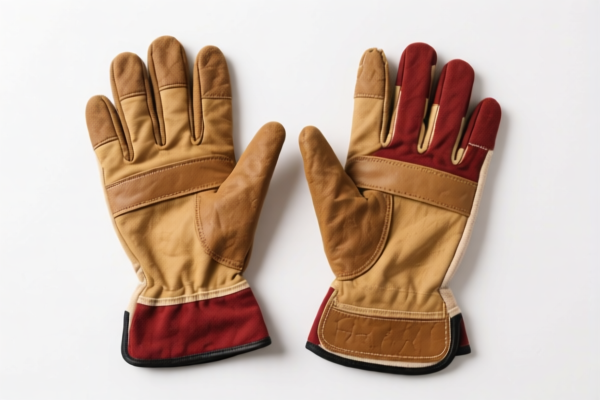

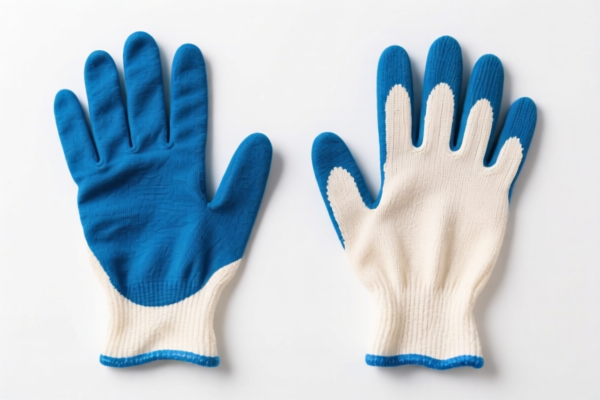
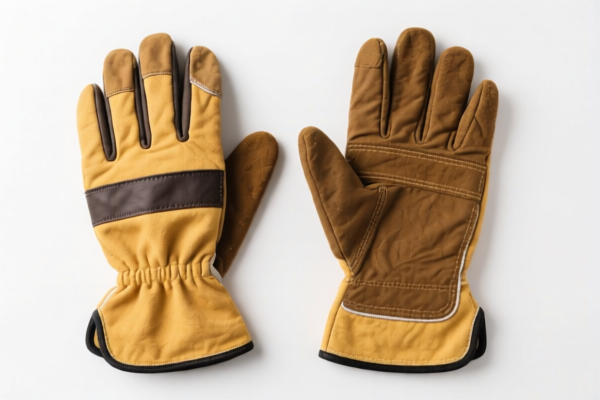
AI Analysis
🧤 Wire Gloves (Metallic Wire Mesh Gloves for Cut Protection)
🌐 HS Code Reference & Customs Clearance Guide | 2026 Latest Tariff Analysis | Professional-Level Compliance Strategy 📌 I. Product Definition & Classification: Do You Really Understand "Wire Gloves"?
Wire gloves, also known as metal mesh gloves or chainmail gloves, are personal protective equipment (PPE) designed to protect hands from severe cuts, slashes, and punctures. They are widely used in meat processing, leather tanning, glass handling, and metalworking industries.
In international trade, they are typically classified based on their material composition and primary function:
Chainmail/Metal Mesh Gloves: Made primarily of stainless steel wire rings. Cut-Resistant Gloves with Metal Inserts: Fabric gloves reinforced with metal wire or mesh for high-risk environments.
⚠️ Key Distinction Point:
- If the glove is primarily made of metal wire/rings (like traditional chainmail) → Classified under HS 7326.90 (Articles of iron or steel).
- If the glove is textile-based with metal reinforcement (e.g., Kevlar + steel mesh) → Classified under HS 3926.90 or 6116.93 (Other gloves, impregnated/coated/plated with plastics/rubber, or textile).
- Most standard industrial "wire gloves" fall under 7326.90 due to their metallic nature.
📦 II. HS Code Classification Details (2026 Latest Tariff Authority Match)
| HS Code | Product Description | Application Scenario | Material Composition |
|---|---|---|---|
7326.90.98.88 |
Other articles of iron or steel (not elsewhere specified) | Stainless steel mesh gloves, chainmail gloves for slaughterhouses | ✅ Yes (Metal) |
7326.90.85.00 |
Other articles of iron or steel (hooks, eyes, etc. - less common for gloves) | Specific metal hardware | ✅ Yes (Metal) |
3926.90.99.98 |
Other articles of plastics | Gloves coated with plastic/nitrile (not wire) | ❌ No |
6116.93.00.00 |
Gloves impregnated, coated, covered or stratified with plastics, of synthetic fibers | Cut-resistant fabric gloves with plastic coating | ❌ No (Textile base) |
6116.99.90.90 |
Other gloves of textile materials | Pure textile safety gloves (no metal) | ❌ No |
🔍 Critical Reminder:
- Standard wire gloves (100% stainless steel mesh) are metals articles, NOT textiles. Misclassifying them as textiles (6116.xx) is a common error that leads to customs holds.
- The key is the primary character: If the protection comes from the metal structure, it belongs to Chapter 73 (Articles of Iron or Steel).
- For composite gloves (fabric + metal), customs often requires a "Component of Greatest Weight" or "Essential Character" test. Most metal-reinforced PPE gloves are still classified under 7326.90.98 if the metal mesh is the protective element.
💰 III. 2026 Latest Tariff Rate Details (Including Surcharges & Policy Add-ons)
✅ Applicable Country: United States (US)
✅ Origin: China (CN)
✅ Effective Date: From November 10, 2025 (including subsequent imports)
🎯 1. 7326.90.98.88 —— Articles of Iron or Steel (Wire Gloves)
| Item | Content |
|---|---|
| Base Tariff Rate | 5.3% (Ad Valorem) |
| USITC Additional Tariff | +25% (Under Section 301, USITC Footnote 9903.73.90.98) |
| IEEPA Additional Tariff | +10% (For China/HK products, effective from Nov 10, 2025) |
| Total Tariff Rate | 40.3% |
| Tax Calculation | CIF Value × 40.3% |
| De Minimis Exemption | ❌ Not Eligible (deny_de_minimis) |
| Legal Path | IEEPA:9903.01.25 → IEEPA:9903.01.24 → USITC:7326.90.98.88 → FOOTNOTE:9903.88.01 |
📌 Explanation:
- The 25% USITC tariff is part of the ongoing trade remedy measures under Section 301.
- The 10% IEEPA tariff is a new surcharge on Chinese-origin goods effective late 2025.
- Total 40.3% is a significant cost driver. Importers must factor this into landed cost calculations.
- Unlike electronics, there is no broad exemption for simple metal tools/PPE from Section 301, though some specific exclusion lists may apply (check USITC database).
🛠️ IV. Customs Clearance Practical Advice (Battle-Tested Pitfall Guide)
✅ 1. Preparation Checklist (None Are Optional)
| Document | Required? | Description |
|---|---|---|
| ✅ Product Specification Sheet | ✔️ | Detail material (e.g., 304/316 Stainless Steel), wire gauge, mesh size, weight. |
| ✅ Product Photos | ✔️ | Clear images showing the glove structure (metal rings vs. fabric). |
| ✅ Material Safety Data Sheet (MSDS) | ✔️ | Though metal, some coatings (e.g., rubber handles) may require it. |
| ✅ Certificate of Origin (CO) | ✔️ | To verify CN origin and apply surcharges. |
| ✅ Commercial Invoice | ✔️ | Must explicitly state: "Stainless Steel Wire Mesh Safety Gloves, for Industrial Use". Avoid vague terms like "Kitchen Gloves". |
| ✅ Packing List | ✔️ | Weight and dimensions per package. |
✅ 2. Declaration Tips (Key Mantra)
🔥 "Metal Core, Steel Code; Don't Call It Textile, Or You're in Trouble!"
| Scenario | Correct Declaration | Wrong Practice |
|---|---|---|
| Pure Stainless Steel Mesh Gloves | 7326.90.98.88 |
Misclassify as 6116.99 (Textile) → High Risk of Audit/Seizure |
| Gloves with Rubber Coating on Metal Mesh | 7326.90.98.88 |
Declare as Rubber Goods (4015.19) → Incorrect Classification |
| Fabric Gloves with Thin Steel Thread | 7326.90.98.88 (if metal is essential) |
Declare as Textile → May be accepted if metal content is minimal, but risky for thick mesh |
| Knitted Metal Fabric (Rolls) | 7326.90.98.88 |
Declare as Fabric → Wrong Chapter |
✅ 3. Special Handling Scenarios
| Situation | Handling Advice |
|---|---|
| OEM/White Label Gloves | Provide customer authorization if brand is involved. Ensure invoice matches the actual manufacturer. |
| Mixed Containers | If wire gloves are mixed with non-metal PPE (e.g., nitrile gloves), declare separately. Wire gloves go to Ch. 73; nitrile gloves go to Ch. 40 or 61. |
| Handles with Non-Metal Parts | If the glove has a leather or plastic handle, the article is still classified as metal if the mesh is the primary protective feature. |
| Pre-Cut vs. Post-Cut | Classification remains 7326.90 regardless of form. |
🌍 V. Global Market Comparison (2026 Latest)
| Country/Region | Recommended HS Code | Tariff (China Origin) | Certification | Notes |
|---|---|---|---|---|
| 🇺🇸 USA | 7326.90.98.88 |
40.3% (5.3% + 25% + 10%) | N/A (No FDA) | High tariff impact; consider non-CN sourcing if possible. |
| 🇨🇳 China | 7326.90.98.88 |
5.3% | CCC (if for specific use) | Standard export tariff. |
| 🇪🇺 EU | 7326.90.90 |
6.5% (MFN) | CE Mark (PPE Regulation 2016/425) | Mandatory CE marking for PPE in EU. |
| 🇦🇺 Australia | 7326.90.90 |
5.0% | AS/NZS 2161.4 (Cut Resistance) | Must meet Australian standards. |
| 🇯🇵 Japan | 7326.90.90 |
6.0% | PSC/JIS | No special surcharges. |
📌 Conclusion:
- USA is the most expensive market due to the 40.3% total tariff.
- EU and Australia require strict PPE certifications (CE/AS/NZS) but have moderate tariffs.
- For US imports, consider sourcing from Vietnam, Mexico, or India to avoid the China-specific 35% surcharge (25% + 10%).
📌 VI. Common Mistakes & Pitfall Guide (Lessons Learned)
❌ Mistake 1: Classifying wire gloves under HS 6116 (Textile Gloves)
👉 Consequence: Customs may reclassify them as metal goods, backcharge taxes, and impose penalties. Metal gloves are not textiles.
❌ Mistake 2: Omitting "Stainless Steel" in the description
👉 Consequence: Customs may delay release to verify material composition, leading to storage fees.
❌ Mistake 3: Ignoring the 10% IEEPA surcharge in cost models
👉 Consequence: Profit margins erased unexpectedly. The 10% is new and applies to most CN-origin goods.
❌ Mistake 4: Failing to provide CE/PPE Certification for EU/AU shipments
👉 Consequence: Goods rejected at border. PPE wire gloves are regulated safety equipment.
✅ Correct Declaration Example:
"Stainless Steel 304 Wire Mesh Safety Gloves, Cut Resistant, Size Large, Pack of 10 Pairs, HS Code 7326.90.98.88"
🎯 VII. Conclusion: Precision Classification, Cost Control!
🎯 Remember the Mantra:
🔹 "Wire is Metal, Not Textile; 7326 is the Code, Don't Be Hasty!"
🔹 "40% Tax in US, Check Origin, Or Pay the Price!"
🔹 "CE Mark for EU, AS for AU, Safety Comes First!"
📌 Pro Tip:
If your wire gloves are originating from Vietnam, Mexico, or India, you may qualify for lower tariffs (e.g., 0-5% base + no 301/IEEPA surcharges).
For high-volume shipments to the US, consider Advance Rulings from CBP to confirm the HS code and avoid disputes.
📣 Action Required:
📞 Engage a licensed customs broker
📄 Prepare detailed material specs (Steel Grade, Mesh Count)
🚀 Optimize supply chain for tax efficiency
✨ Professional Clearance Starts with Accurate Classification!
💼 Every percentage point in tariff matters!
Customer Reviews
About HS Code Classification
The Harmonized System (HS) is an internationally standardized nomenclature developed by the World Customs Organization (WCO) to classify traded products. Over 200 countries use the HS system as the basis for customs tariffs, trade statistics, and import/export regulations.
Each HS code follows a hierarchical structure:
- Chapter (2 digits) — Broad category of goods (e.g., Chapter 84: Machinery and Mechanical Appliances)
- Heading (4 digits) — More specific grouping within the chapter
- Subheading (6 digits) — Internationally standardized breakdown, used by all WCO member countries
- National subdivisions (8-10 digits) — Country-specific extensions for further classification, such as US HTSUS 10-digit codes
Correct HS code classification is essential for smooth customs clearance, accurate duty payment, and compliance with trade regulations. Misclassification can lead to customs delays, overpayment of duties, or penalties.
When importing from CN to US, the applicable tariff rates may include:
- Most-Favored-Nation (MFN) rate — The standard duty rate applied to WTO members
- General rate — Applied to countries without trade agreements
- Trade remedy duties — Additional tariffs such as Section 301 (anti-dumping), Section 232 (national security), or countervailing duties
The information provided on this page is for reference purposes only. For official classification, please consult with your local customs authority or a licensed customs broker.