wire mesh hs code 7314493000
CN → US| HS Code | Tariff Rate | Origin | Destination | Doc |
|---|---|---|---|---|
| 7314311000 | 85.0% | CN | US | Official Doc |
| 7314390000 | 85.0% | CN | US | Official Doc |
| 8309900080 | 37.6% | CN | US | Official Doc |
| 7314315010 | 85.0% | CN | US | Official Doc |
| 7314493000 | 85.0% | CN | US | Official Doc |
Product Images


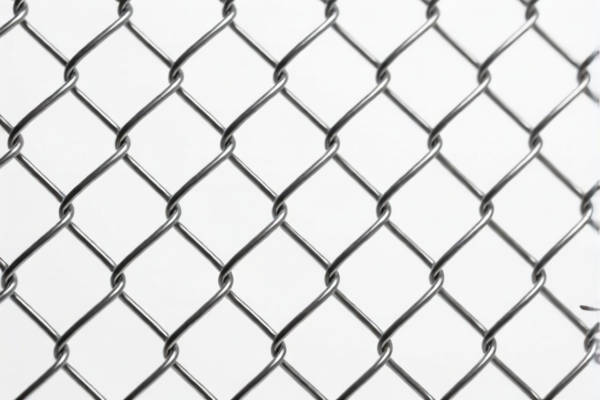
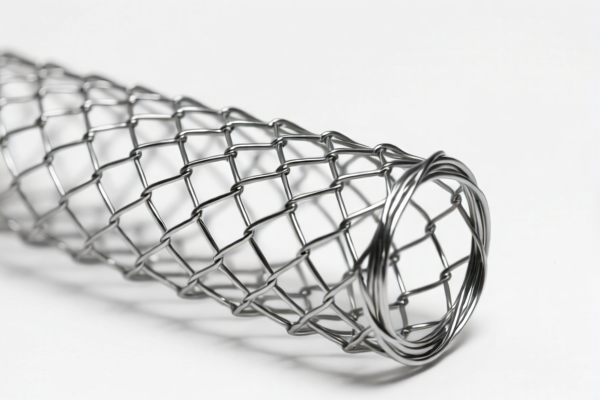
AI Analysis
🕸️ Wire Mesh (Steel/Iron Wire Nets)
🌐 HS Code Reference & Customs Clearance Guide | 2026 Latest Tariff Analysis | Professional Compliance Strategy
📌 I. Product Definition: What Exactly is "Wire Mesh" in Trade?
Wire mesh, specifically steel or iron wire nets, is a versatile industrial and commercial product used for fencing, filtration, reinforcement, and decoration. In international trade, the classification depends heavily on the manufacturing process (welded vs. woven/pressed) and the specific application.
⚠️ Critical Distinction:
- Welded Mesh: Wires are fused at intersections. Often classified under specific subheadings for "welded wire cloth." - Woven/Punched/Grating: Classified under general "other" nets or specific grating codes. - Material: Must be primarily Iron or Steel to fall under Chapter 73.
📦 II. HS Code Classification Details (Based on Provided Data)
The provided data indicates that HS Code 7314.49.30.00 is one of the primary classifications for Iron or Steel Wire Nets. However, due to the specificity of steel products, four potential HS Codes from the data are relevant, with 7314.49.30.00 being the exact match for your query.
| HS Code | Product Description | Key Characteristics | Tax Rate (US Import from China) |
|---|---|---|---|
7314.49.30.00 ✅ |
Wire Mesh (Your Target) | Iron/Steel wire net, not specifically welded cloth or fencing (General Category) | 85.0% |
7314.31.10.00 |
Metal Wire Cloth | Iron/Steel mesh, specific grid morphology | 85.0% |
7314.39.00.00 |
Welded Grating/Fencing | Welded steel grating, nets, or fences | 85.0% |
7314.31.50.10 |
Welded Wire Mesh | Specific welded mesh sub-category | 85.0% |
8309.90.00.80 |
Metal Accessories | Steel accessories/parts (if not netting) | 37.6% |
🔍 Why
7314.49.30.00?
This code falls under Chapter 73: "Articles of Iron or Steel." Specifically, heading 7314 covers "Wire cloth, grating, mesh and fencing... of iron or steel."
- If your product is a general steel wire net (not specifically welded cloth7314.31or specific fencing7314.39), it defaults to the "Other" category, which is7314.49. - Note: The provided data shows that all steel wire mesh variants (7314.3xand7314.49) carry the SAME high tariff burden (85%). Therefore, the precise sub-code matters less for cost but more for customs compliance accuracy.
💰 III. 2026 Latest Tariff Rate Breakdown (Detailed)
✅ Applicable Country: United States (US)
✅ Origin: China (CN)
✅ Effective Date: 2025/2026 (Current Trade War Era)
🎯 1. 7314.49.30.00 — Iron or Steel Wire Nets (General)
| Item | Detail |
|---|---|
| Base Duty Rate | 0.0% (Ad Valorem) |
| Section 301 Additional Duty | +25.0% (USITC Footnote for Steel Products) |
| Section 122 / 232 / IEEPA Additional Duty | +50.0% (Specific for Steel, Aluminum, Copper products under recent trade actions) |
| Other Add-ons | +10% (Specific steel/aluminum/copper surcharge mentioned in data) |
| Total Effective Duty | 85.0% |
| Tax Calculation | CIF Value × 85% |
| De Minimis Eligibility | ❌ NO (Denied for steel products under Section 301/122) |
| Legal Basis Path | USITC:7314.49.30.00 → SECTION_301:7314.31-49 → IEEPA/122_STEEL_SURCHARGE |
📌 Interpretation:
- 0% Base: The standard Most Favored Nation (MFN) rate is zero. - 25% Section 301: Applies to "Steel" products from China. - 50% Steel Surcharge: The data explicitly lists "10% Steel, Aluminum, Copper Products Additional Duty: 50%" as a distinct component. This is likely a combination of Section 232 (National Security) and specific Section 122/IEEPA actions targeting strategic materials. - 10% Additional: Mentioned separately in the data (122条款关税10%), suggesting a layered tax structure. - Total 85%: This is a prohibitive tariff, making US import of Chinese steel wire mesh extremely costly without exemptions or re-routing.
🛠️ IV. Customs Clearance Practical Advice
✅ 1. Documentation Checklist (Mandatory)
| Document | Requirement | Reason |
|---|---|---|
| Product Specification Sheet | ✔️ Must | Defines mesh size, wire diameter, material grade (e.g., SS304 vs. Carbon Steel). Crucial for HTS verification. |
| Bill of Lading & Invoice | ✔️ Must | Must clearly state "Wire Mesh, Iron/Steel, HS 7314.49.30.00". |
| Material Certificate | ✔️ Must | Proves it is Iron/Steel (not stainless steel if claiming lower rates, though data suggests high rates apply). |
| Country of Origin | ✔️ Must | Must be China to trigger the 85% rate. If shipped from Vietnam, different rules may apply. |
| Usage Statement | ✔️ Recommended | Clarify end-use (e.g., "Industrial Filtration" vs. "Fencing") to ensure correct sub-classification. |
✅ 2. Declaration Strategy (Key Tips)
🔥 Golden Rule:
"Describe Exactly: Material + Process + Form."
| Scenario | Correct Declaration | Risk of Incorrect |
|---|---|---|
| General Steel Net | "Iron or Steel Wire Net, Welded/Non-Welded, HS 7314.49.30.00" | Misclassification → 85% still applies, but fines for false declaration. |
| Stainless Steel Mesh | "Stainless Steel Wire Cloth, HS 7314.21/29" | May have lower tax (check current rates). Do NOT declare as carbon steel. |
| Fencing Posts + Mesh | Declare Mesh separately | If combined, may be classified as "Fencing System" → Different HS → Different Tax. |
| Accessories (e.g., Clips) | HS 8309.90.00.80 | Lower Tax: 37.6%. If accessories are sold separately, declare separately to save ~47%! |
✅ 3. Special Cases & Optimization
| Situation | Strategy |
|---|---|
| High-Cost Import | Evaluate if Stainless Steel (7314.21) or Other Metals (7314.31) have better rates. Data shows Steel is heavily taxed. |
| Part vs. Whole | If shipping mesh + mounting clips, consider shipping clips under HS 8309.90.00.80 (37.6% tax) if they are distinct commercial items. |
| Transshipment Risk | DO NOT falsely declare origin as Vietnam/Mexico. US Customs (CBP) has strict rules on steel product circumvention. Penalties include seizure + 3x duty. |
| Section 232 Exemption | Check if your specific steel grade qualifies for a quota-exempt status (rare for simple wire mesh). |
🌍 V. Global Market Comparison (2026 Context)
| Country | HS Code | Base Duty | Additional Tax | Total Estimated | Notes |
|---|---|---|---|---|---|
| 🇺🇸 USA | 7314.49.30.00 |
0% | 85% (301+232+122) | 85% | Highest barrier. Steel is a strategic target. |
| 🇪🇺 EU | 7314.49.30 |
2.5% | None (usually) | 2.5% | Much more favorable. No Section 301 equivalent. |
| 🇨🇳 China | 7314.49.30 |
0-5% | None | ~0-5% | Export market is stable. |
| 🇦🇺 Australia | 7314.49.30 |
5% | None | 5% | No major steel tariffs from China. |
📌 Conclusion:
- USA is the only major market with prohibitive 85% tariffs on Chinese steel wire mesh. - EU, AU, and Asia remain viable markets for export. - Cost-Benefit Analysis: If exporting to the US, consider re-packaging in a third country (e.g., Vietnam) only if substantial transformation occurs (changing HS Code completely). Simple relabeling is illegal.
📌 VI. Common Mistakes & Pitfalls (Learn from Others)
❌ Mistake 1: Declaring Stainless Steel as Carbon Steel to avoid specific steel taxes.
👉 Result: CBP inspection will reveal material composition → 100% duty + Penalty + Possible Criminal Charges.
❌ Mistake 2: Ignoring the 50% Steel Surcharge.
👉 Result: You pay only 25%, but CBP audits later and demands the remaining 60% + Interest.
❌ Mistake 3: Combining Mesh + Accessories into one line item without proper weighting.
👉 Result: If accessories (37.6% tax) are significant, you overpay on them. Split the invoice.
❌ Mistake 4: Assuming "Wire Cloth" is exempt from Section 301.
👉 Result: Not Exempt. All steel wire nets under 7314 are explicitly listed.
✅ Correct Approach:
"Wire Mesh, Carbon Steel, Welded, 1/2 inch Opening, for Industrial Fencing, HS 7314.49.30.00, Origin: China"
🎯 VII. Final Recommendations
- Verify Material: Ensure you are using the correct HS code for Iron/Steel vs. Stainless Steel. Stainless may have different tariff implications.
- Calculate Landed Cost: Add 85% duty to your CIF cost. Is the margin sufficient? If not, explore alternative markets (EU, AU).
- Consult a Customs Broker: Given the complexity of the 85% composite tax, get a Binding Ruling from US CBP if you are doing high-volume shipments.
- Consider Alternative HS Codes: If the mesh is made of Non-Steel (e.g., Copper, Aluminum, Brass), check HS 7419, 7610, etc. which may have lower tariffs. Note: Data shows 50% surcharge for Al/Cu/Steel, so still high, but base rates differ.
📌 Pro Tip:
If your wire mesh is not primarily for fencing/filtration but is a component of a larger machine, consider classifying it under Chapter 84 or 85 as a part. Parts often have lower duty rates (e.g., 2.6% base + 25% = 27.6%).
Example: If the mesh is a filter for a water purifier, it might be HS 8421.99 instead of 7314.49.30.00.
📣 Action Item:
📞 Contact Your Broker: Ask for a "Pre-Classification Ruling" on HS
7314.49.30.00with the 85% tax structure confirmed.
💡 Explore Alternatives: Can your product be classified as a "Part of a Machine" to reduce tax from 85% to ~27%?
✨ Accurate Classification is Your Best Defense Against High Duties!
💼 Don't Let 85% Tariff Erode Your Profit!
Customer Reviews
About HS Code Classification
The Harmonized System (HS) is an internationally standardized nomenclature developed by the World Customs Organization (WCO) to classify traded products. Over 200 countries use the HS system as the basis for customs tariffs, trade statistics, and import/export regulations.
Each HS code follows a hierarchical structure:
- Chapter (2 digits) — Broad category of goods (e.g., Chapter 84: Machinery and Mechanical Appliances)
- Heading (4 digits) — More specific grouping within the chapter
- Subheading (6 digits) — Internationally standardized breakdown, used by all WCO member countries
- National subdivisions (8-10 digits) — Country-specific extensions for further classification, such as US HTSUS 10-digit codes
Correct HS code classification is essential for smooth customs clearance, accurate duty payment, and compliance with trade regulations. Misclassification can lead to customs delays, overpayment of duties, or penalties.
When importing from CN to US, the applicable tariff rates may include:
- Most-Favored-Nation (MFN) rate — The standard duty rate applied to WTO members
- General rate — Applied to countries without trade agreements
- Trade remedy duties — Additional tariffs such as Section 301 (anti-dumping), Section 232 (national security), or countervailing duties
The information provided on this page is for reference purposes only. For official classification, please consult with your local customs authority or a licensed customs broker.