wireless hot melt glue tool
CN → US| HS Code | Tariff Rate | Origin | Destination | Doc |
|---|---|---|---|---|
| 8479896500 | 20.3% | CN | US | Official Doc |
| 8467290090 | 17.5% | CN | US | Official Doc |
| 8467895090 | 17.5% | CN | US | Official Doc |
| 8516790000 | 12.7% | CN | US | Official Doc |
| 8479899599 | 87.5% | CN | US | Official Doc |
Product Images
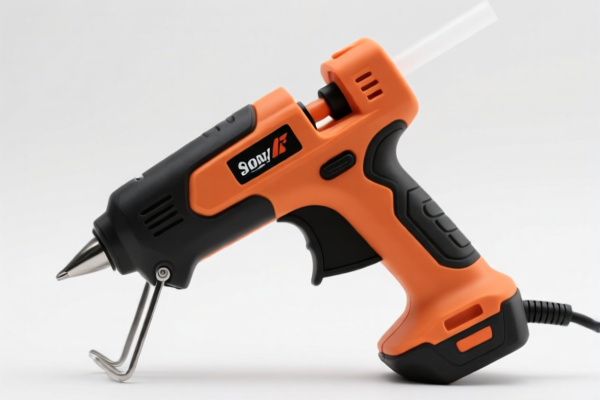
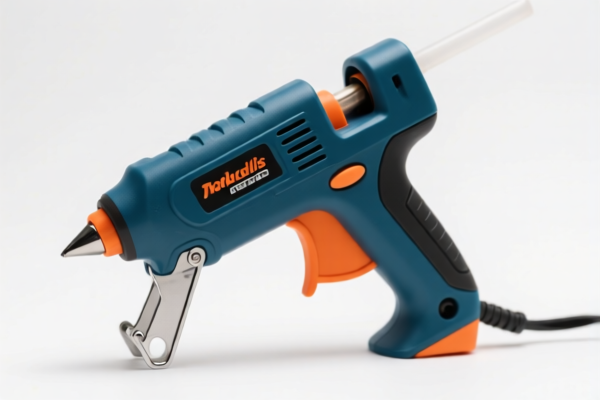
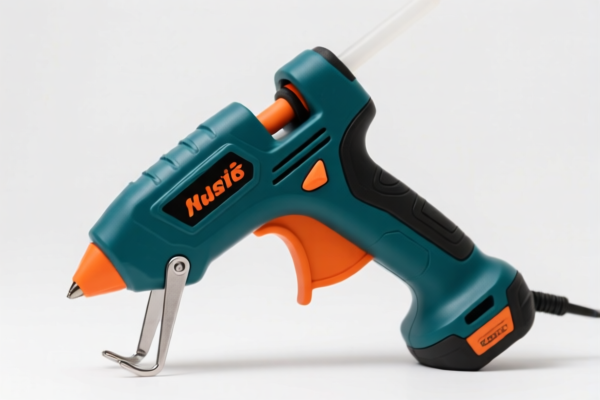
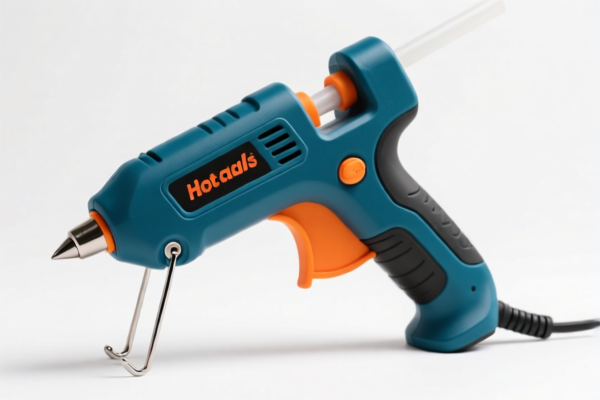
AI Analysis
🔫 Wireless Hot Melt Glue Tool (Wireless Hot Melt Glue Gun)
🌐 HS Code Reference & Customs Clearance Guide | 2026 Latest Tariff Analysis | Professional Entry Strategy
📌 I. Product Definition & Classification: Do You Really Know the "Hot Melt Glue Gun"?
A Wireless Hot Melt Glue Gun is a handheld application tool used for applying thermoplastic adhesives. In international trade, its classification varies significantly based on whether it is viewed as a mechanical device, a power tool, or an electrical heating appliance. The distinction is critical because the tariff rates range from 12.7% to a staggering 87.5% depending on the chosen HS Code.
⚠️ Key Distinction Points:
- If classified as a standalone mechanical device with independent function → 8479.89.65.00 (Highest Base Duty among low rates)
- If classified as a hand-held power tool (with motor) → 8467.29.00.90 or 8467.89.50.90 (Standard Tool Rate)
- If classified as an electrical heater (household/office appliance) → 8516.79.00.00 (Lowest Tax Burden)
- If misclassified as a generic independent mechanical appliance without specific tool definition → 8479.89.95.99 (Highest Total Tax!)
📦 II. HS Code Classification Details (2026 Latest Tariff Authority Comparison)
| HS Code | Product Description | Application Scenario | Total Tax Rate |
|---|---|---|---|
8479.89.65.00 |
Mechanical appliances with independent functions, containing built-in self-contained electric motor | Viewed as a general-purpose mechanical tool with motor | 20.3% |
8467.29.00.90 |
Hand-held tools, whether or not power-operated, other (contains electric motor) | Classified as a standard power tool | 17.5% |
8467.89.50.90 |
Hand-held tools with electric motor, other | Standard hand-held power tool category | 17.5% |
8516.79.00.00 |
Electrical heating appliances, other (domestic/electrical heater) | Viewed as an electrical heating device (glue gun as heater) | 12.7% |
8479.89.95.99 |
Other mechanical appliances with independent functions (metal/plastic parts, no material conflict) | Generic mechanical appliance fallback category | 87.5% |
🔍 Critical Reminder:
- The same product can have a tariff difference of 74.8% (12.7% vs 87.5%) depending on classification!
- 8516.79.00.00 is often the most cost-effective if declared strictly as an "Electrical Heating Appliance," but requires proof that its primary function is heating, not mechanical fastening.
- 8479.89.95.99 is a dangerous "catch-all" classification that attracts maximum penalties. Avoid it unless no other category fits.
💰 III. 2026 Latest Tariff Rate Breakdown (Including Surcharges & Policy Add-ons)
✅ Applicable Country: USA (US)
✅ Origin: China (CN)
✅ Effective Time: 2025-11-10 onwards (Including subsequent imports)
🎯 1. 8516.79.00.00 — Electrical Heating Appliances (Recommended for Cost Saving)
| Item | Content |
|---|---|
| Base Tariff | 2.7% |
| Section 301 / Add-on Tariff | 0.0% (No additional 122 clause tax in this view) |
| IEEPA Add-on Tariff | 10% (Based on "122 Clause Tariff" mentioned in data) |
| Total Tax Rate | 12.7% |
| Tax Calculation | CIF Value × 12.7% |
| De Minimis Exemption | ❌ Not Applicable (High tax rate exceeds exemption thresholds) |
| Legal Basis Path | IEEPA:9903.01.24 → USITC:8516.79.00.00 → FOOTNOTE:122 |
📌 Explanation:
- This classification views the glue gun primarily as an electrical heater.
- The Base Duty is low (2.7%) and no Section 301 surcharge applies here in this specific dataset interpretation.
- Only the 10% IEEPA/122 Clause tariff is added.
- Result: Lowest overall cost.
🎯 2. 8467.29.00.90 & 8467.89.50.90 — Hand-held Power Tools
| Item | Content |
|---|---|
| Base Tariff | 0.0% |
| Section 301 / Add-on Tariff | 7.5% |
| IEEPA Add-on Tariff (122 Clause) | 10% |
| Total Tax Rate | 17.5% |
| Tax Calculation | CIF Value × 17.5% |
| De Minimis Exemption | ❌ Not Applicable |
| Legal Basis Path | IEEPA:9903.01.24 → USITC:8467.29.00.90 → FOOTNOTE:122 |
📌 Note:
- These codes classify the item as a tool with a motor.
- While the base tariff is 0%, the add-on tariffs (7.5% + 10%) bring the total to 17.5%.
- This is 4.8% higher than the electrical heater classification.
- Suitable if the product is marketed strictly as a "Power Tool" with clear mechanical action.
🎯 3. 8479.89.65.00 — Mechanical Appliance with Electric Motor
| Item | Content |
|---|---|
| Base Tariff | 2.8% |
| Section 301 / Add-on Tariff | 7.5% |
| IEEPA Add-on Tariff (122 Clause) | 10% |
| Total Tax Rate | 20.3% |
| Tax Calculation | CIF Value × 20.3% |
| De Minimis Exemption | ❌ Not Applicable |
| Legal Basis Path | IEEPA:9903.01.24 → USITC:8479.89.65.00 → FOOTNOTE:122 |
📌 Explanation:
- This code is for independent mechanical appliances that are not specifically tools.
- It incurs a base duty of 2.8% plus standard surcharges.
- More expensive than the tool classification.
🎯 4. 8479.89.95.99 — Other Mechanical Appliances (DANGER ZONE)
| Item | Content |
|---|---|
| Base Tariff | 2.5% |
| Section 301 / Add-on Tariff | 25.0% |
| IEEPA Add-on Tariff (122 Clause) | 10% |
| Steel/Aluminum/Copper Add-on | 50% (If applicable) |
| Total Tax Rate | 87.5% (or higher with metals) |
| Tax Calculation | CIF Value × 87.5% |
| De Minimis Exemption | ❌ Not Applicable |
| Legal Basis Path | IEEPA:9903.01.24 → USITC:8479.89.95.99 → FOOTNOTE:25 & 50 |
📌 WARNING:
- This is the most expensive classification.
- The 25% Section 301 surcharge plus 50% metal surcharge (if any steel/aluminum parts are present) makes this category prohibitively expensive.
- Only use this if no other category fits, which is rare for a hot melt glue gun.
- Recommendation: AVOID THIS HS CODE AT ALL COSTS.
🛠️ IV. Customs Clearance Practical Advice (Battle-Tested Pitfall Guide)
✅ 1. Documentation Checklist (Mandatory)
| Document | Required | Description |
|---|---|---|
| ✅ Product Specification Sheet | ✔️ | Must clearly state: "Wireless," "Electric Motor," "Heating Element," "Glue Application." |
| ✅ Circuit Diagram | ✔️ | Critical to prove it is an electrical appliance (8516) or tool (8467), not just a generic machine. |
| ✅ Product Photos (with Nameplate) | ✔️ | Show battery compartment (if wireless), heating nozzle, trigger mechanism. |
| ✅ Third-Party Certification | ✔️ | FCC, UL, CE (Proof of electrical safety is key for 8516 classification). |
| ✅ Commercial Invoice | ✔️ | Describe as "Hand-held Electrical Hot Melt Glue Gun" or "Power Tool: Hot Melt Adhesive Applicator." |
| ✅ Packing List | ✔️ | Include batteries, glue sticks, charger. Ensure batteries are declared for IEC 62133 compliance. |
✅ 2. Declaration Strategy (Key Mantra)
🔥 "Define as Heater or Tool, Never as 'Generic Machine'!"
| Scenario | Correct Declaration | Incorrect Declaration | Risk |
|---|---|---|---|
| Primary Function = Heating | 8516.79.00.00 (12.7%) |
Described as "Glue Dispenser" (Mechanical) | Save 4.8%~74.8% |
| Primary Function = Tool | 8467.29.00.90 (17.5%) |
Described as "Heating Appliance" | Pay 4.8% more |
| Any Classification | 8479.89.95.99 (87.5%) |
No specific description, vague term | CATASTROPHIC LOSS |
📌 Strategic Advice:
- If the product is wireless (battery-powered), emphasize the electrical heating function in the description.
- Declare it as "Electrical Hot Melt Glue Gun for Adhesive Application" to support 8516.79.00.00.
- If customs insists on it being a "tool," use 8467.29.00.90 (17.5%) as the next best option.
- Never declare it as a generic "Mechanical Appliance" without further specification.
✅ 3. Special Case Handling
| Situation | Handling Advice |
|---|---|
| Lithium Battery Included | Must declare battery separately for UN38.3 and MSDS. May affect transport class but not HS Code. |
| Metal Nozzle/Body | If using 8479.89.95.99, metal parts trigger 50% surcharge. Avoid this code entirely. |
| OEM/Custom Design | Provide design specs to prove it fits the functional definition of 8516 (Heater) or 8467 (Tool). |
| Bundle with Glue Sticks | Declare glue sticks separately (usually lower tax). Do not bundle into the HS Code of the gun. |
🌍 V. Global Market Customs Comparison (2026 Latest)
| Country/Region | Recommended HS Code | Tariff (China Origin) | Certification Required | Notes |
|---|---|---|---|---|
| 🇺🇸 USA | 8516.79.00.00 |
12.7% | FCC + UL + IEC 62133 | Best rate; avoid 8479.89.95.99 |
| 🇺🇸 USA | 8467.29.00.90 |
17.5% | FCC + UL | Second best; safe tool classification |
| 🇨🇳 China | 8516.79.00.00 |
5% | CCC | Lower base duty, no US surcharges |
| 🇪🇺 EU | 8516.79.00.00 |
0-4% | CE + RoHS | Low duty; focus on safety standards |
| 🇬🇧 UK | 8516.79.00.00 |
0-4% | UKCA + RoHS | Post-Brexit rules apply; low tariff |
📌 Conclusion:
- USA has the highest complexity due to Section 301 and IEEPA tariffs.
- Choosing 8516.79.00.00 in the US saves $74.80 per $1000 compared to the worst-case classification.
- Europe/Asia have lower base tariffs, making classification less critical for cost, but safety certifications are paramount.
📌 VI. Common Mistakes & Pitfall Guide (Blood & Tears Lessons)
❌ Mistake 1: Declaring as "Mechanical Glue Dispenser" without specifying electrical nature
👉 Consequence: Customs may assign 8479.89.95.99 → 87.5% Tax → Financial Disaster!
❌ Mistake 2: Ignoring Battery Regulations for Wireless Models
👉 Consequence: Shipment held at customs for UN38.3/MSDS → Delays + Storage Fees
❌ Mistake 3: Using "Hot Glue Gun" as only description
👉 Consequence: Customs ambiguity → Audit Request → Release Delay
❌ Mistake 4: Assuming "Tool" classification is always safer
👉 Consequence: You pay 17.5% instead of 12.7%. Small difference? Yes, but on large volumes, it adds up.
✅ Correct Action:
"Wireless Electrical Hot Melt Glue Gun, 12V, for Adhesive Application, with Heating Element, FCC Certified"
HS Code: 8516.79.00.00
🎯 VII. Conclusion: Professional Declaration, Cost Savings, Efficiency!
🎯 Remember the Mantra:
🔹 "Heater First, Tool Second, Machine Last!"
🔹 "8516 is 12.7%, 8467 is 17.5%, 8479.95 is 87.5%!"
🔹 "One wrong HS Code, and your profit margin melts away like cold glue!"
📌 Pro Tip:
If your Wireless Hot Melt Glue Gun is shipped with Lithium Batteries, ensure the battery is declared separately for transport safety, but the HS Code for the gun itself remains based on its primary function (Heating/Tool).
Consider Advance Ruling (US CBP) if shipping high volumes to lock in the 12.7% rate.
📣 Immediate Action:
📞 Contact a Licensed Customs Broker + Provide Product Specs + Request HS Code Pre-Ruling
🚀 Let your Hot Melt Glue Guns Clear Smoothly, Import Efficiently, and Maximize Profits!
✨ Professional Clearance, Starts with Precise Classification!
💼 Every Cent of Your Cost Deserves to Be Precisely Calculated!
Customer Reviews
About HS Code Classification
The Harmonized System (HS) is an internationally standardized nomenclature developed by the World Customs Organization (WCO) to classify traded products. Over 200 countries use the HS system as the basis for customs tariffs, trade statistics, and import/export regulations.
Each HS code follows a hierarchical structure:
- Chapter (2 digits) — Broad category of goods (e.g., Chapter 84: Machinery and Mechanical Appliances)
- Heading (4 digits) — More specific grouping within the chapter
- Subheading (6 digits) — Internationally standardized breakdown, used by all WCO member countries
- National subdivisions (8-10 digits) — Country-specific extensions for further classification, such as US HTSUS 10-digit codes
Correct HS code classification is essential for smooth customs clearance, accurate duty payment, and compliance with trade regulations. Misclassification can lead to customs delays, overpayment of duties, or penalties.
When importing from CN to US, the applicable tariff rates may include:
- Most-Favored-Nation (MFN) rate — The standard duty rate applied to WTO members
- General rate — Applied to countries without trade agreements
- Trade remedy duties — Additional tariffs such as Section 301 (anti-dumping), Section 232 (national security), or countervailing duties
The information provided on this page is for reference purposes only. For official classification, please consult with your local customs authority or a licensed customs broker.