woman handbags
CN → US| HS Code | Tariff Rate | Origin | Destination | Doc |
|---|---|---|---|---|
| 4202228980 | 52.6% | CN | US | Official Doc |
| 4202923120 | 52.6% | CN | US | Official Doc |
| 4202923900 | 52.6% | CN | US | Official Doc |
| 4202316000 | 43.0% | CN | US | Official Doc |
| 4202228980 | 52.6% | CN | US | Official Doc |
Product Images
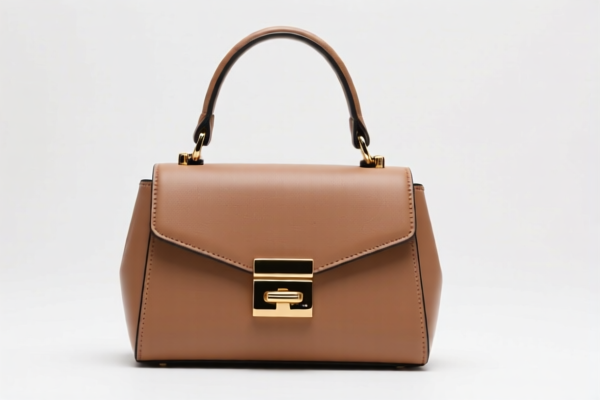
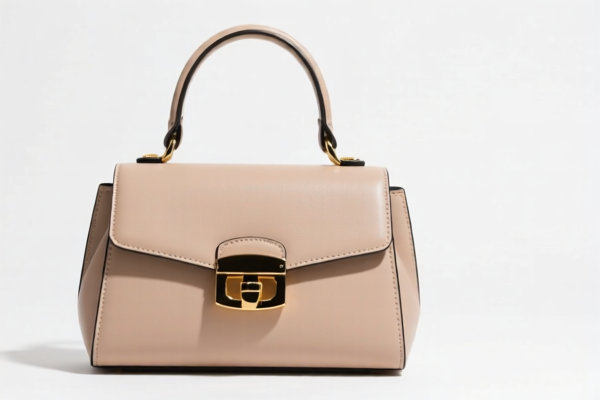
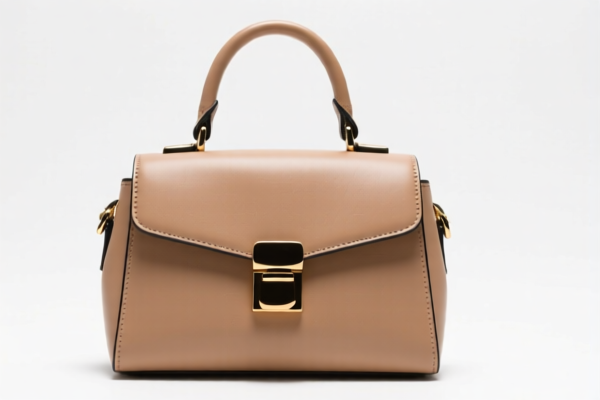
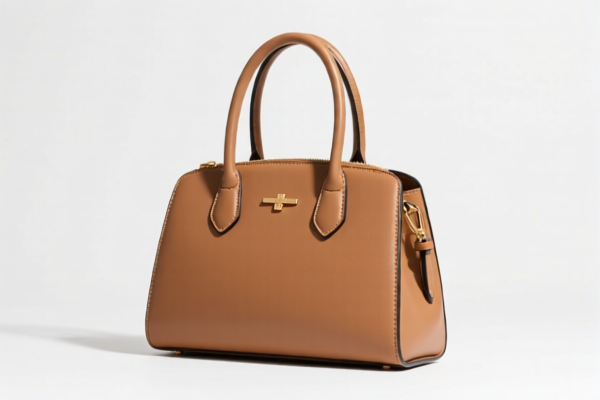
AI Analysis
👜 Women's Handbags & Accessories: The Ultimate HS Code & Tariff Guide (2026 Edition)
🌐 HS Code Reference & Customs Clearance Guide | 2026 Latest Tariff Analysis | Professional Customs Strategy
📌 I. Product Definition & Classification: Do You Really Understand "Women's Bags"?
Women's handbags are not a single commodity in international trade. They are strictly categorized by shape, usage, and material. Misclassification is the #1 cause of customs delays, fines, and unexpected tariffs. In the 2026 tariff regime, precision is critical because US Extra Tariffs apply heavily to Chinese-origin goods.
Two Main Categories:
-
Handbags & Purse Cases (Heading 4202.22):
Designed to be carried in the hand or under the arm. Includes clutches, totes, and standard handbags.- Key Indicator: Shape suggests hand-carried use.
- Material Inference: Usually textile or other specific materials not listed elsewhere.
-
Backpacks & Rucksacks (Heading 4202.92):
Designed to be worn on the back (straps over shoulders). Includes travel backpacks, school bags, and sports rucksacks.- Key Indicator: Straps allow back-carrying.
- Material Inference: Often textile, synthetic fiber, or leather.
⚠️ Critical Distinction Point:
- If it is carried in the hand/arm → Look at 4202.22.xxxx
- If it is worn on the back → Look at 4202.92.xxxx
- If it is a small wallet (fits in hand, not for general carrying) → Look at 4202.31.xxxx
📦 II. HS Code Classification Matrix (2026 Latest Tariff Authority)
Based on the provided data, here are the specific HS Codes for Women's Bags, Handbags, and Wallets, along with their inferred materials and tax structures.
| HS Code | Product Description | Material Inference | Shape/Usage Logic | Total Tariff Rate |
|---|---|---|---|---|
4202.22.89.80 |
Women's Handbags / Totes | Textile / Other Non-Specific | Hand-carry, Tote, Clutch | 52.6% |
4202.92.31.20 |
Women's Backpacks | Textile / Synthetic Fiber | Back-carry, Travel/Sport | 52.6% |
4202.92.39.00 |
Women's Rucksacks | Textile | Back-carry, Other Categories | 52.6% |
4202.31.60.00 |
Women's Mini Wallets | Leather | Hand-held, Small Container | 43.0% |
4202.22.89.80 |
Women's Bags (General) | Textile / Other | Hand-carry, Fallback Category | 52.6% |
🔍 Key Reminder:
- All Backpacks (4202.92) and Handbags (4202.22) from China face a Total Tariff of 52.6%.
- Mini Wallets made of Leather (4202.31) face a lower base tax, resulting in a Total Tariff of 43.0%.
- The "Catch-all" code4202.22.89.80is used when the exact material doesn't fit primary textile categories, but the shape is clearly a handbag.
💰 III. 2026 Latest Tariff Breakdown (Base + Extra Tariffs)
✅ Applicable Country: United States (US)
✅ Origin: China (CN)
✅ Effective Date: From November 10, 2025, onwards (including subsequent imports)
🎯 1. Handbags & Backpacks (HS Codes: 4202.22.89.80, 4202.92.31.20, 4202.92.39.00)
| Item | Details |
|---|---|
| Base Duty Rate | 17.6% (Standard MFN Rate for Bags) |
| Section 301 Extra Tariff | +25.0% (USITC Footnote for Chinese Goods) |
| Section 122 Tariff | +10.0% (Specific Additional Duty for Chinese Goods) |
| Total Effective Rate | 52.6% |
| Tax Calculation | CIF Value × 52.6% |
| De Minimis Exemption | ❌ DENIED (deny_de_minimis) Note: Items falling under these codes are NOT eligible for the $800 de minimis exemption. Full formal entry is required. |
| Legal Basis Path | USITC:4202.22/4202.92 → SECTION301:25% → SECTION122:10% |
📌 Explanation:
- 17.6% is the standard duty for leather/textile bags.
- 25% is the standard Section 301 tariff on most Chinese consumer goods.
- 10% is the "Section 122" tariff, a newer layer of duties specifically targeting certain Chinese imports.
- Total 52.6% is a VERY HIGH barrier. Margin analysis must account for this immediately.
🎯 2. Mini Wallets (HS Code: 4202.31.60.00)
| Item | Details |
|---|---|
| Base Duty Rate | 8.0% (Lower base rate for small leather goods/wallets) |
| Section 301 Extra Tariff | +25.0% |
| Section 122 Tariff | +10.0% |
| Total Effective Rate | 43.0% |
| Tax Calculation | CIF Value × 43.0% |
| De Minimis Exemption | ❌ DENIED (deny_de_minimis) |
| Legal Basis Path | USITC:4202.31 → SECTION301:25% → SECTION122:10% |
📌 Note:
- While the total rate (43.0%) is lower than handbags (52.6%), it is still significantly high.
- The base duty is lower (8.0% vs 17.6%) because it is classified as a "pocket-sized" item, likely made of leather.
🛠️ IV. Customs Clearance Practical Advice (Avoiding Pitfalls)
✅ 1. Required Documentation Checklist (Mandatory)
| Document | Must Provide | Explanation |
|---|---|---|
| ✅ Product Specification Sheet | ✔️ | Detailed description: "Women's Handbag, Textile, Zipper Closure." |
| ✅ Material Declaration | ✔️ | Explicitly state material (e.g., "100% Polyester," "Genuine Leather"). Mislabeling leads to reclassification. |
| ✅ Product Photos (Front, Back, Interior, Tags) | ✔️ | Must clearly show straps (backpack vs. handbag) and size (wallet vs. bag). |
| ✅ Commercial Invoice | ✔️ | Must match HS Code and describe item accurately (e.g., "Women's Leather Mini Wallet"). |
| ✅ Packing List | ✔️ | Separate line items for main bag, dust bags, straps, etc. Do not combine with unrelated items. |
| ✅ Country of Origin Certificate | ✔️ | Essential for confirming Chinese origin and applying correct extra tariffs. |
✅ 2. Declaration Strategy (Key Tips)
🔥 "Shape Dictates Code, Material Dictates Base, Origin Dictates Extra!"
| Scenario | Correct Declaration | Incorrect Declaration | Consequence |
|---|---|---|---|
| Backpack | 4202.92.31.20 (Textile) |
Declare as "Handbag" | Reclassification Risk → Higher duty or penalty. |
| Handbag | 4202.22.89.80 (Textile) |
Declare as "Backpack" | Reclassification Risk → Audit triggered. |
| Mini Wallet | 4202.31.60.00 (Leather) |
Declare as "Handbag" | Overpayment (52.6% instead of 43.0%). |
| Set (Bag + Wallet) | Declare separately | Combine into one line | Complex Audit → Delays. |
Crucial Tip:
- Do NOT use "De Minimis" ($800 exemption) for these items. The data explicitly statesdeny_de_minimis. All shipments, regardless of value, must go through formal customs entry and pay the 52.6% or 43.0% duties.
✅ 3. Special Cases & Handling
| Situation | Recommendation |
|---|---|
| OEM Private Label | Provide brand authorization. Ensure the material description matches the actual fabric/leather used. |
| Mixed Materials | If a bag has leather straps but textile body, classify based on the principal material or the essential character. Often, textile prevails for 4202.22.89.80. |
| Sets (Bag + Wallet) | Declare each item separately. Do not bundle them into one HS code. |
| Samples | Even samples are subject to the 52.6% tariff if they are commercial samples. Mark as "No Commercial Value" only if truly non-sellable, but expect duty still. |
🌍 V. Global Market Comparison (2026)
| Country/Region | Recommended HS Code | Approx. Total Duty | Notes |
|---|---|---|---|
| 🇺🇸 USA | 4202.22.89.80 / 4202.92.31.20 |
52.6% | Very High. Due to Section 301 + Section 122. De Minimis denied. |
| 🇨🇳 China (Import) | 4202.22.89.80 |
~10-13% | Lower base duty, no extra Section 301. |
| 🇪🇺 EU | 4202.22.89.80 |
~12% | No Section 301. Standard EU duty applies. |
| 🇬🇧 UK | 4202.22.89.80 |
~12% | Post-Brexit standard rates. |
📌 Conclusion:
- The US market is the most expensive for Chinese-origin bags due to multiple layers of tariffs.
- Margin Planning: If you are exporting to the US, ensure your pricing model includes at least 52.6% in landed cost calculations for bags.
- Alternative: Consider sourcing from Vietnam, India, or Bangladesh to avoid US Section 301 tariffs (check specific country rules).
📌 VI. Common Mistakes & Pitfalls (Lessons Learned)
❌ Mistake 1: Assuming all bags under $800 are tax-free.
👉 Reality: DE MINIMIS IS DENIED for these HS codes. You MUST pay duty on every single item.
❌ Mistake 2: Declaring a Backpack as a Handbag.
👉 Reality: Customs officers check strap types. If misclassified, you may face penalties or rejection.
❌ Mistake 3: Ignoring Section 122 Tariff.
👉 Reality: Many shippers only account for 25%. Forgetting the extra 10% leads to short payments and holds.
❌ Mistake 4: Vague Descriptions ("Women's Bag").
👉 Reality: Use specific terms: "Women's Textile Handbag with Zipper" or "Women's Leather Mini Wallet."
✅ Correct Approach:
"Women's Handbag, Textile, Color: Black, Model: XYZ, HS Code: 4202.22.89.80, Origin: China"
🎯 VII. Conclusion: Professional Classification, Cost Control
🎯 Remember the Golden Rules:
🔹 "Handbag = 4202.22 | Backpack = 4202.92 | Wallet = 4202.31"
🔹 "China Origin = 52.6% Total Duty (Bags) / 43.0% (Wallets)"
🔹 "No De Minimis! Formal Entry Required for ALL shipments."
📌 Pro Tip:
If your volume is high, consider applying for an HTSUS Advance Ruling to confirm the specific material classification. For large volumes, explore Bonded Warehouses or FTZ (Foreign Trade Zones) to defer duty payments until the goods leave the zone.
📣 Take Action Now:
📞 Contact your freight forwarder to confirm the "Section 122" status for your specific carrier.
📄 Prepare detailed product photos showing material texture and strap design.
📊 Update your cost models to reflect 52.6% duty for US-bound bags.
✨ Precision in Classification Saves Thousands!
💼 Don't Let Hidden Tariffs Eat Your Margins!
Customer Reviews
About HS Code Classification
The Harmonized System (HS) is an internationally standardized nomenclature developed by the World Customs Organization (WCO) to classify traded products. Over 200 countries use the HS system as the basis for customs tariffs, trade statistics, and import/export regulations.
Each HS code follows a hierarchical structure:
- Chapter (2 digits) — Broad category of goods (e.g., Chapter 84: Machinery and Mechanical Appliances)
- Heading (4 digits) — More specific grouping within the chapter
- Subheading (6 digits) — Internationally standardized breakdown, used by all WCO member countries
- National subdivisions (8-10 digits) — Country-specific extensions for further classification, such as US HTSUS 10-digit codes
Correct HS code classification is essential for smooth customs clearance, accurate duty payment, and compliance with trade regulations. Misclassification can lead to customs delays, overpayment of duties, or penalties.
When importing from CN to US, the applicable tariff rates may include:
- Most-Favored-Nation (MFN) rate — The standard duty rate applied to WTO members
- General rate — Applied to countries without trade agreements
- Trade remedy duties — Additional tariffs such as Section 301 (anti-dumping), Section 232 (national security), or countervailing duties
The information provided on this page is for reference purposes only. For official classification, please consult with your local customs authority or a licensed customs broker.