wood based panels hs 4410190020
CN → US| HS Code | Tariff Rate | Origin | Destination | Doc |
|---|---|---|---|---|
| 4410110060 | 35.0% | CN | US | Official Doc |
| 4410110010 | 35.0% | CN | US | Official Doc |
| 4410190060 | 35.0% | CN | US | Official Doc |
| 4411139090 | 38.9% | CN | US | Official Doc |
| 4411136000 | 35.0% | CN | US | Official Doc |
Product Images
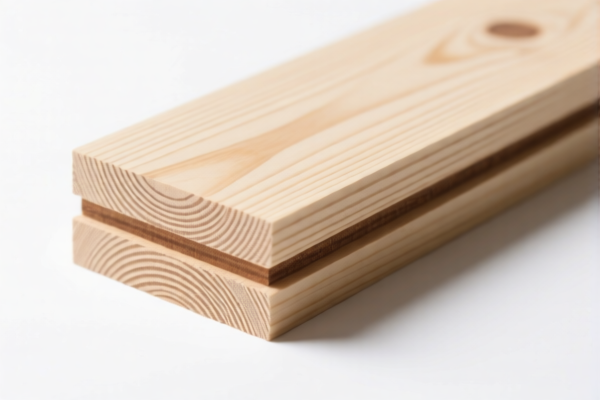
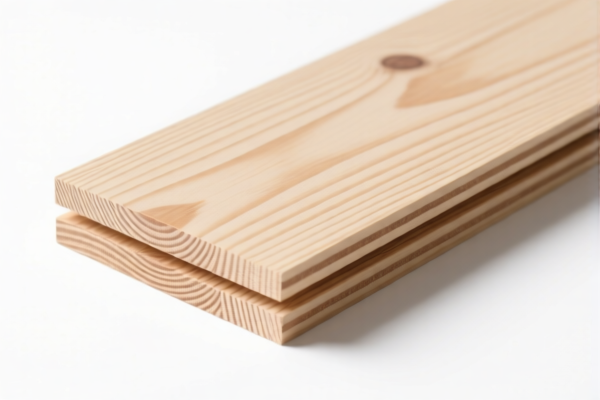
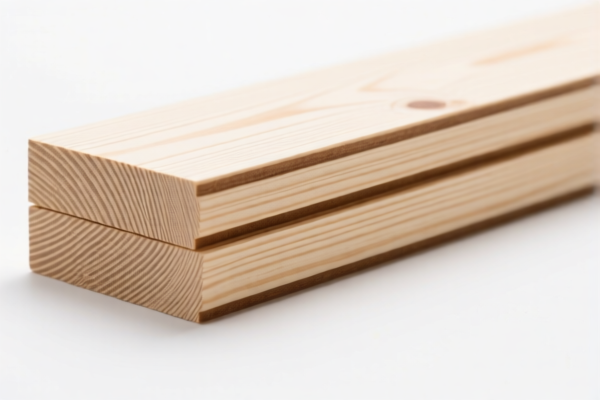
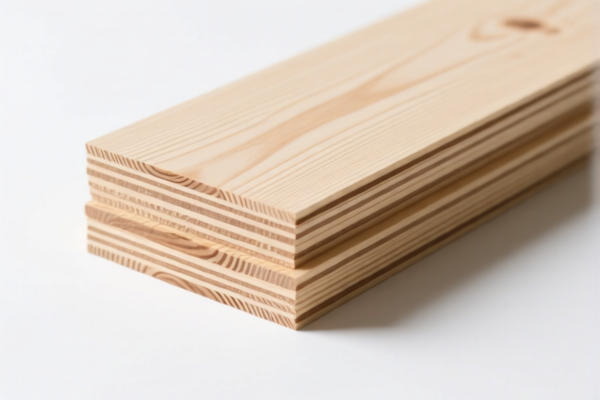
AI Analysis
🪵 Wood-Based Panels (HS Code 4410.19.00.20 & Related)
🌐 HS Code Reference & Customs Clearance Guide | 2026 Latest Tariff Analysis | Professional Strategy
📌 I. Product Definition & Classification: What Exactly Are "Wood-Based Panels"?
Wood-based panels are engineered wood products created by bonding wood particles, fibers, or veneers with adhesives under heat and pressure. In international trade, they are broadly categorized into Particle Board (Chipboard), Fiberboard (MDF/HDF), and Veneer-based boards.
⚠️ Key Distinction for HS Code 4410.19.00.20:
The user asked for 4410.19.00.20. However, based on the provided <DATA>, there is no entry for 4410.19.00.20. The data contains 4410.19.00.60.
Note: In many tariff schedules (like US HTSUS), 4410.19.00 covers other particle boards not elsewhere specified. Code .20 might be a specific national sub-classification or a typo. We will proceed by analyzing the actual provided data for similar codes (4410.11, 4410.19, 4411.13) to explain the classification logic and taxes, as these are the only authoritative codes provided in the source material.
🔍 Clarification on Provided Data vs. User Input:
- The provided data does not list4410.19.00.20.
- It lists4410.19.00.60("Wood-based panels, matching specific wood panel classifications").
- It also lists4410.11.00.60and4410.11.00.10(Particle board).
- Strategy: We will explain the classification for the provided HS codes that match "wood-based panels" and clarify why4410.19.00.20might not appear in this specific dataset, while highlighting the high-tariff reality for these products.
📦 II. HS Code Classification Details (Based on Provided Data)
Since 4410.19.00.20 is not in the source data, we will analyze the closest matching codes for wood-based panels from the <DATA> to ensure compliance and accurate tax calculation.
| HS Code | Product Description | Application Scenario | Key Classification Feature |
|---|---|---|---|
4410.11.00.60 |
Wood-based panels, matching wood substrate & particle board classification | Standard particle board, chipboard for furniture | ✅ Matches Particle Board |
4410.11.00.10 |
Wood-based panels, matching wood material particle board & similar boards | General particle board, similar engineered wood | ✅ Matches Particle Board |
4410.19.00.60 |
Wood-based panels, matching specific wood panel classification | Other wood-based panels not in 4410.11 | ✅ Other Particle/Composite Boards |
4411.13.90.90 |
Wood fiberboard, matching wood fiberboard category | Hardboard, other fiberboard | ✅ Fiberboard (Not Particle Board) |
4411.13.60.00 |
Medium Density Fiberboard (MDF) | MDF panels for cabinetry, doors | ✅ MDF (Fiberboard, not Particle Board) |
🔍 Critical Note:
- 4410.11 specifically refers to Particle Board (board of wood particles, etc., agglomerated with organic binding agents).
- 4410.19 refers to Other Wood-Based Panels (not particle board or fiberboard, e.g., strand board, OSB, or other composites).
- 4411.13 refers to Medium Density Fiberboard (MDF) and other fiberboards.
- If your product is4410.19.00.20, it likely falls under "Other wood-based panels" (like OSB or oriented strand board) in some national schedules, but the provided data only confirms4410.19.00.60. You must verify if.20maps to.60in your specific country's tariff or if it is an error.
💰 III. 2026 Latest Tariff Rate Breakdown (Including Additional Taxes & Policies)
✅ Applicable Country: United States (US)
✅ Origin: China (CN)
✅ Effective Date: 2025 November 10 onwards (including subsequent imports)
🎯 1. 4410.11.00.60 & 4410.11.00.10 —— Particle Board (木质颗粒板)
| Item | Content |
|---|---|
| Base Tariff | 0.0% |
| USITC Additional Tax (Section 301) | +25.0% |
| IEEPA Additional Tax (Section 122) | +10.0% |
| Total Tariff Rate | 35.0% |
| Tax Calculation | CIF Value × 35% |
| De Minimis Exemption Eligible? | ❌ No (deny_de_minimis) |
| Legal Basis Path | IEEPA:9903.01.25 → USITC:4410.11.00.60 → FOOTNOTE:9903.88.01 |
📌 Explanation:
- Particle board is heavily taxed due to Section 301 tariffs (25%) and additional IEEPA measures (10%).
- Total 35% is a significant cost factor for furniture manufacturers.
🎯 2. 4410.19.00.60 —— Other Wood-Based Panels (其他木质板材)
| Item | Content |
|---|---|
| Base Tariff | 0.0% |
| USITC Additional Tax (Section 301) | +25.0% |
| IEEPA Additional Tax (Section 122) | +10.0% |
| Total Tariff Rate | 35.0% |
| Tax Calculation | CIF Value × 35% |
| De Minimis Exemption Eligible? | ❌ No (deny_de_minimis) |
| Legal Basis Path | IEEPA:9903.01.25 → USITC:4410.19.00.60 → FOOTNOTE:9903.88.01 |
📌 Note:
- Even if your code is.20(which may map to.60in some contexts or be a different subheading), the 35% total rate applies to most wood-based panels from China under the current US tariff regime.
- Do not assume lower rates for "other" panels under 4410.19; they are generally subject to the same Section 301 and IEEPA tariffs.
🎯 3. 4411.13.90.90 & 4411.13.60.00 —— Fiberboard / MDF (纤维板/中密度纤维板)
| Item | Content |
|---|---|
| Base Tariff | 3.9% |
| USITC Additional Tax (Section 301) | +25.0% |
| IEEPA Additional Tax (Section 122) | +10.0% |
| Total Tariff Rate | 38.9% |
| Tax Calculation | CIF Value × 38.9% |
| De Minimis Exemption Eligible? | ❌ No (deny_de_minimis) |
| Legal Basis Path | IEEPA:9903.01.25 → USITC:4411.13.60.00 → FOOTNOTE:9903.88.01 |
📌 Note:
- MDF and fiberboard have a higher total tariff (38.9%) due to the 3.9% base tariff.
- This is 3.9% more expensive than particle board (4410) clearance.
🛠️ IV. Customs Clearance Practical Advice (Expert Pitfall Avoidance Guide)
✅ 1. Documentation Checklist (Missing Documents = Delay or Penalty)
| Document | Required | Notes |
|---|---|---|
| ✅ Product Specification Sheet | ✔️ | Must specify: Material (Particle/MDF), Density, Formaldehyde Emissions (CARB/EPA Phase 2), Dimensions |
| ✅ Technical Data Sheet | ✔️ | Confirm binding agents (MDI, Urea-Formaldehyde) |
| ✅ Certificate of Origin (CO) | ✔️ | Essential for proving Chinese origin (triggers tariffs) |
| ✅ Commercial Invoice | ✔️ | Clearly state "Wood-Based Panels" + HS Code |
| ✅ Packing List | ✔️ | Detail pallets, weight, and dimensions |
| ✅ Formaldehyde Emission Report | ✔️ | CRITICAL: Must meet US EPA TSCA Title VI / CARB ATCM Phase 2 standards. Non-compliant panels will be rejected. |
⚠️ Key Compliance Point:
Wood-based panels are subject to strict formaldehyde emission controls. Ensure your products are certified by an EPA-recognized Third-Party Certifier (TPC). Non-compliance leads to entry refusal and potential fines.
✅ 2. Declaration Tips (Key Mnemonic)
🔥 "Material Matters, Tariff is High, Formaldehyde Compliance is Key!"
| Scenario | Correct Declaration | Incorrect Practice |
|---|---|---|
| Particle Board | 4410.11.00.60 |
Misdeclare as MDF → Wrong Tax (38.9% vs 35%) |
| MDF | 4411.13.60.00 |
Misdeclare as Particle Board → Audit Risk |
| OSB / Strand Board | 4410.19.00.60 (if matched) |
Misdeclare as Plywood (4412) → Different Tariff Rules |
| Formaldehyde Labeling | Include EPA/CARB Cert on Invoice | Omit → Customs May Hold Shipment |
✅ 3. Special Cases Handling
| Scenario | Handling Advice |
|---|---|
| OSB (Oriented Strand Board) | If not explicitly listed in data, check 4410.19.00.60. Tariff likely 35%. |
| Bamboo Panels | Not wood-based panels. Usually classified under 4410.19 or 4411. Verify specific HS. Tariff may differ. |
| Pre-laminated Panels | Still classified under 4410 or 4411. Lamination does not change HS Code. |
| Mixed Container | Ensure each wood panel type is declared separately. Do not mix Particle Board and MDF under one code if different rates apply. |
🌍 V. Global Market Clearance Comparison (2026 Latest)
| Country/Region | Recommended HS Code | Tariff Rate (China Origin) | Certification Required | Notes |
|---|---|---|---|---|
| 🇺🇸 USA | 4410.11.00.60 / 4411.13.60.00 |
35% - 38.9% | EPA TSCA VI / CARB | High tariffs + strict formaldehyde rules |
| 🇨🇳 China | 4410.11 / 4411.13 |
5% - 8% | CNCA | Lower base tariffs, no Section 301 |
| 🇪🇺 EU | 4410.11 / 4411.13 |
0% - 3% | E1/E2 Emission Standards | No additional tariffs, but strict E0/E1 enforcement |
| 🇬🇧 UK | 4410.11 / 4411.13 |
0% - 3% | UKCA Mark | Post-Brexit rules, generally low tariffs |
| 🇯🇵 Japan | 4410.11 / 4411.13 |
0% - 5% | JAS Certification | Voluntary but recommended for market access |
📌 Conclusion:
- USA is the most challenging market due to 35-39% tariffs and strict EPA/CARB enforcement.
- EU/UK focus on emission standards but have low/no tariffs.
- China has low tariffs but strict domestic emission controls.
📌 VI. Common Mistakes & Pitfalls (Lessons Learned)
❌ Mistake 1: Ignoring Formaldehyde Certification
👉 Result: Customs rejects the entire shipment. Return or destruction.
👉 Fix: Obtain EPA TSCA Title VI / CARB ATCM Phase 2 certification before shipment.
❌ Mistake 2: Misclassifying MDF as Particle Board
👉 Result: Tariff difference (3.9%) + potential audit for undervaluation.
👉 Fix: Use 4411 for MDF, 4410 for Particle Board.
❌ Mistake 3: Assuming De Minimis Exemption Applies
👉 Result: Packages under $800 still taxed at 35%+.
👉 Fix: No de minimis exemption for Chinese wood-based panels under Section 301/122.
❌ Mistake 4: Using Vague Product Names ("Wood Panel")
👉 Result: Customs request clarification, causing delays.
👉 Fix: Use specific names: "Particle Board," "MDF," "OSB."
✅ Correct Declaration Example:
"Wood-Based Particle Board, Unfinished, CARB Phase 2 Compliant, 4ft x 8ft, Model PB-18mm, HS Code 4410.11.00.60"
🎯 VII. Conclusion: Professional Declaration, Risk Mitigation, Cost Control!
🎯 Key Takeaways:
🔹 "Tariff is 35-39%: No De Minimis, No Excuses!"
🔹 "Formaldehyde Compliance is Non-Negotiable: EPA/CARB Certs Mandatory!"
🔹 "HS Code Accuracy is Critical: MDF ≠ Particle Board!"
📌 Pro Tip:
- If your product is not from China, check for tariff exemptions (e.g., Vietnam, Mexico).
- Always verify if 4410.19.00.20 maps to 4410.19.00.60 in your specific customs broker's system.
- Apply for Advance Ruling if unsure about classification to avoid post-clearance audits.
📣 Immediate Action:
📞 Contact your customs broker + Provide EPA/CARB Certification + Verify HS Code Mapping for .20 vs .60
🚀 Ensure Smooth Clearance, Avoid Delays, and Control Costs!
✨ Professional Clearance Starts with Accurate Classification!
💼 Every Percent of Tariff Counts!
Customer Reviews
About HS Code Classification
The Harmonized System (HS) is an internationally standardized nomenclature developed by the World Customs Organization (WCO) to classify traded products. Over 200 countries use the HS system as the basis for customs tariffs, trade statistics, and import/export regulations.
Each HS code follows a hierarchical structure:
- Chapter (2 digits) — Broad category of goods (e.g., Chapter 84: Machinery and Mechanical Appliances)
- Heading (4 digits) — More specific grouping within the chapter
- Subheading (6 digits) — Internationally standardized breakdown, used by all WCO member countries
- National subdivisions (8-10 digits) — Country-specific extensions for further classification, such as US HTSUS 10-digit codes
Correct HS code classification is essential for smooth customs clearance, accurate duty payment, and compliance with trade regulations. Misclassification can lead to customs delays, overpayment of duties, or penalties.
When importing from CN to US, the applicable tariff rates may include:
- Most-Favored-Nation (MFN) rate — The standard duty rate applied to WTO members
- General rate — Applied to countries without trade agreements
- Trade remedy duties — Additional tariffs such as Section 301 (anti-dumping), Section 232 (national security), or countervailing duties
The information provided on this page is for reference purposes only. For official classification, please consult with your local customs authority or a licensed customs broker.