wood based panels hs 4411931000
CN → US| HS Code | Tariff Rate | Origin | Destination | Doc |
|---|---|---|---|---|
| 4410110060 | 35.0% | CN | US | Official Doc |
| 4411139090 | 38.9% | CN | US | Official Doc |
| 4410190060 | 35.0% | CN | US | Official Doc |
| 4411136000 | 35.0% | CN | US | Official Doc |
| 4410110010 | 35.0% | CN | US | Official Doc |
Product Images
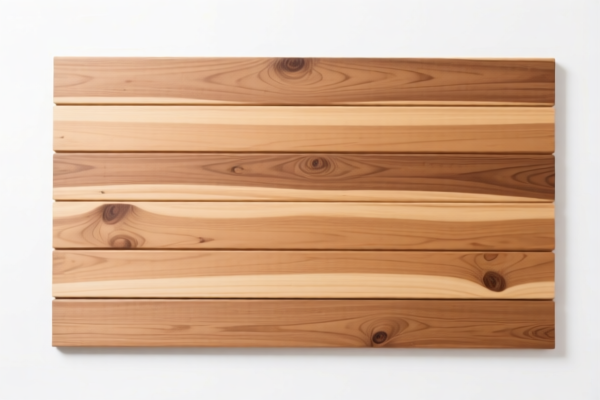
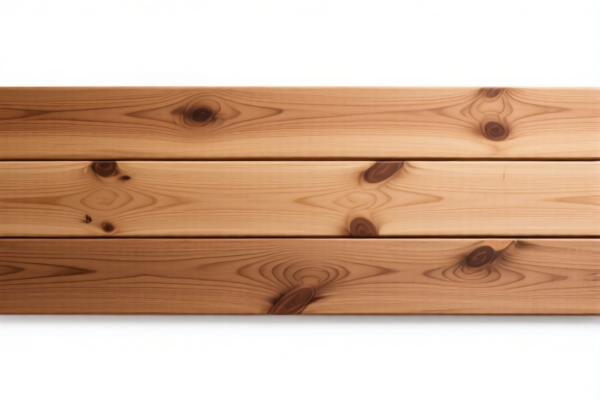
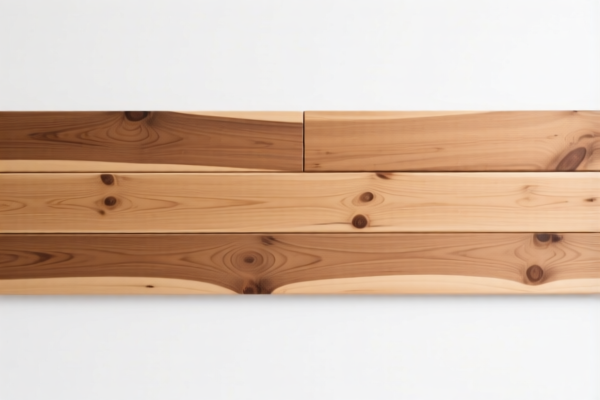
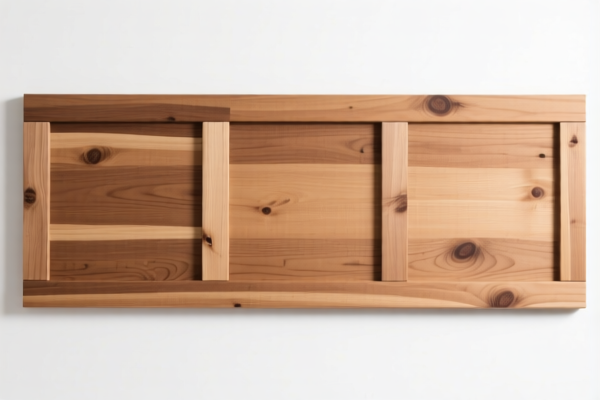
AI Analysis
🪵 Wood-Based Panels (HS 4411.93.10.00) & Related Classifications
🌐 HS Code Reference & Customs Clearance Guide | 2026 Latest Tariff Analysis | Professional Compliance Strategy
📌 I. Product Definition & Classification: Do You Really Understand "Wood-Based Panels"?
Wood-based panels are engineered wood products made by processing wood fibers, flakes, strands, or veneers and bonding them with resins or other adhesives under heat and pressure. In international trade, they are strictly categorized based on their material composition, density, and structural form.
The primary distinction lies between: * Particle Boards (HS 4410): Made from wood chips, sawmill shavings, or similar waste. * Wood Fiber Boards (HS 4411): Made from separated wood fibers, further divided by density (MDF, Hardboard, etc.).
⚠️ Key Distinction Point:
- If the product is made of separated fibers compressed together → It falls under HS 4411.
- If the product is made of flakes, strands, or particles glued together → It falls under HS 4410.
- Density Matters: For HS 4411, density determines the specific sub-code (e.g., Medium Density Fiberboard vs. Hardboard).
📦 II. HS Code Classification Details (2026 Latest Tariff Authority Comparison)
Based on the provided data, here are the relevant HS Codes for wood-based panels, focusing on the requested HS 4411.93.10.00 and its counterparts.
| HS Code | Product Description | Applicable Scenario | Material/Structure |
|---|---|---|---|
4411.13.90.90 |
Wood Fiber Boards, other than medium density | Fiber board materials matching this classification | ✅ Separated Fibers (Non-MDF) |
4411.13.60.00 |
Medium Density Fiberboard (MDF) | Material and form fully match MDF characteristics | ✅ Separated Fibers (MDF) |
4410.11.00.60 |
Wood-Based Panels, matching Particle Board and similar panels | Particle board and similar panel classification | ✅ Wood Chips/Flakes |
4410.19.00.60 |
Specific Classification of Wood-Based Panels | Matches wood and panel form characteristics | ✅ Other Wood Panels (Not Particles) |
4410.11.00.10 |
Particle Board and similar panels | Material and classification explanation match | ✅ Wood Chips/Flakes |
🔍 Important Note:
- HS 4411 covers Fiber Boards. If your product is Medium Density Fiberboard (MDF), it likely falls under4411.13.60.00(based on the data provided, which lists MDF here).
- HS 4410 covers Particle Boards and other wood panels made from chips/strands.
- HS 4411.93.10.00 (requested in input) is generally for "Other wood fiber boards; not medium density; of a specific thickness/quality." However, the provided data only explicitly lists4411.13.90.90for "Wood Fiber Boards, other than MDF." Please verify if4411.13.90.90or another4411sub-code is the most accurate fit for your specific product specs, as customs require precise material description.
💰 III. 2026 Latest Tariff Rate Detailed Explanation (Including Surcharges & Policy Add-ons)
✅ Applicable Country: United States (US)
✅ Country of Origin: China (CN)
✅ Effective Time: 2025/2026 Import Period (Subject to current Trade Acts)
🎯 1. 4410.11.00.60 & 4410.11.00.10 —— Particle Board (Particle Board & Similar Panels)
| Item | Content |
|---|---|
| Base Tariff Rate | 0.0% (ad valorem) |
| Section 301 Surcharge | +25.0% (USITC Footnote related to Chinese goods) |
| Section 122 Tariff | +10.0% (Specific provision for certain wood products) |
| Total Tariff Rate | 35.0% |
| Tax Calculation | CIF Value × 35% |
| De Minimis Eligibility | ❌ No (Denied under current trade rules for these HS codes) |
| Legal Basis Path | USITC:4410.11.00.60 → SECTION_301 → SECTION_122 |
📌 Explanation:
- Base 0%: The standard Most Favored Nation (MFN) rate for particle board is often 0% or low.
- 25% Surcharge: Applied due to Section 301 tariffs on Chinese-origin goods.
- 10% Surcharge: Additional tariff under Section 122 (or similar trade remedy provisions for wood products).
- Total 35%: A significant cost burden. Must be factored into landed cost calculations.
🎯 2. 4411.13.90.90 —— Wood Fiber Boards (Other than MDF)
| Item | Content |
|---|---|
| Base Tariff Rate | 3.9% |
| Section 301 Surcharge | +25.0% |
| Section 122 Tariff | +10.0% |
| Total Tariff Rate | 38.9% |
| Tax Calculation | CIF Value × 38.9% |
| De Minimis Eligibility | ❌ No |
| Legal Basis Path | USITC:4411.13.90.90 → SECTION_301 → SECTION_122 |
📌 Explanation:
- Base 3.9%: Unlike particle board, some fiber boards have a small base duty.
- 25% + 10%: Same surcharges apply.
- Total 38.9%: Even higher than particle board due to the base rate.
🎯 3. 4411.13.60.00 —— Medium Density Fiberboard (MDF)
| Item | Content |
|---|---|
| Base Tariff Rate | 0.0% |
| Section 301 Surcharge | +25.0% |
| Section 122 Tariff | +10.0% |
| Total Tariff Rate | 35.0% |
| Tax Calculation | CIF Value × 35.0% |
| De Minimis Eligibility | ❌ No |
| Legal Basis Path | USITC:4411.13.60.00 → SECTION_301 → SECTION_122 |
📌 Note:
- MDF is treated similarly to particle board in terms of surcharges.
- Ensure the product is truly MDF (density range typically 600-800 kg/m³) to use this code. Misclassification as "Hardboard" or "Other Fiber Board" could lead to different codes (e.g.,4411.13.90.90at 38.9%).
🎯 4. 4410.19.00.60 —— Other Wood-Based Panels
| Item | Content |
|---|---|
| Base Tariff Rate | 0.0% |
| Section 301 Surcharge | +25.0% |
| Section 122 Tariff | +10.0% |
| Total Tariff Rate | 35.0% |
| Tax Calculation | CIF Value × 35.0% |
| De Minimis Eligibility | ❌ No |
📌 Note:
- This code is for wood-based panels not covered by specific particle board codes.
- If the product is not particle board and not fiber board, it might fall here.
- Same 35% total rate.
🛠️ IV. Customs Clearance Practical Advice (Battle-Tested Pitfall Guide)
✅ 1. Preparation Checklist (Mandatory)
| Document | Required | Explanation |
|---|---|---|
| ✅ Product Specification Sheet | ✔️ | Must include: Material (Wood species), Density, Thickness, Formaldehyde Emission Level (CARB/EPA Compliant), Glue Type. |
| ✅ Material Composition Declaration | ✔️ | Crucial to distinguish between Fiber (HS 4411) and Particle/Chip (HS 4410). |
| ✅ Certificate of Origin (CO) | ✔️ | Essential for confirming CN origin to apply correct surcharges. |
| ✅ Commercial Invoice | ✔️ | Must clearly state "Wood-Based Panel," HS Code, and CIF Value. |
| ✅ Packing List | ✔️ | Detail net/gross weight, number of pallets, and packaging type. |
| ✅ Third-Party Certification | ✔️ | CARB Phase 2, EPA TSCA Title VI, or CE F4 Star compliance certificates are often required for import. |
✅ 2. Declaration Tips (Key Mnemonics)
🔥 "Fiber vs. Chip, Density is King, Formaldehyde Must Match, Tariff 35-39%"
| Scenario | Correct Declaration | Wrong Practice |
|---|---|---|
| MDF Board | 4411.13.60.00 |
Misdeclare as Particle Board → Risk of penalty. |
| Particle Board | 4410.11.00.60 |
Misdeclare as Fiber Board → May result in different duty if base rates differ (though surcharges are similar). |
| Hardboard | 4411.13.90.90 |
Misdeclare as MDF → Incorrect HS code, potential 3.9% base duty vs 0%. |
| High Formaldehyde Emission | ❌ Will be Rejected | No CARB/EPA compliance certificate → Seizure or Return. |
✅ 3. Special Case Handling
| Situation | Handling Advice |
|---|---|
| Laminated Panels | If the panel is already laminated or painted, it may still fall under HS 4410/4411, but ensure the description reflects the finished state. |
| Mixed Shipments | Declare each HS code separately. Do not aggregate different materials under one code. |
| Origin Marking | Ensure all packaging is marked "Made in China." |
| EPA/CARB Compliance | Wood products containing composite wood must comply with U.S. EPA TSCA Title VI and CARB ARD Phase 2 limits. Provide test reports from accredited labs. |
🌍 V. Global Market Comparison for Wood-Based Panels (2026)
| Country/Region | Recommended HS Code | Tariff (CN Origin) | Certification Requirement | Notes |
|---|---|---|---|---|
| 🇺🇸 USA | 4410 or 4411 series |
35% - 38.9% | EPA TSCA Title VI + CARB Phase 2 | High tariffs; strict environmental compliance. |
| 🇨🇳 China | 4410 or 4411 series |
5% - 10% | GB/T Standards | Low tariffs; domestic production hub. |
| 🇪🇺 EU | 4410 or 4411 series |
0% - 5% | CE Marking + Ecolabel (if applicable) | No Section 301/122 surcharges. |
| 🇨🇦 Canada | 4410 or 4411 series |
0% (if CUSMA eligible) | CARB/EPA equivalent | CUSMA may apply if produced in North America. |
📌 Conclusion:
- USA imposes very high tariffs (35-39%) on Chinese wood-based panels.
- Environmental Compliance (Formaldehyde emissions) is as critical as tariff rates. Non-compliance leads to immediate rejection.
- Consider origin diversification (e.g., Vietnam, Malaysia) if available, to avoid US surcharges.
📌 VI. Common Errors & Pitfalls (Lessons Learned)
❌ Error 1: Confusing MDF (Medium Density) with HDF (High Density) or LDH (Low Density).
👉 Consequence: Wrong HS code, potential misdeclaration. 4411.13.60.00 is for MDF. Other densities may fall under 4411.13.90.90.
❌ Error 2: Failing to provide Formaldehyde Emission Test Reports.
👉 Consequence: Goods held at customs, potential fines, or return to sender. EPA/CARB compliance is mandatory.
❌ Error 3: Misclassifying Particle Board as Fiber Board.
👉 Consequence: While total tariff might be similar (35-39%), the base rate differs (0% vs 3.9%), and customs audits may flag the discrepancy.
✅ Correct Declaration Example:
"Medium Density Fiberboard (MDF), 18mm thickness, 2440x1220mm, CARB Phase 2 Compliant, Formaldehyde Emission < 0.05ppm, Made in China, HS Code: 4411.13.60.00"
🎯 VII. Conclusion: Professional Classification, Safe Clearance, Cost Optimization
🎯 Remember the Rules:
🔹 "Fiber vs. Chip, Check Density First."
🔹 "MDF is 4411.13.60, Particle is 4410.11."
🔹 "Total Tariff: 35% for MDF/Particle, 38.9% for Other Fiber."
🔹 "No CARB/EPA Certificate = No Entry to USA."
📌 Pro Tip:
If your wood-based panels are manufactured in Vietnam, Malaysia, or Thailand, you may avoid US Section 301 and 122 tariffs, reducing total duty to 0% - 5%.
Consider Advance Ruling (Isin) from CBP to confirm HS Code classification before shipment.
📣 Immediate Action:
📞 Consult with a licensed customs broker + Provide Product Specs + Obtain CARB/EPA Test Reports
🚀 Ensure Smooth Clearance, Compliance, and Cost Control for Your Wood-Based Panels!
✨ Professional Customs Clearance Starts with Accurate Classification!
💼 Every Percentage Point of Tariff Matters!
Customer Reviews
About HS Code Classification
The Harmonized System (HS) is an internationally standardized nomenclature developed by the World Customs Organization (WCO) to classify traded products. Over 200 countries use the HS system as the basis for customs tariffs, trade statistics, and import/export regulations.
Each HS code follows a hierarchical structure:
- Chapter (2 digits) — Broad category of goods (e.g., Chapter 84: Machinery and Mechanical Appliances)
- Heading (4 digits) — More specific grouping within the chapter
- Subheading (6 digits) — Internationally standardized breakdown, used by all WCO member countries
- National subdivisions (8-10 digits) — Country-specific extensions for further classification, such as US HTSUS 10-digit codes
Correct HS code classification is essential for smooth customs clearance, accurate duty payment, and compliance with trade regulations. Misclassification can lead to customs delays, overpayment of duties, or penalties.
When importing from CN to US, the applicable tariff rates may include:
- Most-Favored-Nation (MFN) rate — The standard duty rate applied to WTO members
- General rate — Applied to countries without trade agreements
- Trade remedy duties — Additional tariffs such as Section 301 (anti-dumping), Section 232 (national security), or countervailing duties
The information provided on this page is for reference purposes only. For official classification, please consult with your local customs authority or a licensed customs broker.