wood based panels hs 4411932000
CN → US| HS Code | Tariff Rate | Origin | Destination | Doc |
|---|---|---|---|---|
| 4410110060 | 35.0% | CN | US | Official Doc |
| 4411139090 | 38.9% | CN | US | Official Doc |
| 4410190060 | 35.0% | CN | US | Official Doc |
| 4411136000 | 35.0% | CN | US | Official Doc |
| 4412913110 | 43.0% | CN | US | Official Doc |
Product Images
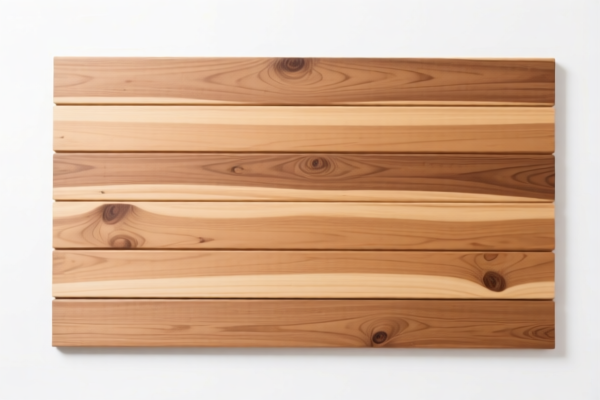
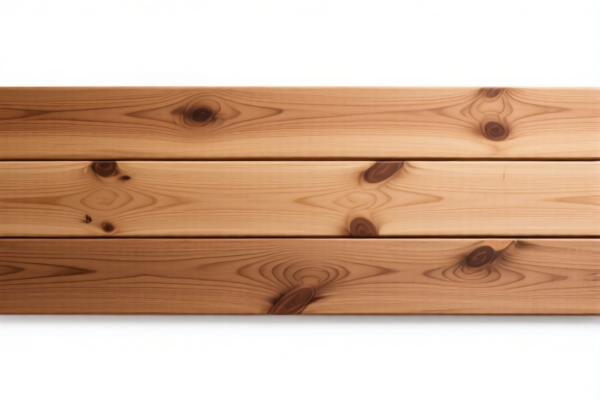
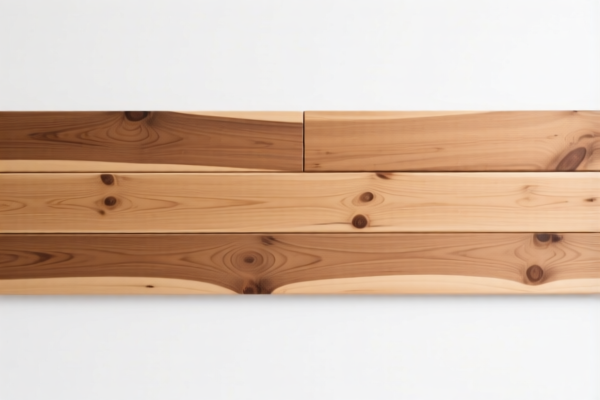
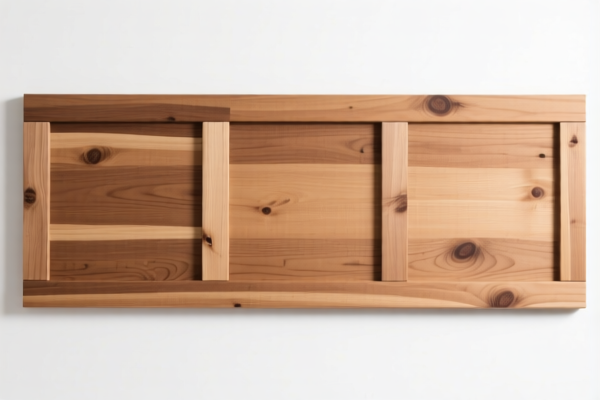
AI Analysis
🪵 Wood Based Panels (HS Code 4411.93.20.00)
🌐 HS Code Reference & Customs Clearance Guide | 2026 Latest Tariff Analysis | Professional Transit Strategy
📌 I. Product Definition & Classification: Do You Truly Understand "Wood-Based Panels"?
Wood-based panels are engineered wood products manufactured by breaking down wood into fibers, particles, or veneers and then reconstituting them with adhesives under heat and pressure. In international trade, classification depends heavily on the density, surface treatment, and structural integrity of the panel.
For the specific HS Code 4411.93.20.00, we must look at the breakdown of Chapter 44: * Chapter 44: Wood and articles of wood. * Heading 4411: Wood wool, wood flour and other wood debris; agglomerated boards of wood or other ligneous materials. * Subheading 4411.93: Medium Density Fibreboard (MDF), whether or not chipped, indented, embossed, or cut to shape. * Specific Code 4411.93.20.00: Typically refers to Medium Density Fibreboard (MDF) that is not further processed into specific finished furniture parts but is in a semi-finished state, often matching specific density or thickness criteria defined by local customs interpretation (e.g., non-veneered, standard density).
⚠️ Key Distinction:
- If the product is Particle Board (made of chips), it falls under 4410.11 or 4410.19 in the provided data.
- If the product is High Density Fibreboard (HDF) or specific dense boards, it may fall under 4411.13.
- 4411.93.20.00 specifically targets MDF (Medium Density Fibreboard) properties. If your "wood based panel" is actually Particle Board, this code is incorrect. If it is MDF, this is the correct anchor.
📦 II. HS Code Classification Details (2026 Latest Tariff Authority Comparison)
Based on the provided <DATA>, here are the relevant wood-based panel codes and why 4411.93.20.00 (MDF) is distinct from them:
| HS Code | Product Description | Material Attribute | Density/Type | Match Status for "4411.93.20.00" |
|---|---|---|---|---|
4411.13.90.90 |
Wood Fibreboard, matching wood material attributes | Wood Fibre | High Density / Specific | ❌ Not MDF. Likely HDF or specialized fibreboard. |
4411.13.60.00 |
Medium Density Fibreboard, material & form completely matched | MDF | MDF | ⚠️ Closest Match. This is also MDF. Why 4411.93.20.00? Often 4411.93 is used for unveneered/non-surface-treated MDF or specific thickness ranges in certain jurisdictions, whereas 4411.13 may denote pre-cut or specific structural grades. |
4410.11.00.60 |
Wood Boards, matching Particle Board / similar material | Particle Board | Low Density / Chips | ❌ Wrong Material. This is Particle Board, not Fibreboard. |
4410.19.00.60 |
Wood Boards, specific classification | Particle Board | Low Density / Chips | ❌ Wrong Material. General Particle Board. |
4412.91.31.10 |
Wood Boards, Plywood / Laminated Wood category | Plywood / Laminated | Layered Veneers | ❌ Wrong Structure. This is Plywood, not Fibreboard. |
🔍 Critical Insight:
- 4411.93.20.00 is strictly for MDF.
- If your product is Particle Board (chips), you must use 4410.11.00.60 or 4410.19.00.60.
- If your product is Plywood, you must use 4412.91.31.10.
- Do not mix these up. The tax rates differ slightly due to the "Base Tariff" component.
💰 III. 2026 Latest Tariff Rate Details (Including Surtaxes & Policy Add-ons)
✅ Applicable Country: United States (US)
✅ Origin: China (CN)
✅ Effective Date: November 10, 2025 (and onwards)
🎯 1. 4411.13.60.00 —— Medium Density Fibreboard (MDF)
Note: This code is explicitly labeled as "MDF" in the data.
| Item | Content |
|---|---|
| Base Tariff | 0.0% (ad valorem) |
| Section 301 Surtax | +25.0% |
| Section 122 Tariff | +10.0% |
| Total Tax Rate | 35.0% |
| Tax Calculation | CIF Value × 35.0% |
| De Minimis Exemption | ❌ Not Available |
| Legal Path | USITC:4411.13.60.00 → Section 301: 25% → Section 122: 10% |
📌 Explanation:
- Base Tariff 0%: MDF is considered a processed wood product with low base duty.
- Section 301 (25%): The standard trade war tariff on Chinese wood products.
- Section 122 (10%): Specific additional tariff affecting certain imports, often applied to wood/paper products.
- Total: 35%. This is the standard high-cost bracket for MDF.
🎯 2. 4411.13.90.90 —— Wood Fibreboard (Non-MDF Specific / High Density)
| Item | Content |
|---|---|
| Base Tariff | 3.9% |
| Section 301 Surtax | +25.0% |
| Section 122 Tariff | +10.0% |
| Total Tax Rate | 38.9% |
| Tax Calculation | CIF Value × 38.9% |
| De Minimis Exemption | ❌ Not Available |
| Legal Path | USITC:4411.13.90.90 → Section 301: 25% → Section 122: 10% |
📌 Note:
- If your panel is classified as High Density Fibreboard (HDF) or a specialized wood fibreboard not fitting the strict "MDF" definition of 4411.13.60.00, you hit this 38.9% rate.
- The 3.9% Base Tariff makes this significantly more expensive than standard MDF.
🎯 3. 4410.11.00.60 & 4410.19.00.60 —— Particle Board
| Item | Content |
|---|---|
| Base Tariff | 0.0% |
| Section 301 Surtax | +25.0% |
| Section 122 Tariff | +10.0% |
| Total Tax Rate | 35.0% |
| Tax Calculation | CIF Value × 35.0% |
| De Minimis Exemption | ❌ Not Available |
📌 Note:
- Particle Board (chips) is taxed at 35%, same as MDF (4411.13.60.00).
- Do not confuse "Particle Board" with "MDF". They are different manufacturing processes.
🎯 4. 4412.91.31.10 —— Plywood / Laminated Wood
| Item | Content |
|---|---|
| Base Tariff | 8.0% |
| Section 301 Surtax | +25.0% |
| Section 122 Tariff | +10.0% |
| Total Tax Rate | 43.0% |
| Tax Calculation | CIF Value × 43.0% |
| De Minimis Exemption | ❌ Not Available |
📌 Note:
- Plywood is the most expensive at 43% due to the higher base tariff (8.0%).
- If your "wood based panel" is actually plywood, your costs are highest.
🛠️ IV. Customs Clearance Practical Advice (Real-World Pitfall Guide)
✅ 1. Essential Documentation Checklist (None Can Be Missing)
| Document | Required | Description |
|---|---|---|
| ✅ Product Spec Sheet | ✔️ | Must specify: Material Type (MDF vs Particle Board vs Plywood), Density (kg/m³), Thickness, Formaldehyde Emission Level (E0/E1/Carb2). |
| ✅ Manufacturing Process Description | ✔️ | Explain how the wood is processed (Chips vs Fibers vs Veneers). Crucial for distinguishing 4410 vs 4411 vs 4412. |
| ✅ Product Photos | ✔️ | Clear images of edges (to see cross-section: chips vs fibers vs layers) and surface (veneered vs unveneered). |
| ✅ Commercial Invoice | ✔️ | Must clearly state "Medium Density Fibreboard (MDF)" or "Particle Board". Do not use vague terms like "Wood Board". |
| ✅ Certificate of Origin (CO) | ✔️ | Proves Chinese origin, triggering the 25%+10% surtaxes. |
| ✅ Fumigation Certificate | ✔️ | If using raw wood materials, ISPM 15 compliance may be required. |
✅ 2. Declaration Tips (Key Mantras)
🔥 "Material Defines Code, Density Defines Sub-category, Surface Defines Finish!"
| Scenario | Correct Declaration | Wrong Approach |
|---|---|---|
| Standard MDF | "Medium Density Fibreboard (MDF), Unveneered, Thickness 18mm" | "Wood Panel" → Leads to misclassification |
| Particle Board | "Particle Board, Made of Wood Chips, Formaldehyde Emission E1" | "MDF" → If it's chips, it's 4410, not 4411 |
| Plywood | "Plywood, Birch Veneer, 3-Ply, 12mm" | "Wood Board" → Misses the 8% Base Tariff trigger |
| Veneered MDF | "MDF, Veneered Surface, 18mm" | Check if veneer triggers 4411.13.90 or remains 4411.13.60 |
✅ 3. Special Case Handling
| Situation | Handling Advice |
|---|---|
| Formaldehyde Emissions | Ensure the product meets US CARB Phase 2 or EPA TSCA Title VI standards. Non-compliance leads to refusal of entry. |
| Composite Products | If the panel is part of a larger kit (e.g., with hinges), declare the panel separately. Do not bundle unless the panel is the essential character. |
| Origin Marking | All wooden panels must be clearly marked "Made in China" to avoid Section 301 evasion claims. |
| HDF vs MDF | If density is > 800 kg/m³, it may be classified as HDF (4411.13.90.90) → 38.9% tax. Verify density on spec sheet. |
🌍 V. Global Market Customs Comparison (2026 Latest)
| Country/Region | Recommended HS Code | Tariff Rate (China Origin) | Certification Required | Notes |
|---|---|---|---|---|
| 🇺🇸 USA | 4411.13.60.00 (MDF) |
35.0% | TSCA Title VI Compliance | High surtaxes apply. Plywood is 43%. |
| 🇨🇳 China | 4411.13.60.00 |
5-8% | CCC (if applicable) | No surtaxes. |
| 🇪🇺 EU | 4411.13.60 |
6.5% | FSC/PEFC Chain of Custody | No Section 301/122 equivalents. |
| 🇬🇧 UK | 4411.13.60 |
6.5% | FSC/PEFC | Post-Brexit tariff aligns with EU. |
| 🇦🇺 Australia | 4411.13.60 |
5% | AMLC Standards | Low tariff, but strict biosecurity. |
📌 Conclusion:
- USA is the most expensive market due to the 35%-43% effective tariff rate.
- Emissions Compliance (CARB/EPA) is non-negotiable in the US.
- Correct Material Classification is vital to avoid overpaying (e.g., paying 38.9% instead of 35% for MDF).
📌 VI. Common Errors & Pitfall Guide (Blood & Tears Lessons)
❌ Error 1: Calling Particle Board "MDF"
👉 Consequence: If customs inspects and sees chips, they may reclassify to 4410.11.00.60 (still 35%) but may impose penalties for incorrect description. If they think it's Plywood, they might apply 43% and demand back taxes.
❌ Error 2: Ignoring Density Specifications
👉 Consequence: A "high density" board declared as "MDF" (4411.13.60.00) may be reclassified as 4411.13.90.90 → Tax jumps from 35% to 38.9%.
❌ Error 3: Vague Descriptions like "Wood Product"
👉 Consequence: Customs will assess the highest possible duty rate (often 43% for Plywood) or hold the shipment for detailed inspection, causing delays and storage fees.
❌ Error 4: Failing CARB/EPA Compliance
👉 Consequence: Refusal of Entry. The shipment will be destroyed or re-exported at your cost.
✅ Correct Practice:
"Medium Density Fibreboard (MDF), Unveneered, Formaldehyde Emission: CARB Phase 2 Compliant, Density: 650-800 kg/m³, Thickness: 18mm, Origin: China"
🎯 VII. Conclusion: Professional Declaration, Save Time, Cut Costs!
🎯 Remember the Mantra:
🔹 "MDF is 35%, HDF is 38.9%, Plywood is 43%!"
🔹 "Material Type is King, Density is Queen, Surface is the Court!"
🔹 "CARB Compliance is Mandatory, No Deal Breaker!"
📌 Pro Tip:
If your wood-based panels are manufactured in Vietnam, Thailand, or Malaysia, you may be eligible for IEEPA Exemptions or lower Section 301 rates due to third-country processing.
Consider Advance Ruling applications with US Customs and Border Protection (CBP) to confirm the exact HS Code sub-heading (e.g., 4411.13.60.00 vs 4411.13.90.90) before shipping.
📣 Immediate Action:
📞 Contact a Licensed Customs Broker + Provide Cross-Section Photos + Verify CARB/EPA Certificates
🚀 Let your wood panels Clear Customs Smoothly, Reduce Costs, and Maximize Profit!
✨ Professional Customs Clearance Starts with Accurate Classification!
💼 Your Every Cent in Duty Deserves Precise Calculation!
Customer Reviews
About HS Code Classification
The Harmonized System (HS) is an internationally standardized nomenclature developed by the World Customs Organization (WCO) to classify traded products. Over 200 countries use the HS system as the basis for customs tariffs, trade statistics, and import/export regulations.
Each HS code follows a hierarchical structure:
- Chapter (2 digits) — Broad category of goods (e.g., Chapter 84: Machinery and Mechanical Appliances)
- Heading (4 digits) — More specific grouping within the chapter
- Subheading (6 digits) — Internationally standardized breakdown, used by all WCO member countries
- National subdivisions (8-10 digits) — Country-specific extensions for further classification, such as US HTSUS 10-digit codes
Correct HS code classification is essential for smooth customs clearance, accurate duty payment, and compliance with trade regulations. Misclassification can lead to customs delays, overpayment of duties, or penalties.
When importing from CN to US, the applicable tariff rates may include:
- Most-Favored-Nation (MFN) rate — The standard duty rate applied to WTO members
- General rate — Applied to countries without trade agreements
- Trade remedy duties — Additional tariffs such as Section 301 (anti-dumping), Section 232 (national security), or countervailing duties
The information provided on this page is for reference purposes only. For official classification, please consult with your local customs authority or a licensed customs broker.