wood based panels hs 4412524100
CN → US| HS Code | Tariff Rate | Origin | Destination | Doc |
|---|---|---|---|---|
| 4411139090 | 38.9% | CN | US | Official Doc |
| 4410110060 | 35.0% | CN | US | Official Doc |
| 4410190060 | 35.0% | CN | US | Official Doc |
| 4411136000 | 35.0% | CN | US | Official Doc |
| 4412913110 | 43.0% | CN | US | Official Doc |
Product Images
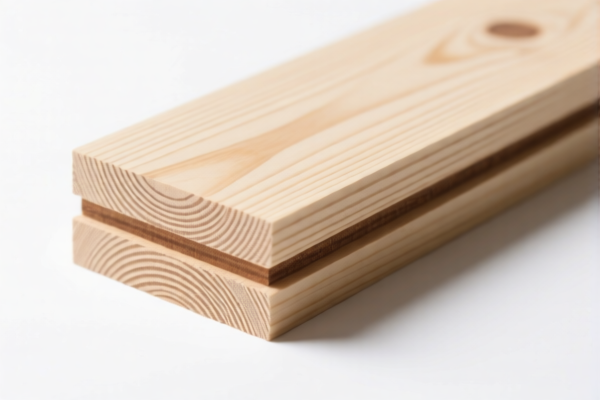
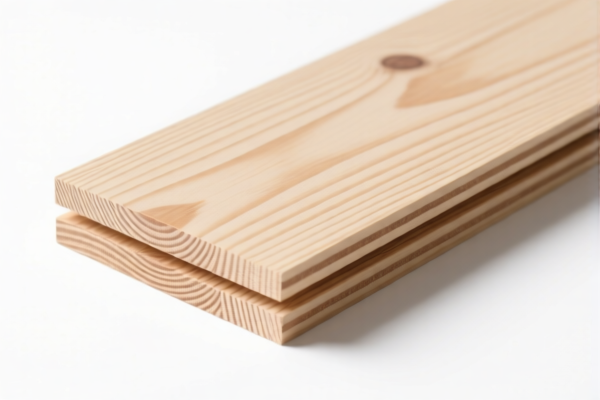
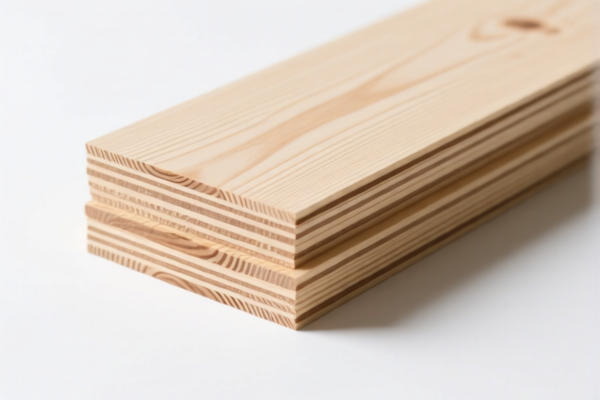
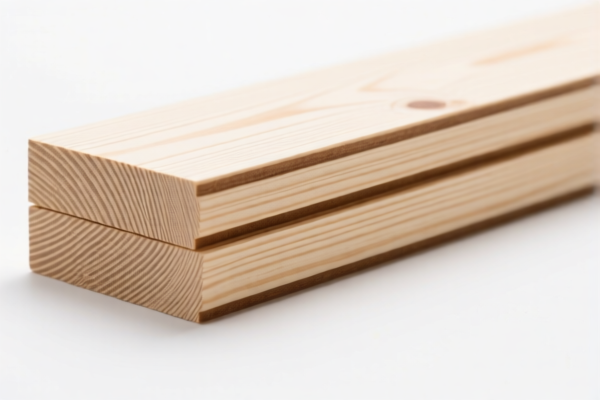
AI Analysis
🪵 Wood Based Panels: HS Code 4412.52.41.00 & Related Classifications
🌐 HS Code Reference & Customs Clearance Guide | 2026 Latest Tariff Analysis | Professional Compliance Strategy
📌 I. Product Definition: What Are "Wood Based Panels"?
Wood-based panels are engineered wood products made from wood veneers, flakes, strands, or fibers, bonded together with adhesives under heat and pressure. In international trade, they are critical for furniture manufacturing, construction, packaging, and interior design.
Key Distinction:
- Plywood (胶合板): Layers of wood veneer glued together with alternating grain directions.
- Particle Board (刨花板): Compressed wood chips or sawdust bonded with resin.
- MDF (中密度纤维板): Fine wood fibers compressed with adhesive.
- Hardboard (硬质纤维板): Dense fiberboard, often used for backing or flooring.
⚠️ Critical Note:
- HS Code 4412.52.41.00 specifically refers to Plywood (not particle board or MDF).
- Other wood-based panels (e.g., particle board, MDF) fall under HS 4410 or 4411, NOT 4412.
- Misclassification leads to incorrect duty rates (up to 43%) and customs delays.
📦 II. HS Code Classification Details (2026 Latest Tariff Reference)
| HS Code | Product Description | Material Match | Applicable Scenario | Duty Rate (US/China) |
|---|---|---|---|---|
4412.52.41.00 |
Plywood, with at least one outer ply of coniferous wood, thickness ≤ 6mm | ✅ Wood Based Panels | Thin plywood for furniture backing, packaging, or lightweight construction | 43.0% |
4411.13.90.90 |
Wood fibreboard, density > 0.8g/cm³, thickness > 9mm, non-cellular | ✅ Wood Based Panels | High-density fiberboard for furniture or flooring | 38.9% |
4410.11.00.60 |
Particle board (chipboard), not cellular | ✅ Wood Based Panels | Standard particle board for furniture or shelving | 35.0% |
4410.19.00.60 |
Other wood-based panels (e.g., OSB, HDF) | ✅ Wood Based Panels | Oriented Strand Board (OSB) or High-Density Fiberboard | 35.0% |
4411.13.60.00 |
Medium Density Fibreboard (MDF) | ✅ Wood Based Panels | MDF for cabinetry, molded furniture, or acoustic panels | 35.0% |
🔍 Key Clarification:
- HS 4412.52.41.00 is ONLY for plywood (layered veneer).
- If your product is particle board, MDF, or hardboard, do NOT use 4412.52.41.00. Use 4410 or 4411 instead.
- All listed HS codes are classified as "Wood Based Panels" in the provided data.
💰 III. 2026 Latest Tariff Rate Breakdown (Including Additional Duties)
✅ Applicable Country: United States (US)
✅ Country of Origin: China (CN)
✅ Effective Date: November 10, 2025 (and subsequent imports)
🎯 1. 4412.52.41.00 —— Plywood (Thin, Coniferous, ≤6mm)
| Item | Detail |
|---|---|
| Base Tariff | 8.0% (ad valorem) |
| Section 301 Additional Duty | +25.0% |
| Section 122 Duty | +10.0% |
| Total Tariff Rate | 43.0% |
| Tax Calculation | CIF Value × 43% |
| De Minimis Exemption? | ❌ No (deny_de_minimis) |
| Legal Basis Path | Section 301:9903.88.01 → IEEPA:9903.01.24 → USITC:4412.52.41.00 → Footnote:122 |
📌 Explanation:
- The 25% Section 301 duty is imposed on Chinese goods under US Trade Act Section 301.
- The 10% Section 122 duty is a separate additional tariff for specific wood products.
- Total 43% is extremely high, significantly impacting profit margins.
🎯 2. 4411.13.90.90 —— High-Density Wood Fibreboard
| Item | Detail |
|---|---|
| Base Tariff | 3.9% |
| Section 301 Additional Duty | +25.0% |
| Section 122 Duty | +10.0% |
| Total Tariff Rate | 38.9% |
| Tax Calculation | CIF Value × 38.9% |
| De Minimis Exemption? | ❌ No |
| Legal Basis Path | Section 301:9903.88.01 → IEEPA:9903.01.24 → USITC:4411.13.90.90 → Footnote:122 |
🎯 3. 4410.11.00.60 & 4410.19.00.60 —— Particle Board / OSB
| Item | Detail |
|---|---|
| Base Tariff | 0.0% |
| Section 301 Additional Duty | +25.0% |
| Section 122 Duty | +10.0% |
| Total Tariff Rate | 35.0% |
| Tax Calculation | CIF Value × 35.0% |
| De Minimis Exemption? | ❌ No |
| Legal Basis Path | Section 301:9903.88.01 → IEEPA:9903.01.24 → USITC:4410.xxxxxx → Footnote:122 |
📌 Note:
- Particle board and OSB have 0% base tariff, but still face 35% total due to additional duties.
- MDF (4411.13.60.00) also falls under 35.0% total.
🛠️ IV. Customs Clearance Practical Advice (Pitfall Avoidance Guide)
✅ 1. Required Documentation Checklist (Non-Negotiable)
| Document | Mandatory | Explanation |
|---|---|---|
| ✅ Product Specification Sheet | ✔️ | Include dimensions, thickness, material type (plywood/particle board/MDF), adhesive type, density |
| ✅ Structural Diagram / Cross-Section | ✔️ | Proves layered structure (for plywood) or compressed fiber (for MDF/particle board) |
| ✅ Product Photos (Label & Whole Unit) | ✔️ | Clearly show model number, brand, and material label |
| ✅ Third-Party Test Reports | ✔️ | CARB Phase 2, EPA TSCA Title VI, Formaldehyde Emission Certificates |
| ✅ Commercial Invoice | ✔️ | Must specify "Wood Based Panel" and exact HS Code |
| ✅ Certificate of Origin (CO) | ✔️ | If not China-origin, apply for preferential rates |
| ✅ Packing List | ✔️ | Detail net/gross weight, dimensions, and packaging type |
✅ 2. Declaration Tips (Key Mnemonic)
🔥 "Exact Material, Exact Code, Avoid 43%, Save Thousands!"
| Scenario | Correct Declaration | Wrong Action |
|---|---|---|
| Plywood (≤6mm, coniferous) | 4412.52.41.00 |
Misdeclare as "particle board" → 35% vs 43% |
| Particle Board | 4410.11.00.60 |
Misdeclare as "MDF" → Same rate, but risk audit |
| MDF | 4411.13.60.00 |
Misdeclare as "plywood" → Higher duty (43% vs 35%) |
| OSB (Oriented Strand Board) | 4410.19.00.60 |
Misdeclare as "hardboard" → Risk of penalty |
✅ 3. Special Cases Handling
| Scenario | Handling Advice |
|---|---|
| OEM Custom Panels | Provide customer order + design specs to prove exact material composition |
| Laminated Panels | Still classified under wood-based panel HS; decoration layer doesn’t change classification |
| Formaldehyde-Exempt | Must provide EPA TSCA Title VI or CARB Phase 2 certification to avoid rejection |
| Re-export to Third Country | If transshipped, ensure documentation shows final destination to avoid US origin penalties |
🌍 V. Global Market Comparison (2026 Latest)
| Country/Region | Recommended HS Code | Tariff (China Origin) | Certification Required | Notes |
|---|---|---|---|---|
| 🇺🇸 USA | 4412.52.41.00 (Plywood) |
43.0% | EPA TSCA VI + CARB Phase 2 | Highest duty among wood panels |
| 🇨🇳 China | 4412.52.41.00 |
5.0% | FSC (optional) | No additional duties |
| 🇪🇺 EU | 4412.52.41.00 |
6.5% | CE + EUTR (Eco Timber Regulation) | No Section 301/122 equivalent |
| 🇬🇧 UK | 4412.52.41.00 |
5.0% | FSC + PEFC | Post-Brexit rules apply |
| 🇯🇵 Japan | 4412.52.41.00 |
5.0% | JAS (Japanese Agricultural Standard) | Low duty, strict certification |
📌 Conclusion:
- USA imposes the highest tariffs (35–43%) on Chinese wood-based panels due to Section 301 and 122 duties.
- EU, UK, and Japan have significantly lower duties (5–6.5%) and different certification requirements.
- Cost Advantage: Consider sourcing from Vietnam, Malaysia, or Indonesia for US exports to avoid high duties (if origin rules are met).
📌 VI. Common Mistakes & Pitfall Guide (Lessons Learned)
❌ Mistake 1: Declaring MDF as Plywood (4412.52.41.00)
👉 Consequence: Duty jumps from 35% to 43% → Overpayment + audit risk.
❌ Mistake 2: Declaring Particle Board as MDF (4411.13.60.00)
👉 Consequence: Same rate (35%), but if density/formaldehyde differs, customs may reject shipment or impose penalties.
❌ Mistake 3: Failing to provide EPA TSCA Title VI Certification
👉 Consequence: Shipment held at port or returned due to formaldehyde emission non-compliance.
❌ Mistake 4: Using vague terms like "Wood Board" or "Engineered Wood" on Invoice
👉 Consequence: Customs cannot verify classification → Delay + Inspection.
✅ Correct Practice:
"Plywood Panel, 5mm Thickness, Coniferous Outer Ply, CARB Phase 2 Compliant, Model XYZ, EPA TSCA Title VI Certified"
🎯 VII. Conclusion: Precision in Classification, Savings in Duties!
🎯 Key Takeaways:
🔹 "Plywood = 43%, Particle/MDF = 35%, Fibreboard = 38.9%. Know Your Material!"
🔹 "Section 301 + 122 = 35–43% Total Duty. Plan Ahead!"
🔹 "Certifications (EPA/CARB) are Mandatory. No Certification = No Entry!"
📌 Pro Tip:
If your wood-based panels are originating from Vietnam, Malaysia, Indonesia, or Thailand, you may qualify for IEEPA exemptions or lower duties (0–5%), provided you meet Rules of Origin requirements.
Recommend applying for an Advance Ruling from CBP to confirm HS Code and duty rate before shipment.
📣 Immediate Action:
📞 Contact a licensed customs broker + Provide product specs + Apply for HS Code Advance Ruling
🚀 Ensure smooth clearance, avoid duties, and maximize profit margins!
✨ Professional Customs Clearance Starts with Accurate Classification!
💼 Every dollar saved in duty is pure profit!
Customer Reviews
About HS Code Classification
The Harmonized System (HS) is an internationally standardized nomenclature developed by the World Customs Organization (WCO) to classify traded products. Over 200 countries use the HS system as the basis for customs tariffs, trade statistics, and import/export regulations.
Each HS code follows a hierarchical structure:
- Chapter (2 digits) — Broad category of goods (e.g., Chapter 84: Machinery and Mechanical Appliances)
- Heading (4 digits) — More specific grouping within the chapter
- Subheading (6 digits) — Internationally standardized breakdown, used by all WCO member countries
- National subdivisions (8-10 digits) — Country-specific extensions for further classification, such as US HTSUS 10-digit codes
Correct HS code classification is essential for smooth customs clearance, accurate duty payment, and compliance with trade regulations. Misclassification can lead to customs delays, overpayment of duties, or penalties.
When importing from CN to US, the applicable tariff rates may include:
- Most-Favored-Nation (MFN) rate — The standard duty rate applied to WTO members
- General rate — Applied to countries without trade agreements
- Trade remedy duties — Additional tariffs such as Section 301 (anti-dumping), Section 232 (national security), or countervailing duties
The information provided on this page is for reference purposes only. For official classification, please consult with your local customs authority or a licensed customs broker.