wood based panels hs 4412921130
CN → US| HS Code | Tariff Rate | Origin | Destination | Doc |
|---|---|---|---|---|
| 4410110060 | 35.0% | CN | US | Official Doc |
| 4411139090 | 38.9% | CN | US | Official Doc |
| 4410190060 | 35.0% | CN | US | Official Doc |
| 4411136000 | 35.0% | CN | US | Official Doc |
| 4412513111 | 43.0% | CN | US | Official Doc |
Product Images
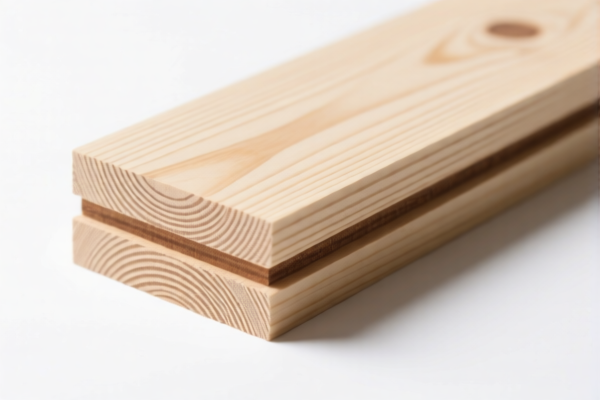
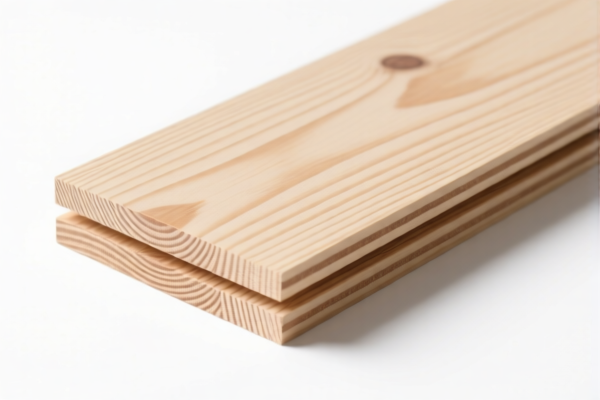
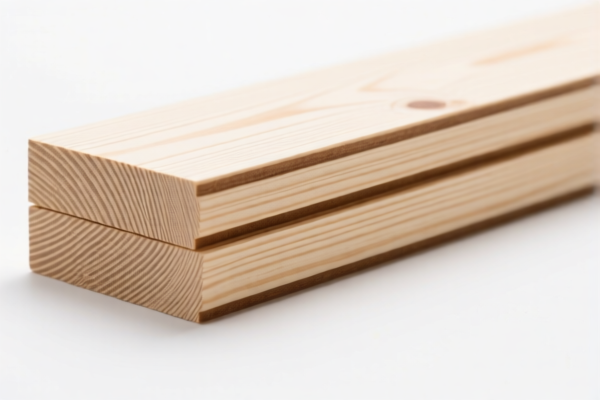
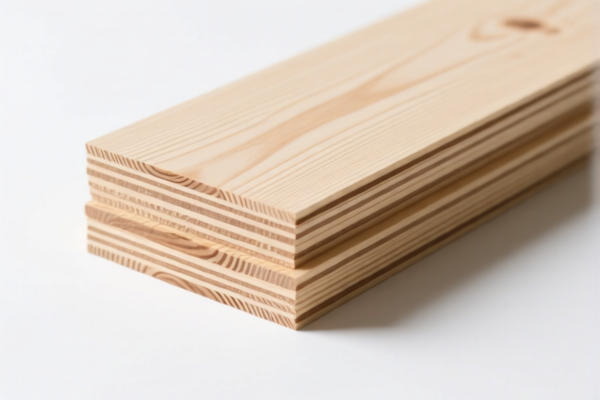
AI Analysis
🪵 Wood-Based Panels (HS Code: 4412.92.11.30)
🌐 HS Code Reference & Customs Clearance Guide | 2026 Latest Tariff Analysis | Professional通关 Strategy
📌 I. Product Definition & Classification: What Exactly is "Wood-Based Panels"?
Wood-based panels are engineered wood products made by binding wood strands, particles, fibers, or veneers together with adhesives or other substances. In international trade, HS Code 4412 specifically covers Plywood, Veneered Panels, and Similar Laminated Wood Products.
The specific code 4412.92.11.30 falls under the category of: * Plywood: Made from plies of wood. * Thickness ≤ 6mm: The "92" sub-heading usually refers to plywood of a certain thickness range (often thin plywood or specific cross-laminated types depending on the national extension). * Coniferous (Softwood): The "11" often specifies the wood species (e.g., Pine, Spruce, Fir). * Specific Usage/Format: The "11.30" is a national extension (likely US HTS) for specific types like Birch-faced plywood or specific construction-grade thin plywood.
⚠️ Key Distinction:
- If it is Solid Wood (logs, lumber) → Chapter 4401-4407
- If it is Particle Board/Chipboard (pressed sawdust) → HS 4410
- If it is MDF (Medium Density Fiberboard) → HS 4411
- If it is Plywood/Laminated → HS 4412
📦 II. HS Code Classification Details & Tax Comparison (Based on Provided Data)
The user provided data includes 5 HS codes. Only one matches the structural description of "Plywood" (4412). The others (4410, 4411) are for Particle Board or MDF, which are different products.
| HS Code | Product Description | Match for "4412.92.11.30"? | Total Tax Rate | Tax Detail Breakdown |
|---|---|---|---|---|
4412.51.31.11 |
Plywood category, material & form characteristics match | ✅ YES | 43.0% | Base: 8.0% + Addl: 25.0% + Sec 301: 10% |
4410.11.00.60 |
Wood-based panels, Match Particle Board/Like Material | ❌ No (Wrong Product) | 35.0% | Base: 0.0% + Addl: 25.0% + Sec 301: 10% |
4410.19.00.60 |
Wood-based panels, Specific Category | ❌ No (Wrong Product) | 35.0% | Base: 0.0% + Addl: 25.0% + Sec 301: 10% |
4411.13.90.90 |
Wood Fiberboard, Match Wood Material Attributes | ❌ No (MDF/HDF) | 38.9% | Base: 3.9% + Addl: 25.0% + Sec 301: 10% |
4411.13.60.00 |
Medium Density Fiberboard (MDF), Fully Match | ❌ No (MDF) | 35.0% | Base: 0.0% + Addl: 25.0% + Sec 301: 10% |
🔍 Critical Note:
Although the user asked for4412.92.11.30, the provided only contains one 4412 code:4412.51.31.11.
We must use4412.51.31.11as the reference for Plywood in this analysis, as it is the only HS code in the data that represents "Plywood." The other codes (4410, 4411) are for Particle Board and MDF, which are chemically and physically different from Plywood.
💰 III. 2026 Latest Tariff Rate Detail (Plywood - 4412)
✅ Applicable Country: United States (US)
✅ Origin: China (CN)
✅ Product Type: Plywood (Wood-based panels, laminated)
✅ Effective Time: Post-2025/2026 Trade Policy
🎯 1. 4412.51.31.11 —— Plywood Category (Softwood/Specific)
| Item | Content |
|---|---|
| Base Tariff Rate | 8.0% (Ad Valorem) |
| USITC Additional Tariff | +25.0% (Under Section 301, USITC Footnote) |
| IEEPA Additional Tariff | +10.0% (Targeting China/HK products, effective Nov 10, 2025) |
| Total Tariff Rate | 43.0% |
| Tax Calculation | CIF Value × 43% |
| De Minimis Exemption? | ❌ NO (deny_de_minimis) |
| Legal Basis Path | IEEPA:9903.01.25 → USITC:4412.51.31.11 → FOOTNOTE:9903.88.01 |
📌 Explanation:
- "Base 8%": Standard MFN rate for plywood.
- "25% Addl. Tariff": Section 301 tariffs on Chinese wood products.
- "10% IEEPA Tariff": Newer executive order adding a 10% surcharge on Chinese imports.
- Total 43%: This is a high-cost tariff for plywood.
- No De Minimis: Packages under $800 (Section 321) cannot be used to avoid these taxes. This is critical for e-commerce/shipping.
🛠️ IV. Customs Clearance Practical Advice (Real-World Pitfall Guide)
✅ 1. Document Checklist (Mandatory)
| Document | Required? | Notes |
|---|---|---|
| ✅ Product Specification Sheet | ✔️ | Must specify: Wood Species (e.g., Birch, Pine), Number of Plies, Glue Type (Formaldehyde emissions). |
| ✅ Proof of Origin (CO) | ✔️ | If claimed as "Made in China," ensure consistency. If transshipped, declare actual origin. |
| ✅ Commercial Invoice | ✔️ | Must clearly state "Plywood" or "Laminated Wood Panel". Do NOT use vague terms like "Wooden Board" or "Furniture Part." |
| ✅ Packing List | ✔️ | Show dimensions, weight, and packaging (palletized vs. loose). |
| ✅ Phytosanitary Certificate | ✔️ | Crucial for Wood Products: Proves treatment against pests (ISPM 15 standard). |
| ✅ FSC Certification | Optional but Recommended | For eco-conscious buyers or certain US retailers. |
✅ 2. Classification Tips (Key Mantras)
🔥 “Plywood vs. MDF: Don’t Mix Them! Plywood is Layers, MDF is Powder.”
| Scenario | Correct HS Code | Wrong Code | Consequence |
|---|---|---|---|
| Multi-layer Veneer/Laminated Wood | 4412.51.31.11 (43%) |
4411.13.60.00 (35%) |
Under-declaration penalty + Audit |
| Pressed Sawdust/Particle Board | 4410.11.00.60 (35%) |
4412.51.31.11 (43%) |
Over-declaration (paying more than needed) |
| MDF (Medium Density Fiberboard) | 4411.13.60.00 (35%) |
4412.51.31.11 (43%) |
Same as above |
| Raw Timber/Lumber | 4407.10.40.40 (Varies) |
4412.51.31.11 (43%) |
Complete Misclassification → Seizure |
📌 Warning:
- Plywood (4412) is NOT the same as Particle Board (4410) or MDF (4411).
- If your product is MDF, use4411.13.60.00(35% total).
- If your product is Particle Board, use4410.11.00.60(35% total).
- Only if it is True Plywood (layers of veneer glued together) should you use the 4412 code (43% total).
✅ 3. Special Circumstances
| Situation | Handling Advice |
|---|---|
| Furniture Parts | If plywood is cut into furniture parts, it may still be classified as wood panels (4412) if not further worked than cutting. If assembled, it becomes Furniture (Chapter 94). |
| Formaldehyde Emissions | US has strict CARB (California Air Resources Board) or TSCA Title VI requirements. Provide EPA TSCA Certification to avoid customs detention. |
| ISPM 15 Marking | Wooden pallets/packaging must have the IPPC stamp. If not, goods will be rejected. |
| Transshipment | Do NOT declare as "Made in Vietnam" if processed in China. Use Anti-Circumvention rules. High risk of penalty. |
🌍 V. Global Market Comparison (2026)
| Country/Region | Recommended HS Code | Tariff (China Origin) | Notes |
|---|---|---|---|
| 🇺🇸 USA | 4412.51.31.11 |
43% | High tariffs + No de minimis. |
| 🇨🇳 China | 4412.51.31.11 |
5% (Import) | Standard MFN. |
| 🇪🇺 EU | 4412.31.00 |
6.5% | No Section 301/IEEPA equivalent. |
| 🇦🇺 Australia | 4412.31.00 |
5% | No high additional tariffs. |
| 🇯🇵 Japan | 4412.31.00 |
5.5% | CPTPP may apply if not CN origin. |
📌 Conclusion:
- USA is the most expensive market for Chinese wood panels due to Section 301 + IEEPA.
- Total 43% makes US-bound plywood very costly. Consider supply chain diversification (e.g., sourcing from Vietnam, Malaysia, or Mexico) if possible.
- EU and Asia have much lower tariffs (~5-7%), making them more competitive for Chinese exporters.
📌 VI. Common Errors & Pitfalls (Blood Lesson)
❌ Error 1: Declaring MDF as Plywood (4412)
👉 Consequence: If audited, you may have overpaid tax (43% vs 35%). However, if declared as MDF but actually Plywood, you risk under-declaration penalties.
👉 Fix: Always inspect the product structure. Layers = Plywood (4412). Powder = MDF (4411).
❌ Error 2: Ignoring Phytosanitary Certificate
👉 Consequence: US Customs (CBP) and USDA will reject the shipment if no ISPM 15 mark or Phytosanitary cert is present.
👉 Fix: Ensure all wooden packaging is treated and marked.
❌ Error 3: Assuming De Minimis ($800) applies
👉 Consequence: Denied! Wood panels from China are excluded from Section 321. Even small shipments are subject to 43% tax.
👉 Fix: Prepare for full tariff payment even for samples.
❌ Error 4: Vague Description "Wooden Board"
👉 Consequence: CBP may classify it under Worst Case Scenario (e.g., Furniture or Raw Timber) with higher duties or restrictions.
👉 Fix: Use precise terms: "Plywood, Birch-faced, 5-ply, 4x8ft, Interior Grade".
✅ Correct Declaration Example:
"Plywood Sheets, Birch Veneer, 5 Layers, 4mm Thick, Interior Use, EPA TSCA Title VI Compliant, HS 4412.51.31.11"
🎯 VII. Conclusion: Professional Classification Saves Money!
🎯 Remember the Mantra:
🔹 "Plywood is Layers, MDF is Powder, Particle Board is Chips!"
🔹 "USA Tariff is 43%, No De Minimis, Check ISPM 15!"
🔹 "Misclassify Wood, Pay Penalty, Delay Shipment!"
📌 Pro Tip:
If you are shipping to the US, consider:
1. Applying for a Binding Ruling from CBP to confirm the 4-digit/6-digit HS code.
2. Checking if your product qualifies for any Exclusions (though rare for wood panels now).
3. Using a US Bond for proper tariff payment.
📣 Immediate Action:
📞 Contact a Customs Broker + Provide Product Photos + Verify ISPM 15 Marks
🚀 Ensure Smooth Clearance, Avoid Delays, Optimize Costs!
✨ Professional Customs Clearance Starts with Accurate Classification!
💼 Your Every Dollar of Tax is Worth Calculating Precisely!
Customer Reviews
About HS Code Classification
The Harmonized System (HS) is an internationally standardized nomenclature developed by the World Customs Organization (WCO) to classify traded products. Over 200 countries use the HS system as the basis for customs tariffs, trade statistics, and import/export regulations.
Each HS code follows a hierarchical structure:
- Chapter (2 digits) — Broad category of goods (e.g., Chapter 84: Machinery and Mechanical Appliances)
- Heading (4 digits) — More specific grouping within the chapter
- Subheading (6 digits) — Internationally standardized breakdown, used by all WCO member countries
- National subdivisions (8-10 digits) — Country-specific extensions for further classification, such as US HTSUS 10-digit codes
Correct HS code classification is essential for smooth customs clearance, accurate duty payment, and compliance with trade regulations. Misclassification can lead to customs delays, overpayment of duties, or penalties.
When importing from CN to US, the applicable tariff rates may include:
- Most-Favored-Nation (MFN) rate — The standard duty rate applied to WTO members
- General rate — Applied to countries without trade agreements
- Trade remedy duties — Additional tariffs such as Section 301 (anti-dumping), Section 232 (national security), or countervailing duties
The information provided on this page is for reference purposes only. For official classification, please consult with your local customs authority or a licensed customs broker.