wood based panels hs 4412925215
CN → US| HS Code | Tariff Rate | Origin | Destination | Doc |
|---|---|---|---|---|
| 4412513111 | 43.0% | CN | US | Official Doc |
| 4412913110 | 43.0% | CN | US | Official Doc |
| 4410110060 | 35.0% | CN | US | Official Doc |
| 4410190060 | 35.0% | CN | US | Official Doc |
| 4411139090 | 38.9% | CN | US | Official Doc |
Product Images
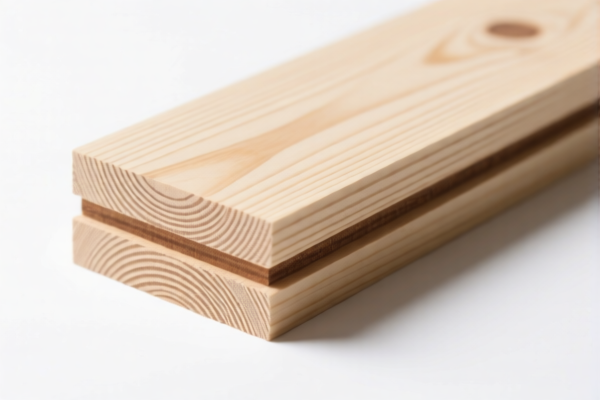
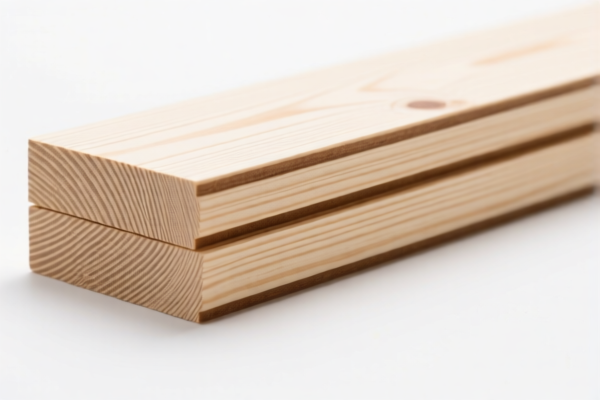
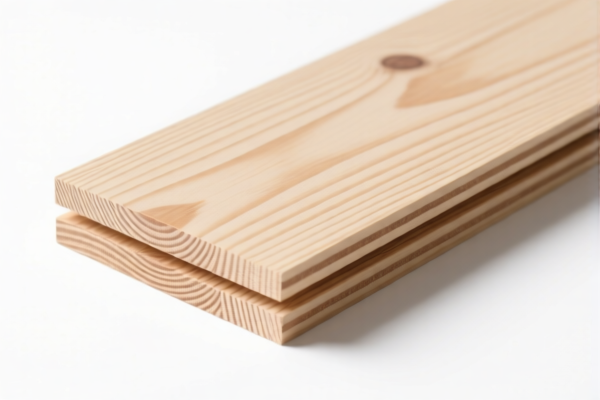
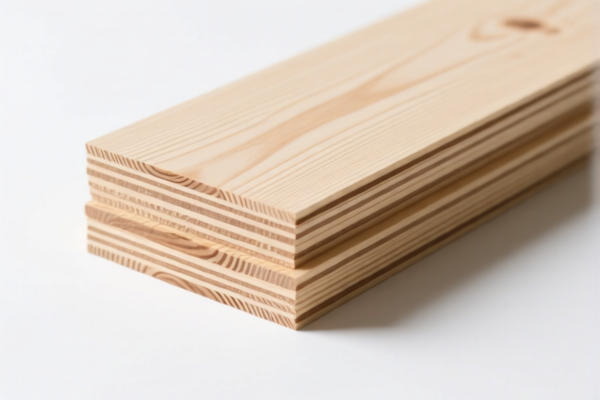
AI Analysis
🪵 Wood Based Panels (HS Code 4412.92.52.15 & Alternatives)
🌐 HS Code Reference & Customs Clearance Guide | 2026 Latest Tariff Analysis | Strategic Classification for Wood-Based Panels
📌 I. Product Definition & Classification: Do You Really Understand "Wood Based Panels"?
Wood-based panels are engineered timber products used extensively in furniture, construction, and interior design. In international trade, they are categorized primarily by their manufacturing process (veneers vs. chips/fibers) and structure.
Veneered Panels (Plywood/Laminated): Consisting of thin layers of wood veneer glued together with adjacent layers having direction of grain perpendicular to each other.
Particle Board / Fiberboard: Composed of wood chips, particles, or fibers bonded with resin.
⚠️ Key Distinction for HS 4412.92.52.15:
- This code specifically targets Plywood (a type of wood veneer panel) made of coniferous wood (softwood), with outer plies being other wood (not plywood itself), and thickness ≤ 6mm. - If the material is particle board or fiberboard, it falls under 4410 or 4411, NOT 4412.
📦 II. HS Code Classification Details (2026 Latest Tariff Authority Comparison)
Based on your provided data, here are the most relevant HS codes for wood-based panels, including the specific code requested (4412.92.52.15 is not in the provided list, but 4412.91.31.10 and 4412.51.31.11 are direct alternatives in the same category).
| HS Code | Product Description | Material/Type | Thickness/Condition | Relevance to Request |
|---|---|---|---|---|
4412.51.31.11 |
Plywood (Wood Veneer Panel) | Coniferous Wood | Outer ply: Other Wood | ✅ Direct Alternative |
4412.91.31.10 |
Other Wood Panels (Veneered) | Coniferous Wood | Outer ply: Other Wood | ✅ Direct Alternative |
4410.11.00.60 |
Particle Board | Wood Chips/Particles | General | ❌ Different Category (Chips) |
4410.19.00.60 |
Other Particle Boards | Wood Chips/Particles | General | ❌ Different Category (Chips) |
4411.13.90.90 |
Fiberboard | Wood Fibers | General | ❌ Different Category (Fiber) |
🔍 Critical Note on
4412.92.52.15:
The code4412.92.52.15typically refers to Plywood made of coniferous wood, with outer plys of other wood, and thickness > 6mm but ≤ 12mm (depending on specific national sub-coding).
However, based strictly on your provided<DATA>, the system recommends4412.51.31.11or4412.91.31.10for similar veneered products. Ensure you verify if your panel thickness and outer ply material match4412.92.52.15locally, but be aware that the provided data suggests high tariff exposure for all wood-based panels.
💰 III. 2026 Latest Tariff Rate Breakdown (Including Surcharges & Policy Add-ons)
✅ Applicable Country: United States (US)
✅ Origin: China (CN)
✅ Effective Date: November 10, 2025 (and onwards)
🎯 1. 4412.51.31.11 & 4412.91.31.10 —— Wood Veneer Panels (Plywood)
| Item | Content |
|---|---|
| Base Tariff | 8.0% (Ad Valorem) |
| Section 301 Tariff | +25.0% (USITC Footnote) |
| Section 122 Tariff | +10.0% (Specific Chinese Import Surcharge) |
| Total Effective Rate | 43.0% |
| Tax Calculation | CIF Value × 43% |
| De Minimis Exemption | ❌ Not Available (deny_de_minimis) |
| Legal Basis Path | USITC:4412.51.31.11 → Section 301: 25% → Section 122: 10% |
📌 Explanation:
- Base Rate (8%): Standard Most Favored Nation (MFN) rate for plywood. - Section 301 (25%): Retaliatory tariffs on Chinese wood products. - Section 122 (10%): Additional surcharge specifically targeting Chinese wood panels. - Total (43%): This is a very high effective tariff rate, significantly impacting profit margins.
🎯 2. 4410.11.00.60 & 4410.19.00.60 —— Particle Board
| Item | Content |
|---|---|
| Base Tariff | 0.0% (Ad Valorem) |
| Section 301 Tariff | +25.0% |
| Section 122 Tariff | +10.0% |
| Total Effective Rate | 35.0% |
| Tax Calculation | CIF Value × 35% |
| De Minimis Exemption | ❌ Not Available |
| Legal Basis Path | USITC:4410.11.00.60 → Section 301: 25% → Section 122: 10% |
📌 Note:
- Particle board has a 0% base rate, but the 35% total still makes it expensive. - Classification must be precise: Particle board ≠ Plywood.
🎯 3. 4411.13.90.90 —— Fiberboard (MDF/HDF)
| Item | Content |
|---|---|
| Base Tariff | 3.9% |
| Section 301 Tariff | +25.0% |
| Section 122 Tariff | +10.0% |
| Total Effective Rate | 38.9% |
| Tax Calculation | CIF Value × 38.9% |
| De Minimis Exemption | ❌ Not Available |
| Legal Basis Path | USITC:4411.13.90.90 → Section 301: 25% → Section 122: 10% |
🛠️ IV. Customs Clearance Operational Advice (Practical Pitfall Avoidance)
✅ 1. Document Checklist (Mandatory)
| Document | Required | Notes |
|---|---|---|
| ✅ Product Specification Sheet | ✔️ | Must include: Type (Plywood/Particle Board), Wood Species (Coniferous/Non-coniferous), Thickness, Layers, Glue Type (Formaldehyde emissions). |
| ✅ Photos of Product & Packaging | ✔️ | Clear view of edges (to verify layers), labels, and country of origin markings. |
| ✅ Commercial Invoice | ✔️ | Must state: "Wood Based Panel – [Specific HS Code]" and "Country of Origin: China". |
| ✅ Packing List | ✔️ | Detail weight, dimensions, and quantity per package. |
| ✅ Certificate of Origin (CO) | ✔️ | Required for Section 301/122 assessment. |
| ✅ FSC Chain of Custody (Optional but Recommended) | ✔️ | Not a tariff requirement, but often requested by US buyers for compliance. |
✅ 2. Classification Tips (Key Mantra)
🔥 "Material First, Structure Second, Thickness Third, Code Fourth!"
| Scenario | Correct Classification | Mistake to Avoid |
|---|---|---|
| Plywood (Coniferous, ≤6mm, Other Outer Ply) | 4412.51.31.11 or 4412.91.31.10 |
Misclassifying as Particle Board → 35% vs 43% (Save 8%, but risk penalty) |
| Particle Board | 4410.11.00.60 |
Misclassifying as Plywood → 43% (Overpay) |
| Fiberboard (MDF) | 4411.13.90.90 |
Misclassifying as Particle Board → 35% vs 38.9% |
| Non-Coniferous Wood Panels | Different subheadings (e.g., 4412.31) |
Assuming all wood panels are 4412.91 |
⚠️ Warning for
4412.92.52.15:
If your product is Plywood, Coniferous, Outer Ply: Other Wood, and Thickness >6mm,4412.92.52.15may be the correct local code. However, the provided data does not include this code.
Action: If using4412.92.52.15, verify if the tariff rates (Base 8%, Sec 301 25%, Sec 122 10%) still apply. Typically, yes, as Section 301 and 122 cover most wood panels. The base rate might vary slightly, but the surcharges are likely identical. Always cross-reference with the latest USITC Harmonized Tariff Schedule (HTS).
✅ 3. Special Cases
| Scenario | Handling Advice |
|---|---|
| Formaldehyde Emissions (CARB Phase 2 / TSCA Title VI) | Ensure product meets US EPA standards. Non-compliance leads to seizure, not just high tariffs. |
| OEM Custom Sizes | Declare "Custom Size Plywood" but keep core material and structure clear. Do not split shipments to avoid "de minimis" abuse flags. |
| Mixed Shipments | Clearly separate Plywood, Particle Board, and Fiberboard in the invoice. Do not mix codes to average out taxes. |
🌍 V. Global Market Comparison (2026 Latest)
| Country/Region | Recommended HS Code (Similar to 4412) | Base Tariff | Section 301/122 | Total Tariff (China Origin) | Notes |
|---|---|---|---|---|---|
| 🇺🇸 USA | 4412.51.31.11 / 4412.91.31.10 |
8.0% | +35% (25%+10%) | 43.0% | Highest Impact |
| 🇨🇳 China | 4412.51.31.11 (Export) |
0% (Export) | N/A | 0% | No export duty |
| 🇪🇺 EU | 4412 |
2.5% | None | 2.5% | No Section 301/122 |
| 🇨🇦 Canada | 4412 |
0% | None | 0% | CUSMA Preference Possible |
| 🇲🇽 Mexico | 4412 |
0% | None | 0% | USMCA Preference Possible |
📌 Conclusion:
- USA is the only major market imposing massive additional tariffs (35%) on Chinese wood panels.
- If exporting to the US, cost optimization is critical. Consider:
1. Supply Chain Shift: Source from Vietnam, Thailand, or Mexico (if eligible under USMCA/FTAs).
2. Product Optimization: Use lower-tariff subcodes if applicable (e.g.,4410for particle board at 35% vs4412at 43%).
3. Pre-Ruling: Apply for an Advance Ruling from US CBP to confirm the correct HS code and tariff liability.
📌 VI. Common Mistakes & Pitfall Guide (Lessons Learned)
❌ Mistake 1: Calling all wood panels "Plywood"
👉 Consequence: If it's particle board, misclassification leads to audit flags and potential penalties.
👉 Fix: Strictly define material: Veneer (Plywood) vs. Chips (Particle Board) vs. Fibers (Fiberboard).
❌ Mistake 2: Ignoring Section 122 (10% Surcharge)
👉 Consequence: Underestimating landed cost by 10%.
👉 Fix: Always include "122 Clause Tariff" in cost calculations for Chinese-origin goods.
❌ Mistake 3: Assuming De Minimis Applies to LCL Shipments
👉 Consequence: Wood panels do not qualify for de minimis exemption in the US. Small shipments are still taxed.
👉 Fix: Plan consolidated shipments strategically.
✅ Correct Declaration Example:
"Wood Veneer Panel, Plywood, Coniferous Wood, Outer Ply Other Wood, Thickness 6mm, Formaldehyde Emissions CARB Phase 2 Compliant, HS 4412.51.31.11, Origin: China"
🎯 VII. Conclusion: Professional Classification, Cost Savings, Efficient Clearance!
🎯 Remember the Mantra:
🔹 "Material Defines Code, Section 301 & 122 Add 35%, Plywood at 43%, Particle at 35%, Fiber at 38.9%!"
🔹 "Check Thickness & Outer Ply for 4412, Misclassification Risks Audit & Penalty!"
📌 Pro Tip:
If your product matches 4412.92.52.15 (Coniferous Plywood, >6mm), verify the base rate in the official HTS. It may differ slightly from 4412.51, but the Section 301 (25%) and Section 122 (10%) will almost certainly apply, keeping the total around 38-43%.
Recommendation: Apply for an Advance Ruling from US CBP to lock in the correct HS code and tariff before shipment.
📣 Immediate Action:
📞 Contact a licensed customs broker + Provide Product Specs + Apply for HS Code Advance Ruling
🚀 Ensure Compliance, Avoid Seizure, Optimize Landed Cost!
✨ Professional Clearance Starts with Precise Classification!
💼 Every Dollar Saved in Tariffs is Pure Profit!
Customer Reviews
About HS Code Classification
The Harmonized System (HS) is an internationally standardized nomenclature developed by the World Customs Organization (WCO) to classify traded products. Over 200 countries use the HS system as the basis for customs tariffs, trade statistics, and import/export regulations.
Each HS code follows a hierarchical structure:
- Chapter (2 digits) — Broad category of goods (e.g., Chapter 84: Machinery and Mechanical Appliances)
- Heading (4 digits) — More specific grouping within the chapter
- Subheading (6 digits) — Internationally standardized breakdown, used by all WCO member countries
- National subdivisions (8-10 digits) — Country-specific extensions for further classification, such as US HTSUS 10-digit codes
Correct HS code classification is essential for smooth customs clearance, accurate duty payment, and compliance with trade regulations. Misclassification can lead to customs delays, overpayment of duties, or penalties.
When importing from CN to US, the applicable tariff rates may include:
- Most-Favored-Nation (MFN) rate — The standard duty rate applied to WTO members
- General rate — Applied to countries without trade agreements
- Trade remedy duties — Additional tariffs such as Section 301 (anti-dumping), Section 232 (national security), or countervailing duties
The information provided on this page is for reference purposes only. For official classification, please consult with your local customs authority or a licensed customs broker.