wood charcoal bamboo
CN → US| HS Code | Tariff Rate | Origin | Destination | Doc |
|---|---|---|---|---|
| 4402900100 | 35.0% | CN | US | Official Doc |
| 4402100000 | 35.0% | CN | US | Official Doc |
| 4402900100 | 35.0% | CN | US | Official Doc |
| 4402100000 | 35.0% | CN | US | Official Doc |
| 4402900100 | 35.0% | CN | US | Official Doc |
Product Images
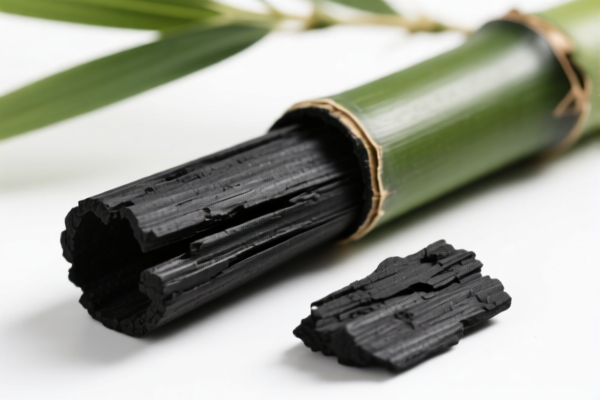
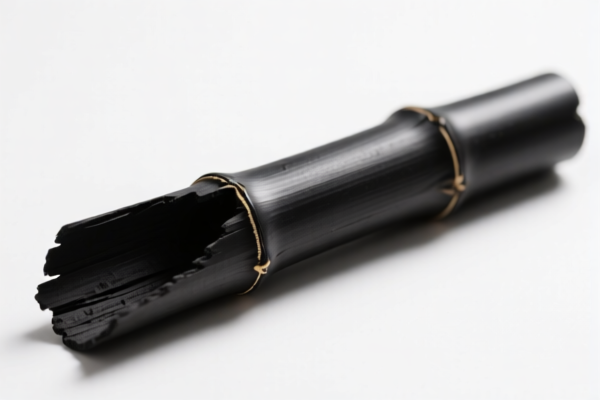
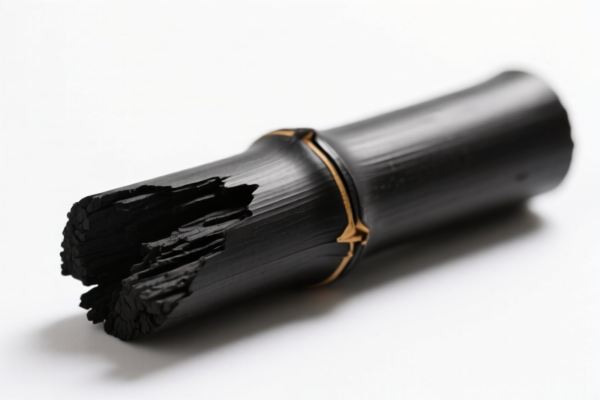
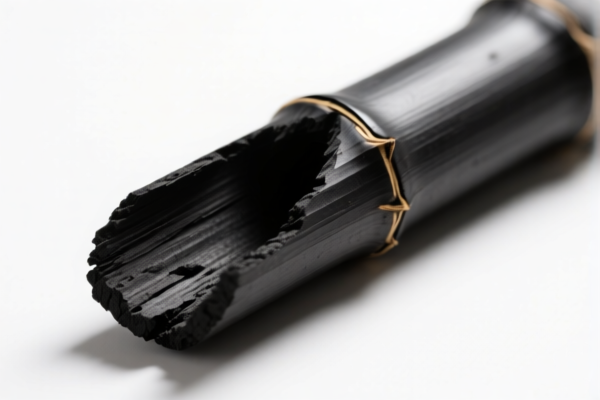
AI Analysis
🎋 Bamboo Charcoal (Activated & Agglomerated Wood Charcoal)
🌐 HS Code Reference & Customs Clearance Guide | 2026 Latest Tariff Analysis | Professional Entry Strategy
📌 I. Product Definition & Classification: Is It Just "Charcoal"?
Bamboo charcoal, in the context of international trade, falls under the broader category of Wood Charcoal. It is primarily used for filtration, air purification, soil amendment, or as a fuel source. Crucially, it must be distinguished between "Activated" (processed for adsorption) and "Simple Agglomerated" (compressed briquettes).
Two Main Categories:
1. Activated Carbon (Activated Bamboo Charcoal): * Processed with high-temperature steam or chemicals to create a porous structure. * Used in water filters, air purifiers, and gold recovery. * HS Classification: Chapter 38 (Chemical Products).
2. Regular Wood/Bamboo Charcoal (Agglomerated or Not): * Raw or slightly processed charcoal used for grilling, heating, or basic adsorption without chemical activation. * HS Classification: Chapter 44 (Wood and Wood Products).
⚠️ Key Distinction Point:
- If the product is sold as "Activated Carbon" with specific adsorption properties (e.g., for filtering) → 3802.10
- If the product is sold as "Bamboo Charcoal Briquettes" for fuel or general use → 4402.10
📦 II. HS Code Classification Details (2026 Latest Tariff Authority Cross-Reference)
| HS Code | Product Description | Application Scenario | Tax Rate Structure |
|---|---|---|---|
3802.10.00.50 |
Activated Carbon (Other) | General activated carbon (non-coconut derived), e.g., from bamboo, coal, or peat | Total Tax: 29.8% |
3802.10.00.20 |
Activated Carbon Derived from Coconut | Note: Listed in data for contrast, but Bamboo usually falls under "Other" unless specifically certified as coconut. | Total Tax: 4.8% |
4402.10.00.00 |
Wood Charcoal: Of Bamboo | Agglomerated or non-agglomerated bamboo charcoal bricks/briquettes | Total Tax: 25.0% |
4402.90.01.00 |
Wood Charcoal: Other | Charcoal from other woods (not bamboo, not activated) | Total Tax: 25.0% |
🔍 Critical Reminder:
- Bamboo Activated Carbon typically falls under3802.10.00.50("Other") because it is not derived from coconut (3802.10.00.20). This results in a significantly higher tariff. - Bamboo Charcoal Briquettes (Fuel) fall under4402.10.00.00. - Do not confuse "Activated Bamboo Charcoal" (Chapter 38) with "Raw Bamboo Charcoal" (Chapter 44). The processing method determines the chapter.
💰 III. 2026 Latest Tariff Rate Breakdown (Including Surcharges & Policy Add-ons)
✅ Applicable Country: United States (US)
✅ Origin: China (CN)
✅ Effective Date: Current rates apply based on 301 Tariffs and Base Rates.
🎯 1. 3802.10.00.50 — Activated Carbon (Other, e.g., Bamboo)
| Item | Content |
|---|---|
| Base Duty Rate | 4.8% (ad valorem) |
| Section 301 Surcharges | +25.0% (Additional Duty on Chinese Goods) |
| Total Effective Tax | 29.8% |
| Tax Calculation | CIF Value × 29.8% |
| De Minimis Eligibility | ❌ Not Eligible (High risk of audit/duty evasion if below $800 threshold is abused for commercial goods) |
| Legal Basis Path | HTSUS:3802.10.00.50 → USITC Footnote 9903.88.01 (Section 301) |
📌 Explanation:
- The 4.8% is the standard Most Favored Nation (MFN) base duty. - The 25% is the Section 301 "Trade Action" surcharge applied to Chinese-origin goods. - Total: 29.8%. This is a high-cost item for importers. Proper classification is vital to avoid misclassification penalties.
🎯 2. 4402.10.00.00 — Wood Charcoal: Of Bamboo (Agglomerated/Non-Activated)
| Item | Content |
|---|---|
| Base Duty Rate | 0.0% |
| Section 301 Surcharges | +25.0% (Additional Duty on Chinese Goods) |
| Total Effective Tax | 25.0% |
| Tax Calculation | CIF Value × 25.0% |
| De Minimis Eligibility | ❌ Not Eligible (Commercial shipments) |
| Legal Basis Path | HTSUS:4402.10.00.00 → USITC Footnote 9903.88.01 (Section 301) |
📌 Explanation:
- While the base duty is 0%, the 25% Section 301 surcharge still applies fully. - This is slightly cheaper than Activated Carbon (29.8% vs 25.0%), but still a significant cost. - Must clearly declare as "Bamboo Charcoal" and not "Activated Carbon" unless chemically processed.
🛠️ IV. Customs Clearance Practical Advice (Pitfall Avoidance Guide)
✅ 1. Required Documentation Checklist (Mandatory)
| Document | Must Provide | Explanation |
|---|---|---|
| ✅ Product Specification Sheet | ✔️ | Must detail: Origin (Bamboo), Processing Method (Agglomerated vs. Activated), Pore Size (if activated). |
| ✅ Certificate of Origin (CO) | ✔️ | Essential for proving Chinese origin to apply 301 tariffs correctly. |
| ✅ Commercial Invoice | ✔️ | Must explicitly state: "Bamboo Charcoal" OR "Activated Bamboo Carbon". Do not use vague terms like "Natural Black". |
| ✅ Packing List | ✔️ | Net/Gross weight must match. |
| ✅ Lab Test Report (If Activated) | ✔️ | For HS 3802.10.00.50, prove it meets "Activated" standards (adsorption capacity) to justify Chapter 38 classification. |
✅ 2. Declaration Tips (Key Mantra)
🔥 "Charcoal vs. Carbon: Process Defines Class, Class Defines Cost!"
| Scenario | Correct Declaration | Wrong Practice |
|---|---|---|
| Raw/Agglomerated Bamboo Charcoal | 4402.10.00.00 |
Misdeclaring as "Activated Carbon" → 29.8% (Overpay) |
| Activated Bamboo Carbon | 3802.10.00.50 |
Misdeclaring as "Wood Charcoal" → 25% (Underpay, Risk of Penalty) |
| "Animal Black" (Spent Carbon) | 3802.10.00.x |
Confusing with fresh charcoal → Different tax treatment |
| Coconut Activated Carbon | 3802.10.00.20 |
Misdeclaring Bamboo as Coconut → 4.8% (Fraud Risk if caught) |
📌 Warning:
- Customs may request physical samples to verify if the product is "Activated" (porous, chemically treated) or just "Charcoal" (combusted wood). - Do not mislabel Bamboo Charcoal as "Coconut Activated Carbon" to save taxes. The origin material (Bamboo vs. Coconut) is strictly audited.
✅ 3. Special Cases & Handling
| Situation | Handling Advice |
|---|---|
| Bamboo Charcoal for Grilling | Declare as 4402.10.00.00. Ensure it is not marketed as "Activated Carbon" for filtration. |
| Bamboo Charcoal for Water Filters | Declare as 3802.10.00.50. Must provide adsorption data. |
| Agglomerated Briquettes | Can be either 4402.10.00.00 (if not activated) or 3802.10.00.50 (if activated). Binding agent does not change Chapter. |
| Spent Animal Black | Different HS code entirely (3802.10.x). Do not confuse with fresh charcoal. |
🌍 V. Global Market Comparison (2026 Latest)
| Country/Region | Recommended HS Code | Tariff (China Origin) | Certification/Remarks |
|---|---|---|---|
| 🇺🇸 USA | 3802.10.00.50 (Activated) |
29.8% (4.8% Base + 25% 301) | High duty; strict origin rules. |
| 🇺🇸 USA | 4402.10.00.00 (Bamboo Charcoal) |
25.0% (0% Base + 25% 301) | Lower than activated, but still high. |
| 🇨🇳 China | 3802.10.00.50 |
4.8% | No additional surcharges for exports. |
| 🇪🇺 EU | 3802.10.00 |
6.5% | Standard MFN rate. No Section 301. |
| 🇦🇺 Australia | 3802.10.00 |
5.0% | Standard MFN rate. |
📌 Conclusion:
- USA is the most expensive market for Bamboo Charcoal due to the 25% Section 301 surcharge. - Activated Carbon (3802.10.00.50) is taxed higher than Regular Charcoal (4402.10.00.00) in the US due to the 4.8% base duty. - Export to Non-US Markets (EU, Asia, Australia) offers significant tariff savings.
📌 VI. Common Errors & Pitfall Guide (Lessons Learned)
❌ Error 1: Declaring "Activated Bamboo Carbon" as "Wood Charcoal" (4402.90)
👉 Consequence: Underpayment of duty (25% vs 29.8%). CBP may audit, issue a Form 2848, and levy penalties + interest.
❌ Error 2: Declaring "Bamboo Charcoal" as "Coconut Activated Carbon" (3802.10.00.20)
👉 Consequence: Severe Penalty. Origin fraud. The 4.8% rate vs 29.8% is a massive discrepancy. Customs can seize goods.
❌ Error 3: Vague Description "Natural Black" or "Biochar"
👉 Consequence: Customs cannot determine classification → Hold for Inspection → Delays + Storage Fees.
✅ Correct Declaration Example:
"Activated Carbon, Granular, Derived from Bamboo, for Water Filtration, HS 3802.10.00.50"
"Bamboo Charcoal Briquettes, Agglomerated, for Grilling, HS 4402.10.00.00"
🎯 VII. Conclusion: Precise Classification Saves Money!
🎯 Remember the Mantra:
🔹 "Activated = 38 (29.8%), Bamboo Charcoal = 44 (25.0%). Don't Mix Them!"
🔹 "Bamboo is NOT Coconut. Coconut is 4.8%, Bamboo is 29.8%. Know Your Source!"
📌 Pro Tip:
If you are importing Activated Bamboo Carbon, consider Advance Rulings (CBP Ruling Letter) to lock in the classification and avoid future disputes.
For Bamboo Charcoal Briquettes, ensure the "Agglomerated" status is clear to justify HS 4402.10.00.00.
📣 Take Action Now:
📞 Consult your freight forwarder.
📄 Provide Product SDS and Process Flowchart.
🚀 Declare Accurately, Avoid Delays, Protect Margins!
✨ Professional Customs Clearance Starts with Accurate Classification!
💼 Every Percent of Duty Saved is Pure Profit!
Customer Reviews
About HS Code Classification
The Harmonized System (HS) is an internationally standardized nomenclature developed by the World Customs Organization (WCO) to classify traded products. Over 200 countries use the HS system as the basis for customs tariffs, trade statistics, and import/export regulations.
Each HS code follows a hierarchical structure:
- Chapter (2 digits) — Broad category of goods (e.g., Chapter 84: Machinery and Mechanical Appliances)
- Heading (4 digits) — More specific grouping within the chapter
- Subheading (6 digits) — Internationally standardized breakdown, used by all WCO member countries
- National subdivisions (8-10 digits) — Country-specific extensions for further classification, such as US HTSUS 10-digit codes
Correct HS code classification is essential for smooth customs clearance, accurate duty payment, and compliance with trade regulations. Misclassification can lead to customs delays, overpayment of duties, or penalties.
When importing from CN to US, the applicable tariff rates may include:
- Most-Favored-Nation (MFN) rate — The standard duty rate applied to WTO members
- General rate — Applied to countries without trade agreements
- Trade remedy duties — Additional tariffs such as Section 301 (anti-dumping), Section 232 (national security), or countervailing duties
The information provided on this page is for reference purposes only. For official classification, please consult with your local customs authority or a licensed customs broker.