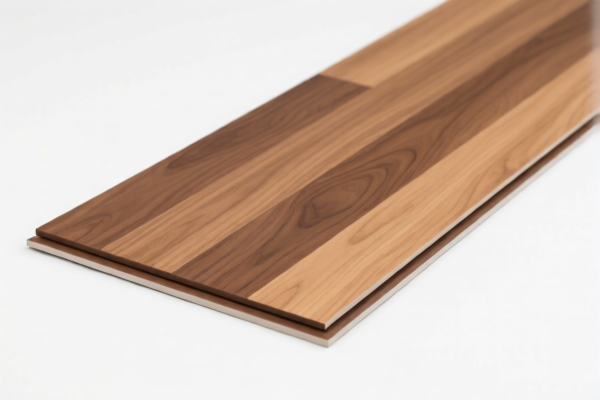
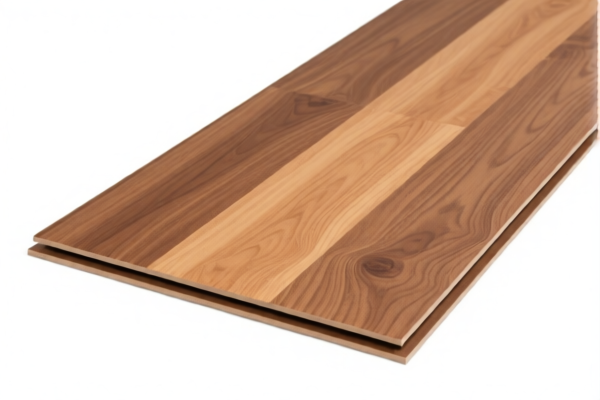
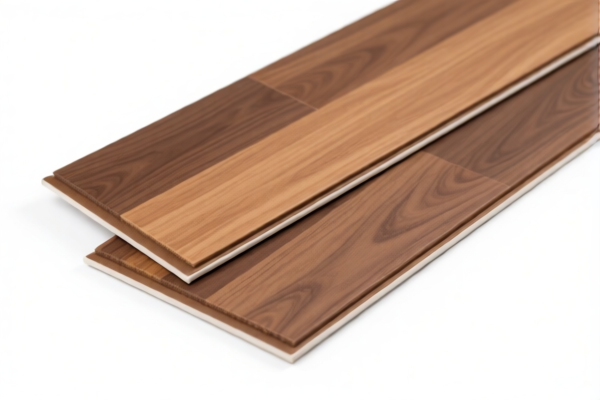
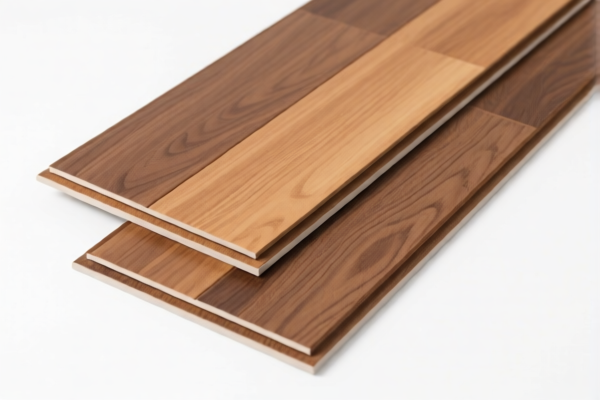
wood grain plastic flooring
CN → US| HS Code | Tariff Rate | Origin | Destination | Doc |
|---|---|---|---|---|
| 3926906090 | 39.2% | CN | US | Official Doc |
| 3925900000 | 40.3% | CN | US | Official Doc |
| 3918101040 | 40.3% | CN | US | Official Doc |
| 3926909989 | 22.8% | CN | US | Official Doc |
| 5904901000 | 35.0% | CN | US | Official Doc |
Product Images
AI Analysis
🌲 Wood Grain Plastic Flooring
🌐 HS Code Reference & Customs Clearance Guide | 2026 Latest Tariff Analysis | Professional Entry Strategy
📌 I. Product Definition & Classification: What is "Wood Grain Plastic Flooring"?
Wood grain plastic flooring is a synthetic floor covering that mimics the aesthetic of natural wood while utilizing plastic materials (such as PVC, WPC, or SPC) for durability and water resistance. In international trade, its classification depends heavily on the base material and the construction method. It is not a single commodity but falls into several distinct categories based on whether it is a pure plastic product, a plastic building component, or a textile-based product with a plastic coating.
⚠️ Critical Distinction Point:
- If the floor is primarily plastic material (e.g., PVC planks/tiles) → It falls under Chapter 39 (Plastics).
- If the floor has a textile base with a plastic coating → It falls under Chapter 59 (Impregnated Textiles).
- Misclassification can lead to significant tariff differences (e.g., 22.8% vs. 40.3%).
📦 II. HS Code Classification Details (2026 Latest Tariff Authority Comparison)
Based on the provided data, here are the specific HS Codes for wood grain plastic flooring, along with their tax implications:
| HS Code | Product Description | Summary | Total Tax Rate |
|---|---|---|---|
| 3926.90.60.90 | Plastic floor made of plastic material, classified as other plastic articles | Pure plastic flooring (e.g., rigid PVC/SPC) treated as a general plastic article. | 39.2% |
| 3925.90.00.00 | Plastic building component flooring, meeting characteristics of other plastic building components | Treated specifically as a building construction component. | 40.3% |
| 3918.10.10.40 | Plastic flooring covering, classified under vinyl/plastic flooring (e.g., PVC) | Specifically categorized as plastic flooring coverings (common for PVC planks). | 40.3% |
| 3926.90.99.89 | Plastic article flooring, no conflict with plastic material classification | A residual category for plastic flooring that doesn't fit other specific plastic codes. | 22.8% |
| 5904.90.10.00 | Floor covering with textile base and plastic coating/layer | Textile-based flooring (e.g., carpet tiles with plastic backing/coating) where plastic is not the primary structural conflict. | 35.0% |
🔍 Key Reminder:
- 3918.10.10.40 is often the most accurate for standard PVC Wood Grain Planks/Tiles if they are clearly "floor coverings."
- 3926.90.99.89 offers the lowest tax (22.8%) but requires strict adherence to the definition of "other plastic articles" without specific building component status.
- 5904.90.10.00 is only applicable if the base material is textile (e.g., felt/fabric) with a plastic surface. If it's all plastic, do not use this code.
💰 III. 2026 Latest Tariff Rate Breakdown (Including Surtaxes & Policy Add-ons)
✅ Applicable Country: United States (US)
✅ Country of Origin: China (CN)
✅ Effective Date: From November 10, 2025 (inclusive)
🎯 1. 3926.90.60.90 – Plastic Floor (Other Plastic Articles)
| Item | Details |
|---|---|
| Basic Tariff | 4.2% |
| Additional Tariff (Section 301) | +25.0% |
| Section 122 Tariff | +10.0% |
| Total Tax Rate | 39.2% |
| Calculation | CIF Value × 39.2% |
| De Minimis Exemption | ❌ Not Eligible |
| Legal Basis | USITC:3926.90.60.90 → Section 301: Footnote 9903.88.01 → Section 122 |
📌 Explanation:
- This code treats the flooring as a general plastic article.
- The 25% Section 301 tariff is a major cost driver.
- The 10% Section 122 tariff is an additional surcharge applicable to certain Chinese imports.
🎯 2. 3925.90.00.00 – Plastic Building Component Flooring
| Item | Details |
|---|---|
| Basic Tariff | 5.3% |
| Additional Tariff (Section 301) | +25.0% |
| Section 122 Tariff | +10.0% |
| Total Tax Rate | 40.3% |
| Calculation | CIF Value × 40.3% |
| De Minimis Exemption | ❌ Not Eligible |
| Legal Basis | USITC:3925.90.00.00 → Section 301: Footnote 9903.88.01 → Section 122 |
📌 Note:
- Slightly higher basic tariff (5.3%) than 3926.90.60.90, leading to a higher total rate (40.3%).
- Classification as a "building component" often triggers stricter scrutiny.
🎯 3. 3918.10.10.40 – Plastic Flooring Covering (Vinyl/Plastic)
| Item | Details |
|---|---|
| Basic Tariff | 5.3% |
| Additional Tariff (Section 301) | +25.0% |
| Section 122 Tariff | +10.0% |
| Total Tax Rate | 40.3% |
| Calculation | CIF Value × 40.3% |
| De Minimis Exemption | ❌ Not Eligible |
| Legal Basis | USITC:3918.10.10.40 → Section 301: Footnote 9903.88.01 → Section 122 |
📌 Note:
- This is the standard code for PVC flooring.
- Despite being the most "specific" code, the surtaxes make it as expensive as 3925.90.00.00.
🎯 4. 3926.90.99.89 – Plastic Article Flooring (Lowest Tax Option)
| Item | Details |
|---|---|
| Basic Tariff | 5.3% |
| Additional Tariff (Section 301) | +7.5% |
| Section 122 Tariff | +10.0% |
| Total Tax Rate | 22.8% |
| Calculation | CIF Value × 22.8% |
| De Minimis Exemption | ❌ Not Eligible |
| Legal Basis | USITC:3926.90.99.89 → Section 301: Footnote 9903.88.01 (reduced rate?) → Section 122 |
📌 Crucial Point:
- This code has a significantly lower Section 301 tariff (7.5% vs. 25%).
- How to justify? You must prove the product is an "other plastic article" and not a "building component" (3925) or "flooring covering" (3918). This often requires demonstrating that the product is a modular tile or a material not primarily intended for permanent installation as a building fixture, or that it falls under a residual category.
- Risk: High risk of Customs reclassification if documentation is weak.
🎯 5. 5904.90.10.00 – Textile-Based Flooring with Plastic Coating
| Item | Details |
|---|---|
| Basic Tariff | 0.0% |
| Additional Tariff (Section 301) | +25.0% |
| Section 122 Tariff | +10.0% |
| Total Tax Rate | 35.0% |
| Calculation | CIF Value × 35.0% |
| De Minimis Exemption | ❌ Not Eligible |
| Legal Basis | USITC:5904.90.10.00 → Section 301: Footnote 9903.88.01 → Section 122 |
📌 Note:
- Only use if the base is textile (e.g., carpet, felt).
- If it's 100% plastic (PVC/SPC), do not use this code.
- The 0% basic tariff helps, but the 25% Section 301 still applies.
🛠️ IV. Customs Clearance Practical Advice (Real-World Pitfall Guide)
✅ 1. Required Documentation Checklist
| Document | Mandatory | Explanation |
|---|---|---|
| ✅ Product Specification Sheet | ✔️ | Must detail material composition (e.g., "100% PVC," "PVC Core + Textile Backing"). |
| ✅ Product Photos | ✔️ | Clear images showing texture, cross-section, and installation method. |
| ✅ Commercial Invoice | ✔️ | Use precise description: "Wood Grain Plastic Flooring Tiles, PVC Material" or "Carpet Tile with Plastic Coating." |
| ✅ Packing List | ✔️ | Detail weights and dimensions. |
| ✅ Certificate of Origin | ✔️ | Required for origin verification (China). |
| ✅ Material Composition Proof | ✔️ | Critical for distinguishing between 3926, 3918, and 5904. |
✅ 2. Declaration Strategy (Key Mnemonic)
🔥 “Material First, Function Second; Plastic Base vs. Textile Base Determines Code!”
| Scenario | Correct HS Code | Wrong Approach | Consequence |
|---|---|---|---|
| PVC/SPC Planks (All Plastic) | 3926.90.60.90 or 3918.10.10.40 |
Declare as 5904.90.10.00 |
Audit Risk: Customs may reclassify, leading to back taxes + penalties. |
| Carpet Tiles with Plastic Backing | 5904.90.10.00 |
Declare as 3926.90.99.89 |
Overpayment: Missing textile-based tariff benefits. |
| Modular Plastic Tiles | 3926.90.99.89 |
Declare as 3925.90.00.00 |
Overpayment: 22.8% vs. 40.3% → Save ~17.5% |
| Large Roll Flooring | 3918.10.10.40 |
Declare as 3926.90.99.89 |
Risk: Rolls are typically "flooring coverings," not "other articles." |
✅ 3. Special Case Handling
| Situation | Handling Advice |
|---|---|
| Mixed Materials (PVC + Wood Dust) | If wood content > 20%, may be classified under Chapter 44 (Wood). If plastic > 50%, Chapter 39. |
| Click-Lock System | Does not change classification. Still treated as flooring material. |
| Installation with Adhesive | If sold with adhesive, declare separately. Adhesive may have different HS/Tariff. |
| Origin Marking | Ensure "Made in China" is clearly marked on products/packaging to avoid anti-dumping investigations. |
🌍 V. Global Market Clearance Comparison (2026 Latest)
| Country/Region | Recommended HS Code | Tariff Rate | Certification Requirements | Notes |
|---|---|---|---|---|
| 🇺🇸 USA | 3926.90.60.90 / 3918.10.10.40 |
39.2% - 40.3% | FCC (if electronic), but mostly physical safety | High tariff due to Section 301 & 122. |
| 🇪🇺 EU | 3918.10.00 |
0% - 6% | CE, REACH, Vinyl 2010 | No Section 301 tariffs. |
| 🇨🇳 China | 3918.10.10.40 |
5% - 8% | CCC (if applicable) | Low tariff for imports. |
| 🇦🇺 Australia | 3918.10.00 |
5% | ACCC | No major surtaxes. |
📌 Conclusion:
- The US market is significantly more expensive due to Section 301 (25%) and Section 122 (10%) tariffs.
- Optimization Tip: Explore if your product can be classified under 3926.90.99.89 (22.8%) by proving it is an "other plastic article" rather than a "building component" or "flooring covering." This requires strong technical documentation.
📌 VI. Common Mistakes & Pitfalls (Lessons Learned)
❌ Mistake 1: Classifying all plastic flooring as 3918.10.10.40
👉 Consequence: 40.3% tax. If it’s a modular tile, it might qualify for 3926.90.99.89 (22.8%).
✅ Fix: Provide technical specs showing it’s not a "building component" but a "plastic article."
❌ Mistake 2: Declaring PVC flooring as 5904.90.10.00 (Textile)
👉 Consequence: Customs audit, reclassification, penalties.
✅ Fix: Only use 5904.90.10.00 if the primary base is textile.
❌ Mistake 3: Ignoring Section 122 Tariff
👉 Consequence: Underestimating cost.
✅ Fix: Always add 10% for Section 122 in US calculations for Chinese goods.
🎯 VII. Conclusion: Professional Declaration, Cost Savings!
🎯 Remember:
🔹 “Material defines Code, Code defines Tax.”
🔹 “PVC Planks: 3918 or 3926? Check if it’s ‘Building Component’ or ‘Other Article.’”
🔹 “Textile Base? Use 5904. Plastic Base? Use 39xx.”
🔹 “Section 301 (25%) + Section 122 (10%) = High Cost. Look for 7.5% Section 301 exemptions!”
📌 Pro Tip:
If your product is PVC-based, try to argue for 3926.90.99.89 (22.8% total) by emphasizing its nature as a manufactured plastic article rather than a permanent building component. This can save ~17.5% in taxes.
Request an Advance Ruling from US Customs if the classification is ambiguous.
📣 Immediate Action:
📞 Contact a Licensed Customs Broker + Provide Material Composition Report + Apply for HS Code Advance Ruling
🚀 Ensure Smooth Clearance, Maximize Profit!
✨ Professional Clearance Starts with Accurate Classification!
💼 Your Every Penny Counts!
Customer Reviews
About HS Code Classification
The Harmonized System (HS) is an internationally standardized nomenclature developed by the World Customs Organization (WCO) to classify traded products. Over 200 countries use the HS system as the basis for customs tariffs, trade statistics, and import/export regulations.
Each HS code follows a hierarchical structure:
- Chapter (2 digits) — Broad category of goods (e.g., Chapter 84: Machinery and Mechanical Appliances)
- Heading (4 digits) — More specific grouping within the chapter
- Subheading (6 digits) — Internationally standardized breakdown, used by all WCO member countries
- National subdivisions (8-10 digits) — Country-specific extensions for further classification, such as US HTSUS 10-digit codes
Correct HS code classification is essential for smooth customs clearance, accurate duty payment, and compliance with trade regulations. Misclassification can lead to customs delays, overpayment of duties, or penalties.
When importing from CN to US, the applicable tariff rates may include:
- Most-Favored-Nation (MFN) rate — The standard duty rate applied to WTO members
- General rate — Applied to countries without trade agreements
- Trade remedy duties — Additional tariffs such as Section 301 (anti-dumping), Section 232 (national security), or countervailing duties
The information provided on this page is for reference purposes only. For official classification, please consult with your local customs authority or a licensed customs broker.