wood hs code 4407990295
CN → US| HS Code | Tariff Rate | Origin | Destination | Doc |
|---|---|---|---|---|
| 4407990261 | 35.0% | CN | US | Official Doc |
| 4407990295 | 35.0% | CN | US | Official Doc |
| 4403210112 | 35.0% | CN | US | Official Doc |
| 4403210165 | 35.0% | CN | US | Official Doc |
| 4407990263 | 35.0% | CN | US | Official Doc |
Product Images
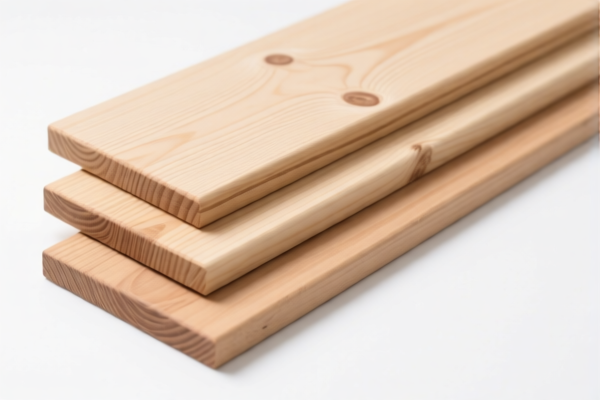
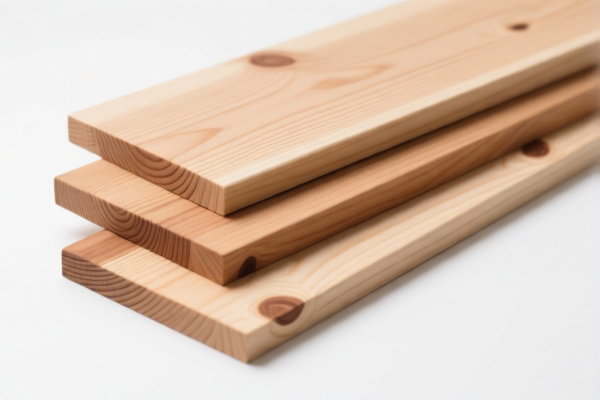
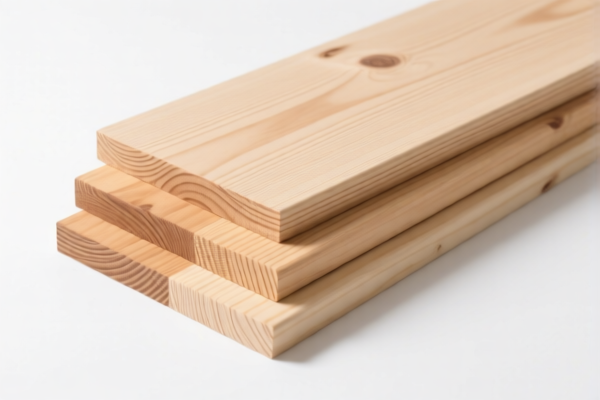
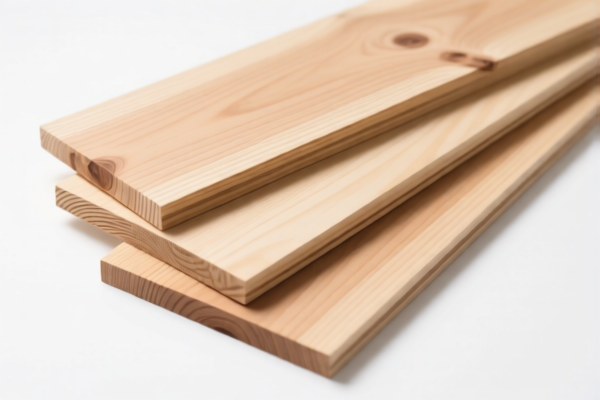
AI Analysis
🌲 Wood (Non-Coniferous) | HS Code 4407.99.02.95
🌐 HS Code Reference & Customs Clearance Guide | 2026 Latest Tariff Analysis | Professional Clearance Strategy
📌 I. Product Definition & Classification: Do You Understand "Wood" for HS 4407.99.02.95?
Wood, in the context of international trade and HS Code 4407.99.02.95, refers to sawn or chipped wood that does not belong to the coniferous (softwood) category. Specifically, this code falls under the "Other" category within Chapter 44, which covers wood and articles of wood. The key distinction here is the material attribute: it is non-coniferous (hardwood).
⚠️ Key Distinction:
- If the wood is coniferous (e.g., pine, spruce, fir), it typically falls under HS Code 4407.99.02.61 or 4407.99.02.63.
- If the wood is non-coniferous (hardwood) and fits the "Other" sub-category, it is classified under 4407.99.02.95.
- Form Factor: The wood must meet the processing requirements of Chapter 44 (sawn, planed, etc.), excluding logs (which fall under 4403).
📦 II. HS Code Classification Details (2026 Latest Tariff Authority Comparison)
| HS Code | Product Description | Applicable Scenario | Material Attribute |
|---|---|---|---|
4407.99.02.61 |
Wood (Coniferous) | Softwood planks, logs (processed) | Coniferous (Softwood) |
4407.99.02.63 |
Wood Planks (Red Eurasian Alder) | Specific hardwood plank | Coniferous/Hardwood (Specific) |
4407.99.02.95 |
Wood (Non-Coniferous) | General hardwood planks, "Other" category | Non-Coniferous (Hardwood) |
4403.21.01.12 |
Coniferous Logs | Raw logs, unprocessed | Coniferous (Logs) |
4403.21.01.65 |
Wood Logs (Coniferous/Pine) | Raw logs, processed | Coniferous (Logs) |
🔍 Critical Reminder:
- 4407.99.02.95 is specifically for non-coniferous wood that does not fall into more specific sub-categories like Red Eurasian Alder (4407.99.02.63) or other coniferous types.
- Ensure the wood is sawn or chipped (not raw logs). Raw logs are classified under 4403.
- Misclassification between coniferous and non-coniferous can lead to significant tariff discrepancies and customs delays.
💰 III. 2026 Latest Tariff Rate Breakdown (Including Additional Taxes & Policy Surcharges)
✅ Applicable Country: United States (US)
✅ Country of Origin: China (CN)
✅ Effective Date: November 10, 2025 (and subsequent imports)
🎯 1. 4407.99.02.95 — Wood (Non-Coniferous)
| Item | Content |
|---|---|
| Base Tariff Rate | 0.0% (ad valorem) |
| Section 301 Surcharge | +25.0% (Additional Tariff) |
| Section 122 Tariff | +10.0% (Specific to China-origin wood products) |
| Total Tariff Rate | 35.0% |
| Tax Calculation | CIF Value × 35% |
| De Minimis Exemption Eligible? | ❌ No (deny_de_minimis) |
| Legal Basis Path | Base: 0% → Section 301: 25% → Section 122: 10% → Total: 35% |
📌 Explanation:
- "Base Tariff 0%": The standard Most Favored Nation (MFN) duty for many wood products is 0%.
- "Section 301 Surcharge 25%": Imposed under the U.S. Trade Act of 1974, Section 301, targeting specific Chinese goods, including certain wood products.
- "Section 122 Tariff 10%": A specific surcharge under Section 122 of the Trade Expansion Act, often applied to imports that threaten to impair U.S. national security or economic stability.
- Total of 35% is a high tariff rate, requiring careful cost calculation and pre-import planning.
🛠️ IV. Customs Clearance Practical Advice (Battle-Tested Pitfall Avoidance Guide)
✅ 1. Documentation Checklist (All Required)
| Document | Required | Description |
|---|---|---|
| ✅ Commercial Invoice | ✔️ | Must clearly state "Wood (Non-Coniferous)" and HS Code 4407.99.02.95 |
| ✅ Packing List | ✔️ | Detail the type, quantity, and weight of wood products |
| ✅ Certificate of Origin (CO) | ✔️ | Essential for determining the country of origin (China vs. other) |
| ✅ Wood Processing Certificate | ✔️ | Proof of processing (sawn/chipped) to distinguish from logs (4403) |
| ✅ Phytosanitary Certificate | ✔️ | Required for all wood imports to prevent pests/diseases |
| ✅ Bill of Lading/Air Waybill | ✔️ | Standard shipping document |
✅ 2. Declaration Tips (Key Mnemonic)
🔥 "Non-Coniferous Check, Section 301 & 122 Apply, Don't Mix with Logs!"
| Scenario | Correct Declaration | Incorrect Action |
|---|---|---|
| Non-coniferous wood (hardwood) | 4407.99.02.95 |
Misdeclare as coniferous → 35% applies anyway, but risks audit |
| Coniferous wood (softwood) | 4407.99.02.61 or 4407.99.02.63 |
Misdeclare as non-coniferous → 35% applies, but incorrect classification |
| Raw logs (coniferous) | 4403.21.01.12 or 4403.21.01.65 |
Misdeclare as sawn wood → Penalties for incorrect HS code |
| Processed wood products (furniture) | Various (e.g., 9403) | Misdeclare as raw wood → Incorrect duty rate |
✅ 3. Special Case Handling
| Scenario | Handling Advice |
|---|---|
| Mixed Loads (Coniferous + Non-Coniferous) | Declare separately. Do not mix HS codes in one line item. |
| Wood from Non-China Origins | Check if Section 301 and Section 122 apply. If not, tariff may be lower. |
| Wood for Construction vs. Furniture | Both fall under 4407 if sawn/chipped. Ensure proper description. |
| High Value Shipments | Consider Advance Ruling from CBP to confirm HS code and duty rate. |
🌍 V. Global Market Comparison (2026 Latest)
| Country/Region | Recommended HS Code | Tariff (China Origin) | Certification Requirements | Remarks |
|---|---|---|---|---|
| 🇺🇸 United States | 4407.99.02.95 |
35% (0% + 25% + 10%) | Phytosanitary Certificate | High tariff due to Section 301 & 122 |
| 🇨🇳 China | 4407.99.02.95 |
5-10% (Import Duty) | N/A | Lower duty for imports into China |
| 🇪🇺 European Union | 4407.99.02.95 |
0% (if FTA applies) | FSC/PEFC Certification | No Section 301/122 surcharges |
| 🇬🇧 United Kingdom | 4407.99.02.95 |
0% (Post-Brexit) | FSC/PEFC Certification | Similar to EU |
| 🇦🇺 Australia | 4407.99.02.95 |
5% | N/A | No additional surcharges |
📌 Conclusion:
- The United States imposes the highest effective tariff (35%) on Chinese-origin non-coniferous wood due to Section 301 and Section 122.
- Other major markets (EU, UK, Australia) have significantly lower or zero tariffs, making them more attractive for export.
- Cost optimization: Consider sourcing from or routing through countries not subject to Section 301/122, if feasible and compliant with trade laws.
📌 VI. Common Mistakes & Pitfall Guide (Blood-Tears Lessons)
❌ Mistake 1: Misclassifying raw logs as sawn wood
👉 Consequence: HS code error → Potential penalties, delays, and back-tariff assessment. Logs are 4403, sawn wood is 4407.
❌ Mistake 2: Ignoring Section 301 and Section 122 surcharges
👉 Consequence: Underestimating total landed cost by 35%. Budget accurately!
❌ Mistake 3: Failing to provide Phytosanitary Certificate
👉 Consequence: Shipment held at customs → Demurrage fees, storage costs, and potential destruction.
❌ Mistake 4: Using vague descriptions like "Wood"
👉 Consequence: Customs may reclassify → Higher tariff or additional scrutiny. Be specific: "Non-Coniferous Sawn Wood, Hardwood."
✅ Best Practice:
"Non-Coniferous Sawn Wood, Hardwood, Processed, Origin: China, HS Code: 4407.99.02.95, Phytosanitary Certificate Attached."
🎯 VII. Conclusion: Precise Classification Saves Money!
🎯 Remember the Mnemonic:
🔹 "Non-Coniferous Check, 35% Total, No De Minimis, Documentation Key!"
🔹 "HS Code 4407.99.02.95: 0% Base + 25% 301 + 10% 122 = 35%."
📌 Pro Tip:
- If your wood originates from Vietnam, Mexico, Thailand, or Malaysia, it may not be subject to Section 301 and Section 122 tariffs. Verify origin and consider supply chain adjustments.
- Apply for an Advance Ruling from U.S. Customs and Border Protection (CBP) to confirm HS code and duty rate before shipping.
📣 Take Action Now:
📞 Contact a licensed customs broker + Provide product specs + Apply for CBP Advance Ruling
🚀 Ensure smooth customs clearance, efficient export, and maximized profit margins!
✨ Professional clearance starts with precise classification!
💼 Every cent of your cost deserves accurate calculation!
Customer Reviews
About HS Code Classification
The Harmonized System (HS) is an internationally standardized nomenclature developed by the World Customs Organization (WCO) to classify traded products. Over 200 countries use the HS system as the basis for customs tariffs, trade statistics, and import/export regulations.
Each HS code follows a hierarchical structure:
- Chapter (2 digits) — Broad category of goods (e.g., Chapter 84: Machinery and Mechanical Appliances)
- Heading (4 digits) — More specific grouping within the chapter
- Subheading (6 digits) — Internationally standardized breakdown, used by all WCO member countries
- National subdivisions (8-10 digits) — Country-specific extensions for further classification, such as US HTSUS 10-digit codes
Correct HS code classification is essential for smooth customs clearance, accurate duty payment, and compliance with trade regulations. Misclassification can lead to customs delays, overpayment of duties, or penalties.
When importing from CN to US, the applicable tariff rates may include:
- Most-Favored-Nation (MFN) rate — The standard duty rate applied to WTO members
- General rate — Applied to countries without trade agreements
- Trade remedy duties — Additional tariffs such as Section 301 (anti-dumping), Section 232 (national security), or countervailing duties
The information provided on this page is for reference purposes only. For official classification, please consult with your local customs authority or a licensed customs broker.