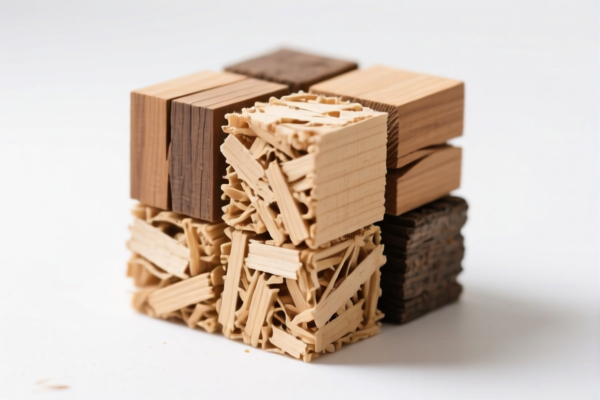
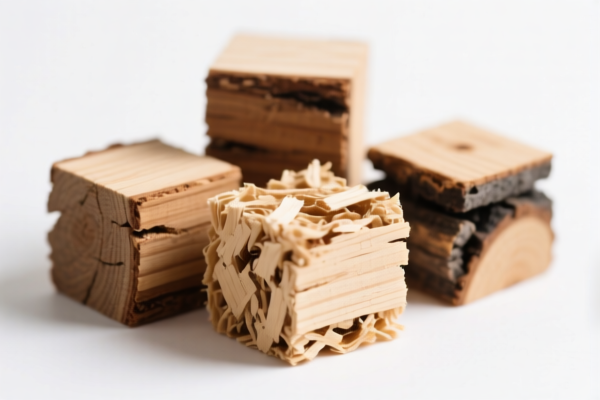
wood sawdust fuel cubes
CN → US| HS Code | Tariff Rate | Origin | Destination | Doc |
|---|---|---|---|---|
| 4401394210 | 35.0% | CN | US | Official Doc |
| 4401310000 | 35.0% | CN | US | Official Doc |
Product Images


AI Analysis
🔥 Fuel Wood Cubes (Agglomerated Sawdust & Wood Waste)
--- 🌐 HS Code Reference & Customs Clearance Guide | 2026 Latest Tariff Analysis | Professional Compliance Strategy 📌 I. Product Definition & Classification: What Are "Wood Sawdust Fuel Cubes"?
"Fuel Wood Cubes" generally refer to solid fuels made from processed wood residues. In international trade, the classification depends strictly on the form and material structure of the product:
- Agglomerated Forms (Pellets, Briquettes, Logs): These are sawdust, wood waste, or scrap that has been compressed or bound into specific shapes (logs, briquettes, pellets, or similar forms).
- Non-Agglomerated Forms: Loose sawdust, chips, or particles.
⚠️ Key Distinction for Your Product: - If your "cubes" are compressed sawdust/wood waste/scrap bound together (agglomerated), they fall under Heading 4401.3x. - They are NOT simple raw logs (Heading 4401.10) because they are processed/agglomerated. - They are NOT loose sawdust (Heading 4401.40) because they are formed into cubes.
📦 II. HS Code Classification Details (2026 Latest Tariff Authority)
Based on the provided data, there are two relevant HS Codes depending on the specific shape and material definition. However, "Cubes" typically fall under "Similar Forms" or "Pellets" in trade practice.
| HS Code | Product Description | Applicable Scenario | Agglomerated? |
|---|---|---|---|
4401.39.42.10 |
Other Sawdust and wood waste and scrap, agglomerated in logs, briquettes, pellets or similar forms | Generic agglomerated wood cubes, briquettes, or irregular agglomerated forms not specifically listed as "pellets" | ✅ Yes |
4401.31.00.00 |
Wood pellets | Strictly defined cylindrical/rod-shaped pellets (standard biomass fuel) | ✅ Yes |
🔍 Critical Note on "Cubes": - If your product is strictly cylindrical pellets, use
4401.31.00.00. - If your product is cubical, briquette-shaped, or irregular agglomerated logs, it usually falls under the "Other" category:4401.39.42.10. - Do not use raw wood codes (e.g., 4401.10) as these products are processed waste/sawdust.
💰 III. 2026 Latest Tariff Rate Details (Including Surtax & Policy Surcharge)
✅ Applicable Country: United States (US)
✅ Country of Origin: China (CN) (Assumed based on typical trade context for this HS code data)
✅ Effective Date: Current trade policies apply
🎯 1. 4401.39.42.10 —— Agglomerated Sawdust/Waste (Other Forms like Cubes/Briquettes)
| Item | Content |
|---|---|
| Base Tariff Rate | 0.0% (Ad Valorem) |
| Section 301 Surtax | +25.0% |
| Total Tariff Rate | 25.0% |
| Tax Calculation | CIF Value × 25% |
| De Minimis Exemption | ❌ Not Applicable (High-risk category for scrutiny) |
| Legal Basis Path | HTSUS:4401.39.42.10 → USITC Footnote 9903.88.01 (Section 301) |
📌 Explanation: - Although the base duty for wood fuel is 0%, the 25% Section 301 surcharge applies to most wood products from China. - Total Cost Impact: High. This is a pure cost addition with no base duty benefit.
🎯 2. 4401.31.00.00 —— Wood Pellets
| Item | Content |
|---|---|
| Base Tariff Rate | 0.0% (Ad Valorem) |
| Section 301 Surtax | +25.0% |
| Total Tariff Rate | 25.0% |
| Tax Calculation | CIF Value × 25% |
| De Minimis Exemption | ❌ Not Applicable |
| Legal Basis Path | HTSUS:4401.31.00.00 → USITC Footnote 9903.88.01 (Section 301) |
📌 Note: - Even though "pellets" are a more specific form, the tax treatment is identical to "other agglomerated forms" in this dataset. - Both categories suffer from the same 25% total tax burden.
🛠️ IV. Customs Clearance Practical Advice (Real-World Pitfall Guide)
✅ 1. Document Checklist (Mandatory)
| Document | Required? | Description |
|---|---|---|
| ✅ Product Specification Sheet | ✔️ | Must detail: Material (sawdust/waste), Binding Agent (if any), Moisture Content, Density. |
| ✅ HS Code Classification Support | ✔️ | Explain why it is "agglomerated" and not "raw wood." |
| ✅ Commercial Invoice | ✔️ | Clear description: "Agglomerated Wood Pellets" or "Wood Briquettes/Cubes." Avoid vague terms like "Fuel." |
| ✅ Packaging List | ✔️ | Net weight and gross weight must match. |
| ✅ Certificate of Origin | ✔️ | To verify Country of Origin (China triggers 25%). |
| ✅ Safety Data Sheet (SDS) | ✔️ | Optional but recommended to prove non-hazardous nature. |
✅ 2. Declaration Tips (Key Rules)
🔥 "Agglomerated is Key, Description Must Be Precise!"
| Scenario | Correct Declaration | Incorrect Practice |
|---|---|---|
| Product is compressed sawdust | 4401.39.42.10 or 4401.31.00.00 |
Declaring as "Raw Wood Logs" (4401.10) → Customs Audit Risk |
| Product is loose sawdust | 4401.40.00.00 (Not in current data, but different tax) |
Declaring as "Pellets" → Misclassification Penalty |
| Product contains chemical binders | Disclose binder type | Hiding binding agents → False Declaration |
📌 Crucial Point: - Ensure the product is dry. High moisture content can lead to rejection or reclassification as "wet waste." - Ensure the product is not contaminated with soil, plastic, or metal (which would change the HS code entirely).
✅ 3. Special Case Handling
| Situation | Handling Advice |
|---|---|
| Origin Diversification | If shipped from Vietnam, Thailand, or Malaysia, the 25% Section 301 tax may not apply. Verify origin rules. |
| Chemical Treatment | If the cubes are treated with preservatives (e.g., chromated copper arsenate), they may be classified as chemical-treated wood (4403), which has different tariffs. |
| Moisture Content | Keep moisture below 10-15% for biomass fuel standards. High moisture can cause mold issues during inspection. |
🌍 V. Global Market Clearance Comparison (2026 Latest)
| Country/Region | Recommended HS Code | Tariff (China Origin) | Certification | Remarks |
|---|---|---|---|---|
| 🇺🇸 USA | 4401.31.00.00 / 4401.39.42.10 |
25% | None (but subject to Section 301) | High Tax Burden |
| 🇪🇺 EU | 4401.31 / 4401.39 |
0% (Usually) | ENplus Standard | Preferred Market if ENplus certified |
| 🇨🇳 China | 4401.31 / 4401.39 |
0% | N/A | Export market |
| 🇬🇧 UK | 4401.31 / 4401.39 |
0% | UKCA (if applicable) | Post-Brexit rules apply |
📌 Conclusion: - USA: High tariff (25%) makes this product less competitive unless sourced from non-China origins. - EU: Low/Zero tariff, but strict quality standards (ENplus) are required.
📌 VI. Common Errors & Pitfalls (Lessons Learned)
❌ Error 1: Declaring "Wood Pellets" as "Raw Firewood" 👉 Consequence: Customs may suspect evasion of Section 301 duties if misclassified, leading to audits. Conversely, if classified as raw wood (0% base) but is agglomerated, it’s a misclassification error.
❌ Error 2: Vague Description "Wood Fuel" 👉 Consequence: Customs cannot determine if it’s sawdust (4401.40) or agglomerated (4401.3x). Delays and inspections.
❌ Error 3: Ignoring Moisture Content 👉 Consequence: If moisture > 20%, it may be rejected as non-compliant with biomass fuel standards or misclassified as "wet wood."
✅ Correct Practice:
"Wood Pellets / Agglomerated Sawdust Cubes, Made from 100% Hardwood Sawdust, Moisture Content <10%, No Chemical Binders, ENplus Certified"
🎯 VII. Conclusion: Professional Declaration, Cost Efficiency!
🎯 Remember the Rules:
🔹 "Agglomerated means 4401.3x, Not 4401.10!"
🔹 "China Origin + Wood Fuel = 25% Total Tax in USA!"
🔹 "Describe Form Clearly: Pellets vs. Briquettes vs. Cubes!"
📌 Tips:
- If you are exporting to the US, consider supply chain diversification to avoid the 25% surcharge.
- Always provide a detailed material breakdown (sawdust ratio vs. waste ratio) to support the HS code.
- For EU exports, obtain ENplus certification to ensure smooth clearance and qualify for zero tariff.
📣 Immediate Action:
📞 Consult with a licensed customs broker to confirm if "Cubes" are classified as "Pellets" (
4401.31) or "Other" (4401.39) in your specific port of entry. 🚀 Accurate HS Code = Predictable Costs!
✨ Professional Clearance Starts with Precise Classification! 💼 Every Percent of Tariff Counts in Bulk Commodities!
Customer Reviews
About HS Code Classification
The Harmonized System (HS) is an internationally standardized nomenclature developed by the World Customs Organization (WCO) to classify traded products. Over 200 countries use the HS system as the basis for customs tariffs, trade statistics, and import/export regulations.
Each HS code follows a hierarchical structure:
- Chapter (2 digits) — Broad category of goods (e.g., Chapter 84: Machinery and Mechanical Appliances)
- Heading (4 digits) — More specific grouping within the chapter
- Subheading (6 digits) — Internationally standardized breakdown, used by all WCO member countries
- National subdivisions (8-10 digits) — Country-specific extensions for further classification, such as US HTSUS 10-digit codes
Correct HS code classification is essential for smooth customs clearance, accurate duty payment, and compliance with trade regulations. Misclassification can lead to customs delays, overpayment of duties, or penalties.
When importing from CN to US, the applicable tariff rates may include:
- Most-Favored-Nation (MFN) rate — The standard duty rate applied to WTO members
- General rate — Applied to countries without trade agreements
- Trade remedy duties — Additional tariffs such as Section 301 (anti-dumping), Section 232 (national security), or countervailing duties
The information provided on this page is for reference purposes only. For official classification, please consult with your local customs authority or a licensed customs broker.