wood shavings bedding
CN → US| HS Code | Tariff Rate | Origin | Destination | Doc |
|---|---|---|---|---|
| 4401220000 | 35.0% | CN | US | Official Doc |
| 4401210000 | 35.0% | CN | US | Official Doc |
| 3802905000 | 39.8% | CN | US | Official Doc |
Product Images
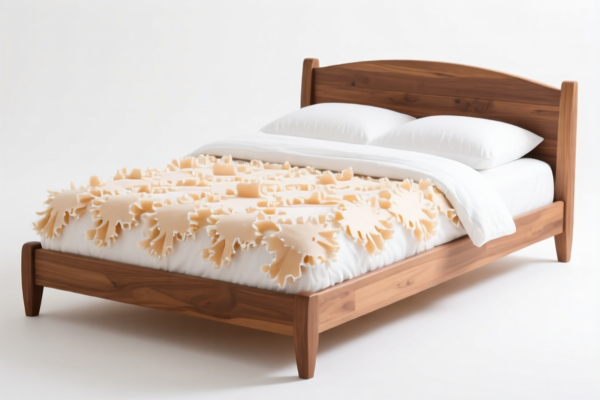
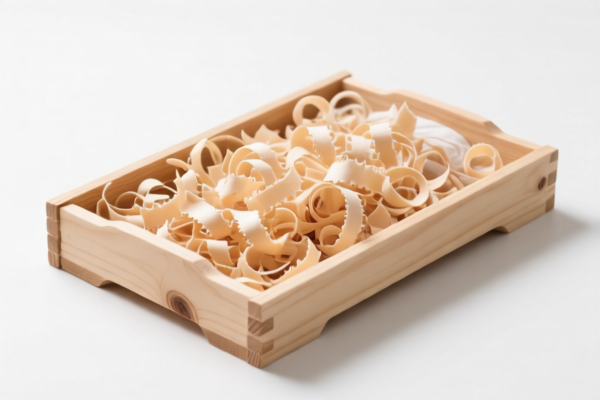
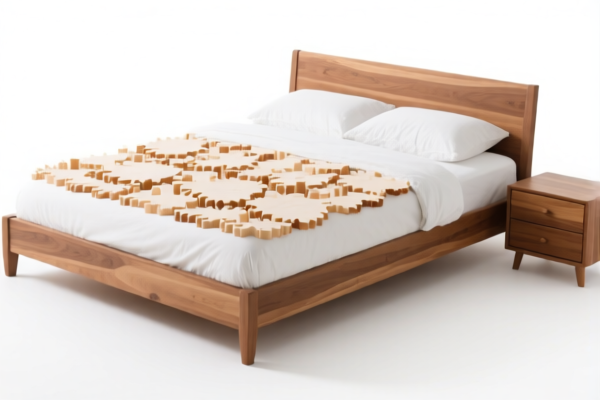
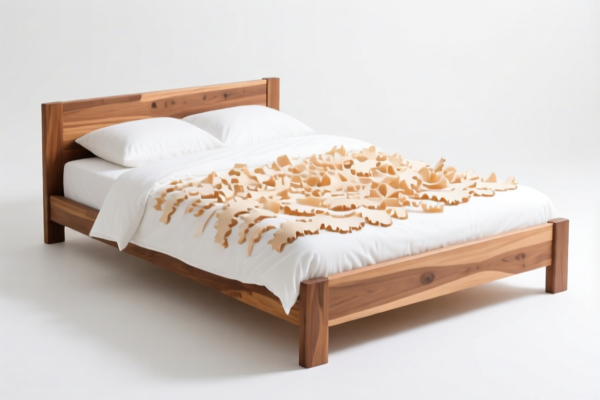
AI Analysis
🪵 Wood Shavings Bedding (Animal Bedding / Fuel Grade)
🌐 HS Code Classification & Customs Clearance Guide | 2026 Tax Analysis | Professional Compliance Strategy
📌 I. Product Definition & Classification: What Exactly is "Wood Shavings Bedding"?
Wood shavings bedding refers to processed wood residues, typically derived from softwoods or hardwoods, cut into small particles, chips, or granules. In international trade, the classification hinges strictly on the physical form and intended use:
- Fuel Grade (4401): If the material is in the form of wood chips, particles, or sawdust primarily intended for burning (biomass fuel), it falls under Chapter 44.
- Chemical/Extractive Grade (3802): If the wood shavings are chemically treated, compressed into briquettes for extraction, or classified under "charcoal" logic for industrial chemical processing, it may fall under Chapter 38.
⚠️ Key Distinction Point:
- If the product is raw, untreated wood chips/particles used for bedding or fuel → It is classified as Wood Fuel (4401).
- If the product is chemically processed, charcoal-based, or used for extraction → It may be classified as Other Charcoal/Extractives (3802).
📦 II. HS Code Classification Details (2026 Latest Tariff Authority Reference)
| HS Code | Product Description | Application Scenario | Material Logic |
|---|---|---|---|
4401.22.00.00 |
Wood chips, particles, or sawdust (Fuel Wood) | Raw wood shavings, biomass fuel, basic animal bedding | ✅ Matches "Fuel Wood" primary product attributes |
4401.21.00.00 |
Wood in the form of wood chips or particles | General wood chips, untreated shavings | ✅ Consistent with "Fuel Wood" material & form |
3802.90.50.00 |
Other activated charcoal; other; other | Chemically processed shavings, charcoal-like materials | ✅ Raw material logic, no conflict with mineral/charcoal nature |
🔍 Critical Reminder:
-4401.21/22: For standard, untreated wood shavings used as bedding or fuel. These are considered primary products of wood.
-3802.90.50: For wood shavings that have undergone chemical treatment or are classified under charcoal/extractive categories. Note that this code often attracts higher base tariffs due to its classification under chemical/processed goods.
💰 III. 2026 Latest Tariff Rate Details (Including Surcharges & Policy Add-ons)
✅ Applicable Country: United States (US)
✅ Country of Origin: China (CN)
✅ Effective Date: From November 10, 2025 (including subsequent imports)
🎯 1. 4401.22.00.00 & 4401.21.00.00 —— Wood Chips/Particles (Fuel Wood)
| Item | Content |
|---|---|
| Base Tariff | 0.0% (ad valorem) |
| USITC Additional Tariff | +25.0% (Section 301 Tariffs) |
| 122 Provision Tariff | +10.0% (Specific China-related provision) |
| Total Tax Rate | 35.0% |
| Tax Calculation | CIF Value × 35% |
| De Minimis Exemption | ❌ Not Eligible (deny_de_minimis) |
| Legal Basis Path | 301:4401.22.00.00 → 122:4401.22.00.00 → Base: 0% |
📌 Explanation:
- "Base Tariff 0%": Wood chips for fuel generally enjoy a zero base tariff under the HTSUS.
- "301 Tariff 25%": The standard Section 301 additional duty on Chinese wood products.
- "122 Provision 10%": An additional 10% tariff applied specifically to certain Chinese-origin wood materials under Section 122.
- Total 35%: This is a high-cost entry point. Importers must budget for significant tariff implications.
🎯 2. 3802.90.50.00 —— Other Charcoal / Chemical Wood Products
| Item | Content |
|---|---|
| Base Tariff | 4.8% (ad valorem) |
| USITC Additional Tariff | +25.0% (Section 301 Tariffs) |
| 122 Provision Tariff | +10.0% (Specific China-related provision) |
| Total Tax Rate | 39.8% |
| Tax Calculation | CIF Value × 39.8% |
| De Minimis Exemption | ❌ Not Eligible (deny_de_minimis) |
| Legal Basis Path | 301:3802.90.50.00 → 122:3802.90.50.00 → Base: 4.8% |
📌 Explanation:
- "Base Tariff 4.8%": Unlike raw wood chips, this code has a non-zero base tariff because it falls under Chapter 38 (Chemical Products/Charcoal).
- "301 Tariff 25%": Same Section 301 surcharge applies to Chinese goods in this chapter.
- "122 Provision 10%": Additional surcharge applies.
- Total 39.8%: This is even higher than the 4401 codes due to the base tariff. Misclassification here can lead to unexpected cost increases.
🛠️ IV. Customs Clearance Practical Advice (Battle-Tested Pitfall Avoidance)
✅ 1. Preparation Checklist (All Documents Required)
| Document | Mandatory? | Description |
|---|---|---|
| ✅ Product Specification Sheet | ✔️ | Must specify material (e.g., Pine, Spruce), form (shavings, pellets), moisture content, and treatment status (untreated/treated). |
| ✅ Material Safety Data Sheet (MSDS) | ✔️ | If chemically treated, MSDS is required for chemical classification (3802). If untreated, a statement of "No Chemical Treatment" suffices. |
| ✅ Commercial Invoice | ✔️ | Clearly state "Wood Shavings for Bedding/Fuel" and precise HS Code. |
| ✅ Packing List | ✔️ | Detail gross/net weight, volume, and palletization. |
| ✅ Phytosanitary Certificate | ✔️ | Critical! Wood products often require phytosanitary certificates to prove freedom from pests/diseases (ISPM 15 compliance). |
| ✅ Certificate of Origin (CO) | ✔️ | Required for verifying Chinese origin and applying accurate surcharges. |
✅ 2. Declaration Tips (Key Mantra)
🔥 “Untreated = 4401 (35%), Treated/Charcoal = 3802 (39.8%). Do Not Split!”
| Scenario | Correct Declaration | Incorrect Practice |
|---|---|---|
| Raw Wood Shavings | 4401.22.00.00 |
Misdeclare as 4401.21 without checking particle size/shape specifics |
| Charcoal Briquettes | 3802.90.50.00 |
Misdeclare as 4401 → Risk of customs penalty for misclassification |
| Mixed Shavings & Pellets | Single HS Code based on predominant form | Splitting declaration → Delays & audits |
| Treated Wood Shavings | 3802.90.50.00 |
Declaring as 4401 → 35% vs 39.8% risk + compliance breach |
✅ 3. Special Situations Handling
| Situation | Handling Advice |
|---|---|
| OEM Custom Bedding | Provide end-user specification sheets. If marketed as "Bedding" but physically identical to "Fuel," customs may still classify by physical form (4401). |
| Chemically Treated | If treated with anti-fungal or scent agents, must use 3802.90.50.00. Provide MSDS and treatment details. |
| ISPM 15 Compliance | Ensure wood is heat-treated or fumigated if required. Lack of phytosanitary certificate → Detention or Return. |
| De Minimis Exemption | ❌ Not Available. Wood shavings from China are not eligible for Section 321 (de minimis) exemption due to the 301/122 tariffs. Full duty payment is mandatory. |
🌍 V. Global Market Clearance Comparison (2026 Latest)
| Country/Region | Recommended HS Code | Tariff (China Origin) | Certification Requirements | Notes |
|---|---|---|---|---|
| 🇺🇸 USA | 4401.22.00.00 |
35.0% | Phytosanitary + ISPM 15 | High tariff burden; strict wood pest controls |
| 🇺🇸 USA | 3802.90.50.00 |
39.8% | MSDS + Chemical Compliance | Higher base tariff; for treated/charcoal products |
| 🇪🇺 EU | 4401.22.00 |
Varies (Check FTA) | Phytosanitary + EoL | No 301/122 tariffs; but EU biofuel standards apply |
| 🇨🇳 China | 4401.22.00 |
5-10% (Import) | Phytosanitary | Domestic consumption often duty-free if from domestic source |
📌 Conclusion:
- USA imposes significant additional tariffs (35-40%) on Chinese wood shavings.
- Misclassification between 4401 and 3802 leads to 4.8% base tariff differences, which, while small, triggers compliance audits.
- Phytosanitary documentation is non-negotiable for wood products in all major markets.
📌 VI. Common Mistakes & Pitfall Avoidance (Lessons Learned)
❌ Mistake 1: Declaring "Bedding" as a general commodity without specifying HS Code
👉 Consequence: Customs assigns highest duty rate → 39.8% instead of 35%
❌ Mistake 2: Ignoring Phytosanitary Certificate
👉 Consequence: Cargo held at port, fines, or return shipment
❌ Mistake 3: Assuming De Minimis Exemption Applies
👉 Consequence: Underpayment of duties → Penalties + Back Taxes
❌ Mistake 4: Mixing Treated and Untreated Shavings in One Shipment
👉 Consequence: Complex classification → Audit Risk & Delays
✅ Correct Practice:
"Untreated Pine Wood Shavings for Animal Bedding, Particle Size <10mm, No Chemical Treatment, ISPM 15 Compliant, HS Code: 4401.22.00.00"
🎯 VII. Conclusion: Professional Declaration, Cost Savings, Efficiency!
🎯 Remember the Mantra:
🔹 "Raw Wood = 4401 (35%), Treated/Charcoal = 3802 (39.8%). No De Minimis!"
🔹 "HS Code Determines Cost, 4.8% Base Difference Matters, Documentation Saves Days!"
📌 Pro Tip:
If your wood shavings are sourced from Vietnam, Thailand, or Malaysia, you may be eligible for reduced or zero Section 301 tariffs under FTA agreements.
Recommend Advance Ruling (Pre-classification) for large volumes to avoid clearance risks.
📣 Immediate Action:
📞 Contact Professional Customs Broker + Provide Product Photos + Apply for HS Code Advance Ruling
🚀 Ensure your wood shavings clear customs smoothly, efficiently, and profitably!
✨ Professional Customs Clearance Starts with Precise Classification!
💼 Every Dollar of Duty Saved is Pure Profit!
Customer Reviews
About HS Code Classification
The Harmonized System (HS) is an internationally standardized nomenclature developed by the World Customs Organization (WCO) to classify traded products. Over 200 countries use the HS system as the basis for customs tariffs, trade statistics, and import/export regulations.
Each HS code follows a hierarchical structure:
- Chapter (2 digits) — Broad category of goods (e.g., Chapter 84: Machinery and Mechanical Appliances)
- Heading (4 digits) — More specific grouping within the chapter
- Subheading (6 digits) — Internationally standardized breakdown, used by all WCO member countries
- National subdivisions (8-10 digits) — Country-specific extensions for further classification, such as US HTSUS 10-digit codes
Correct HS code classification is essential for smooth customs clearance, accurate duty payment, and compliance with trade regulations. Misclassification can lead to customs delays, overpayment of duties, or penalties.
When importing from CN to US, the applicable tariff rates may include:
- Most-Favored-Nation (MFN) rate — The standard duty rate applied to WTO members
- General rate — Applied to countries without trade agreements
- Trade remedy duties — Additional tariffs such as Section 301 (anti-dumping), Section 232 (national security), or countervailing duties
The information provided on this page is for reference purposes only. For official classification, please consult with your local customs authority or a licensed customs broker.