wooden frame chair excluding hs 9401
CN → US| HS Code | Tariff Rate | Origin | Destination | Doc |
|---|---|---|---|---|
| 9401694011 | 35.0% | CN | US | Official Doc |
| 9401698011 | 35.0% | CN | US | Official Doc |
Product Images
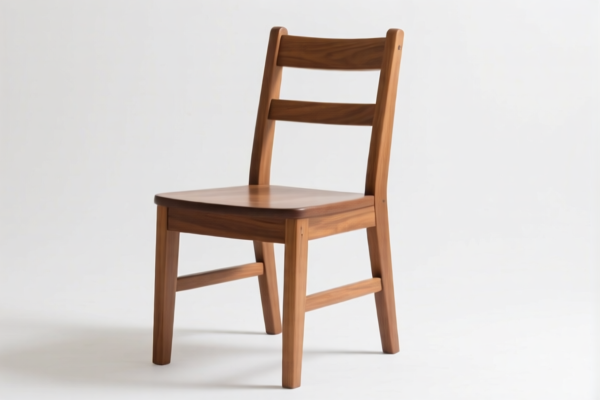
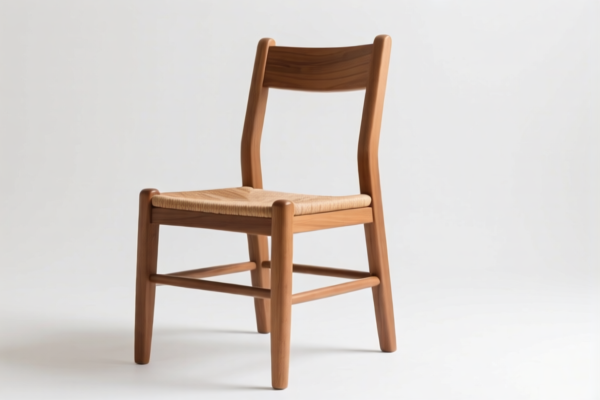
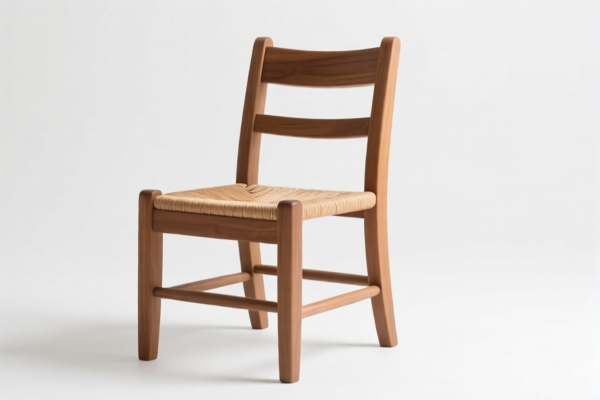
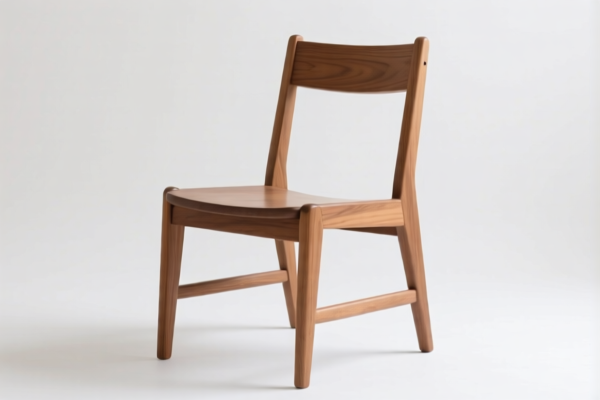
AI Analysis
🪑 Wooden Frame Chairs (Excluding Heading 9402)
🌐 HS Code Reference & Customs Clearance Guide | 2026 Latest Tariff Analysis | Professional Clearance Strategy
📌 I. Product Definition & Classification: What Exactly Is a "Wooden Frame Chair"?
Wooden frame chairs are furniture pieces primarily used for seating, distinguished by their structural framework made of wood. In international trade, they are categorized under Heading 9401 ("Seats (other than those of heading 9402), whether or not convertible into beds, and parts thereof").
Key Distinctions: * Heading 9402 includes medical, dental, surgical, or veterinary chairs (e.g., dentist chairs, barber chairs). These are EXCLUDED from the scope of this analysis. * Heading 9401 covers household, office, restaurant, and general-purpose seating. * Wooden Frames: The primary structural component is wood. This distinguishes them from metal-frame or plastic-frame chairs.
⚠️ Critical Classification Point:
- If the chair has convertible beds (e.g., sofa beds), it may fall under specific sub-headings, but standard wooden frame chairs for seating are classified here.
- If the chair is not a medical/office task chair but a general household or dining chair, it belongs in 9401.
📦 II. HS Code Classification Details (2026 Latest Tariff Authority Cross-Reference)
Based on the provided DATA, the specific HS Codes for wooden frame chairs (excluding 9402) are:
| HS Code | Product Description | Material/Origin Specifics | Application Scenario |
|---|---|---|---|
9401.69.40.11 |
Other seats, with wooden frames: Other: Other: Chairs: Of teak Household: Of plantation-harvested teak | Household use; Specifically made from plantation-harvested teak | High-end household furniture, eco-friendly certified teak chairs |
9401.69.80.11 |
Other seats, with wooden frames: Other: Other: Other Other household | General household wooden chairs (not specifically teak or falling under other specific sub-codes) | Standard dining chairs, wooden living room chairs, generic household seating |
🔍 Key Reminder:
- Both codes fall under 9401.69 ("Other seats, with wooden frames").
- The distinction lies in the material specificity (Plantation Teak vs. Other Household).
- Non-household wooden chairs (e.g., office task chairs with wooden frames) may fall under different sub-headings not listed here (e.g., 9401.30 for swivel seats), but the provided data focuses on household applications.
💰 III. 2026 Latest Tariff Rate Details (Including Additional Taxes)
✅ Applicable Country: United States (US)
✅ Country of Origin: China (CN)
✅ Effective Date: Current (2026)
🎯 1. 9401.69.40.11 — Plantation-Harvested Teak Household Chairs
| Item | Content |
|---|---|
| Base Tariff Rate | 0.0% (ad valorem) |
| Section 301 Additional Tariff | +25.0% |
| Total Effective Tax Rate | 25.0% |
| Tax Calculation | CIF Value × 25.0% |
| De Minimis Exemption | ❌ Not Eligible (Standard rules apply) |
| Legal Basis Path | USITC:9401.69.40.11 → USITC:Footnote 9903.88.01 (Section 301) |
📌 Explanation:
- The base tariff for wooden chairs under heading 9401 is generally low or zero.
- However, due to Section 301 trade measures against China, an additional 25% tariff applies.
- Total Cost Impact: 25% of the CIF value is added as duty. This is a significant cost factor for exporters.
🎯 2. 9401.69.80.11 — Other Other Household Wooden Chairs
| Item | Content |
|---|---|
| Base Tariff Rate | 0.0% (ad valorem) |
| Section 301 Additional Tariff | +25.0% |
| Total Effective Tax Rate | 25.0% |
| Tax Calculation | CIF Value × 25.0% |
| De Minimis Exemption | ❌ Not Eligible |
| Legal Basis Path | USITC:9401.69.80.11 → USITC:Footnote 9903.88.01 (Section 301) |
📌 Note:
- Identical tax treatment to plantation teak chairs in this context.
- No base duty, but the 25% Section 301 tariff dominates the cost structure.
- Even if the wood is not teak, the classification as a "wooden frame household chair" triggers the same 25% additional tax.
🛠️ IV. Customs Clearance Practical Advice (Real-World Pitfall Guide)
✅ 1. Documentation Checklist (Must-Have)
| Document | Required | Explanation |
|---|---|---|
| ✅ Product Specification Sheet | ✔️ | Must specify: Material (Wood Type), Usage (Household), Frame Structure. |
| ✅ Material Declaration | ✔️ | Clearly state if wood is "Plantation-Harvested Teak" or "Other Wood." Misclassification leads to penalties. |
| ✅ Commercial Invoice | ✔️ | Must describe as "Wooden Frame Chair, Household Use." Avoid vague terms like "Furniture." |
| ✅ Packing List | ✔️ | Detailed breakdown of chairs, parts, and packaging weight. |
| ✅ Origin Certificate | ❌ Not Critical for US Tariff | Section 301 applies regardless of origin if produced in China. |
| ✅ Photos of Product | ✔️ | Show wooden frame construction to verify classification under 9401.69. |
📌 Critical Tip:
- Labeling: Ensure the product label or invoice clearly states "Household Use" to support classification under 9401.69. If deemed "Office Use" (e.g., ergonomic task chairs), it might fall under 9401.30 or 9401.71, which may have different tariff treatments (though Section 301 often still applies).
- Wood Type: If claiming "Plantation-Harvested Teak" for9401.69.40.11, provide proof of sustainability/origin to avoid being downgraded to "Other."
✅ 2. Declaration Strategy (Key Mantra)
🔥 "Specify Wood, Define Use, Declare Frame!"
| Scenario | Correct Declaration | Error to Avoid |
|---|---|---|
| Standard Wooden Dining Chair | 9401.69.80.11 — "Other household wooden chair" |
Declare as "Metal Chair" → Wrong HTS, possible fraud |
| High-End Teak Chair | 9401.69.40.11 — "Household chair, plantation teak" |
Declare as "Other Wood" → Misses potential specific code benefits (though tax is same here) |
| Office Chair with Wooden Frame | Check 9401.30/71 | Declare as Household → Misclassification risk |
| Medical/Barber Chair | Excluded (9402) | Declare under 9401 → Rejection/Penalty |
✅ 3. Special Case Handling
| Case | Handling Advice |
|---|---|
| Mixed Materials | If the frame is wood but legs are metal, customs may still classify under 9401.69 if wood is the predominant structural material. Document this clearly. |
| Kit/Flat-Pack | Declare as "Assembled" or "Parts"? If shipped assembled, declare as chair. If parts, declare under 9401.90 (parts), but still subject to 25% tariff. |
| Eco-Friendly Claims | If marketing as "Sustainable," ensure the "Plantation-Harvested Teak" claim is backed by FSC or equivalent certification to justify 9401.69.40.11. |
🌍 V. Global Market Comparison (2026 Latest)
| Country/Region | Recommended HS Code | Tariff (China Origin) | Certification | Notes |
|---|---|---|---|---|
| 🇺🇸 USA | 9401.69.40.11 / .80.11 |
25% (Section 301) | None specific | Highest cost due to trade war tariffs. |
| 🇨🇳 China | 9401.69.40.11 / .80.11 |
0%–5% | CCC (if applicable) | Low import tax for domestic production. |
| 🇪🇺 EU | 9401.69 |
0% (if FSC certified) | CE, REACH | May require wood legality verification (EUTR). |
| 🇬🇧 UK | 9401.69 |
0%–12% | UKCA | Post-Brexit rules may vary by wood origin. |
| 🇦🇺 Australia | 9401.69 |
5% | None | Moderate tariff, no Section 301 equivalent. |
📌 Conclusion:
- USA remains the most expensive market for Chinese wooden furniture due to the 25% Section 301 tariff.
- EU and Australia offer more favorable tariff environments, but compliance with wood legality laws is strict.
📌 VI. Common Errors & Pitfalls (Lessons Learned)
❌ Error 1: Classifying a metal-frame chair as "Wooden Frame"
👉 Consequence: Misclassification Penalty, potential 25% tariff avoidance flagged → Audit Risk.
❌ Error 2: Failing to specify "Household" use
👉 Consequence: Customs may classify as "Office" or "Public" seating, leading to incorrect HTS and potential delay.
❌ Error 3: Assuming "Teak" is a free tariff category
👉 Consequence: Even with base 0% duty, the 25% Section 301 tariff still applies. No exemption for wood type under current US policy.
❌ Error 4: Ignoring "Plantation-Harvested" Documentation
👉 Consequence: If 9401.69.40.11 is declared but no proof of plantation origin is provided, customs may downgrade to 9401.69.80.11 (same tax, but compliance risk).
✅ Correct Practice:
"Household Wooden Frame Chair, Teak, Plantation-Harvested, Model XYZ, Assembled, CIF $10,000"
🎯 VII. Conclusion: Precision in Classification, Profit in Clearance
🎯 Remember the Mantra:
🔹 "Wooden Frame? 9401.69. Tax 25%. Household Use? Specify It!"
🔹 "Teak or Other? Tax Same, Docs Different!"
🔹 "No 9402! No Medical! No Barber Chairs!"
📌 Pro Tip:
If your wooden chairs are shipped from Vietnam, Mexico, or Malaysia, you may be eligible for Section 301 exemptions or lower tariffs under trade agreements (e.g., USMCA, ASEAN).
Recommendation:
📞 Consult a Customs Broker: Verify if your product qualifies for transshipment benefits or exclusion lists.
📄 Pre-Ruling: Apply for an Advance Ruling from US Customs to confirm the exact sub-heading and tariff applicability.
📣 Immediate Action:
📦 Document Everything: Material, Origin, Use Case.
💰 Budget for 25%: Include this in your landed cost calculation.
🚀 Optimize Supply Chain: Consider non-US-origin wood or assembly to mitigate tariffs.
✨ Professional Clearance Starts with Accurate Classification!
💼 Every Percent Matters in Furniture Trade!
Customer Reviews
About HS Code Classification
The Harmonized System (HS) is an internationally standardized nomenclature developed by the World Customs Organization (WCO) to classify traded products. Over 200 countries use the HS system as the basis for customs tariffs, trade statistics, and import/export regulations.
Each HS code follows a hierarchical structure:
- Chapter (2 digits) — Broad category of goods (e.g., Chapter 84: Machinery and Mechanical Appliances)
- Heading (4 digits) — More specific grouping within the chapter
- Subheading (6 digits) — Internationally standardized breakdown, used by all WCO member countries
- National subdivisions (8-10 digits) — Country-specific extensions for further classification, such as US HTSUS 10-digit codes
Correct HS code classification is essential for smooth customs clearance, accurate duty payment, and compliance with trade regulations. Misclassification can lead to customs delays, overpayment of duties, or penalties.
When importing from CN to US, the applicable tariff rates may include:
- Most-Favored-Nation (MFN) rate — The standard duty rate applied to WTO members
- General rate — Applied to countries without trade agreements
- Trade remedy duties — Additional tariffs such as Section 301 (anti-dumping), Section 232 (national security), or countervailing duties
The information provided on this page is for reference purposes only. For official classification, please consult with your local customs authority or a licensed customs broker.