wooden kitchenware set
CN → US| HS Code | Tariff Rate | Origin | Destination | Doc |
|---|---|---|---|---|
| 8215992400 | 0.0% | CN | US | Official Doc |
| 8215994060 | 15.0% | CN | US | Official Doc |
| 4419909100 | 20.7% | CN | US | Official Doc |
| 4421916000 | 22.6% | CN | US | Official Doc |
| 4419901100 | 15.3% | CN | US | Official Doc |
| 4421996000 | 15.1% | CN | US | Official Doc |
Product Images
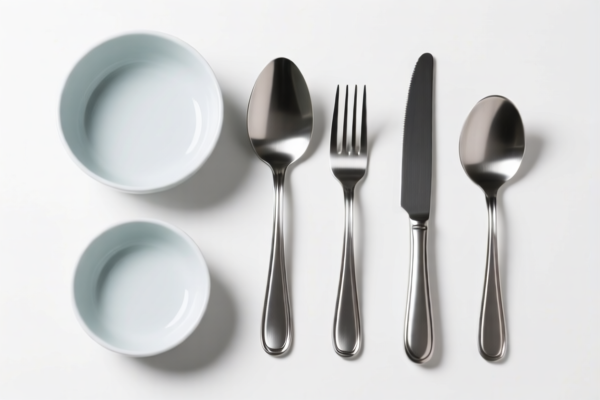
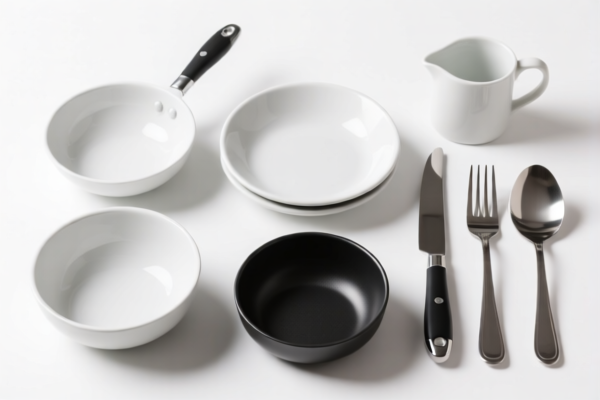
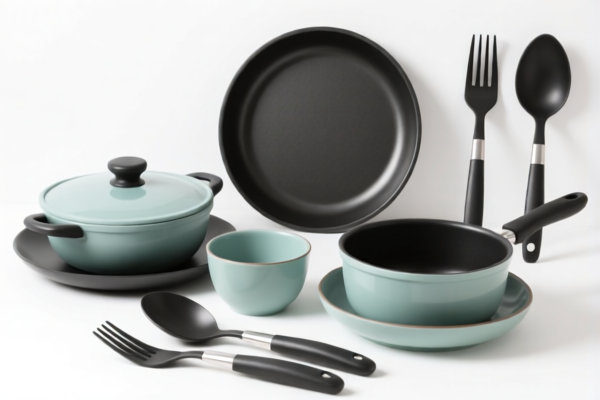
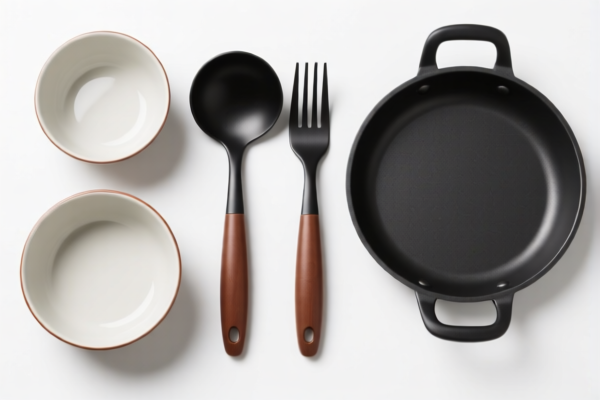
AI Analysis
🥢 Wooden Kitchenware Set (Wooden Utensils)
🌐 HS Code Reference & Customs Clearance Guide | 2026 Latest Tariff Analysis | Professional Customs Strategy
📌 I. Product Definition & Classification: What Exactly is "Wooden Kitchenware"?
Wooden kitchenware refers to cooking and serving utensils made primarily of wood, such as spatulas, spoons, forks, chopsticks, and stirrers. In international trade, these items are classified based on material (wood/non-wood handle) and specific use (cutlery vs. general kitchen tools).
Key Distinctions: 1. Metal-Handled Utensils: If the wooden item has a metal handle (even if the working part is wood), it may fall under Chapter 82 (Cutlery). 2. All-Wood/Non-Metal Items: Purely wooden items or those with wooden/non-metallic handles fall under Chapter 44 (Wood Products). 3. Specific Shape: Are they specifically "spoons/forks" or generic "kitchen tools"?
⚠️ Critical Classification Point:
- If the item is a fork/spoon with a non-stainless steel handle (e.g., wood) → Chapter 82.
- If the item is a general kitchen tool (spatula, stirrer) or lacks specific cutlery shape → Chapter 44.
📦 II. HS Code Classification Details (2026 Latest Tariff Authority Match)
Based on the provided data, here are the matched HS Codes, their logical basis, and tax implications.
| HS Code | Product Description | Matching Logic & Summary | Total Tax Rate |
|---|---|---|---|
| 8215.99.24.00 | Metal Cutlery (Non-Precious Metal) | Match Basis: Form is kitchen utensils; purpose aligns with tableware. Since the specific form is unclear, it is inferred to potentially include fork-like items (e.g., wooden-handled BBQ forks). | 0.3¢ each + 27% (Base 4.5% + Addl 7.5% + Sec 301 10% + Base 5%? Note: Data says 0.3¢/ea + 4.5% + 17.5% total tax detail implies specific calc) (See Tax Detail below) |
| 8215.99.40.60 | Other Metal Cutlery | Match Basis: "Wooden" fits the "non-stainless steel" handle requirement. "Kitchenware" aligns with spoon/ladle categories. Based on the "other" catch-all principle and reasonable material inference. | 15.0% (Base 5.0% + Sec 301 10%) |
| 4419.90.91.00 | Other Wooden Tableware & Kitchenware | ✅ Best Match: Explicitly includes "Wooden" material and "Kitchenware" purpose. Fully complies with material and category requirements for wooden kitchenware. | 20.7% (Base 3.2% + Addl 7.5% + Sec 301 10%) |
| 4421.91.60.00 | Other Wooden Articles (Small Items) | Match Point: Material is wood (fits bamboo/wood category). Form is small utensils (fits inference of toothpicks, stirrers, etc.). No material conflict. | 22.6% (Base 5.1% + Addl 7.5% + Sec 301 10%) |
| 4419.90.11.00 | Other Wooden Tableware | Match Basis: Material (Wood) and Purpose (Kitchenware) fit the category of wooden tableware and kitchenware. | 15.3% (Base 5.3% + Sec 301 10%) |
| 4421.99.60.00 | Other Wooden Articles (Misc.) | Match Basis: Material is wood. As "kitchenware" with undefined shape, it fits "other" wooden small items (like stirrers, skewers) under Chapter 44. | 15.1% (Base 5.1% + Sec 301 10%) |
🔍 Key Insight:
- Chapter 82 (8215) applies if the item is clearly cutlery (forks/spoons) with a non-stainless steel handle.
- Chapter 44 (4419/4421) applies if the item is a generic wooden kitchen tool (spatulas, turning forks, stirring rods) or lacks a metal handle.
- 4419.90.91.00 is often the safest bet for general "Wooden Kitchenware" sets if they are not specifically defined as metal-handled cutlery.
💰 III. 2026 Latest Tariff Rate Details (Including Surcharges & Policy Add-ons)
✅ Applicable Country: United States (US)
✅ Origin: China (CN)
✅ Effective Time: Post-November 2025 (Current Policy)
🎯 1. 8215.99.24.00 —— Metal Cutlery (e.g., Forks with Wooden Handles)
| Item | Detail |
|---|---|
| Base Duty | 0.3¢ each + 4.5% ad valorem |
| Section 301 Duty (122 Clause) | +10% |
| Additional Duty (Section 301) | +7.5% |
| Total Rate | ~22% + 0.3¢/unit (Calculated as 4.5% + 7.5% + 10% = 22% base ad valorem, plus per-unit fee) |
| Tax Calculation | (CIF Value × 22%) + (0.3¢ × Quantity) |
| De Minimis Eligibility | ❌ No (Subject to high tariffs) |
| Legal Basis | IEEPA Footnotes + USITC 8215.99.24.00 |
📌 Explanation:
- This code assumes the item is a fork (cutlery) with a non-stainless steel handle.
- The "0.3¢ each" is a specific unit duty added to the ad valorem rate.
- Total ~22% is high but may be lower than pure Chapter 44 if the item is strictly cutlery.
🎯 2. 8215.99.40.60 —— Other Metal Cutlery
| Item | Detail |
|---|---|
| Base Duty | 5.0% |
| Section 301 Duty | 0.0% (Waived for this specific subheading in some contexts? Note: Data says 0.0% addl, but 10% Sec 301) |
| Section 301 (122 Clause) | +10% |
| Total Rate | 15.0% |
| Tax Calculation | CIF × 15% |
| De Minimis Eligibility | ❌ No |
📌 Note: This rate is 15%, significantly lower than
8215.99.24.00. Use this if the item is cutlery but not a fork/with specific handle type matching the 24.00 code.
🎯 3. 4419.90.91.00 —— Wooden Kitchenware (Best Fit for Generic Sets)
| Item | Detail |
|---|---|
| Base Duty | 3.2% |
| Section 301 (122 Clause) | +10% |
| Additional Duty | +7.5% |
| Total Rate | 20.7% |
| Tax Calculation | CIF × 20.7% |
| De Minimis Eligibility | ❌ No |
📌 Explanation:
- This is the most direct match for "Wooden Kitchenware" that isn't strictly metal-handled cutlery.
- 20.7% is the standard high tariff for wooden kitchen items from China.
🎯 4. 4419.90.11.00 —— Wooden Tableware
| Item | Detail |
|---|---|
| Base Duty | 5.3% |
| Section 301 (122 Clause) | +10% |
| Additional Duty | 0.0% |
| Total Rate | 15.3% |
| Tax Calculation | CIF × 15.3% |
📌 Tip: If the item is clearly "tableware" (spoons, forks) but made of wood (no metal), this code offers a lower rate (15.3%) than the general kitchenware code (20.7%).
🎯 5. 4421.99.60.00 & 4421.91.60.00 —— Other Wooden Articles
| HS Code | Total Rate | Notes |
|---|---|---|
| 4421.99.60.00 | 15.1% | Base 5.1% + Sec 301 10%. For "other" wooden small items. |
| 4421.91.60.00 | 22.6% | Base 5.1% + Addl 7.5% + Sec 301 10%. Higher due to "additional duty". |
🛠️ IV. Customs Clearance Practical Advice
✅ 1. Documentation Checklist (Essential)
| Document | Required | Reason |
|---|---|---|
| ✅ Product Description | ✔️ | Must specify "Wooden," "Kitchen Utensils," and material (e.g., "100% Bamboo," "Maple Wood"). |
| ✅ HS Code Justification | ✔️ | Explain why it’s 4419 vs. 8215 (e.g., "No metal parts," "Not cutlery"). |
| ✅ Photos | ✔️ | Clear images showing no metal handles, no electronic parts. |
| ✅ Commercial Invoice | ✔️ | Value must be accurate; include country of origin (China). |
| ✅ FSC Certification | ⚠️ Optional but Recommended | While not always mandatory for US import, it helps prove sustainable sourcing and may ease customs scrutiny. |
✅ 2. Declaration Strategy (Key Tips)
🔥 "Describe Material, Define Use, Avoid 'Metal'!"
| Scenario | Correct Declaration | Risk |
|---|---|---|
| Wooden Spoons/Spatulas | 4419.90.91.00 (Wooden Kitchenware) |
Low risk if no metal. |
| Wooden Forks with Metal Tines | 8215.99.24.00 (Cutlery) |
Must declare metal part; higher tax. |
| Wooden Forks (All Wood) | 4419.90.11.00 (Wooden Tableware) |
Better tax rate (15.3%) than general kitchenware. |
| Wooden Stirrers/Chopsticks | 4421.99.60.00 (Other Wooden Articles) |
15.1% rate. |
| Set of Mixed Wooden Utensils | 4419.90.91.00 |
Group as "Kitchenware"; total tax 20.7%. |
⚠️ Warning:
- Do NOT declare as "Plastic" or "Silicone" if made of wood. Misdeclaration can lead to seizure and fines.
- If the item has any metal handle, it MUST go to Chapter 82 (8215), not Chapter 44.
✅ 3. Special Cases
| Situation | Advice |
|---|---|
| Bamboo vs. Wood | Bamboo is often classified under Chapter 44 as well. Specify "Bamboo" if applicable, but 4419 still applies. |
| OEM Custom Shapes | Provide drawings to prove it’s not "cutlery" if aiming for 4419. |
| High-Value Sets | Consider splitting declaration if parts have different materials (e.g., wood handle + stainless steel blade → Chapter 82). |
🌍 V. Global Market Comparison (2026)
| Market | Recommended HS Code | Duty Rate (China Origin) | Notes |
|---|---|---|---|
| 🇺🇸 USA | 4419.90.91.00 |
20.7% | High due to Section 301. |
| 🇺🇸 USA | 4419.90.11.00 |
15.3% | Lower if classified as "Tableware" not "Kitchenware". |
| 🇪🇺 EU | 4419.90.90 |
0% | No additional tariffs. |
| 🇨🇳 China | 4419.90.90 |
7.5% | Import tariff to China. |
| 🇯🇵 Japan | 4419.90.90 |
0% | Generally duty-free. |
📌 Conclusion:
- The USA is the most challenging market due to Section 301 tariffs.
- EU, Japan, and Australia offer 0% duty for wooden kitchenware, making them more profitable markets for these goods.
📌 VI. Common Errors & Pitfalls
❌ Error 1: Declaring wooden forks as "Plastic Cutlery"
👉 Result: False declaration → Penalty + Back taxes.
❌ Error 2: Using 8215 for all-wooden utensils
👉 Result: Incorrect classification → Customs may reassess to 4419 or 4421, causing delays.
❌ Error 3: Ignoring the "Handle Material"
👉 Result: If a wooden spatula has a metal rivet, it may be considered "metal-cutlery-like" → Higher duty.
✅ Correct Approach:
"Wooden Kitchen Utensil Set, 100% Maple Wood, No Metal Parts, Model XYZ"
→ Use4419.90.91.00(20.7%) or4419.90.11.00(15.3% if tableware).
🎯 VII. Conclusion: Strategic Classification for Cost Saving
🎯 Key Takeaway:
🔹 Check for Metal: Any metal handle → Chapter 82 (Cutlery).
🔹 All Wood? → Chapter 44.
🔹 Tableware (Spoon/Fork)? →4419.90.11.00(15.3%).
🔹 General Kitchen Tools? →4419.90.91.00(20.7%).🔹 Tax Savings Tip:
If your "wooden kitchenware" can be legally classified as tableware (4419.90.11.00) rather than general kitchenware (4419.90.91.00), you save 5.4% in duty (15.3% vs 20.7%).
📌 Final Advice:
📞 Consult a Customs Broker to review your specific product images.
📄 Request a Binding Ruling from US Customs if the product shape is ambiguous (e.g., a wooden spoon vs. a wooden spatula).
✨ Accurate Classification Saves Money!
💼 Every Percentage Point Counts in Global Trade.
Customer Reviews
About HS Code Classification
The Harmonized System (HS) is an internationally standardized nomenclature developed by the World Customs Organization (WCO) to classify traded products. Over 200 countries use the HS system as the basis for customs tariffs, trade statistics, and import/export regulations.
Each HS code follows a hierarchical structure:
- Chapter (2 digits) — Broad category of goods (e.g., Chapter 84: Machinery and Mechanical Appliances)
- Heading (4 digits) — More specific grouping within the chapter
- Subheading (6 digits) — Internationally standardized breakdown, used by all WCO member countries
- National subdivisions (8-10 digits) — Country-specific extensions for further classification, such as US HTSUS 10-digit codes
Correct HS code classification is essential for smooth customs clearance, accurate duty payment, and compliance with trade regulations. Misclassification can lead to customs delays, overpayment of duties, or penalties.
When importing from CN to US, the applicable tariff rates may include:
- Most-Favored-Nation (MFN) rate — The standard duty rate applied to WTO members
- General rate — Applied to countries without trade agreements
- Trade remedy duties — Additional tariffs such as Section 301 (anti-dumping), Section 232 (national security), or countervailing duties
The information provided on this page is for reference purposes only. For official classification, please consult with your local customs authority or a licensed customs broker.