wooden lining fabric eyeglass case
CN → US| HS Code | Tariff Rate | Origin | Destination | Doc |
|---|---|---|---|---|
| 4421919880 | 38.3% | CN | US | Official Doc |
| 4421999880 | 38.3% | CN | US | Official Doc |
| 4202999000 | 55.0% | CN | US | Official Doc |
| 4202993000 | 35.0% | CN | US | Official Doc |
| 4202993000 | 35.0% | CN | US | Official Doc |
Product Images
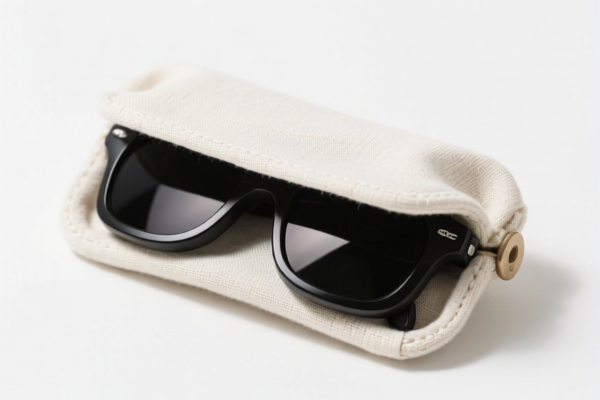
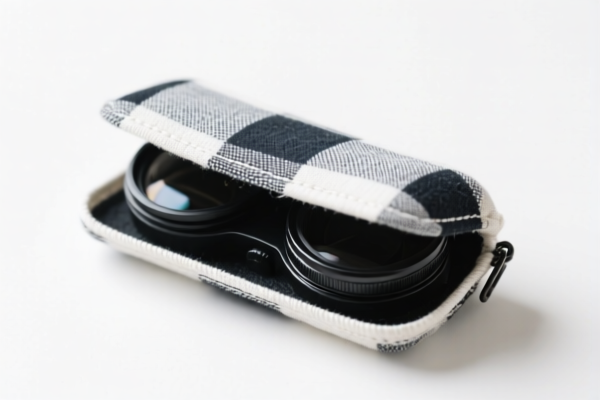
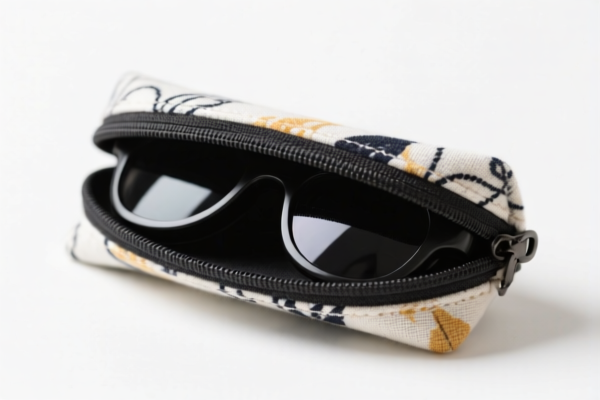
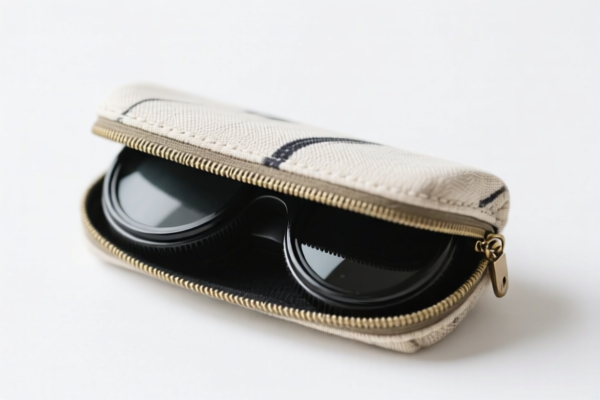
AI Analysis
🕶️ Wooden Lining Fabric Eyeglass Case (Glasses Case)
🌐 HS Code Reference & Customs Clearance Guide | 2026 Latest Tariff Analysis | Professional Clearance Strategy
📌 Part 1: Product Definition & Classification: Do You Really Understand "Eyeglass Cases"?
An eyeglass case is a small container designed to protect spectacles, sunglasses, or reading glasses from scratches, impacts, and moisture. In international trade, classification hinges on two key factors: Material Composition (what is it made of?) and Function/Form (what does it look like?).
There are two primary classification paths for this product:
Path A: The "Wooden Artisan" Route (Chapter 44)
If the case is primarily identified by its wooden construction (even if lined with fabric), it falls under woodworking products. The wood is the defining characteristic.
Path B: The "Textile Container" Route (Chapter 42)
If the case is primarily identified as a bag, pouch, or similar container with fabric as the outer material and wood merely as a structural lining or reinforcement, it falls under articles of textile materials.
⚠️ Key Distinction Point:
- If the outer shell is wood and fabric is just an interior lining → Go with HS 4421 (Wood Products).
- If the outer shell is fabric/textile and wood is the inner lining/structure → Go with HS 4202 (Articles of Textile Materials).
📦 Part 2: HS Code Classification Details (2026 Latest Tariff Authoritative Comparison)
Based on the provided data, here are the four potential HS Codes and their specific tax implications for imports into the US (China Origin):
| HS Code | Product Description | Applicability Scenario | Total Tax Rate |
|---|---|---|---|
4421.91.98.80 |
Other wooden articles | Primary Material: Wood. The summary indicates the product is inferred as a "wooden product." The fabric lining is secondary. No material conflict. | 38.3% |
4421.99.98.80 |
Other wooden articles (Non-specific) | Primary Material: Wood. The core attribute is considered a "wooden eyeglass case." Even with fabric, it’s classified as a non-specific wooden article. | 38.3% |
4202.99.90.00 |
Articles of textile materials | Primary Material: Textile. The outer surface is fabric; the wood is a "lining." It fits the "similar container" category (like a pouch/wallet). | 55.0% |
4202.99.30.00 |
Other bags and similar containers | Primary Material: Textile. Specifically matches "wooden" (lining) + "fabric" (outer) + "box/container" form. Best fit for Textile-focused classification. | 35.0% |
4202.99.30.00 |
Other bags and similar containers | Primary Material: Textile. Explicitly matches "Wooden" (core) + "Fabric Lining" + "Box" shape. No material conflict. | 35.0% |
🔍 Critical Note:
- Why two different tax rates?
- HS 4421 (Wood) has a higher base tariff (3.3%) compared to HS 4202 (Textile, some codes 0%).
- However, both are subject to the same Section 301 Tariffs (25%) and IEEPA Tariffs (10%).
- HS 4202.99.30.00 is the most advantageous because its base tariff is 0.0%, whereas HS 4421 has a 3.3% base.
- Calculation:(1 + 0%) * 1.25 * 1.10 = 1.375(approx 35% effective) vs(1 + 3.3%) * 1.25 * 1.10 = 1.385(approx 38.3% effective).
💰 Part 3: 2026 Latest Tariff Rate Breakdown (Including Surcharges & Policy Add-ons)
✅ Applicable Country: United States (US)
✅ Origin: China (CN)
✅ Effective Time: From November 10, 2025 (and subsequent imports)
🎯 1. 4421.91.98.80 & 4421.99.98.80 — Wooden Articles
| Item | Content |
|---|---|
| Base Tariff | 3.3% (Ad Valorem) |
| USITC Surcharge (Section 301) | +25.0% |
| IEEPA Surcharge (China-specific) | +10.0% (Effective Nov 10, 2025) |
| Total Effective Rate | 38.3% |
| Tax Calculation | CIF Value × 38.3% |
| De Minimis Eligibility | ❌ Not Eligible (Deny De Minimis) |
| Legal Basis Path | IEEPA:9903.01.25 → IEEPA:9903.01.24 → USITC:4421.xx.xx.xx → FOOTNOTE:9903.88.01 |
📌 Explanation:
- The 3.3% base rate applies to general wooden articles.
- The 25% is the standard Section 301 penalty.
- The 10% is the additional IEEPA tariff for Chinese goods.
- Total: 38.3%. This is a high-cost classification. Avoid if possible if a lower-tax textile code applies.
🎯 2. 4202.99.90.00 — Other Textile Articles
| Item | Content |
|---|---|
| Base Tariff | 20.0% (Ad Valorem) |
| USITC Surcharge (Section 301) | +25.0% |
| IEEPA Surcharge (China-specific) | +10.0% |
| Total Effective Rate | 55.0% |
| Tax Calculation | CIF Value × 55.0% |
| De Minimis Eligibility | ❌ Not Eligible |
| Legal Basis Path | IEEPA:9903.01.25 → IEEPA:9903.01.24 → USITC:4202.99.90.00 → FOOTNOTE:9903.88.01 |
📌 Warning:
- This code has a high base rate (20%).
- Combined with 301 (25%) and IEEPA (10%), the total hits 55.0%.
- Recommendation: Avoid this code if4202.99.30.00is applicable, as it is significantly cheaper.
🎯 3. 4202.99.30.00 — Other Bags & Similar Containers (OPTIMAL CHOICE)
| Item | Content |
|---|---|
| Base Tariff | 0.0% (Ad Valorem) |
| USITC Surcharge (Section 301) | +25.0% |
| IEEPA Surcharge (China-specific) | +10.0% |
| Total Effective Rate | 35.0% |
| Tax Calculation | CIF Value × 35.0% |
| De Minimis Eligibility | ❌ Not Eligible |
| Legal Basis Path | IEEPA:9903.01.25 → IEEPA:9903.01.24 → USITC:4202.99.30.00 → FOOTNOTE:9903.88.01 |
📌 Explanation:
- The 0% base rate is the key advantage here.
- The 35.0% total rate is the lowest among all options provided in the data.
- Condition: The product must be classified as a "similar container" (like a pouch/bag) with textile as the primary outer material and wood as lining/structure.
- Best For: Cases where the outer layer is fabric/leatherette, and wood is internal or structural.
🛠️ Part 4: Customs Clearance Practical Advice (Real-World Pitfall Guide)
✅ 1. Document Checklist (Non-Negotiable)
| Document | Mandatory? | Notes |
|---|---|---|
| ✅ Product Specification Sheet | ✔️ | Must detail: Outer material, Lining material, Dimensions, Brand. |
| ✅ Product Photos (Clear) | ✔️ | Show the outer surface clearly. Is it fabric or wood? This determines HS 4421 vs 4202. |
| ✅ Commercial Invoice | ✔️ | Must state: "Eyeglass Case, Wooden Lining, Fabric Outer." |
| ✅ Packing List | ✔️ | List quantity, weight, and carton details. |
| ✅ Origin Certificate (CO) | ✔️ | Confirms China origin (triggers 301/IEEPA). |
✅ 2. Declaration Strategy (Key Tips)
🔥 “Outer Material Defines the Code!”
| Scenario | Correct HS Code | Why? |
|---|---|---|
| Hard Shell Wooden Case (Fabric inside only) | 4421.91.98.80 or 4421.99.98.80 |
Wood is the primary material/structure. |
| Soft/Fabric Case (Wooden frame/lining) | 4202.99.30.00 |
Textile is the primary outer material. Form is a "container/pouch." |
| Leather/Faux Leather Case | 4202.99.90.00 |
Leather falls under different subheadings, often higher base tax. |
📌 Critical Warning:
- Do NOT describe it simply as "Wooden Box." If the outside is fabric, customs may reject it.
- Do NOT describe it simply as "Fabric Bag" if the structure is rigid wood. Customs may reject it for Chapter 44.
- Use Precise Language:
- Good: "Eyeglass Case, Fabric Outer, Wooden Lining" → Supports4202.99.30.00
- Good: "Eyeglass Case, Solid Wood Shell, Fabric Interior" → Supports4421.91.98.80
✅ 3. Special Situations
| Situation | Handling Advice |
|---|---|
| Mixed Material Claims | If unsure, provide both material breakdowns in the invoice. Customs will decide based on principal character. |
| Gift Sets | If the case is part of a sunglasses set, the entire set may be classified by the sunglasses (HS 9004), not the case. Check the set definition. |
| De Minimis (Section 321) | ❌ Not Applicable. Even if the value is under $800, Section 301 and IEEPA surcharges often negate de minimis for China-origin goods in certain categories. Verify current CBP rulings. |
🌍 Part 5: Global Market Comparison (2026 Latest)
| Country/Region | Recommended HS Code | Base Tariff | Total Rate (China) | Notes |
|---|---|---|---|---|
| 🇺🇸 USA | 4202.99.30.00 |
0% | 35.0% | Lowest total rate due to 0% base. |
| 🇺🇸 USA (Wood) | 4421.99.98.80 |
3.3% | 38.3% | Higher base rate. |
| 🇨🇳 China | 4202.99.30.00 |
0% | 0%~5% | No Section 301. |
| 🇪🇺 EU | 4202.99.90 |
4% | 4% | No major surcharges. |
| 🇬🇧 UK | 4202.99.90 |
4% | 4% | Post-Brexit tariffs. |
📌 Conclusion:
- For US Imports,4202.99.30.00is the most cost-effective if the product’s outer material is textile/fabric.
- If the product is hard wood, accept the 38.3% rate under4421.
- Avoid4202.99.90.00due to its high 20% base tariff.
📌 Part 6: Common Mistakes & Pitfalls (Lessons Learned)
❌ Mistake 1: Declaring a fabric-outer case as 4421 (Wood)
👉 Consequence: Customs may accept it, but you pay 38.3% instead of 35.0%. Minor loss, but technically inaccurate.
❌ Mistake 2: Declaring a hard-wood case as 4202 (Textile)
👉 Consequence: Customs may reject the classification as the principal material is wood. Risk of audit, fines, or re-classification penalties.
❌ Mistake 3: Ignoring the IEEPA 10% Surcharge
👉 Consequence: Many importers forget the 10% IEEPA tariff (effective Nov 2025). Failing to include it leads to underpayment and subsequent penalties.
✅ Correct Approach:
“Identify the Outer Surface. Fabric Outer = 4202. Wood Outer = 4421. Always add 35% (or 38.3%) for China-US trade.”
🎯 Part 7: Conclusion: Precise Classification Saves Money!
🎯 Key Takeaways:
🔹 “Outer Material is King”: Fabric exterior →
4202.99.30.00(35%). Wood exterior →4421(38.3%).
🔹 “IEEPA is Real”: The 10% surcharge is mandatory for China-origin goods since Nov 2025.
🔹 “Avoid 55%”: Don’t use4202.99.90.00unless forced; it’s too expensive.
📌 Pro Tip:
If your product is exclusively wooden with no fabric structure, accept the 38.3% rate. If it is fabric with wooden lining, fight for
4202.99.30.00to save 3.3%.
Consult a customs broker to review product photos before shipment to ensure the principal character is correctly declared.
📣 Act Now:
📞 Contact your customs broker with clear photos of the exterior.
🚀 Optimize your landed cost by choosing the right HS Code.
💼 Don’t let classification errors eat your margins!
✨ Professional clearance starts with precise classification!
💼 Every percentage point counts!
Customer Reviews
About HS Code Classification
The Harmonized System (HS) is an internationally standardized nomenclature developed by the World Customs Organization (WCO) to classify traded products. Over 200 countries use the HS system as the basis for customs tariffs, trade statistics, and import/export regulations.
Each HS code follows a hierarchical structure:
- Chapter (2 digits) — Broad category of goods (e.g., Chapter 84: Machinery and Mechanical Appliances)
- Heading (4 digits) — More specific grouping within the chapter
- Subheading (6 digits) — Internationally standardized breakdown, used by all WCO member countries
- National subdivisions (8-10 digits) — Country-specific extensions for further classification, such as US HTSUS 10-digit codes
Correct HS code classification is essential for smooth customs clearance, accurate duty payment, and compliance with trade regulations. Misclassification can lead to customs delays, overpayment of duties, or penalties.
When importing from CN to US, the applicable tariff rates may include:
- Most-Favored-Nation (MFN) rate — The standard duty rate applied to WTO members
- General rate — Applied to countries without trade agreements
- Trade remedy duties — Additional tariffs such as Section 301 (anti-dumping), Section 232 (national security), or countervailing duties
The information provided on this page is for reference purposes only. For official classification, please consult with your local customs authority or a licensed customs broker.