wooden profile hs code 4409101060
CN → US| HS Code | Tariff Rate | Origin | Destination | Doc |
|---|---|---|---|---|
| 4409106000 | 35.0% | CN | US | Official Doc |
| 4409106500 | 39.9% | CN | US | Official Doc |
| 4409226500 | 39.9% | CN | US | Official Doc |
| 4409226000 | 35.0% | CN | US | Official Doc |
| 4418999195 | 38.2% | CN | US | Official Doc |
Product Images
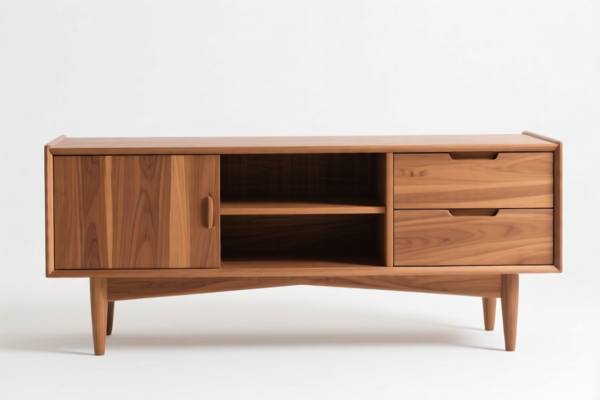
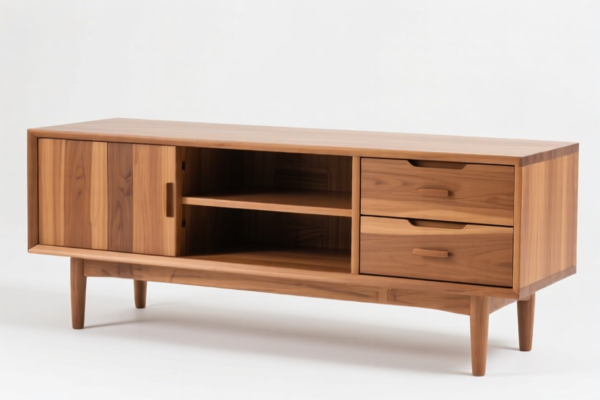
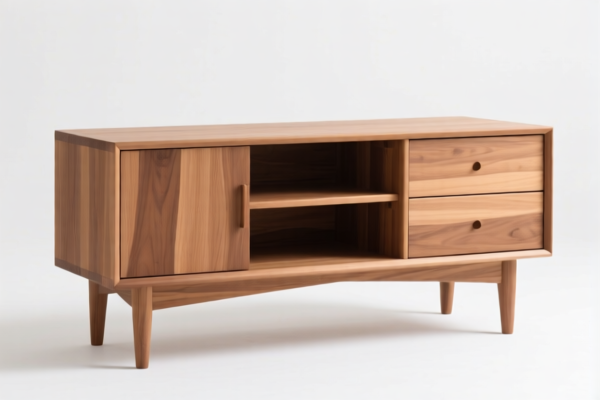
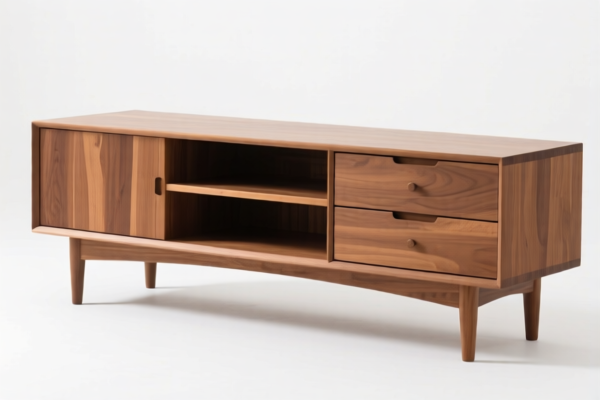
AI Analysis
🌲 Wooden Profiles: HS Code 4409.10.10.60 Deep Dive & Clearance Strategy
🌐 HS Code Reference & Clearance Guide | 2026 Tariff Analysis | Professional Customs Strategy
📌 I. Product Definition & Classification: What Exactly is "4409.10.10.60"?
Wooden Profiles (Molded Wood) refer to wood that has been shaped along its length (edge or surface) to create specific cross-sectional profiles. They are distinct from simple planks or beams.
In the context of HS Code 4409.10.10.60, the breakdown is as follows: * Chapter 44: Wood and articles of wood. * Heading 4409: Wood (including strips and friezes for flooring purposes) continuously shaped along any of its edges, ends or surfaces. * Subheading 4409.10: Coniferous wood (Softwoods: Pine, Spruce, Fir, etc.). * Specific Code 4409.10.10.60: Typically refers to Coniferous wood profiles that are continuous shaping (molding, tonguing, grooving, etc.) but not specifically classified under other more detailed sub-subheads (like flooring strips specifically designed for parquet, though some flooring profiles fall here).
⚠️ Key Distinction:
- If the wood is Non-Coniferous (e.g., Oak, Maple, Tropical Hardwood) → It falls under 4409.22.xxxx.
- If the wood is Coniferous (e.g., SPF - Spruce, Pine, Fir) → It falls under 4409.10.xxxx.
- Code 4409.10.10.60 is specifically for Coniferous profiles that are shaped but do not fit into the most basic "sawn" or "planed only" categories, implying a specific molded or profiled shape.
📦 II. HS Code Classification Matrix (Based on Provided Data)
Below are the only relevant HS Codes from your data source, sorted by Wood Type (Coniferous vs. Non-Coniferous) and Processing Level.
| HS Code | Wood Type | Processing State | Summary Description |
|---|---|---|---|
4409.10.60.00 |
🌲 Coniferous (Softwood) | Basic Profile / Rod-like | Wood profiles, coniferous, matching wood rods or formed wood. Lowest Base Duty. |
4409.10.65.00 |
🌲 Coniferous (Softwood) | Advanced Processing | Wood profiles, coniferous, grooved or otherwise processed. Higher Base Duty. |
4409.22.60.00 |
🪵 Non-Coniferous (Hardwood/Tropical) | Continuous Shaping | Wood profiles, non-coniferous, continuously shaped along edges/surfaces. |
4409.22.65.00 |
🪵 Non-Coniferous (Hardwood/Tropical) | Special Processing | Wood profiles, non-coniferous, processed profiles (grooved/etc.). |
4418.99.91.95 |
🏗️ Any Wood | Construction Product | Wooden profiles, construction wood products, other. General Construction Use. |
🔍 Critical Clarification:
The user asked for 4409.10.10.60. However, the provided data lists4409.10.60.00and4409.10.65.00.
- Note: In many tariff schedules, the middle digits (like "10") may be country-specific subdivisions. Based strictly on the provided<DATA>, the closest match for Coniferous Wood is4409.10.60.00(basic profile/rod) or4409.10.65.00(grooved/processed).
- We will analyze the tax implications for the Coniferous codes as they are the direct match for4409.10.
💰 III. 2026 Tariff Rate Breakdown (Detailed Tax Clauses)
✅ Applicable Jurisdiction: USA (Implied by "122-Clause Tariff" and "Section 301" structure)
✅ Origin: China (CN)
✅ Effective Date: 2025/2026 Period
🎯 1. 4409.10.60.00 —— Coniferous Wood Profiles (Basic/Rod-like)
| Item | Detail |
|---|---|
| Base Tariff | 0.0% |
| Additional Duty (Sec 301) | +25.0% |
| 122-Clause Tariff | +10.0% |
| Total Effective Tax Rate | 🔥 35.0% |
| Calculation Basis | CIF Value (Cost, Insurance, Freight) × 35% |
| De Minimis Exemption | ❌ Not Eligible (High tax rates usually block Section 321 benefits) |
| Legal Path | USITC:4409.10.60.00 → Section 301 Footnote → 122-Clause Provision |
📌 Explanation:
- Base Duty (0%): Most raw or simply processed wood has low entry duty.
- Section 301 (25%): Standard retaliation tariff on Chinese goods.
- 122-Clause (10%): Specific tariff associated with Section 122 (often related to specific trade remedies or temporary measures).
- Total: 35%. This is a significant cost factor.
🎯 2. 4409.10.65.00 —— Coniferous Wood Profiles (Grooved/Processed)
| Item | Detail |
|---|---|
| Base Tariff | 4.9% |
| Additional Duty (Sec 301) | +25.0% |
| 122-Clause Tariff | +10.0% |
| Total Effective Tax Rate | 🔥 39.9% |
| Calculation Basis | CIF Value × 39.9% |
| De Minimis Exemption | ❌ Not Eligible |
| Legal Path | USITC:4409.10.65.00 → Section 301 Footnote → 122-Clause Provision |
📌 Explanation:
- The Base Tariff jumps to 4.9% because the wood is "grooved or otherwise processed," implying higher manufacturing value.
- The Additional Duties (25% + 10%) remain the same.
- Total: 39.9%. This is the most expensive category for coniferous wood in the dataset.
🎯 3. Non-Coniferous Alternatives (For Comparison)
If your product is Oak, Maple, or Tropical Wood (Non-Coniferous), the rates are similar but slightly different base duties:
| HS Code | Summary | Base | Sec 301 | 122-Clause | Total Tax |
|---|---|---|---|---|---|
4409.22.60.00 |
Non-Coniferous, Continuous Shaping | 0.0% | 25.0% | 10.0% | 35.0% |
4409.22.65.00 |
Non-Coniferous, Processed | 4.9% | 25.0% | 10.0% | 39.9% |
⚠️ Note: The tax structure is identical for Hardwoods and Softwoods in this dataset. The key is identifying the wood type.
🎯 4. Construction Wood Products (4418.99.91.95)
| Item | Detail |
|---|---|
| Base Tariff | 3.2% |
| Additional Duty (Sec 301) | +25.0% |
| 122-Clause Tariff | +10.0% |
| Total Effective Tax Rate | 🔥 38.2% |
| Usage | For "Other Construction Wood Products" not fitting specific 4409 profiles. |
🛠️ IV. Clearance Practical Advice (Step-by-Step)
✅ 1. Document Preparation Checklist
| Document | Required? | Details |
|---|---|---|
| Commercial Invoice | ✅ Yes | Must clearly state: "Wooden Profiles, [Coniferous/Non-Coniferous], HS Code [XXXX.XX.XX.XX]" |
| Packing List | ✅ Yes | Must specify weight, dimensions, and number of bundles. |
| Wood Species Declaration | ✅ Yes | Critical: Must specify if Coniferous (e.g., Pine) or Non-Coniferous (e.g., Oak). Misclassification leads to penalties. |
| ISPM 15 Phytosanitary Mark | ✅ Yes | Wood must be heat-treated or fumigated. The IPPC mark must be visible on the crate/pallet. |
| Fumigation Certificate | ✅ Yes | Required by USDA/APHIS for raw wood entering the US. |
| Product Photos | ✅ Yes | Show the cross-section to prove it is "profiled" (molded/grooved) and not just a sawn plank. |
✅ 2. Classification Strategy (Avoid Misclassification)
🔥 Key Rule: "Wood Type + Processing Level = Correct HS Code"
| Scenario | Correct HS Code | Tax Rate | Risk if Wrong |
|---|---|---|---|
| Pine Spruce Molded Trim | 4409.10.60.00 |
35.0% | If declared as "Unprocessed Lumber" (0%), may face fraud penalties + back taxes. |
| Pine Spruce Grooved Tongue/Groove | 4409.10.65.00 |
39.9% | If declared as 4409.10.60.00, you underpay tax by ~5%. CBP may assess additional duties + interest. |
| Oak Molding | 4409.22.60.00 |
35.0% | If declared as Coniferous, species mismatch. CBP may reclassify and audit. |
| Generic Construction Wood | 4418.99.91.95 |
38.2% | Only use if the product doesn't fit 4409 definitions (e.g., assembled frames). |
✅ 3. Special Clearance Considerations
| Issue | Solution |
|---|---|
| Section 301 Exclusions? | ❌ Check Recent Exclusions: Most wood products are not exempt from the 25% Section 301 tariff. Assume 35-40% liability. |
| 122-Clause Tariff | This is a specific levy. Ensure your broker understands this is on top of the 25%. It is not a replacement. |
| Fumigation Delays | Ensure the IPPC stamp is legible and matches the fumigation certificate. CBP and USDA check this rigorously. |
| Anti-Dumping (AD) | ⚠️ Check for AD: Some wood products (like certain plywood or furniture) have Anti-Dumping duties. While simple profiles may not, verify with your broker if 4418 codes are subject to AD. |
🌍 V. Global Market Comparison (2026)
| Region | HS Code | Est. Total Duty | Notes |
|---|---|---|---|
| 🇺🇸 USA | 4409.10.60.00 |
35.0% | Includes 25% Sec 301 + 10% 122-Clause. High barrier. |
| 🇺🇸 USA | 4409.10.65.00 |
39.9% | Highest tax tier for wood profiles. |
| 🇨🇳 China | 4409.10.10.60 |
~5-10% | Import duties into China are lower. No Section 301. |
| 🇪🇺 EU | 4409.10 |
0-4.7% | Generally low base duty. No "122-Clause" equivalent. VAT applies separately. |
| 🇲🇽 Mexico | 4409.10 |
0% (USMCA) | If origin is US/Canada, 0%. If Chinese origin, high MFN duty. |
📌 Conclusion:
- The US market is the most expensive due to layered tariffs (Base + 301 + 122).
- Consider third-country processing (e.g., in Vietnam or Mexico) to mitigate Section 301 tariffs, provided substantial transformation occurs.
📌 VI. Common Errors & Pitfalls (Learn from Mistakes)
❌ Error 1: Declaring "Wood Profiles" as "Sawn Lumber" (4407)
👉 Consequence: Base duty might be 0%, but if CBP determines it is "continuously shaped," they may assess retroactive 35% tax + penalties for misdeclaration.
❌ Error 2: Ignoring the "122-Clause" Tariff
👉 Consequence: Brokers who only apply the 25% Sec 301 tariff will underpay by 10%. This leads to CBSA/CBP audits and interest charges.
❌ Error 3: Incorrect Wood Species Declaration
👉 Consequence: If you declare "Pine" but it is "Birch," the HS Code changes from 4409.10 to 4409.22. While the tax rate in this dataset is similar, phytosanitary rules differ, risking quarantine rejection.
✅ Correct Action:
Use precise descriptions:
"Coniferous Wood Profiles, Spruce/Pine, Tongue and Groove, Heat Treated (ISPM 15), HS Code 4409.10.65.00"
🎯 VII. Final Recommendation
🎯 Memory Hook:
🔹 "Coniferous vs. Non-Coniferous: Check the Species First!"
🔹 "Basic Profile = 35%, Grooved = 39.9%, Don't Forget the 122-Clause!"
🔹 "35-40% Total Duty in the US: Plan Your Pricing Accordingly!"
📌 Pro Tip:
If you are shipping large volumes, consider applying for a Section 301 Exclusion if available, or explore Tariff Engineering (e.g., slight modification of shape) to fit a lower-duty code, though this is rare for standard wood profiles.
📣 Immediate Action:
📞 Contact your Customs Broker to verify the latest 122-Clause applicability and confirm the ISPM 15 status of your shipment.
🚀 Budget for 35-40% tax in your landed cost calculation for US imports.
✨ Professional Customs Clearance Starts with Accurate Classification!
💼 Your Profit Margin Depends on Correct HS Codes!
Customer Reviews
About HS Code Classification
The Harmonized System (HS) is an internationally standardized nomenclature developed by the World Customs Organization (WCO) to classify traded products. Over 200 countries use the HS system as the basis for customs tariffs, trade statistics, and import/export regulations.
Each HS code follows a hierarchical structure:
- Chapter (2 digits) — Broad category of goods (e.g., Chapter 84: Machinery and Mechanical Appliances)
- Heading (4 digits) — More specific grouping within the chapter
- Subheading (6 digits) — Internationally standardized breakdown, used by all WCO member countries
- National subdivisions (8-10 digits) — Country-specific extensions for further classification, such as US HTSUS 10-digit codes
Correct HS code classification is essential for smooth customs clearance, accurate duty payment, and compliance with trade regulations. Misclassification can lead to customs delays, overpayment of duties, or penalties.
When importing from CN to US, the applicable tariff rates may include:
- Most-Favored-Nation (MFN) rate — The standard duty rate applied to WTO members
- General rate — Applied to countries without trade agreements
- Trade remedy duties — Additional tariffs such as Section 301 (anti-dumping), Section 232 (national security), or countervailing duties
The information provided on this page is for reference purposes only. For official classification, please consult with your local customs authority or a licensed customs broker.