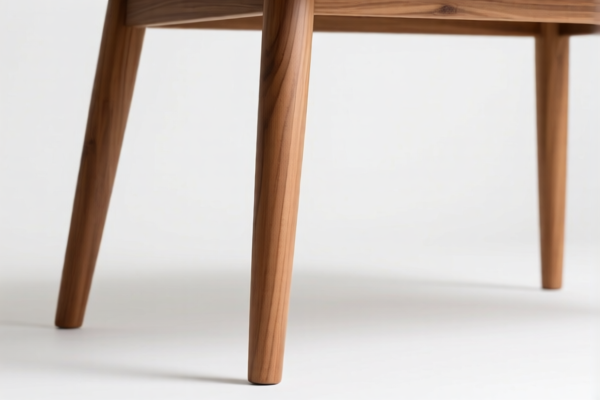
wooden table
CN → US| HS Code | Tariff Rate | Origin | Destination | Doc |
|---|---|---|---|---|
| 4421999880 | 38.3% | CN | US | Official Doc |
| 9403608040 | 35.0% | CN | US | Official Doc |
| 4418999195 | 38.2% | CN | US | Official Doc |
| 9403608093 | 35.0% | CN | US | Official Doc |
| 9403308090 | 35.0% | CN | US | Official Doc |
Product Images


AI Analysis
🪵 Wooden Table (Solid Wood Round Table & Office Desk)
🌐 HS Code Reference & Customs Clearance Guide | 2026 Updated Tax Analysis | Professional Entry Strategy
📌 I. Product Definition & Classification: Do You Know Your "Wooden Table"?
A Wooden Table is a ubiquitous piece of furniture found in homes, offices, and commercial spaces. In international trade, its classification depends heavily on material (Solid vs. Processed Wood), function (Dining vs. Office vs. General), and specific structural details.
Key Distinctions for Custom Classification: * Solid Wood Round Tables: Often fall under wood制品 (Construction wood) or general furniture depending on design specifics. * Solid Wood Round Tables (Dining): Clearly categorized as "Other Wooden Furniture" if used for dining. * Solid Wood Round Tables (General/Other): Used as a catch-all category for wooden furniture not specified elsewhere. * Wooden Desks: Specifically classified under "Office Furniture."
⚠️ Critical Differentiator:
- Construction Wood/Components (e.g., unfinished or specific structural parts) → May fall under 4418.99.
- Finished Furniture (Dining, Office, General) → Falls under 9403.x.
- Material Composition: "Solid Wood" vs. "Wooden" (could imply veneer or composite in some contexts, but here defined as 实木/wooden).
📦 II. Detailed HS Code Breakdown (2026 Latest Tariff Reference)
| HS Code | Product Description | Application Scenario | Total Tax Rate | Tax Composition Details |
|---|---|---|---|---|
4421.99.98.80 |
Solid Wood Round Table, classified as "Other Articles of Wood" (Other categories) | General wooden items, non-furniture specific components, or niche wood articles | 38.3% | Base: 3.3% + Section 301: 25.0% + Section 122: 10.0% |
9403.60.80.40 |
Solid Wood Round Table, Dining Table (Wooden Material) | Dining rooms, restaurants, dining sets | 35.0% | Base: 0.0% + Section 301: 25.0% + Section 122: 10.0% |
4418.99.91.95 |
Solid Wood Round Table, Construction Wood/Components (Other categories) | Structural wood elements, unfinished furniture parts, architectural wood | 38.2% | Base: 3.2% + Section 301: 25.0% + Section 122: 10.0% |
9403.60.80.93 |
Solid Wood Round Table, General Furniture (Other Wooden Furniture - Catch-all) | General household furniture, non-dining, non-office wooden tables | 35.0% | Base: 0.0% + Section 301: 25.0% + Section 122: 10.0% |
9403.30.80.90 |
Wooden Office Desk (Wooden Material, Office Use) | Offices, workstations, commercial desks | 35.0% | Base: 0.0% + Section 301: 25.0% + Section 122: 10.0% |
🔍 Key Takeaway:
- Category 9403 (Furniture) generally offers a 0% Base Tariff, resulting in a 35.0% total (301 + 122).
- Category 4421/4418 (Wood Products) often carries a ~3.2-3.3% Base Tariff, resulting in a ~38.2-38.3% total.
- Misclassification Risk: Choosing4421over9403adds ~3.3% cost unnecessarily for finished furniture.
💰 III. 2026 Latest Tariff Rate Deep Dive (Including Surcharges & Policy Add-ons)
✅ Target Market: USA (US)
✅ Country of Origin: China (CN)
✅ Effective Period: Current trade restrictions (Section 301 & Section 122)
🎯 1. 9403.60.80.40 & 9403.60.80.93 — Wooden Furniture (Round Tables)
Best for Finished Dining/General Tables
| Item | Content |
|---|---|
| Base Tariff | 0.0% (ad valorem) |
| Section 301 Surcharge (USITC) | +25.0% (Section 301: 301-Action-2018-06) |
| Section 122 Surcharge | +10.0% (Section 122: 122-Action-2024-01, specific to certain goods) |
| Total Effective Rate | 35.0% |
| Tax Calculation | CIF Value × 35% |
| De Minimis Exemption | ❌ No (Denied) |
| Legal Path | USITC:9403.60.80 → Section301:301-2018-06 → Section122:122-2024-01 |
📌 Explanation:
- Section 301 (25%): The classic US-China trade war tariff on Chinese goods.
- Section 122 (10%): A newer specific tariff imposed on certain categories of Chinese goods (likely affecting wood products or furniture).
- Total Cost: For every $100 of goods, $35 is tax.
🎯 2. 4421.99.98.80 & 4418.99.91.95 — Other Wood Articles / Construction Wood
Higher Cost, Avoid unless necessary (e.g., unfinished parts)
| Item | Content |
|---|---|
| Base Tariff | 3.2% / 3.3% (Standard MFN rate) |
| Section 301 Surcharge | +25.0% |
| Section 122 Surcharge | +10.0% |
| Total Effective Rate | 38.2% / 38.3% |
| Tax Calculation | CIF Value × (Base + 35%) |
| De Minimis Exemption | ❌ No |
| Legal Path | USITC:4421/4418 → Section301:301-2018-06 → Section122:122-2024-01 |
📌 Warning:
- If your product is a finished table, do NOT classify under4421or4418unless it's clearly a raw component.
- The extra 3.2-3.3% base tax is avoidable if the correct "Furniture" (9403) code is used.
🎯 3. 9403.30.80.90 — Wooden Office Desk
Standard Office Furniture
| Item | Content |
|---|---|
| Base Tariff | 0.0% |
| Section 301 Surcharge | +25.0% |
| Section 122 Surcharge | +10.0% |
| Total Effective Rate | 35.0% |
| Tax Calculation | CIF Value × 35% |
| De Minimis Exemption | ❌ No |
📌 Note: Same rate as dining tables (
9403.60). "Office" vs. "Dining" does not change the tax burden in this specific scenario.
🛠️ IV. Practical Customs Clearance Advice (Avoid Pitfalls)
✅ 1. Documentation Checklist (Non-Negotiable)
| Document | Requirement | Why? |
|---|---|---|
| ✅ Product Specifications | ✔️ | Must state material ("Solid Wood"), dimensions, weight, and finish status (finished vs. unfinished). |
| ✅ Technical Drawings | ✔️ | Proves it is "Furniture" (9403) and not "Wood Component" (4418/4421). |
| ✅ Clear Photos | ✔️ | Show the final product (legs, top, assembly) to confirm it's a "Table" not "Planks". |
| ✅ Commercial Invoice | ✔️ | Must use "Solid Wood Round Table" or "Wooden Office Desk" – avoid vague terms like "Wooden Item". |
| ✅ Packing List | ✔️ | Detail assembly status (knocked down or flat packed). |
| ✅ Bill of Lading | ✔️ | Accurate description matching HS Code. |
✅ 2. Declaration Strategy (Golden Rules)
🔥 The "Furniture First" Principle:
"Finished Table? Use 9403! Raw Wood? Use 44xx!"
| Scenario | Correct HS Code | Incorrect HS Code | Consequence |
|---|---|---|---|
| Finished Round Dining Table | 9403.60.80.40 (35.0%) |
4421.99.98.80 (38.3%) |
Overpaying 3.3% + Risk of Audit |
| Finished Office Desk | 9403.30.80.90 (35.0%) |
4418.99.91.95 (38.2%) |
Overpaying 3.2% + Classification Error |
| Unfinished Wood Component | 4418.99.91.95 (38.2%) |
9403.60.80.93 (35.0%) |
Under-declaration → Penalty + Seizure |
| Table with Metal Legs | 9403.60.80.xx (Furniture) |
4421.xx (Wood only) |
Wrong code if >50% wood value? |
✅ 3. Special Scenarios
| Situation | Recommendation |
|---|---|
| Knock-Down (KD) Furniture | Still classified as 9403 (Furniture). Do not split into parts. |
| Solid vs. Veneered | If "Solid Wood" is claimed, ensure material is verified. If veneered, rate might differ (but here all are "Solid"). |
| Multi-Purpose Tables | If used for both dining and office, choose the primary use declared on the invoice. |
| Section 122 Eligibility | Crucial: Ensure the product is not on a "Prohibited" list for Section 122. Currently, wood furniture seems included. |
🌍 V. Global Market Comparison (2026)
| Country | Recommended HS Code | Base Tariff | Section 301 | Section 122 | Total Rate | Notes |
|---|---|---|---|---|---|---|
| 🇺🇸 USA | 9403.60 |
0.0% | +25% | +10% | 35.0% | Highest due to 122 add-on |
| 🇨🇳 China | 9403.60 |
5.0% | 0% | 0% | 5.0% | No 301/122 for exports from CN to CN |
| 🇪🇺 EU | 9403.60 |
0.0% | 0% | 0% | 0.0% | No 301/122, but potential anti-dumping |
| 🇯🇵 Japan | 9403.60 |
0.0% | 0% | 0% | 0.0% | J-EPA/FTA benefits may apply |
| 🇦🇺 Australia | 9403.60 |
0.0% | 0% | 0% | 0.0% | No 301/122, but check specific wood rules |
📌 Conclusion:
- USA is the ONLY major market imposing the Section 122 (10%) surcharge on these wood products in this dataset.
- Cost Savings Tip: If possible, explore transshipment (e.g., via Vietnam or Malaysia) for Section 122/301 exemptions, provided rules of origin are met.
📌 VI. Common Mistakes & Pitfalls (Learn from Errors)
❌ Mistake 1: Using "Wood" instead of "Furniture"
👉 Result: Paying 38.3% instead of 35.0% → 3.3% extra cost.
❌ Mistake 2: Splitting "Table" and "Legs"
👉 Result: If legs are metal, declaring wood only might trigger Section 122 or anti-dumping on wood.
❌ Mistake 3: Ignoring "Section 122"
👉 Result: Assuming only 25% (301). 10% is missing! Total 35%, not 25%.
❌ Mistake 4: Vague Description
👉 Result: Customs asks for info, delays shipment, storage fees accumulate.
✅ Best Practice:
"Solid Wood Round Dining Table, Finished, KD Type, Model XYZ, Origin: China"
🎯 VII. Conclusion: Precision is Profit!
🎯 Key Takeaway:
🔹 "Furniture = 9403 (35%) / Wood Parts = 44xx (38%)"
🔹 "Don't forget the 10% Section 122!"
🔹 "Declare 'Finished' clearly to avoid 3.3% overpayment."
📌 Pro Tip:
If your wooden tables are produced in Vietnam/Mexico, you might avoid Section 301 and Section 122 entirely.
Action:
🚀 Consult a Customs Broker → Verify Origin → Apply for Pre-Ruling
💰 Save 35% on tax by switching origin or optimizing HS Code.
📣 Next Steps:
1. Verify Material: Is it 100% Solid Wood?
2. Check Function: Dining (9403.60) or Office (9403.30)?
3. Calculate Tax: 35% vs 38.3%?
4. File Correctly: Avoid "Other Wood" codes for finished tables!
✨ Smart Classification = Lower Costs
💼 Your Bottom Line Matters!
Customer Reviews
About HS Code Classification
The Harmonized System (HS) is an internationally standardized nomenclature developed by the World Customs Organization (WCO) to classify traded products. Over 200 countries use the HS system as the basis for customs tariffs, trade statistics, and import/export regulations.
Each HS code follows a hierarchical structure:
- Chapter (2 digits) — Broad category of goods (e.g., Chapter 84: Machinery and Mechanical Appliances)
- Heading (4 digits) — More specific grouping within the chapter
- Subheading (6 digits) — Internationally standardized breakdown, used by all WCO member countries
- National subdivisions (8-10 digits) — Country-specific extensions for further classification, such as US HTSUS 10-digit codes
Correct HS code classification is essential for smooth customs clearance, accurate duty payment, and compliance with trade regulations. Misclassification can lead to customs delays, overpayment of duties, or penalties.
When importing from CN to US, the applicable tariff rates may include:
- Most-Favored-Nation (MFN) rate — The standard duty rate applied to WTO members
- General rate — Applied to countries without trade agreements
- Trade remedy duties — Additional tariffs such as Section 301 (anti-dumping), Section 232 (national security), or countervailing duties
The information provided on this page is for reference purposes only. For official classification, please consult with your local customs authority or a licensed customs broker.