woodworking drill
CN → US| HS Code | Tariff Rate | Origin | Destination | Doc |
|---|---|---|---|---|
| 8207502070 | 40.0% | CN | US | Official Doc |
| 8205100000 | 41.2% | CN | US | Official Doc |
| 8467210030 | 11.7% | CN | US | Official Doc |
| 8205306000 | 40.0% | CN | US | Official Doc |
| 8465950055 | 38.0% | CN | US | Official Doc |
Product Images
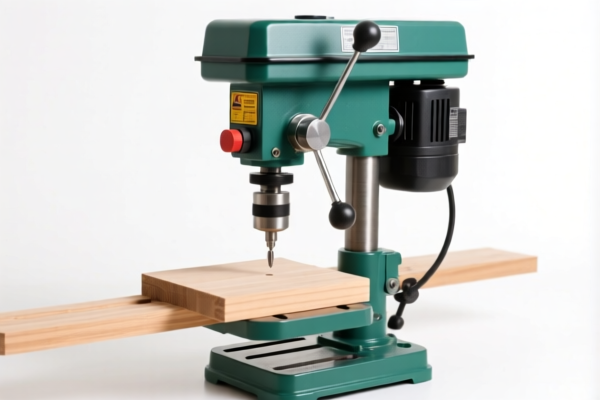
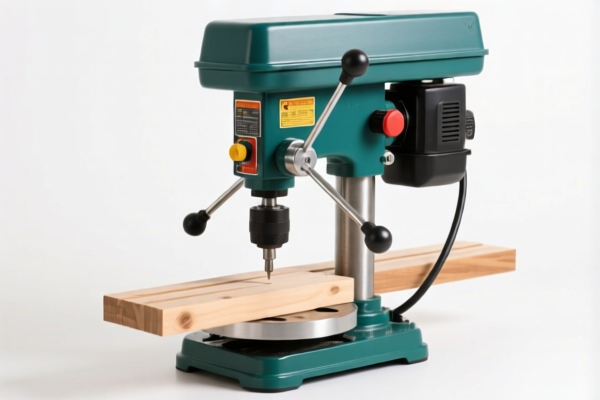
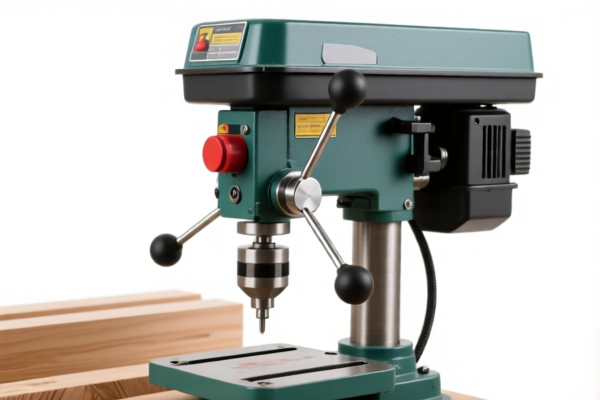
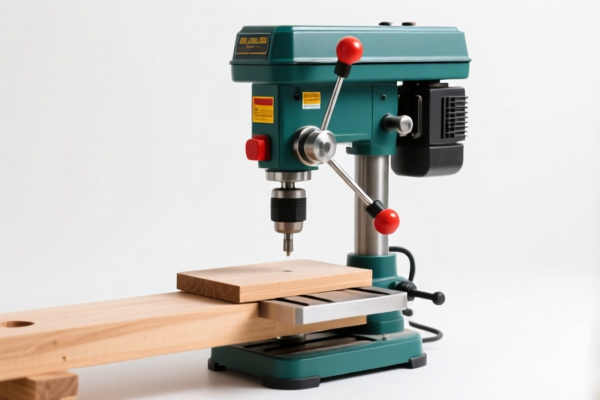
AI Analysis
🪵 Woodworking Drill (Woodworking Drill Tools)
🌐 HS Code Reference & Customs Clearance Guide | 2026 Latest Tariff Analysis | Professional Classification Strategy
📌 I. Product Definition & Classification: Do You Really Understand "Woodworking Drills"?
A Woodworking Drill is a critical tool in carpentry and woodworking, used for creating holes in wood. In international trade, classification depends heavily on whether the item is a standalone drill bit, a portable power tool, or part of a stationary machine. Misclassification can lead to drastic duty differences, particularly under current US trade policies.
⚠️ Key Distinction Point:
- Is it a non-powered bit (insert for a machine)? → Often Chapter 82 (Tools of Base Metal).
- Is it a portable electric hand-held drill? → Chapter 84 (Machinery/Power Tools).
- Is it part of a woodworking machine (drill press)? → Chapter 84 (Woodworking Machinery).
📦 II. HS Code Classification Details (2026 Latest Authorized对照)
Based on the provided data, here are the 6 possible classifications for "Woodworking Drill" products, ranging from drill bits to portable electric drills.
| HS Code | Product Description | Application Scenario | Tax Rate (Total) |
|---|---|---|---|
8207.50.20.70 |
Woodworking Drill Bits | Specific use as drill bits; non-powered inserts | 40.0% |
8205.10.00.00 |
Woodworking Drilling Tools | Hand tools for drilling, tapping, or threading | 41.2% |
8467.21.00.30 |
Portable Electric Drill | Rotating drill, hand-held, for wood | 11.7% |
8205.30.60.00 |
Woodworking Cutting Tools | Woodworking processing cutting tools | 40.0% |
8465.95.00.55 |
Woodworking Drill Press | Stationary machine defined as a drilling machine for wood | 38.0% |
8467.21.00.50 |
Rotary Electric Drill | Hand-held electric tool, rotary type | 11.7% |
8465.95.00.20 |
Woodworking Drilling Machine | Matches wood processing + drilling function, no conflict | 38.0% |
🔍 Critical Insight:
- Hand-held Electric Drills (8467.21...) have the lowest total tax rate (11.7%).
- Manual/Insert Tools (8207,8205) have high tax rates (40-41.2%) due to higher base tariffs.
- Stationary Machines (8465.95) fall in the middle (38.0%).
💰 III. 2026 Latest Tariff Rate Breakdown (Including Surcharges & Policy Add-ons)
✅ Applicable Country: USA (US)
✅ Origin: China (CN)
✅ Effective Date: 2025/2026 (Current US Trade Policy)
🎯 1. 8207.50.20.70 & 8205.30.60.00 —— Woodworking Drill Bits / Cutting Tools
| Item | Detail |
|---|---|
| Base Tariff | 5.0% |
| Section 301 Surcharge | 25.0% |
| IEEPA Surcharge | 10.0% (122 Section) |
| Total Tax Rate | 40.0% |
| Calculation | CIF Value × 40% |
| De Minimis Exemption | ❌ Not Eligible (High risk of audit) |
| Legal Basis | USITC:8207.50.20.70 → SECTION301:25% → IEEPA:10% |
📌 Explanation:
- Base tariff is 5%.
- 25% Section 301 applies to most Chinese-made tools.
- 10% IEEPA applies to Chinese origin goods.
- Total: 40%. This is a high-cost classification for simple drill bits.
🎯 2. 8205.10.00.00 —— Hand Drilling/Tapping Tools
| Item | Detail |
|---|---|
| Base Tariff | 6.2% |
| Section 301 Surcharge | 25.0% |
| IEEPA Surcharge | 10.0% (122 Section) |
| Total Tax Rate | 41.2% |
| Calculation | CIF Value × 41.2% |
| De Minimis Exemption | ❌ Not Eligible |
| Legal Basis | USITC:8205.10.00.00 → SECTION301:25% → IEEPA:10% |
📌 Note:
- Slightly higher base tariff (6.2%) than drill bits.
- Applies to manual hand tools for drilling/tapping.
- Total: 41.2% – the highest rate in the dataset. Avoid this if possible.
🎯 3. 8467.21.00.30 & 8467.21.00.50 —— Portable Electric Drills (Hand-held)
| Item | Detail |
|---|---|
| Base Tariff | 1.7% |
| Section 301 Surcharge | 0.0% |
| IEEPA Surcharge | 10.0% (122 Section) |
| Total Tax Rate | 11.7% |
| Calculation | CIF Value × 11.7% |
| De Minimis Exemption | ❌ Not Eligible (Still subject to IEEPA) |
| Legal Basis | USITC:8467.21.00.30 → IEEPA:10% |
📌 Key Advantage:
- Base tariff is only 1.7%.
- Section 301 (25%) is EXEMPT for hand-held power tools (8467.21).
- Only the 10% IEEPA applies.
- Total: 11.7% – This is the MOST COST-EFFECTIVE classification.
- Crucial: Must be clearly defined as a hand-held portable electric drill.
🎯 4. 8465.95.00.55 & 8465.95.00.20 —— Woodworking Drill Machines (Stationary)
| Item | Detail |
|---|---|
| Base Tariff | 3.0% |
| Section 301 Surcharge | 25.0% |
| IEEPA Surcharge | 10.0% (122 Section) |
| Total Tax Rate | 38.0% |
| Calculation | CIF Value × 38.0% |
| De Minimis Exemption | ❌ Not Eligible |
| Legal Basis | USITC:8465.95.00.55 → SECTION301:25% → IEEPA:10% |
📌 Note:
- Stationary woodworking machines (e.g., drill presses) are subject to the full 25% Section 301 tariff.
- Total: 38.0%. More expensive than hand-held drills but cheaper than manual tools.
🛠️ IV. Customs Clearance Practical Advice (Actionable Pitfall Avoidance)
✅ 1. Documentation Checklist (Essential for Accurate Classification)
| Document | Required? | Purpose |
|---|---|---|
| ✅ Product Specs | ✔️ | Must specify: Hand-held vs. Stationary, Powered (Electric/Battery) vs. Manual. |
| ✅ Photos | ✔️ | Show the tool's form factor (hand-held, corded/battery, chuck type). |
| ✅ User Manual | ✔️ | Confirm intended use (e.g., "Hand-held portable drill for wood"). |
| ✅ Bill of Lading | ✔️ | Ensure description matches HS code (e.g., "Electric Drill" not just "Tool"). |
| ✅ CE/UL Certificate | ✔️ | Proof of safety compliance for electrical components. |
✅ 2. Classification Strategy (How to Save Money)
🔥 Golden Rule:
"If it's a hand-held electric drill, go for 8467.21! If it's a bit or hand tool, expect 40%+."
| Scenario | Recommended HS Code | Total Tax | Why? |
|---|---|---|---|
| Hand-held Electric Drill (Corded/Battery) | 8467.21.00.30 / .50 |
11.7% | Exempt from 301 (25%). Lowest duty. |
| Drill Bit (Insert for machine) | 8207.50.20.70 |
40.0% | Classified as base metal tool. Subject to 301. |
| Manual Hand Drill (No power) | 8205.10.00.00 |
41.2% | Highest base tariff + 301. Avoid if possible. |
| Drill Press (Stationary) | 8465.95.00.20 / .55 |
38.0% | Stationary machines face 301. Higher than hand-held. |
⚠️ Warning:
- Do NOT misdeclare a stationary drill press as a hand-held drill to get 11.7%. Customs will inspect and penalize.
- Do NOT misdeclare a manual hand tool as an electric one.
- Accuracy is key. The physical form factor must match the HS code description.
✅ 3. Special Case Handling
| Situation | Recommendation |
|---|---|
| Kit Sales (Drill + Bits) | Declare as the main item. If it's a hand-held drill, declare as 8467.21. Bits are considered accessories and may be included or taxed separately depending on packaging. |
| Battery Included | Ensure battery compliance (UN38.3, MSDS) for air/sea freight. Does not change HS code if integrated into hand-held drill. |
| OEM Products | Provide design specs to prove it is a "hand-held portable power tool" to qualify for 8467.21. |
🌍 V. Global Market Comparison (2026)
| Market | Recommended HS Code (Hand-held) | Duty Rate | Notes |
|---|---|---|---|
| 🇺🇸 USA | 8467.21.00.30 |
11.7% | Best rate. Exempt from Section 301. |
| 🇨🇳 China | 8417.80 / 8467.21 |
~10-15% | Lower base tariffs, no 301. |
| 🇪🇺 EU | 8467.21 |
~4-6% | No Section 301. Standard EU duties apply. |
| 🇦🇺 Australia | 8467.21 |
~5% | Standard MFN rates. |
📌 Conclusion:
- The US market is the most complex due to Section 301 and IEEPA.
- Hand-held electric drills (8467.21) are the only woodworking drill category with significant tariff benefits (11.7% vs 40%+).
- Manual tools and drill bits are heavily taxed.
📌 VI. Common Errors & Pitfalls (Lessons Learned)
❌ Error 1: Declaring a Drill Press as a Hand-held Drill
👉 Consequence: Customs seizure, penalties, and retroactive duties of 25%+.
❌ Error 2: Declaring Drill Bits as Power Tools
👉 Consequence: Classification error, potential audit for "deceptive practice".
❌ Error 3: Ignoring Battery Compliance
👉 Consequence: Shipment held at port for safety inspection (UN38.3 required).
❌ Error 4: Using Generic Descriptions like "Woodworking Tool"
👉 Consequence: Customs may assign highest possible duty or request detailed breakdown.
✅ Correct Description Example:
"Hand-held Electric Drill, 20V, Lithium-ion, with Chuck, for Woodworking, Model XYZ, UL Listed"
→ HS Code:8467.21.00.30
→ Duty: 11.7%
🎯 VII. Conclusion: Smart Classification Saves Costs!
🎯 Key Takeaway:
🔹 "Hand-held Electric = 11.7% (Savings!)"
🔹 "Manual/Bit = 40%+ (Expensive)"
🔹 "Stationary = 38% (Moderate)"
📌 Action Plan:
1. Confirm Product Type: Is it hand-held, electric, and portable?
2. Select 8467.21: If yes, use this code to minimize duties.
3. Prepare Docs: Ensure specs and photos clearly show it's a hand-held electric tool.
4. Avoid Misclassification: Do not force manual tools into electric categories.
📣 Immediate Action:
📞 Consult a Licensed Customs Broker to verify your specific product model against
8467.21.00.30or.50.
🚀 Optimize Your Supply Chain: Shift focus to hand-held electric drills for maximum tariff efficiency in the US market.
✨ Professional Customs Clearance Starts with Accurate Classification!
💼 Every Percentage Point of Duty Saved is Pure Profit!
Customer Reviews
About HS Code Classification
The Harmonized System (HS) is an internationally standardized nomenclature developed by the World Customs Organization (WCO) to classify traded products. Over 200 countries use the HS system as the basis for customs tariffs, trade statistics, and import/export regulations.
Each HS code follows a hierarchical structure:
- Chapter (2 digits) — Broad category of goods (e.g., Chapter 84: Machinery and Mechanical Appliances)
- Heading (4 digits) — More specific grouping within the chapter
- Subheading (6 digits) — Internationally standardized breakdown, used by all WCO member countries
- National subdivisions (8-10 digits) — Country-specific extensions for further classification, such as US HTSUS 10-digit codes
Correct HS code classification is essential for smooth customs clearance, accurate duty payment, and compliance with trade regulations. Misclassification can lead to customs delays, overpayment of duties, or penalties.
When importing from CN to US, the applicable tariff rates may include:
- Most-Favored-Nation (MFN) rate — The standard duty rate applied to WTO members
- General rate — Applied to countries without trade agreements
- Trade remedy duties — Additional tariffs such as Section 301 (anti-dumping), Section 232 (national security), or countervailing duties
The information provided on this page is for reference purposes only. For official classification, please consult with your local customs authority or a licensed customs broker.