wool blend fabric
CN → US| HS Code | Tariff Rate | Origin | Destination | Doc |
|---|---|---|---|---|
| 5111309000 | 60.0% | CN | US | Official Doc |
| 5515130510 | 60.0% | CN | US | Official Doc |
| 5111209000 | 60.0% | CN | US | Official Doc |
| 5112909010 | 60.0% | CN | US | Official Doc |
| 5112303000 | 60.0% | CN | US | Official Doc |
| 5515220510 | 55.1% | CN | US | Official Doc |
Product Images
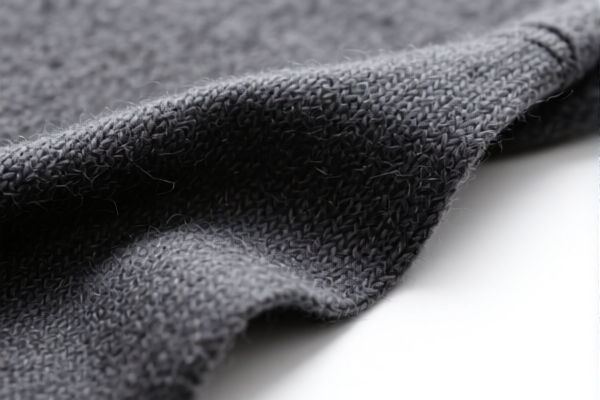
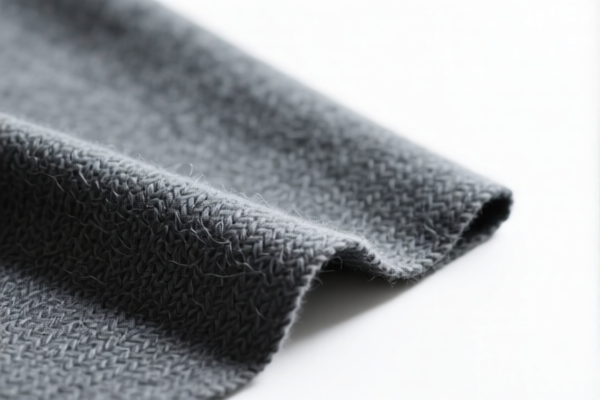
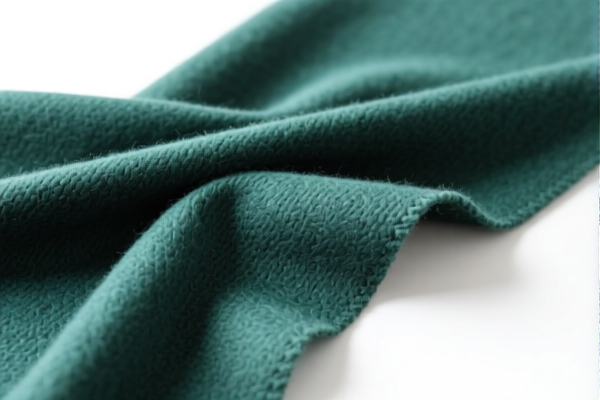
AI Analysis
🧶 Wool Blend Fabric (羊毛混纺布料)
🌐 HS Code Reference & Customs Clearance Guide | 2026 Tariff Analysis | Professional Clearance Strategy
📌 I. Product Definition & Classification: What is "Wool Blend Fabric"?
Wool blend fabric refers to textiles primarily composed of sheep's wool or fine animal hair, mixed with other fibers (such as synthetic fibers, cotton, or other natural fibers). In international trade, the classification depends heavily on: 1. Material Composition: Percentage of wool/fine animal hair vs. other materials. 2. Processing Method: Carded (梳理过) vs. Combed (梳过). 3. Form: Woven fabric (机织物).
⚠️ Key Distinction:
- If the fabric contains carded wool or fine animal hair (rougher texture, less refined) → Often falls under Chapter 51 (5111 series) or Chapter 55 (5515 series) depending on the blend ratio.
- If the fabric contains combed wool or fine animal hair (smoother, higher quality) → Often falls under Chapter 51 (5112 series).
- Crucial Point: The term "Wool Blend" in the name directly triggers classification under wool/hair textile headings. The specific sub-heading depends on whether it is "carded" or "combed" and the specific blend composition.
📦 II. HS Code Classification Details (2026 Latest Tariff Authority Comparison)
Based on the provided data, here are the potential HS Codes for "Wool Blend Fabric," sorted by logical grouping:
🟢 Group A: Carded Wool/Fine Animal Hair Blends (Usually Chapter 51 or 55)
| HS Code | Product Description | Applicable Scenario | Total Tax Rate |
|---|---|---|---|
5111.30.90.00 |
Wool or fine animal hair fabrics, carded, woven, other (blends) | Standard wool blends, carded processing | 60.0% |
5111.20.90.00 |
Wool or fine animal hair fabrics, carded, woven, other | Similar to above, "Other" category | 60.0% |
5515.22.05.10 |
Woven fabrics containing < 85% wool/fine animal hair, mixed with synthetic fibers, carded | Low wool content blends (e.g., 50% wool/50% polyester) | 55.1% |
🟢 Group B: Combed Wool/Fine Animal Hair Blends (Usually Chapter 51)
| HS Code | Product Description | Applicable Scenario | Total Tax Rate |
|---|---|---|---|
5112.30.30.00 |
Wool or fine animal hair fabrics, combed, woven | High-quality wool blends, combed processing | 60.0% |
5112.90.90.10 |
Wool or fine animal hair fabrics, combed, woven, other | Other combed wool blends not specified elsewhere | 60.0% |
🟢 Group C: Mixed/General Wool Fabric Classifications (Chapter 55)
| HS Code | Product Description | Applicable Scenario | Total Tax Rate |
|---|---|---|---|
5515.13.05.10 |
Woven fabrics containing < 85% wool/fine animal hair, mixed with man-made fibers, combed | Combed wool blends with synthetic/man-made fibers | 60.0% |
🔍 Key Takeaway:
- All codes listed result in a high total tax rate due to US trade policies.
- The primary difference lies in whether the wool is carded (5111/5515) or combed (5112/5515.13), and the specific blend ratio.
- Lowest Tax:5515.22.05.10at 55.1% (if the wool content is low and it is carded).
- Highest/Most Common: 60.0% for most other wool blend fabrics.
💰 III. 2026 Latest Tariff Rate Breakdown (Including Surtaxes & Policy Add-ons)
✅ Applicable Country: United States (US)
✅ Origin: China (CN)
✅ Effective Date: From November 10, 2025 (including subsequent imports)
🎯 1. Standard Wool Blend Fabrics (60.0% Total Rate)
Applies to: 5111.30.90.00, 5111.20.90.00, 5112.30.30.00, 5112.90.90.10, 5515.13.05.10
| Item | Content |
|---|---|
| Base Tariff (MFN) | 25.0% (Ad Valorem) |
| Section 301 Surcharge | 25.0% (From USITC Footnote 9903.88.01) |
| Section 122 Tariff | 10.0% (Specific US trade policy surcharge) |
| Total Tax Rate | 60.0% |
| Tax Calculation | CIF Value × 60% |
| De Minimis Exemption | ❌ Not Eligible (deny_de_minimis) |
| Legal Basis Path | Base Tariff → Section 301: 25% → Section 122: 10% |
📌 Explanation:
- The 25% base tariff is the standard Most Favored Nation (MFN) rate for wool fabrics.
- The 25% Section 301 surcharge is imposed on Chinese goods to address unfair trade practices.
- The 10% Section 122 tariff is an additional surcharge under US trade law.
- Combined 60% is a very high tariff, significantly impacting profitability.
🎯 2. Low-Wool Content Carded Blends (55.1% Total Rate)
Applies to: 5515.22.05.10
| Item | Content |
|---|---|
| Base Tariff (MFN) | 20.1% (Ad Valorem) |
| Section 301 Surcharge | 25.0% (From USITC Footnote 9903.88.01) |
| Section 122 Tariff | 10.0% (Specific US trade policy surcharge) |
| Total Tax Rate | 55.1% |
| Tax Calculation | CIF Value × 55.1% |
| De Minimis Exemption | ❌ Not Eligible (deny_de_minimis) |
| Legal Basis Path | Base Tariff → Section 301: 25% → Section 122: 10% |
📌 Note:
- This is the only code with a lower total rate (55.1% vs 60.0%).
- It applies when the wool content is below 85% and the fabric is carded and made with synthetic fibers.
- Even with a lower rate, 55.1% is still extremely high.
🛠️ IV. Customs Clearance Practical Advice (Real-World Pitfall Avoidance Guide)
✅ 1. Documentation Checklist (Essential)
| Document | Required | Explanation |
|---|---|---|
| ✅ Product Specification Sheet | ✔️ | Must include wool percentage, fiber composition, fabric weight, and weave type. |
| ✅ Fabric Swatch/Photo | ✔️ | Visual proof of texture (carded vs. combed) to support HS code selection. |
| ✅ Commercial Invoice | ✔️ | Clearly state "Wool Blend Fabric" and specify the HS Code. |
| ✅ Packing List | ✔️ | Detail the quantity and weight to avoid disputes on CIF value. |
| ✅ Origin Certificate (CO) | ✔️ | Essential for determining origin-based surcharges (Section 301 applies to China). |
| ✅ Third-Party Test Report | ✔️ | Fiber content analysis from a reputable lab (e.g., SGS, BV) is critical to prove wool percentage. |
✅ 2. Declaration Tips (Key Mnemonics)
🔥 "Carded or Combed? Check the Blend! Low Wool = Slightly Lower Tax, But Still High!"
| Scenario | Correct Declaration | Wrong Approach |
|---|---|---|
| High Wool Content (>85%) | 5111 or 5112 series |
Misdeclaring as "100% Cotton" → Fraud Risk |
| Low Wool Content (<85%) | 5515.22.05.10 (if carded) |
Using 5111 code → Higher Tax (60% vs 55.1%) |
| Combed Wool | 5112 or 5515.13 |
Declaring as "Carded" → Incorrect Classification |
| Fabric Rolls | Declare as "Woven Fabric" | Declaring as "Garments" → Different Tax Rate & Regulations |
✅ 3. Special Situations
| Situation | Handling Advice |
|---|---|
| OEM Custom Fabric | Provide the customer's order + design specs. If the wool % varies, ensure the invoice reflects the actual shipment's composition. |
| Blended with Silk | If the blend is significant, re-evaluate HS codes. Silk blends may have different tax implications. |
| Fabric for Military/Medical Use | Generally, no exemption applies. The high tariff stands. Prepare for full cost absorption. |
| Transshipment via Vietnam/Mexico | If the fabric is substantially transformed in a third country, it may qualify for a different origin. However, simple cutting or packaging does not change the origin. |
🌍 V. Global Market Comparison (2026 Latest)
| Country/Region | Recommended HS Code | Tariff Rate | Certification | Note |
|---|---|---|---|---|
| 🇺🇸 USA | 5111 / 5112 / 5515 |
55.1% - 60.0% | None Specific | Extremely High Tariff due to Section 301 & 122 |
| 🇨🇳 China | Same HS Codes | ~5-10% | None | Low import tariff, but high export tax in some cases |
| 🇪🇺 EU | 5111 / 5112 |
~4-12% | CE (if finished product) | No Section 301 surcharge |
| 🇬🇧 UK | Same as EU | ~4-12% | UKCA | Post-Brexit tariffs similar to EU |
| 🇦🇺 Australia | Same HS Codes | ~5% | GTS | No major surcharges |
📌 Conclusion:
- The USA is the most challenging market for wool blend fabrics due to the 60% total tariff.
- EU and UK are more favorable, with standard tariffs around 4-12%.
- China has low import tariffs but may have export restrictions or taxes depending on the final product.
📌 VI. Common Mistakes & Pitfalls (Lessons from Blood and Tears)
❌ Mistake 1: Declaring "Wool Blend" as "100% Polyester" to avoid tariffs
👉 Consequence: Customs Fraud → Seizure, heavy fines, and potential criminal charges.
❌ Mistake 2: Ignoring the "Carded vs. Combed" distinction
👉 Consequence: Wrong HS code → Tax underpayment → Back taxes + penalties + delay.
❌ Mistake 3: Not providing fiber content test reports
👉 Consequence: Customs cannot verify the wool percentage → Delayed clearance or re-classification into a higher tax bracket.
❌ Mistake 4: Assuming "De Minimis" (Section 321) applies
👉 Consequence: Denial → Section 321 exemptions do not apply to goods from China under Section 301/122. All shipments are subject to full duty.
✅ Correct Practice:
"Wool Blend Woven Fabric, 60% Wool/40% Polyester, Carded, 200 GSM, for Apparel Use, Model XYZ, Origin: China"
🎯 VII. Conclusion: Precise Classification Saves Money!
🎯 Remember the Mnemonic:
🔹 "Carded or Combed? Check the Blend! Low Wool = Slightly Lower Tax, But Still High!"
🔹 "60% Tax is Standard, 55.1% is the Exception. Fraud is Not an Option!"
📌 Pro Tip:
If your wool blend fabric is originating from Vietnam, Mexico, or Thailand (and substantially transformed), you may apply for Section 301 Exemptions or lower tariffs.
Recommendation: Apply for an Advance Ruling from US Customs (CBP) to confirm the HS code and tax rate before shipping.
📣 Immediate Action:
📞 Contact a professional customs broker + Provide fabric swatches + Apply for CBP Advance Ruling
🚀 Let your wool blend fabrics clear customs smoothly, efficiently, and profitably!
✨ Professional Clearance Starts with Accurate Classification!
💼 Every cent of your cost deserves precise calculation!
Customer Reviews
About HS Code Classification
The Harmonized System (HS) is an internationally standardized nomenclature developed by the World Customs Organization (WCO) to classify traded products. Over 200 countries use the HS system as the basis for customs tariffs, trade statistics, and import/export regulations.
Each HS code follows a hierarchical structure:
- Chapter (2 digits) — Broad category of goods (e.g., Chapter 84: Machinery and Mechanical Appliances)
- Heading (4 digits) — More specific grouping within the chapter
- Subheading (6 digits) — Internationally standardized breakdown, used by all WCO member countries
- National subdivisions (8-10 digits) — Country-specific extensions for further classification, such as US HTSUS 10-digit codes
Correct HS code classification is essential for smooth customs clearance, accurate duty payment, and compliance with trade regulations. Misclassification can lead to customs delays, overpayment of duties, or penalties.
When importing from CN to US, the applicable tariff rates may include:
- Most-Favored-Nation (MFN) rate — The standard duty rate applied to WTO members
- General rate — Applied to countries without trade agreements
- Trade remedy duties — Additional tariffs such as Section 301 (anti-dumping), Section 232 (national security), or countervailing duties
The information provided on this page is for reference purposes only. For official classification, please consult with your local customs authority or a licensed customs broker.