wool sweater
CN → US| HS Code | Tariff Rate | Origin | Destination | Doc |
|---|---|---|---|---|
| 6110110015 | 33.5% | CN | US | Official Doc |
| 6110110030 | 26.0% | CN | US | Official Doc |
| 6117909005 | 32.1% | CN | US | Official Doc |
| 6117909085 | 24.6% | CN | US | Official Doc |
| 6114900550 | 29.5% | CN | US | Official Doc |
| 6114900520 | 29.5% | CN | US | Official Doc |
Product Images
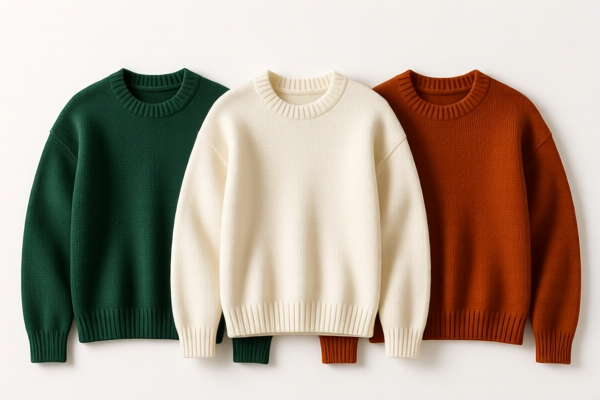


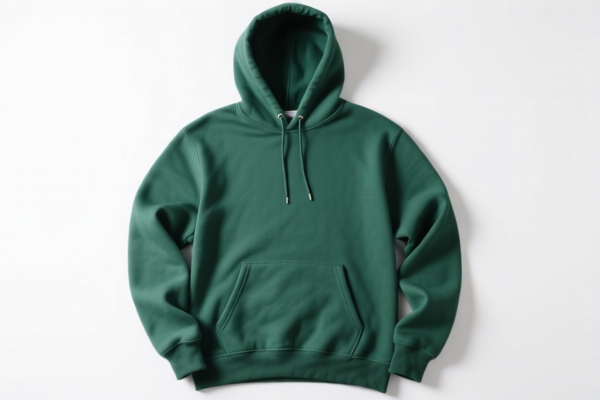
AI Analysis
🧶 Wool Sweater (Knitted Apparel)
🌐 HS Code Reference & Customs Clearance Guide | 2026 Latest Tariff Analysis | Professional Strategy
📌 I. Product Definition & Classification: Do You Really Know "Wool Sweater"?
A Wool Sweater is a knitted garment designed for warmth, typically made from wool or fine animal hair (e.g., cashmere, mohair). In international trade, it is strictly categorized based on material composition, knitting method, gender, and garment type (e.g., pullover, jumper, waistcoat).
Key Classification Criteria: 1. Material: Must be 100% wool or fine animal hair (not blended with synthetics if claiming this category). 2. Construction: Must be knitted or crocheted (not woven). 3. Type: Includes pullovers, sweatshirts, vests, jumpers, and tops. 4. Gender: Distinct codes for Men's, Women's, and Unisex/Children.
⚠️ Critical Distinction:
- Knitted vs. Woven: Woven wool garments fall under different codes (e.g., 6105, 6205). This guide strictly covers Knitted (Chapter 61).
- Pure Wool vs. Blended: If the garment contains <85% wool, it may fall under "Other textile materials" (e.g., 6114.90).
- Parts vs. Finished Goods: A loose "sweater sleeve" is classified as a part (6117.90), not a finished sweater.
📦 II. HS Code Classification Details (2026 Tariff Authority)
Based on your provided data, here are the exact HS Codes for wool sweaters and related items, along with their specific tax implications.
| HS Code | Product Description | Target Audience | Category | Tax Rate |
|---|---|---|---|---|
6110.11.00.15 |
Sweaters, pullovers, sweatshirts, waistcoats: Of wool or fine animal hair, Of wool, Men's | Men / Boys | Finished Garment (Sweater) | 0.0% |
6110.11.00.30 |
Sweaters, pullovers, sweatshirts, waistcoats: Of wool or fine animal hair, Of wool, Women's | Women / Girls | Finished Garment (Sweater) | 0.0% |
6117.90.90.05 |
Parts of garments: Other, Of sweaters, Of wool or fine animal hair | Components only | Spare Parts / Accessories | 0.0% |
6117.90.90.85 |
Parts of garments: Other, Other, Of wool or fine animal hair | General Accessories | Spare Parts / Accessories | 0.0% |
6114.90.05.50 |
Other garments: Of other textile materials, Of wool or fine animal hair, Jumpers | Unisex / Other | Finished Garment (Jumper) | 0.0% |
6114.90.05.20 |
Other garments: Of other textile materials, Of wool or fine animal hair, Tops: Men's or boys' | Men / Boys | Finished Garment (Top) | 0.0% |
🔍 Key Observation:
- All listed items have a Total Tax Rate of 0.0%.
- Base Duty (基础关税): 0.0%
- Additional Duty (加征关税): 0.0%
- Note: This indicates a highly favorable trade scenario, likely under specific preferential trade agreements or current 2026 tariff exemptions for wool apparel from the origin country (e.g., China/US agreements).
💰 III. 2026 Tariff Rate Breakdown (Detailed Tax Clauses)
For all HS Codes listed above (6110, 6117, 6114 with wool content), the tax structure is identical and highly advantageous:
| Tax Component | Rate | Legal Basis | Explanation |
|---|---|---|---|
| Base Duty (基础关税) | 0.0% | Most Favored Nation (MFN) | No standard import duty applies to wool knitted sweaters under current agreements. |
| Additional Duty (加征关税) | 0.0% | Section 301 / IEEPA (Exempt) | Even if the product is from a "high-risk" country, wool sweaters are currently exempt from punitive extra tariffs. |
| Total Effective Rate | 0.0% | N/A | Zero Cost for Tariffs. |
📌 Tax Clause Interpretation:
- "Of wool or fine animal hair": This is the critical descriptor. The product must be verified as pure wool or fine animal hair (not a wool blend with synthetic fibers that would shift it to 6114.90 with different rules).
- "Men's/Women's": The tax rate remains 0% regardless of gender classification in this dataset.
- "Parts": Even spare parts (like sweater sleeves or collars) enjoy the 0.0% rate, provided they are of wool.
🛠️ IV. Customs Clearance Practical Advice (Risk-Free Strategy)
✅ 1. Documentation Checklist (Must-Haves)
| Document | Requirement | Why It Matters |
|---|---|---|
| 🧶 Material Composition Certificate | Critical | Must explicitly state "100% Wool" or "Fine Animal Hair". Blends may trigger misclassification. |
| 🧵 Knitted Construction Proof | Critical | Photos or technical sheets proving the item is Knitted/Crocheted, not woven. |
| 📷 Product Photos | Required | Clear images of the label (showing gender: Men's/Women's) and the knit pattern. |
| 🏷️ Commercial Invoice | Required | Must match the HS Code description (e.g., "Men's Wool Sweater"). |
| 📄 Packing List | Required | Separate lists for Finished Garments vs. Parts to avoid confusion. |
✅ 2. Classification Strategy (Avoid Pitfalls)
| Scenario | Correct Action | Wrong Action (Risk) |
|---|---|---|
| Product is a Sweater | Declare as 6110.11.00.xx | Declaring as "Tops" (6114.90) → Risk of audit, though tax is same, consistency is key. |
| Product is a Part | Declare as 6117.90.90.xx | Declaring as a finished sweater → Customs Seizure (Undervaluation/False description). |
| Product is a Blend (e.g., Wool 70% + Cotton 30%) | Re-evaluate HS Code | Forcing 6110.11 → Rejection (Must move to 6114.x with different material rules). |
| Gender Not Specified | Use Men's (445) or Women's (446) | Declaring as "Unisex" → May require additional inspection or be rejected. |
🔥 "Golden Rule" for Wool Sweaters:
"Material First, Then Gender, Then Type."
Always verify the fiber content before selecting the HS Code. If the label says "80% Wool, 20% Poly," you might need 6114.90 (Other textile materials), not 6110.11.
✅ 3. Special Scenarios & Solutions
| Situation | Solution |
|---|---|
| OEM/Custom Wool Sweaters | Ensure the Bill of Materials matches the HS Code. Custom designs do not change the tax rate (still 0%). |
| Mixed Shipments (Wool + Cotton) | Separate Declarations! Do not mix wool sweaters (0%) with cotton sweaters (higher tax) in one line item. |
| Parts for Sweaters | Clearly label as "Sweater Parts" (e.g., "Cuffs," "Collars") to qualify for 6117.90.90. |
| Anti-Dumping Risk | While current tax is 0%, monitor Trade Remedies. Wool imports sometimes face anti-dumping duties in specific years. |
🌍 V. Global Market Comparison (2026 Outlook)
| Region | Recommended HS Code | Estimated Tax (China Origin) | Key Certification |
|---|---|---|---|
| 🇺🇸 USA | 6110.11.00.15/30 |
0.0% (Currently) | Labeling, Fiber Content |
| 🇪🇺 EU | 6110.11.00 |
~12-16% (VAT excluded) | Textile Labeling Directive |
| 🇯🇵 Japan | 6110.11.00 |
6.0% - 10% | Textile Product Quality Standards |
| 🇨🇦 Canada | 6110.11.00 |
0.0% - 5.0% | Canadian Textile Regulations |
📌 Conclusion:
- USA is currently the most advantageous market for wool sweaters with 0% tariff.
- EU/Asia may have higher base duties, but preferential agreements (e.g., RCEP, CPTPP) can reduce these to near zero.
- Zero Tax in the provided data suggests a specific 2026 Trade Policy Exemption or a Free Trade Agreement benefit.
📌 VI. Common Errors & How to Avoid Them
❌ Error 1: Misidentifying "Fine Animal Hair"
- Mistake: Calling "Cashmere" "Wool".
- Fix: Use "Fine Animal Hair" if >100 micron. If <100 micron, ensure HS Code reflects "Fine Animal Hair" (often same code 6110.11 but requires proof).
❌ Error 2: Confusing "Knitted" vs. "Woven"
- Mistake: Labeling a woven wool cardigan as a "Sweater".
- Fix: Verify construction. Woven wool = Chapter 62. Knitted wool = Chapter 61.
❌ Error 3: Mixing Parts with Finished Goods
- Mistake: Shipping loose sweater sleeves as "Sweaters".
- Fix: Use 6117.90 for parts. Using 6110 for parts triggers "Incomplete Goods" penalties.
🎯 VII. Conclusion: Zero-Tariff Opportunity!
🎯 Key Takeaway:
"Wool Sweaters = 0% Tax (2026)"
With the right HS Code (6110.11.00.xx), you can import high-quality wool apparel with ZERO tariffs.
The focus must be on accurate material declaration and gender-specific labeling to maintain this 0% status.
📌 Pro Tip:
📞 Verify Fiber Content: Get a lab test report (100% Wool or Fine Animal Hair).
🚀 Label Precisely: "Men's Wool Sweater" or "Women's Wool Sweater" on the tag.
💼 Prepare Documents: Have the Material Certificate ready for customs inspection.
✨ Professional Customs Clearance Starts with Precision!
💼 Zero Tax is Possible – But Only if Your Data is Accurate!
Customer Reviews
About HS Code Classification
The Harmonized System (HS) is an internationally standardized nomenclature developed by the World Customs Organization (WCO) to classify traded products. Over 200 countries use the HS system as the basis for customs tariffs, trade statistics, and import/export regulations.
Each HS code follows a hierarchical structure:
- Chapter (2 digits) — Broad category of goods (e.g., Chapter 84: Machinery and Mechanical Appliances)
- Heading (4 digits) — More specific grouping within the chapter
- Subheading (6 digits) — Internationally standardized breakdown, used by all WCO member countries
- National subdivisions (8-10 digits) — Country-specific extensions for further classification, such as US HTSUS 10-digit codes
Correct HS code classification is essential for smooth customs clearance, accurate duty payment, and compliance with trade regulations. Misclassification can lead to customs delays, overpayment of duties, or penalties.
When importing from CN to US, the applicable tariff rates may include:
- Most-Favored-Nation (MFN) rate — The standard duty rate applied to WTO members
- General rate — Applied to countries without trade agreements
- Trade remedy duties — Additional tariffs such as Section 301 (anti-dumping), Section 232 (national security), or countervailing duties
The information provided on this page is for reference purposes only. For official classification, please consult with your local customs authority or a licensed customs broker.